
Do Air Purifiers Burn A Lot Of Electricity? Essential Guide

Do air purifiers burn a lot of electricity? Generally, no. Most modern air purifiers are designed to be energy-efficient, consuming power comparable to a light bulb, but actual usage depends on the unit’s size, fan speed, and features.
Air purifiers are fantastic tools for improving indoor air quality, but a common question pops up: “Do air purifiers burn a lot of electricity?” It’s a valid concern, especially with rising energy costs and the desire for a healthy home environment. Many people worry that running an air purifier constantly will lead to shockingly high electricity bills. This guide will demystify air purifier energy consumption, helping you understand what to expect and how to choose an energy-efficient model. We’ll break down the factors influencing power usage and offer practical tips to keep your energy bills in check while enjoying cleaner air.
Understanding Air Purifier Power Consumption
The energy consumption of an air purifier is often less than people imagine. Think of it like a small appliance rather than a major one. Most units use a wattage similar to a standard light bulb when operating on lower settings.
The actual amount of electricity an air purifier uses is measured in watts. This figure tells you how much power the device draws at any given moment. Higher wattage means more power consumption, but it doesn’t always translate directly to a higher electricity bill.
Factors like the size of the room the purifier is designed for, the type of filtration technology it uses, and its energy efficiency rating all play a role in its overall power draw. We’ll explore these in more detail.
Key Factors Influencing Electricity Usage
Several elements determine how much electricity your air purifier will consume. Understanding these will help you make informed decisions about usage and selection.
Fan Speed Settings
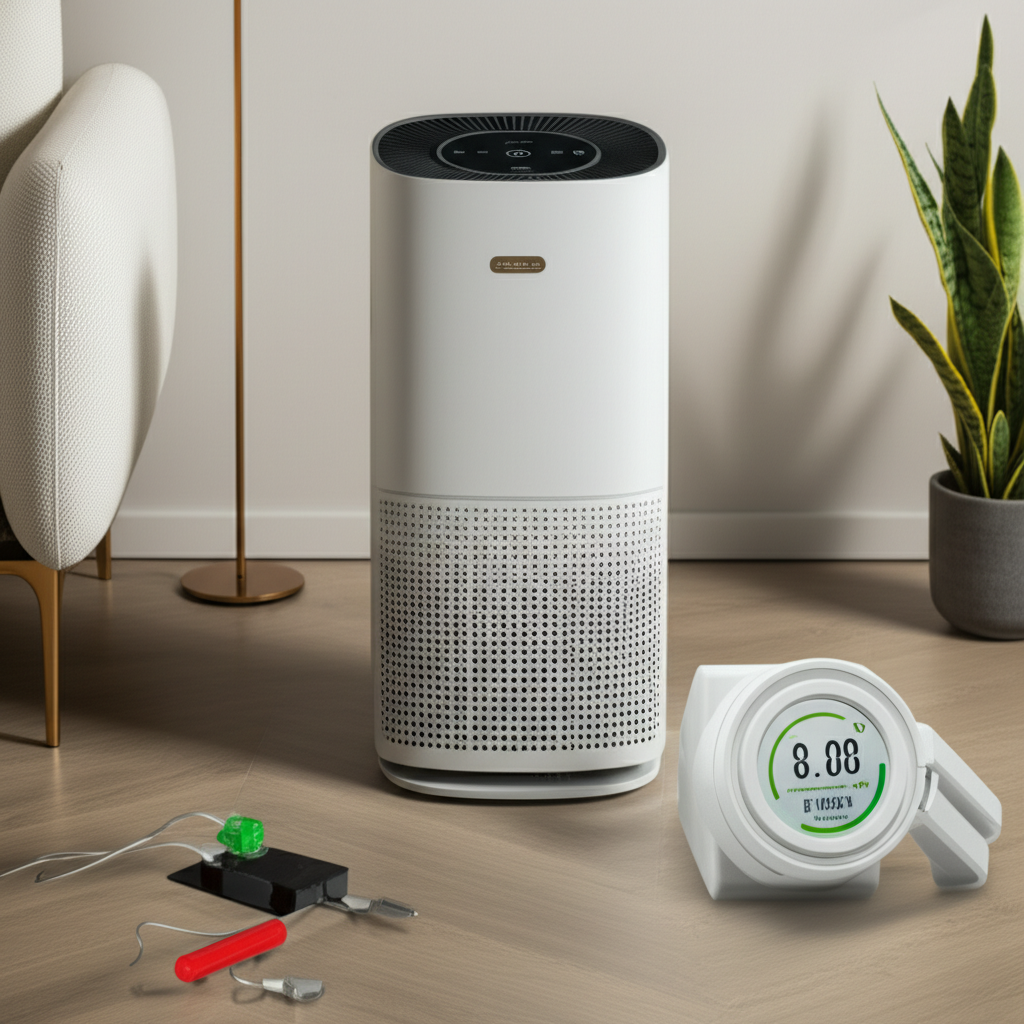
The fan speed is perhaps the most significant factor affecting an air purifier’s electricity usage. Running the fan on its highest setting will naturally draw more power than running it on a low or medium setting.
Most air purifiers offer multiple fan speeds. Using a lower setting is ideal for continuous operation and quietness, while higher settings are for rapid air cleaning when needed. This flexibility allows you to manage energy consumption effectively.
For overnight use or when you’re not actively in the room, a lower fan speed is usually sufficient and significantly reduces power draw. This simple adjustment can lead to noticeable savings.
Unit Size and Coverage Area
Larger air purifiers designed to clean bigger rooms typically require more power to circulate air effectively. A small unit in a small bedroom will use less electricity than a large unit in a spacious living area.
Always choose an air purifier rated for the square footage of the room you intend to use it in. An undersized unit will struggle to clean the air and may run on high constantly, negating any potential energy savings.
Conversely, an oversized unit might be overkill and use more energy than necessary for a smaller space. Matching the unit’s capacity to your room size is crucial for efficiency.
Filtration Technology
Different types of air purifiers use various filtration technologies, which can impact their energy needs. For instance, HEPA filters require a fan to push air through them, consuming a consistent amount of power.
Some technologies, like UV-C light or ionizers, add to the overall energy consumption, though their individual wattage is often quite low. The primary energy draw usually comes from the fan motor.
Newer models often incorporate more energy-efficient motors and designs, minimizing the power needed to achieve effective air purification. This means you can get great performance without a hefty energy penalty.
Energy Star Certification
Look for the Energy Star label when purchasing an air purifier. Products with this certification are independently verified to be more energy-efficient than standard models, using at least 20% less energy.
An Energy Star certified air purifier can save you money on your electricity bill and reduce your carbon footprint. These models have undergone rigorous testing to ensure they meet strict energy efficiency guidelines set by the U.S. Environmental Protection Agency (EPA).
Choosing an Energy Star model is a straightforward way to ensure you’re getting a device that balances performance with minimal electricity consumption.
Typical Wattage and Energy Costs
Understanding the typical wattage can help you visualize the electricity usage. Most air purifiers operate within a reasonable range, making them cost-effective to run.
Wattage Range of Common Air Purifiers
On their lowest settings, many air purifiers consume between 15 to 30 watts. This is comparable to a standard LED light bulb. On higher settings, this might increase to 50 to 100 watts, or slightly more for very large or powerful units.
For example, a compact air purifier for a bedroom might use 20 watts on low and 40 watts on high. A larger unit for a living room could range from 40 watts on low to 120 watts on high.
It’s important to check the manufacturer’s specifications for the exact wattage of the model you are considering or currently own. This information is usually found on the product label or in the user manual.
Estimating Monthly Electricity Costs
To estimate your monthly costs, you need to know the air purifier’s wattage, how many hours a day you run it, and your local electricity rate (cost per kilowatt-hour, kWh). The formula is: (Wattage / 1000) Hours per day Days per month Cost per kWh.
Let’s take an example: an air purifier uses 50 watts and runs 24 hours a day. If your electricity costs $0.15 per kWh, the daily cost is (50/1000) 24 $0.15 = $0.18. Monthly, this would be around $0.18 30 = $5.40. This is a modest cost for continuous air purification.
This calculation highlights that even with continuous operation, the monthly expense for most energy-efficient air purifiers is relatively low. You can find your local electricity rate on your utility bill.
How to Choose an Energy-Efficient Air Purifier
Selecting an air purifier with energy efficiency in mind can save you money and reduce environmental impact. Here’s what to look for.
Prioritize Energy Star Certification
As mentioned, Energy Star certification is a strong indicator of efficiency. These models are designed to meet strict standards for energy conservation without compromising performance.
When comparing models, look for the Energy Star logo. This simple step can ensure you’re choosing a unit that consumes less electricity over its lifespan.
Many reputable brands offer Energy Star certified air purifiers, so you won’t have to sacrifice features or effectiveness. Always check product descriptions and specifications.
Compare Wattage Ratings
Before buying, compare the wattage ratings of different air purifiers, especially for models designed for similar room sizes. Pay attention to the wattage at different fan speeds.
A unit with a lower maximum wattage might be more energy-efficient, but also consider its CADR (Clean Air Delivery Rate). You want a balance between effective cleaning and low power consumption.
Look for models that offer a wide range of fan speeds, allowing you to fine-tune the operation for optimal efficiency and noise levels. A good guide for comparison is the Energy Star certified air purifiers page, which lists qualifying models and their efficiency ratings.
Consider Smart Features
Some modern air purifiers come with smart features like automatic modes, timers, and app control. These can indirectly help manage electricity usage.
An auto mode adjusts fan speed based on detected air quality, preventing the unit from running on high unnecessarily. Timers allow you to schedule operation for specific periods, reducing usage when you’re away or asleep.
While smart features themselves use a tiny amount of power, their ability to optimize the purifier’s operation can lead to overall energy savings. This is especially true if you tend to forget to adjust settings manually.
Tips to Minimize Air Purifier Electricity Consumption
Even with an efficient model, you can implement strategies to further reduce your air purifier’s electricity usage.
Use Lower Fan Speeds
Whenever possible, run your air purifier on a lower fan speed. For continuous air cleaning, especially in bedrooms at night, a low setting is often sufficient and significantly more energy-efficient.
Only use higher settings when you need to quickly clear the air of strong odors or pollutants, or when the air quality sensor indicates a problem. This simple habit can make a difference.
Many users find that the lowest setting provides adequate air purification for everyday use without a noticeable increase in noise or energy bills.
Utilize Timer Functions
If your air purifier has a timer, use it to your advantage. Set it to run only when you are home or during specific hours when air quality is most likely to be an issue.
For example, you might schedule it to run at a higher setting for an hour in the morning and evening, and then switch to a lower, more energy-saving mode overnight. This targeted approach conserves power.
This is especially useful if you leave your home for extended periods during the day. Scheduling the purifier to turn off while you’re out can prevent unnecessary electricity consumption.
Place Purifier Strategically
The placement of your air purifier can also impact its efficiency. Ensure it has unobstructed airflow around it; don’t push it against a wall or furniture.
Placing it in a central location within the room allows it to circulate air more effectively, potentially enabling you to use lower fan speeds. Consider where pollutants are most likely to originate or accumulate.
A well-placed unit can perform its job more efficiently, reducing the need for it to work harder and consume more electricity. This also helps in achieving better overall air quality.
Regular Maintenance
Proper maintenance, particularly cleaning or replacing filters, is crucial. Clogged filters restrict airflow, forcing the fan to work harder and consume more electricity.
Follow the manufacturer’s recommendations for filter maintenance. This typically involves vacuuming pre-filters regularly and replacing HEPA and carbon filters at the recommended intervals.
Keeping filters clean ensures optimal airflow and maintains the unit’s energy efficiency. It also ensures the purifier continues to perform its primary function of cleaning your air effectively.
Do Air Purifiers Contribute Significantly to Electricity Bills?
For most households, the answer is a resounding no. The electricity cost associated with running an air purifier is typically quite manageable.
Compared to other household appliances like refrigerators, washing machines, or even televisions, air purifiers are generally low-energy consumers. Their contribution to your monthly bill is often minimal, especially when using energy-efficient models and employing smart usage habits.
The peace of mind from breathing cleaner air often outweighs the small incremental cost. When you consider the health benefits, the investment in an air purifier becomes even more worthwhile.
Comparing Air Purifier Electricity Use to Other Appliances
It can be helpful to put the electricity consumption of air purifiers into perspective by comparing them to other common household appliances.
Here’s a general comparison of typical wattages:
| Appliance | Typical Wattage (Low to High) | Estimated Monthly Cost (24/7 Usage, $0.15/kWh) |
|---|---|---|
| Air Purifier (Energy Efficient) | 15-50 watts | $0.11 – $0.36 |
| LED Light Bulb | 5-15 watts | $0.03 – $0.09 |
| Laptop Computer | 50-100 watts | $0.36 – $0.72 |
| Refrigerator | 100-200 watts (cycling) | $0.72 – $1.44 (actual cost varies greatly due to cycling) |
| Television (LED) | 50-150 watts | $0.36 – $1.08 |
| Washing Machine | 300-1200 watts (during cycle) | $10.80 – $43.20 (highly variable based on usage) |
This table illustrates that an air purifier, especially an energy-efficient one running on lower settings, consumes far less electricity than many other appliances. For example, running an air purifier 24/7 might cost less than $5 per month, depending on your electricity rates and the unit’s efficiency. This is a small price to pay for improved air quality.
Common Misconceptions About Air Purifier Energy Use
There are a few common misunderstandings about how much electricity air purifiers use. Addressing these can help alleviate unnecessary concerns.
One misconception is that all air purifiers are power-hungry devices. In reality, modern designs have made them much more efficient. Another myth is that they automatically use a lot of electricity simply because they are running continuously.
The truth is that their energy consumption is highly dependent on the specific model, its settings, and its features. By choosing wisely and using them smartly, you can keep energy use low.
Frequently Asked Questions
Do air purifiers use a lot of electricity?
Generally, no. Most modern air purifiers are energy-efficient, consuming power similar to a light bulb on lower settings. Higher settings and larger units will use more, but typically not to an extent that significantly impacts your electricity bill.
How many watts does a typical air purifier use?
A typical air purifier can range from 15 to 100 watts, with many energy-efficient models using 20-50 watts on low settings. This is comparable to many household appliances like laptops or LED lights.
Will running an air purifier 24/7 increase my electricity bill drastically?
Not usually. If you have an energy-efficient model and run it on lower settings, the cost of running it 24/7 is often minimal, potentially less than $10 per month depending on your electricity rates.
What is the most energy-efficient way to use an air purifier?
The most energy-efficient way is to use lower fan speeds, utilize timer functions to run it only when needed, ensure regular filter maintenance, and choose an Energy Star certified model. Placing it strategically for optimal airflow also helps.
Are air purifiers with ionizers or UV lights more expensive to run?
These features add a small amount to the overall energy consumption, but their individual wattage is typically very low. The main power draw still comes from the fan motor.
Should I turn off my air purifier when I leave the house?
You can, especially if you have a timer function or are leaving for an extended period. However, for continuous air cleaning, especially if you have allergies or pets, running it on a low setting while you’re away is often recommended and still energy-efficient.
How can I find out how much electricity my specific air purifier uses?
Check the manufacturer’s specifications on the product label, in the user manual, or on the company’s website. You can also use a plug-in energy meter (like a Kill-A-Watt device) to measure its actual power consumption.
Conclusion
So, to answer the question: do air purifiers burn a lot of electricity? The answer is a reassuring no for most modern, well-chosen units. While they do consume power, their energy usage is typically comparable to other small appliances and can be quite minimal when managed effectively. By understanding the factors that influence consumption—like fan speed, unit size, and technology—and by choosing Energy Star certified models, you can ensure your air purifier works hard to clean your air without working your electricity meter overtime.
Implementing simple tips such as using lower fan settings, utilizing timer functions, and performing regular maintenance will further minimize energy expenditure. The benefits of improved indoor air quality, especially for those with allergies, asthma, or sensitivities, far outweigh the modest electricity costs associated with running an air purifier. Enjoying cleaner, healthier air in your home is more accessible and affordable than you might think.
