
Why Does My Vacuum Smell Bad? 7 Causes and Safe Fixes

Quick Answer
A vacuum usually smells bad because odor-producing debris is trapped in the bin, bag, filter, hose, or brush head. Damp filters and moist pet hair can create musty odors, while a burning-rubber or hot-plastic smell needs immediate attention; Bissell’s vacuum odor guidance makes the same important distinction between damp smells and burning smells.
What the smell usually means
- Musty smell: Check for a damp filter, wet debris, or moisture inside the bin or hose.
- Sour or pet odor: Look for old pet hair, food crumbs, dirty dust bags, or debris around the brush roll.
- Dusty smell: A full bag, dirty filter, or clogged airflow path may be recirculating stale dust.
- Burning rubber: Stop the vacuum and inspect the brush roll and belt for a jam or excess friction.
- Hot plastic or electrical odor: Switch the machine off, unplug it, and do not keep testing it.
Fastest check
- Unplug the vacuum, empty it, inspect the filter and brush head, then check the hose for trapped debris before running it again.
If you’re asking, “Why does my vacuum smell bad?” the odor itself is your best first clue. In home hygiene, a smelly vacuum cleaner usually points to trapped debris, moisture, restricted airflow, or a mechanical problem.
I’ve dealt with everything from pet-hair odors to that unmistakable damp-filter smell. This guide shows you how to identify the source, clean it safely, and know when the vacuum needs repair instead.
In This Guide
- Why Does My Vacuum Smell Bad in the First Place?
- What Causes a Musty or Sour Vacuum Smell?
- Why Does My Vacuum Smell Like Burning Rubber or Plastic?
- How Do I Get a Bad Smell Out of My Vacuum?
- How Can I Stop My Vacuum From Smelling Again?
- When Should I Repair or Replace a Smelly Vacuum?
- Frequently Asked Questions
Why Does My Vacuum Smell Bad in the First Place?
A vacuum smells bad when material inside the machine releases odor as air moves through it. Heat from normal operation can make an existing smell seem stronger.
A bad vacuum smell is an odor coming from debris, moisture, filters, airflow components, or mechanical parts inside the vacuum. The smell type often tells you where to check first.
As of 2026, I still find this smell-first approach faster than taking half the vacuum apart immediately. Start by deciding whether the odor is musty, sour, dusty, rubbery, or electrical.
| Smell | Likely area | Common clue | First action |
|---|---|---|---|
| Musty | Filter, bin, hose | Washed filter or damp pickup | Unplug, inspect, and dry washable parts fully |
| Sour or pet-like | Bin, bag, brush roll | Hair or food debris | Empty and clean permitted parts |
| Dusty or stale | Bag, filter, airway | Full bag or restricted airflow | Service filters and clear clogs |
| Burning rubber | Brush roll or belt | Brush stalls, squeals, or feels hot | Stop and unplug immediately |
| Hot plastic or electrical | Motor, wiring, electronics | Acrid odor, smoke, sparking, unusual heat | Stop using the machine |
What Causes a Musty or Sour Vacuum Smell?
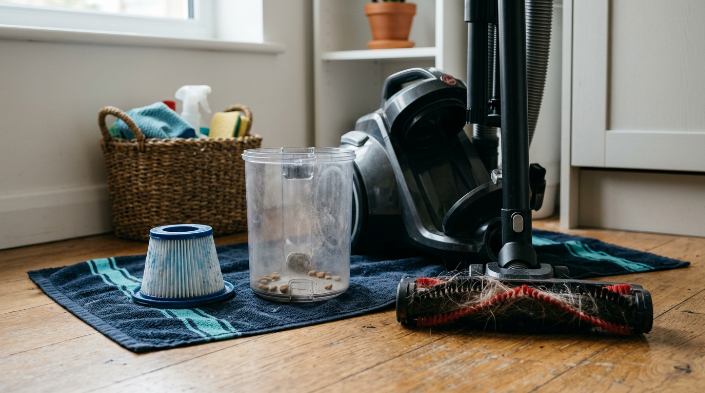
A musty vacuum smell usually involves moisture somewhere in the airflow path. Sour or animal-like odors are more often linked to organic debris such as pet hair, crumbs, or dirty dust.
1. A washable filter was put back while damp
This is one of the first things I check. I once reinstalled a filter that felt dry outside but still held moisture deeper inside, and the vacuum smelled like damp laundry almost immediately.
Not every filter is washable, so check your model instructions first. For models with washable filters, Dyson’s filter-care guidance gives one useful example: its washable cordless filters should dry for at least 24 hours and be completely dry before refitting.
2. You vacuumed damp pet hair, food, or dirt
A standard dry vacuum is designed for dry debris unless the manufacturer specifically says otherwise. Slightly damp pet hair, food crumbs, soil, or carpet debris can sit inside the bin or hose and develop a strong odor.
- Pet hair: Hair can carry skin oils, moisture, and other household odors.
- Food crumbs: Small food particles may lodge in corners of the bin or hose.
- Damp dirt: Moist soil can leave both residue and a musty smell.
- Dirty brush rolls: Hair wrapped around the roller can hold odors close to the floor head.
3. Moisture has remained inside the vacuum
Persistent moisture deserves attention because mold needs moisture to grow. The Environmental Protection Agency’s mold guidance emphasizes moisture control as the key to preventing indoor mold growth.
If you see suspicious growth on removable, washable components, follow your vacuum’s cleaning instructions. Don’t soak motors, wiring, batteries, or other electrical assemblies.
The Centers for Disease Control and Prevention’s mold information also notes that mold can have a musty smell. A persistent musty odor after normal vacuum cleaning is therefore worth investigating rather than covering with fragrance.
Expert Alert: If visible mold extends into the motor housing, wiring, or other inaccessible components, don’t dismantle electrical sections yourself. Have the machine assessed by a qualified appliance technician or replace the affected component when appropriate.
Section Takeaway: Musty smells point first to moisture, while sour smells often point to old organic debris. Clean the source instead of trying to perfume the exhaust.
Why Does My Vacuum Smell Like Burning Rubber or Plastic?
A burning-rubber smell can come from excess friction around the brush roll or drive belt. An acrid electrical or melting-plastic smell is more serious and should end the cleaning session immediately.
4. Hair or string is stopping the brush roll
Long hair, thread, carpet fibers, and string can wrap tightly around a rotating brush. That extra resistance can heat the brush area or stress a belt-driven system.
- Turn the vacuum off and unplug it, or remove the battery when the design allows.
- Check the brush roll for tightly wrapped hair and thread.
- Remove debris using the method specified in your manual.
- Check whether the roller turns normally before reassembly.
5. The belt is slipping or damaged
Many upright vacuums use a belt to drive the brush roll. A jammed roller can make that belt slip, overheat, or wear unusually fast.
Don’t keep running the machine just to see whether the smell disappears. Continued friction may cause more damage.
6. Restricted airflow is making the machine run hotter
A packed bag, clogged hose, blocked floor head, or heavily loaded filter can restrict airflow. Some machines may also lose suction, sound different, pulse, or shut down when airflow is poor.
- Check the dust bag or bin.
- Inspect accessible hoses and wands.
- Look for debris at bends and connection points.
- Service filters according to the manufacturer schedule.
7. The odor is coming from an electrical component
Stop immediately if you notice smoke, sparking, melted plastic, an acrid electrical smell, or abnormal heat near the motor, plug, charger, or battery. Unplug the vacuum or disconnect its removable battery when safe to do so.
Expert Alert: Electrical repairs, motor work, battery-pack repairs, and internal wiring checks should be handled by a qualified technician. Don’t open sealed electrical assemblies to investigate an odor.
Section Takeaway: A musty vacuum can usually be cleaned and dried, but a burning or electrical smell changes the priority. Stop first, then diagnose the brush, belt, airflow, or electrical system safely.
How Do I Get a Bad Smell Out of My Vacuum?
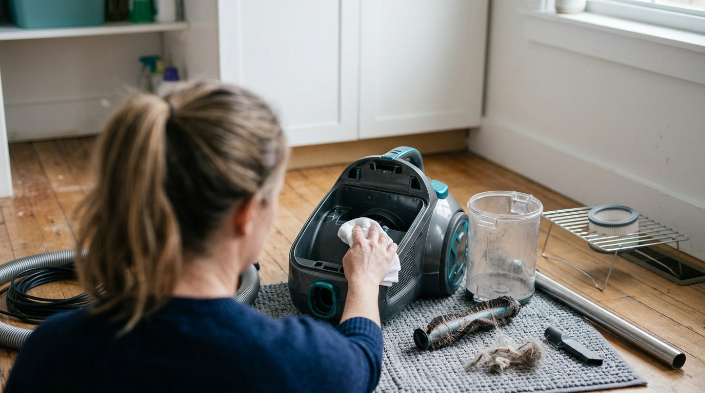
The safest way to remove vacuum odor is to eliminate the material causing it. Work from the easiest removable parts toward the deeper airflow path.
- Switch off and disconnect power. Unplug corded vacuums and follow the manual for battery removal on cordless models.
- Empty the bin or replace the bag. Don’t leave pet hair, food crumbs, or damp dirt sitting inside after cleaning.
- Inspect the brush roll. Remove hair and string using the manufacturer’s approved method.
- Check the hose and wand. Look through accessible sections for trapped debris or clogs.
- Service the filters. Wash only filters specifically labeled washable; replace disposable filters when required.
- Dry washed parts completely. Never reinstall a filter, bin, or other washed component while moisture remains.
- Wipe permitted surfaces. Follow the manual rather than soaking components or applying strong cleaners indiscriminately.
- Reassemble and test briefly. Stop again if a burning, electrical, or hot-plastic smell returns.
I avoid putting perfume, essential oils, or cleaning liquid directly onto a vacuum filter unless the manufacturer specifically approves it. Masking an odor can make it harder to tell whether the underlying problem is gone.
Bagged vacuums may need a fresh bag even before it is completely full if the contents smell strongly. Bagless machines usually need more attention around the bin seals, cyclone area, filters, and narrow airflow passages.
How Can I Stop My Vacuum From Smelling Again?
Good odor prevention comes down to keeping organic debris, excess dust, and moisture from sitting inside the machine. A small maintenance routine usually takes less effort than deodorizing a neglected vacuum later.
After messy cleaning jobs
- Empty pet hair and food debris promptly.
- Check the brush roll after vacuuming long hair.
- Avoid picking up damp debris with a dry-only vacuum.
- Leave washed parts out until they are completely dry.
On a regular maintenance schedule
- Check filters at the interval specified in your manual.
- Replace disposable bags before they become severely packed.
- Inspect hoses when suction noticeably drops.
- Wipe dust from seals and accessible bin surfaces.
If household allergies are a concern, controlling what the vacuum releases matters as well as controlling odors. The Asthma and Allergy Foundation of America’s dust-mite guidance recommends regular vacuuming with a high-efficiency particulate air filtered vacuum as part of a broader allergen-control approach.
Store the vacuum in a dry location after cleaning. A closed, humid cupboard is a poor place for a machine that still has moisture in its filter or bin.
When Should I Repair or Replace a Smelly Vacuum?
Cleaning makes sense when the odor clearly comes from removable debris, a dirty bin, a serviceable filter, or a clogged hose. Repair becomes more appropriate when the smell returns immediately or involves heat and mechanical symptoms.
| Situation | Best next step |
|---|---|
| Pet or food smell in bin | Clean permitted components |
| Damp washable filter | Clean correctly and allow full drying time |
| Brush roll jam | Remove debris and inspect serviceable parts |
| Burning smell repeatedly returns | Stop using and arrange repair |
| Smoke, sparking, melted wiring, or damaged battery | Do not restart; seek qualified service |
Replacement may make more sense when repair costs approach the value of an older machine or when several major components are failing. A technician can help determine whether a motor, control board, battery, or other expensive part is worth replacing.
Frequently Asked Questions
Why does my vacuum smell bad only when I turn it on?
Airflow and normal operating heat can make trapped odors much more noticeable once the vacuum starts. Check the dust bag or bin, filters, brush roll, hose, and floor head for old debris, moisture, or blockages before assuming the motor is responsible.
Why does my vacuum smell like a wet dog?
Pet hair can carry oils, moisture, and household odors into the bin, bag, brush roll, and filters. Empty the vacuum promptly after heavy pet-hair cleaning, remove wrapped hair, and clean or replace filters only according to your model’s instructions.
Can a dirty vacuum filter make the vacuum smell?
Yes. A filter can hold fine dust, organic debris, and odors, while a washable filter reinstalled before it is fully dry may create a damp or musty smell. Check whether your filter is washable before rinsing it, because many vacuum filters require replacement instead.
Can mold grow inside a vacuum cleaner?
Mold needs moisture, so persistent dampness inside a vacuum can create conditions where growth becomes possible. Investigate any lasting musty odor, dry washable parts completely, and avoid dismantling electrical assemblies if suspected contamination extends into inaccessible areas.
Why does my vacuum smell burnt but still work?
A working vacuum can still have a jammed brush, slipping belt, restricted airflow, or developing electrical problem. Stop using it until you inspect accessible serviceable areas because continuing to run a machine with a burning smell can turn a small fault into a larger one.
Should I put baking soda or fragrance in my vacuum?
I prefer fixing the odor source first rather than adding fragrance or powder to the machine. Fine powders can behave differently across vacuum designs, so check the manufacturer’s instructions before vacuuming deodorizing powders or placing scented products near filters and airflow components.
How long should a vacuum filter dry after washing?
Follow your specific vacuum manual because drying requirements vary. As one manufacturer example, Dyson instructs users of its washable cordless filters to allow at least 24 hours in good airflow and confirm that the filter is completely dry before putting it back.
The main takeaway: Your vacuum’s smell is a diagnostic clue. Musty and sour odors usually send me toward filters and trapped debris, while burning or electrical odors tell me to stop the machine before doing anything else.
Clean the source, let washable parts dry fully, and follow your model’s maintenance instructions. If heat, smoke, sparking, or a burning smell persists, have the vacuum professionally assessed rather than continuing to use it.