
What’s the Best Air Purifier for Mold: Proven Solutions

The best air purifier for mold has a HEPA filter, an activated carbon filter, and sufficient CADR for your room size. It tackles mold spores and odors effectively, improving your home’s air quality and health.
It can be truly frustrating to find mold in your home. Those tiny spores can spread quickly and affect your air quality and health. Dealing with mold requires a good plan, and an air purifier is a key part of that. But with so many options, how do you choose the right one? This guide will help you find the best air purifier for mold, ensuring you breathe easier and live healthier. We’ll look at what makes an air purifier great for mold and which features matter most.
Why Mold Air Purifiers Are Essential for a Healthy Home
Mold thrives in damp, humid environments and can grow on almost any surface. When mold spores become airborne, they can cause allergy symptoms, respiratory problems, and other health issues. An air purifier with the right filters can capture these microscopic spores, preventing them from spreading further. It also helps remove the musty odors associated with mold growth.
An effective mold air purifier acts as a shield against these airborne irritants. It helps maintain cleaner indoor air, especially in areas prone to moisture like bathrooms, kitchens, and basements. This proactive approach is vital for protecting your family’s well-being.
Understanding Mold Spores and Air Quality
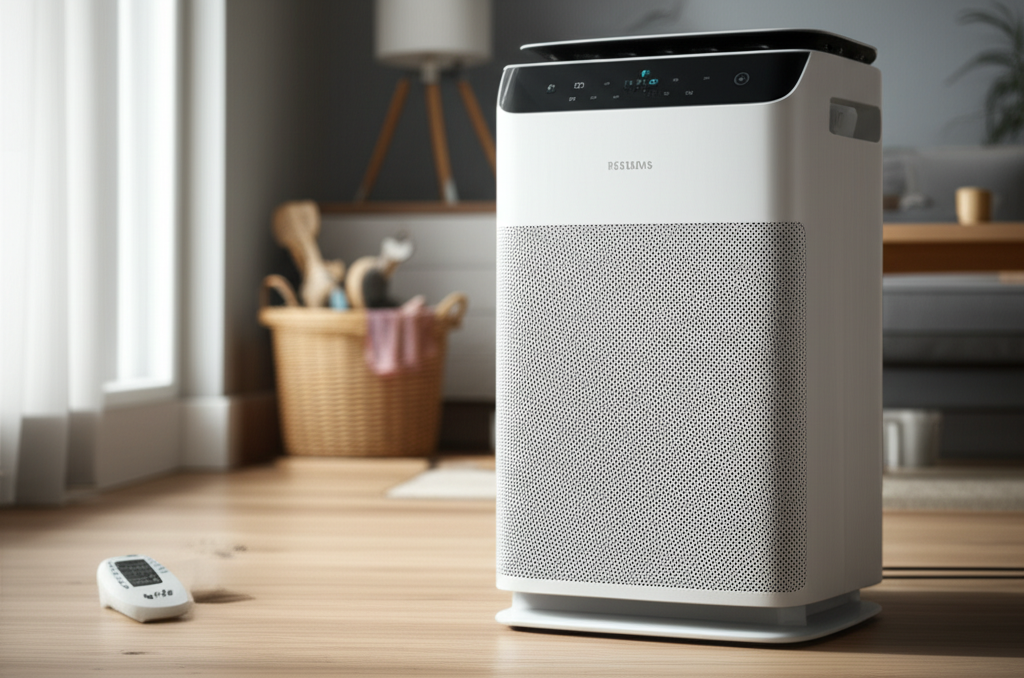
Mold spores are microscopic. They float in the air and can land on surfaces, starting new mold colonies. When you breathe them in, they can cause sneezing, coughing, and itchy eyes. For some people, mold can trigger asthma attacks or more severe allergic reactions.
The Environmental Protection Agency (EPA) recommends controlling moisture to prevent mold. However, once mold is present, an air purifier can help manage the airborne spores. It complements other mold remediation steps, offering continuous air cleaning.
Key Features of the Best Air Purifier for Mold
When looking for an air purifier to combat mold, certain features are non-negotiable. These are the elements that directly impact its ability to capture mold spores and improve your air. Prioritizing these will lead you to the most effective solutions for your home.
The best air purifiers for mold focus on filtration technology and performance metrics. They are designed to trap small particles efficiently and handle the air volume of your space. We will explore these critical aspects in detail.
True HEPA Filtration: The Gold Standard for Mold Spores
A True HEPA filter is the most important feature for an air purifier targeting mold. HEPA stands for High-Efficiency Particulate Air. These filters are designed to capture at least 99.97% of airborne particles as small as 0.3 microns. Mold spores are typically between 2 and 10 microns, so a HEPA filter can effectively trap them.
Look for air purifiers that explicitly state they have a “True HEPA” filter. Some may claim “HEPA-like” or “HEPA-type,” which do not meet the same rigorous standards. A True HEPA filter ensures that the smallest mold spores are removed from your air.
Activated Carbon Filters: Tackling Mold Odors
While HEPA filters capture the mold spores themselves, activated carbon filters are crucial for removing the associated odors. Mold often produces a distinct, musty smell that can permeate your home. Activated carbon is highly porous and adsorbs (attracts and holds) odor molecules.
A good air purifier for mold will combine a HEPA filter with a substantial activated carbon filter. This dual approach not only removes the source of the problem (spores) but also eliminates the unpleasant smell. This combination leads to a fresher, cleaner-smelling living space.
CADR: Matching Purifier Power to Room Size
CADR stands for Clean Air Delivery Rate. It measures how quickly an air purifier can clean the air in a room. There are separate CADR ratings for dust, pollen, and smoke. For mold, you’ll want a high CADR for dust and pollen, as these are similar in size to mold spores.
The higher the CADR, the more effective the purifier will be, especially in larger rooms. It’s important to match the purifier’s CADR to your room’s square footage. A general rule is to choose a purifier with a CADR that is at least two-thirds of the room’s area in square feet. For example, a 150 sq ft room needs a CADR of at least 100.
Pre-filters: Extending HEPA Filter Life
Many air purifiers include a pre-filter. This is usually a washable mesh layer located at the very front of the filtration system. Its job is to capture larger particles like dust, hair, and pet dander. By trapping these bigger items, the pre-filter prevents them from reaching and clogging the HEPA and carbon filters.
A good pre-filter helps extend the lifespan of your more expensive HEPA and carbon filters. This means you’ll have to replace them less often, saving you money in the long run. Cleaning the pre-filter regularly is a simple maintenance step that significantly boosts the purifier’s efficiency.
Top Air Purifier Features for Mold Control
Here’s a quick look at the essential features to prioritize when selecting an air purifier for mold:
| Feature | Importance for Mold Control |
| :——————- | :————————————————————- |
| True HEPA Filter | Captures 99.97% of particles 0.3 microns, including mold spores. |
| Activated Carbon | Adsorbs and removes musty mold odors. |
| High CADR Rating | Ensures efficient cleaning for your room size. |
| Pre-filter | Captures larger particles, extending HEPA filter life. |
| Ozone-Free Operation | Avoids releasing harmful ozone, which can irritate lungs. |
Recommended Air Purifier Types for Mold Issues
Different types of air purifiers offer varying levels of effectiveness against mold. Understanding these differences helps you make an informed choice based on your specific needs and the severity of your mold problem.
Not all air purifiers are created equal when it comes to mold. Some technologies are more effective than others at capturing spores and neutralizing odors. We’ll explore the best options.
HEPA Air Purifiers: The Most Effective Choice
As we’ve discussed, air purifiers with True HEPA filters are the most effective for capturing mold spores. They physically trap the particles, removing them from the air you breathe. When combined with an activated carbon filter, they offer a complete solution for mold control and odor elimination.
These are the workhorses for mold remediation. They are widely recommended by health organizations and are the standard for allergy and asthma sufferers. Look for reputable brands that clearly list their filtration capabilities.
Ionizers and Ozone Generators: Use with Caution
Some air purifiers use ionizers or ozone generators to clean the air. Ionizers release negative ions that attach to airborne particles, causing them to clump together and fall to the floor. Ozone generators intentionally produce ozone gas, which can neutralize odors and kill mold. However, ozone is a lung irritant.
The U.S. Food and Drug Administration (FDA) warns that ozone generators are not recommended for use in occupied spaces. While some newer models claim to produce very low levels of ozone, it’s generally best to avoid them if mold is a primary concern, especially for those with respiratory sensitivities. Always opt for ozone-free certified purifiers for mold.
UV-C Light Purifiers: A Supporting Role
Air purifiers with UV-C light technology aim to kill airborne microorganisms, including mold spores. The UV-C light can damage the DNA of mold spores, preventing them from reproducing. However, the effectiveness of UV-C in air purifiers can vary greatly.
For UV-C to be truly effective, the mold spores must be exposed to the light for a sufficient duration. In many portable air purifiers, the airflow is too fast for this to happen reliably. UV-C is often seen as a supplementary feature rather than the primary solution for mold.
Choosing the Right Size and Coverage Area
Selecting an air purifier that is the correct size for your space is crucial for its effectiveness. An undersized unit will struggle to clean the air adequately, while an oversized one might be unnecessarily expensive and noisy. Consider the square footage of the room where mold is a concern.
You want a machine that can handle the air volume of your specific area. This ensures it runs efficiently and effectively removes mold spores. Measure your room carefully before you shop.
Understanding Room Size and CADR Ratings
Manufacturers typically provide an estimated room coverage area for their air purifiers. This is usually based on achieving a certain number of air changes per hour (ACH), often 4-5 ACH for optimal air cleaning. A higher ACH means the air in the room is filtered more times per hour.
To calculate the CADR you need, multiply the room’s length by its width. For example, a room that is 10 feet by 12 feet has an area of 120 square feet. For effective mold control, aim for a CADR rating that is at least two-thirds of this number. So, for a 120 sq ft room, a CADR of 80 or higher is recommended.
Best Practices for Placement
Proper placement of your air purifier can significantly enhance its performance. Avoid placing it in corners or behind furniture, as this can obstruct airflow. Ideally, position the unit in the room where mold is most problematic or where you spend the most time.
Placing the air purifier in a central location within the room allows for better air circulation. Ensure there is adequate space around the unit for air intake and exhaust. This allows the machine to draw in contaminated air and release clean air efficiently.
Top Air Purifier Brands and Models for Mold
Based on expert reviews and user feedback, several brands consistently offer high-performing air purifiers suitable for mold control. These brands are known for their reliable filtration systems and durable designs. I’ve found these to be excellent choices for tackling mold issues.
It’s helpful to see which models stand out. These are often praised for their balance of features, performance, and value. Let’s look at some proven solutions.
Coway Airmega 200M: A Powerful All-Rounder
The Coway Airmega 200M is a popular choice for its robust filtration system and effective coverage. It features a True HEPA filter and an activated carbon filter, making it excellent for capturing mold spores and eliminating odors. Its coverage area is suitable for medium to large rooms.
This model is also known for its quiet operation and energy efficiency. It includes an air quality sensor that adjusts fan speed automatically, ensuring optimal performance. The pre-filter is washable, adding to its convenience and cost-effectiveness.
Levoit Core 300S: Compact and Effective
For smaller rooms or specific problem areas, the Levoit Core 300S is a fantastic option. It boasts a 3-stage filtration system, including a True HEPA filter and an activated carbon filter. This makes it effective at capturing mold spores and neutralizing odors.
The Core 300S is compact and quiet, making it ideal for bedrooms or home offices. It’s also very user-friendly with simple controls. Its affordable price point makes it accessible for many households looking for a reliable mold solution.
Blueair Blue Pure 211+ Auto: High Performance and Style
The Blueair Blue Pure 211+ Auto is a stylish and powerful air purifier that excels in larger spaces. It uses a unique combination of electrostatic filtration and mechanical filtration to capture a wide range of particles, including mold spores. It also features an activated carbon filter to combat odors.
This model is known for its high CADR and ability to clean large rooms quickly. The “Auto” version includes an air quality sensor for automatic adjustments. Its design is modern and fits well with various home decors.
Maintaining Your Air Purifier for Maximum Effectiveness
An air purifier is only as good as its maintenance. Regular cleaning and filter replacement are essential to ensure it continues to capture mold spores and odors effectively. Neglecting maintenance can reduce performance and even lead to the purifier becoming a source of air pollutants.
Think of it like changing the oil in your car. Doing it regularly keeps the engine running smoothly. Your air purifier needs similar care to keep working at its best.
Cleaning the Pre-filter
The pre-filter should be cleaned regularly, typically once every 2-4 weeks, depending on your environment. Simply remove the filter and rinse it under running water. You can use a soft brush to gently remove any accumulated dust or debris. Allow it to dry completely before reinserting it.
A clean pre-filter is vital for the longevity of the other filters. It prevents larger particles from reaching the HEPA and carbon layers, which are more expensive to replace. This simple step saves you money and keeps your purifier efficient.
Replacing HEPA and Carbon Filters
HEPA and activated carbon filters are not washable and need to be replaced periodically. The replacement schedule varies by manufacturer and model, but it’s usually every 6 to 12 months. Some purifiers have filter indicator lights that alert you when it’s time for a change.
Always use genuine replacement filters recommended by the manufacturer. Using third-party filters might compromise performance and void your warranty. Check your user manual for specific recommendations on filter replacement intervals and types.
When to Consider Professional Mold Remediation
While the best air purifier for mold can significantly help manage airborne spores and odors, it is not a substitute for addressing the root cause of mold growth. If you have a significant mold problem, it’s crucial to identify and fix the moisture source. For extensive mold growth, professional remediation is often necessary.
An air purifier is a tool for managing the air quality, not for eliminating the mold itself. If you see mold growing on walls or other surfaces, or if the smell is overwhelming, it’s time to call in the experts. Websites like the EPA’s provide guidance on mold cleanup.
Identifying the Moisture Source
Mold needs moisture to grow. Common sources include leaky pipes, roof leaks, condensation, and poor ventilation in bathrooms or kitchens. Before you can effectively tackle mold, you must find and fix the source of the dampness. Otherwise, the mold will likely return.
Consulting with a professional inspector can help identify hidden moisture issues. Addressing these problems ensures a long-term solution to your mold concerns. This is a critical step before or alongside using an air purifier.
Professional Mold Remediation Services
For mold infestations larger than 10 square feet, or if you suspect mold is inside your walls or HVAC system, professional remediation is the safest and most effective approach. Professionals have the tools and expertise to safely remove mold and prevent its recurrence. They can also test your air quality to ensure it’s safe.
After professional remediation, an air purifier can help maintain clean air quality and prevent future issues. It acts as a protective measure, continuously filtering out any lingering spores. This combination offers the best defense against mold.
Frequently Asked Questions About Air Purifiers for Mold
Q1: Can an air purifier completely remove mold from my home?
No, an air purifier cannot completely remove mold. It can effectively capture airborne mold spores and reduce their concentration in the air, but it doesn’t eliminate the mold source. You must address the moisture problem causing the mold.
Q2: How often should I run an air purifier for mold?
For best results, run your air purifier continuously, especially in rooms where mold is a concern or where you spend a lot of time. This ensures constant filtration of airborne spores. Many models are energy-efficient for 24/7 operation.
Q3: Are there any air purifiers that are NOT good for mold?
Yes, air purifiers that only use ionizers or ozone generators can be problematic. Ozone is a lung irritant and can be harmful. Avoid purifiers that do not have a True HEPA filter as their primary particle-capturing mechanism.
Q4: How do I know if my air purifier is working for mold?
You might notice a reduction in musty odors and fewer allergy symptoms. Some air purifiers have air quality indicators that show when they are actively cleaning. Regularly checking and replacing filters also ensures it’s working optimally.
Q5: Can an air purifier prevent mold from growing?
An air purifier can help reduce the number of mold spores in the air, which are necessary for mold to grow. However, it cannot prevent mold growth on its own. You must control humidity and fix moisture problems for true prevention.
Conclusion: Breathe Easier with the Right Air Purifier
Finding the best air purifier for mold is about understanding key features and matching them to your needs. A True HEPA filter is essential for capturing spores, while an activated carbon filter tackles odors. Always ensure the purifier is sized correctly for your room using its CADR rating.
By selecting a reputable brand with these features and maintaining it properly, you can significantly improve your indoor air quality. Remember, an air purifier is a powerful tool in your fight against mold, but it works best when combined with addressing the source of moisture. Take control of your home’s air and breathe easier knowing you’ve made a proven choice.
