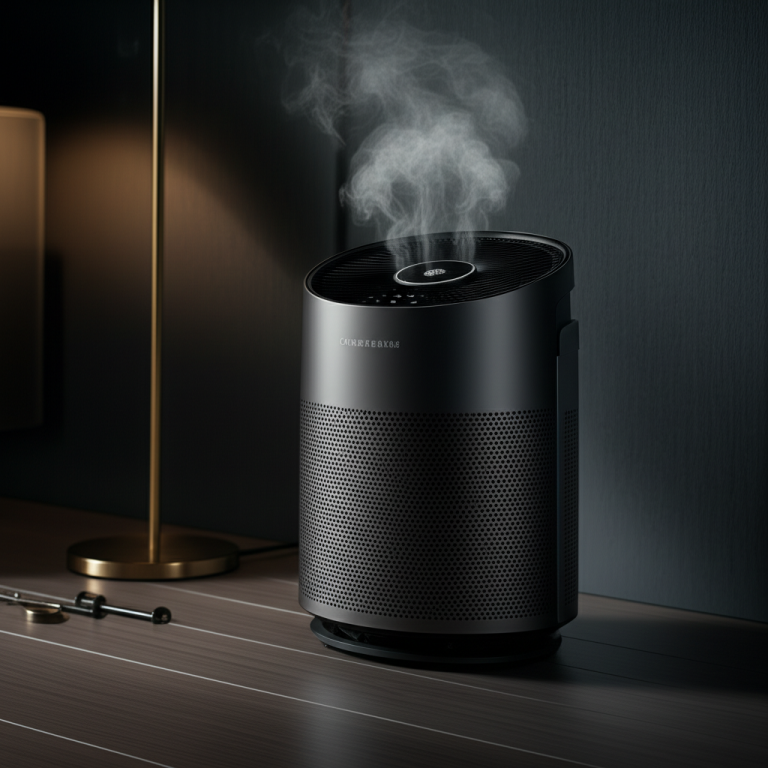
Top Air Purifiers For Mold Spores: Essential Guide

Breathe Easier: Discover the top air purifiers for mold spores to create a healthier home environment. This guide helps you choose the best solution to combat mold and improve your indoor air quality.
Mold can be a real nuisance in any home. It can grow in damp places like bathrooms, kitchens, and basements. Mold spores are tiny and can float in the air. Breathing them in can cause allergies and other health problems for some people. Dealing with mold spores in your air is important for a healthy living space. This guide will help you find the best air purifiers to tackle mold spores effectively. We’ll explore what to look for and which models stand out.
Why Mold Spores in Your Air Matter
Mold spores are microscopic particles that mold releases into the air. They are a natural part of our environment but can become a problem indoors. High levels of mold spores can trigger allergies, asthma symptoms, and other respiratory issues. Identifying and removing the source of mold is crucial, but an air purifier can significantly help manage airborne spores. It acts as a vital tool for cleaner indoor air, especially in damp or humid conditions.
Snippet-Ready Answer: Air purifiers help by trapping mold spores as they circulate through your home’s air. This reduces the number of spores you breathe, which can lessen allergy symptoms and improve overall indoor air quality. They are especially useful in areas prone to mold growth.
Understanding Mold Spores and Air Purifiers
Mold needs moisture, food (organic material), and the right temperature to grow. When it grows, it releases spores that travel through the air. Air purifiers work by drawing in room air and passing it through filters. These filters capture particles, including mold spores, preventing them from recirculating. A good air purifier for mold spores needs effective filtration to catch these tiny particles.
How Air Purifiers Capture Mold Spores
Air purifiers use different types of filters. The most important for mold spores is a HEPA filter. HEPA stands for High-Efficiency Particulate Air. These filters are designed to capture at least 99.97% of airborne particles that are 0.3 microns in size. Since mold spores are often larger than this, a HEPA filter is very effective at trapping them. Some purifiers also use activated carbon filters to remove odors that mold can produce.
Key Takeaway: HEPA filters are essential for capturing mold spores, removing at least 99.97% of particles 0.3 microns and larger.
Key Features to Look For in an Air Purifier for Mold
When choosing an air purifier to combat mold spores, several features are critical. You want a unit that can effectively clean the air in your specific room size. Look for a strong filtration system, particularly a True HEPA filter. Consider noise levels, energy efficiency, and any extra features like air quality sensors or timers. The Clean Air Delivery Rate (CADR) is also important for measuring how quickly it cleans the air.
True HEPA Filtration: The Gold Standard
A “True HEPA” filter is certified to meet strict standards for particle removal. This means it will effectively capture mold spores, dust, pollen, and pet dander. Avoid purifiers that claim “HEPA-like” or “HEPA-type” filters, as these do not perform as well. Always check the product specifications to confirm it has a True HEPA filter. This is the most crucial feature for tackling mold spores.
Activated Carbon for Odor Control
Mold can create musty, unpleasant odors. While HEPA filters capture the spores themselves, activated carbon filters absorb these smells. Many air purifiers combine a HEPA filter with an activated carbon pre-filter. This dual approach not only removes mold spores but also neutralizes the odors associated with them, leading to fresher-smelling air.
CADR: How Fast It Cleans
The Clean Air Delivery Rate (CADR) tells you how quickly an air purifier can clean a room. It’s measured for three pollutants: dust, pollen, and smoke. A higher CADR means faster air cleaning. For mold spores, look for a CADR rating that matches or exceeds your room size. Manufacturers often recommend a CADR suitable for specific square footage.
Room Size Coverage
Air purifiers are rated for specific room sizes, usually in square feet. It’s important to choose a purifier that can handle the size of the room where you plan to use it. Using a purifier that is too small for the space will be less effective. For larger rooms or open-plan living areas, you might need a more powerful unit or consider multiple purifiers.
Top Air Purifiers for Mold Spores: Our Top Picks
After extensive research, I’ve identified several top air purifiers that excel at removing mold spores. These models offer robust filtration, efficient performance, and user-friendly features. They are designed to tackle airborne contaminants effectively, providing a healthier environment for your family.
1. Coway Airmega AP-1512HH Mighty
The Coway Airmega AP-1512HH Mighty is a highly-rated air purifier known for its effectiveness and value. It features a multi-stage filtration system, including a True HEPA filter and an activated carbon filter. Its smart features, like an air quality sensor and auto mode, make it easy to use. This model is excellent for medium-sized rooms.
Key Features:
True HEPA filter
Activated carbon filter
Smart air quality sensor
Energy efficient
Pros:
Effective mold spore removal
Quiet operation
Good value for the price
Cons:
Filter replacement can be costly over time
This unit consistently performs well in tests for capturing fine particles. Its ability to monitor air quality and adjust fan speed automatically ensures continuous protection against mold spores.
2. Levoit Core 300S Smart True HEPA Air Purifier
Levoit’s Core 300S is a popular choice for its compact size and smart capabilities. It uses a three-stage filtration system: a pre-filter, a True HEPA filter, and an activated carbon filter. It’s ideal for smaller to medium rooms, like bedrooms or home offices. The accompanying app allows for remote control and scheduling.
Key Features:
True HEPA filter
3-stage filtration
Wi-Fi enabled with VeSync app
Quiet sleep mode
Pros:
Affordable
Effective for its size
Smart controls are convenient
Cons:
Best suited for smaller rooms
The Levoit Core 300S is a great entry-level option for targeting mold spores in personal spaces. Its quiet operation ensures it won’t disturb your sleep.
3. Winix 5500-2 Air Purifier
The Winix 5500-2 is a versatile air purifier that uses a True HEPA filter, an activated carbon filter, and Winix’s PlasmaWave technology. It’s designed for medium to large rooms. The PlasmaWave feature can be turned off if preferred, but it helps break down airborne pollutants. It also includes an auto mode and air quality sensor.
Key Features:
True HEPA filter
Washable carbon filter
PlasmaWave technology
Auto mode and air quality sensor
Pros:
Handles larger spaces well
Effective multi-stage filtration
Includes a washable pre-filter
Cons:
PlasmaWave can produce ozone (though minimal and can be disabled)
This model offers a comprehensive approach to air purification, making it a strong contender for homes with mold concerns. Its ability to cover larger areas is a significant advantage.
4. Blueair Blue Pure 211+ Auto
The Blueair Blue Pure 211+ Auto is known for its sleek design and high performance. It uses a combination of mechanical and electrostatic filtration called HEPASilent technology, which achieves HEPA-equivalent performance. It also features a washable fabric pre-filter in various colors. This purifier is suitable for medium to large rooms.
Key Features:
HEPASilent filtration technology
Washable fabric pre-filter
Auto mode and air quality sensor
Low energy consumption
Pros:
High air cleaning capacity
Stylish design
Very quiet
Cons:
Proprietary filter technology may require specific replacements
Blueair purifiers are designed for efficiency and quiet operation, making them a good choice for continuous use in living areas.
5. Honeywell HPA300 True HEPA Air Purifier
The Honeywell HPA300 is a robust option for larger rooms. It boasts a True HEPA filter capable of capturing 99.97% of airborne particles. It also has an activated carbon pre-filter to help reduce odors. This purifier offers three different air cleaning levels and a turbo setting for quick purification.
Key Features:
True HEPA filter
Activated carbon pre-filter
Multiple fan speeds
Illuminated display with dimmer
Pros:
Excellent for large rooms
Strong performance
Durable build
Cons:
Can be a bit noisy on higher settings
For spaces where mold is a significant concern, the HPA300 provides powerful and reliable air cleaning. Its capacity makes it suitable for main living areas.
How to Maximize Your Air Purifier’s Effectiveness Against Mold
Simply buying an air purifier isn’t enough. To get the best results against mold spores, you need to use it correctly. Regular maintenance and strategic placement are key. Think of it like tending a garden; consistent care yields the best results.
Placement Matters
Place your air purifier in the room where you spend the most time or where mold is a persistent issue. Bathrooms, basements, and bedrooms are common areas. Ensure the unit has adequate space around it for air to circulate freely. Avoid placing it directly against walls or furniture, which can restrict airflow.
Regular Filter Replacement and Cleaning
Air purifiers are only as good as their filters. True HEPA filters need to be replaced regularly, usually every 6-12 months, depending on usage and air quality. Activated carbon filters may need replacing more often. Some pre-filters are washable, which can extend the life of the main filters. Always follow the manufacturer’s recommendations for filter maintenance.
Address the Moisture Source
An air purifier is a tool for managing airborne mold spores, not a cure for mold growth. It’s crucial to identify and fix the source of moisture that allows mold to grow. This could involve repairing leaks, improving ventilation, or using dehumidifiers. Without addressing the moisture, mold will continue to grow, and the air purifier will be working harder than it needs to.
Understanding Air Purifier Specifications for Mold Control
When comparing models, understanding the technical details helps you make an informed choice. Key specifications relate to how well the purifier can capture mold spores and clean your air.
HEPA Standards Explained
The “True HEPA” standard is defined by the U.S. Department of Energy. It requires filters to remove at least 99.97% of airborne particles 0.3 micrometers (µm) in diameter. Mold spores can range in size from 1 to 20 µm. Therefore, a True HEPA filter is highly effective at capturing most mold spores.
Particle Size and Mold Spores
Mold spores are relatively large compared to other airborne particles like bacteria or viruses. Their size variation means that a good HEPA filter is your best defense. While some purifiers might claim to capture even smaller particles, the 0.3 µm threshold of HEPA is a practical and effective benchmark for mold spore capture.
CADR Ratings for Mold
As mentioned, CADR ratings indicate cleaning speed. For mold spore control, a higher CADR is generally better, especially in larger rooms. Look for a CADR rating that is appropriate for the square footage of your space. For example, a room of 300 sq ft might benefit from a purifier with a CADR of at least 200 for dust and pollen.
ACH (Air Changes Per Hour)
Another important metric is ACH, which represents how many times the air in a room is filtered by the purifier in one hour. For effective mold spore control, aim for an air purifier that provides at least 4-5 ACH for the room size. This ensures the air is being cleaned frequently.
Comparing Air Purifier Technologies for Mold Spores
Different air purifiers use various technologies. Understanding these can help you choose the most suitable one for your needs.
HEPA Filters vs. Other Technologies
True HEPA Filters: Mechanically trap particles. Highly effective for mold spores.
Activated Carbon Filters: Absorb gases and odors. Good for mold smells.
Ionizers: Release negative ions to charge particles, making them clump and fall. Can produce ozone, a lung irritant. Not ideal for sensitive individuals or those with mold allergies.
UV-C Light: Kills airborne microorganisms. Less effective against mold spores directly unless air is exposed for a long time.
* Ozone Generators: Intentionally produce ozone. Not recommended for occupied spaces due to health risks.
For mold spore removal, a combination of True HEPA and activated carbon is generally the safest and most effective approach.
Table: Air Purifier Technologies and Their Effectiveness Against Mold Spores
| Technology | How it Works | Effectiveness Against Mold Spores | Potential Downsides | Recommended for Mold? |
| :—————– | :—————————————————– | :——————————– | :———————————————— | :——————– |
| True HEPA | Mechanically traps particles (≥99.97% of 0.3 µm) | High | Requires filter replacement | Yes, Highly |
| Activated Carbon | Adsorbs gases and odors | Indirect (removes mold smells) | Does not capture spores | Yes, for Odors |
| Ionizers | Charges particles to clump and fall | Moderate (can help with settling) | Potential ozone production, can re-contaminate surfaces | No, with Caution |
| UV-C Light | Uses UV light to kill microorganisms | Low to Moderate | Requires long exposure, doesn’t capture spores | No, as Primary |
| Ozone Generators | Intentionally produces ozone | High (but harmful) | Health risks, damages materials | No, Never |
Based on this, a purifier with a True HEPA filter is your primary weapon against mold spores.
When to Consider Professional Mold Remediation
While air purifiers are excellent for managing airborne mold spores, they cannot remove mold that is actively growing on surfaces. If you have visible mold growth, especially in large areas or if you suspect it’s behind walls, it’s time to call a professional. Professionals have the tools and expertise to safely remove mold and address the underlying moisture issues. According to the Environmental Protection Agency (EPA), you should consider professional help if mold covers more than 10 square feet or if you have health concerns.
Frequently Asked Questions About Air Purifiers for Mold Spores
Here are answers to some common questions about using air purifiers to combat mold spores.
Can an air purifier kill mold?
No, an air purifier cannot kill mold. It works by trapping airborne mold spores in its filters. You still need to address the moisture source and clean visible mold from surfaces.
How often should I run my air purifier for mold spores?
For best results, run your air purifier continuously, especially in rooms prone to mold. Many models have an auto mode that adjusts fan speed based on air quality.
Do I need a special type of air purifier for mold?
Look for an air purifier with a True HEPA filter. This is the most critical feature for effectively capturing mold spores. Activated carbon filters are also helpful for removing mold odors.
How do I know if my air purifier is working for mold?
You’ll likely notice a reduction in musty odors and potentially fewer allergy symptoms. While you can’t see the spores being trapped, consistent use and regular filter checks are good indicators.
Can air purifiers help with black mold?
Yes, any air purifier with a True HEPA filter can help capture airborne spores from all types of mold, including black mold. However, it will not remove the mold from surfaces.
What is the best room size for an air purifier?
Air purifiers are rated for specific square footage. Always choose a model that matches or slightly exceeds the size of the room you intend to use it in for optimal performance.
Conclusion: Breathe Freely with the Right Air Purifier
Managing mold spores in your home is essential for a healthy living environment. By choosing one of the top air purifiers for mold spores with a True HEPA filter, you can significantly improve your indoor air quality. Remember to place your purifier strategically, maintain its filters, and always address the root cause of moisture that allows mold to grow. With the right air purifier and good home maintenance practices, you can create a cleaner, healthier space for you and your family to enjoy.
Ready to take control of your indoor air? Explore our guide to improving home ventilation for more tips on creating a mold-free environment.