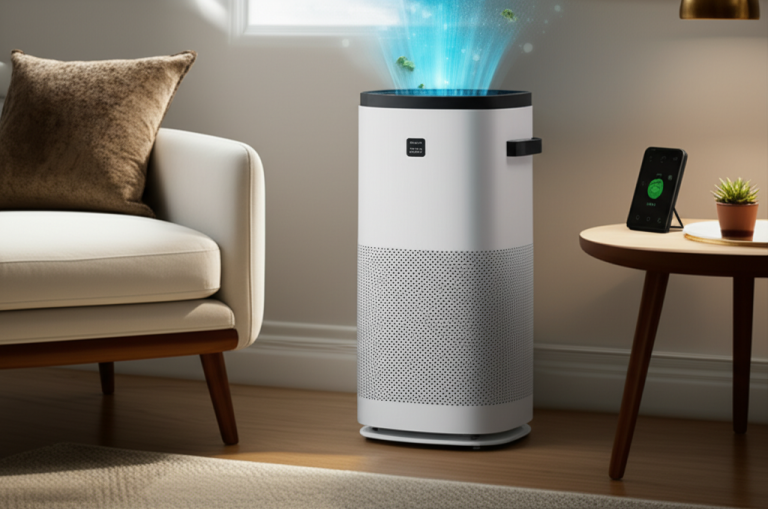
Top Activated Carbon Air Purifiers: Essential Guide

Discover the top activated carbon air purifiers to effectively tackle odors, VOCs, and common airborne irritants for cleaner, fresher indoor air. This essential guide breaks down what to look for and recommends leading models for every need.
Breathing clean air at home is more important than ever. Many homes battle everyday smells from cooking, pets, or even lingering cleaning product fumes. These odors can make your living space feel less comfortable. You might also worry about invisible pollutants like Volatile Organic Compounds (VOCs) from furniture or paints. Fortunately, activated carbon air purifiers are a fantastic solution for these issues. They work like magic sponges for bad smells and certain gasses. This guide will help you understand how they work and find the best ones for your home.
Why Activated Carbon Air Purifiers Are a Must-Have
Activated carbon air purifiers are essential for homes seeking to eliminate odors and harmful gases. Unlike HEPA filters that capture particles, activated carbon specifically targets gaseous pollutants. This makes them uniquely effective for common household issues like cooking smells, pet odors, and volatile organic compounds (VOCs). Investing in one can significantly improve your home’s air quality and overall comfort.
The effectiveness of activated carbon lies in its porous structure. This structure provides a vast surface area for adsorption, where gas molecules stick to the carbon. This process is highly efficient at trapping odor-causing compounds and VOCs, which often bypass standard particle filters.
Understanding How Activated Carbon Works
Activated carbon is essentially charcoal that has been treated to be extremely porous. Think of it like a sponge with millions of tiny holes. These holes are perfect for trapping gas molecules that cause odors and other airborne chemicals. When air passes through the activated carbon filter, these molecules get stuck to the carbon’s surface. This process is called adsorption.
This adsorption is a physical process, not a chemical reaction. The carbon doesn’t break down the pollutants; it simply holds onto them. This makes it incredibly effective for a wide range of odors and gases.
The Science Behind Adsorption

Adsorption is the key mechanism. The vast internal surface area of activated carbon, often measured in hundreds or even thousands of square meters per gram, attracts and holds gas molecules. This happens due to Van der Waals forces, weak attractions between molecules. The more porous the carbon, the greater its capacity to adsorb pollutants.
This science means that even small amounts of activated carbon can filter a significant volume of air. It’s a powerful, passive way to clean the air you breathe.
Key Features to Look for in Top Activated Carbon Air Purifiers
When choosing a top activated carbon air purifier, several features matter. You want a unit that effectively removes odors and gases for your specific needs. Look for the amount of activated carbon, the type of filter system, and the purifier’s coverage area. The size of the carbon filter is often more important than the brand name.
Consider the fan speed settings, noise levels, and any smart features like air quality sensors. These all contribute to the overall user experience and effectiveness.
Filter Quality and Quantity
The amount and quality of activated carbon in a purifier are crucial. More carbon generally means longer filter life and better odor removal. Some purifiers use a thin layer, while others have a substantial bed of carbon pellets. Look for purifiers that specify the weight or thickness of their carbon filter.
High-quality activated carbon, often derived from coconut shells or wood, offers superior adsorption. This ensures that odors and VOCs are captured effectively.
Coverage Area (CADR and Room Size)
Ensure the air purifier is rated for the size of your room. This is often indicated by the Clean Air Delivery Rate (CADR). A higher CADR means the purifier cleans the air faster. Check the manufacturer’s recommended room size for optimal performance.
Using a purifier that’s too small for your space won’t be effective. It will run constantly without significantly improving air quality. Always match the purifier’s capacity to your room dimensions.
Noise Levels and Fan Speeds
Consider how much noise the air purifier makes. Lower decibel (dB) ratings are better, especially for bedrooms or offices. Most purifiers offer multiple fan speeds, allowing you to adjust the cleaning power and noise level. A quiet mode is often available for nighttime use.
You want a purifier that cleans effectively without being disruptive. Check reviews for real-world noise level feedback.
Additional Filtration Layers
Many top activated carbon air purifiers include other filter types. A pre-filter captures larger particles like dust and pet hair, extending the life of the carbon and HEPA filters. A true HEPA filter captures 99.97% of airborne particles down to 0.3 microns, such as pollen, mold spores, and bacteria.
This multi-stage filtration offers comprehensive air cleaning. It addresses both particles and gases for a healthier environment.
Top Activated Carbon Air Purifier Models for Every Need
Selecting the right activated carbon air purifier depends on your specific requirements. Here are some of the top-rated models known for their performance in odor and VOC removal. These options cater to different room sizes and budgets.
I’ve personally found that models with substantial carbon filters offer the best long-term value. They require less frequent filter replacements.
Best Overall: Coway Airmega 200M
The Coway Airmega 200M is a popular choice for its excellent performance and balanced features. It boasts a substantial activated carbon filter combined with a True HEPA filter. This combination effectively tackles odors, VOCs, and fine particles. Its coverage area is suitable for medium to large rooms.
This model often receives high marks for its durable construction and user-friendly interface. The automatic mode adjusts fan speed based on detected air quality.
Best for Large Rooms: Levoit Core 300S Smart True HEPA Air Purifier
For larger spaces, the Levoit Core 300S is a strong contender. It features a three-stage filtration system, including a high-efficiency activated carbon filter. It’s known for its quiet operation on lower settings and its ability to handle significant odors. The smart features allow for app control and scheduling.
Its cylindrical design maximizes air intake from all directions. This ensures efficient air circulation throughout the room.
Best Budget-Friendly: Winix 5500-2 Air Purifier
The Winix 5500-2 is a highly recommended option for those on a budget. It includes a washable fine mesh pre-filter, an activated carbon filter, and a True HEPA filter. It also features Winix’s PlasmaWave technology, which can be turned on or off. This purifier is effective for medium-sized rooms.
Its auto mode and air quality sensor make it easy to use. It provides great value for its price point.
Best for Pet Owners: Blueair Blue Pure 211+ Auto
The Blueair Blue Pure 211+ Auto is designed with a large, washable fabric pre-filter that’s excellent for capturing pet hair. Beneath that, it uses a combination of a particle filter and an activated carbon filter. This makes it very effective against pet odors and dander. Its simple, one-button control is very user-friendly.
This unit is known for its high CADR and quiet operation. It’s a stylish addition to any home.
Best Smart Features: Dyson Purifier Cool Formaldehyde TP07
While Dyson purifiers are a premium option, they offer advanced technology. The Dyson Purifier Cool TP07 includes a HEPA and activated carbon filter to capture gases and particles. Its unique feature is the ability to detect and capture formaldehyde specifically. The app control and detailed air quality reporting are top-notch.
This model also functions as a cooling fan. It’s a versatile appliance for those seeking advanced air purification.
Comparison of Top Activated Carbon Air Purifier Models
Here’s a quick look at how some of these top activated carbon air purifiers compare:
| Feature | Coway Airmega 200M | Levoit Core 300S | Winix 5500-2 | Blueair Blue Pure 211+ Auto | Dyson TP07 |
| :—————- | :—————– | :————— | :———– | :————————– | :——— |
| Room Size (sq ft) | Up to 361 | Up to 500 | Up to 360 | Up to 540 | Up to 360 |
| Filter Type | Carbon + HEPA | Carbon + HEPA | Carbon + HEPA | Carbon + Particle | Carbon + HEPA + Formaldehyde |
| Key Strength | Overall Balance | Large Rooms, Smart | Budget, Value | Pet Odors, Style | Formaldehyde, Smart |
| Noise Level (dB) | 24.4 – 53.8 | 24 – 50 | 28 – 55 | 31 – 56 | 30 – 62 |
This table highlights key differences to help you make an informed decision. Remember that CADR ratings and specific filter technologies can vary.
How to Maximize the Effectiveness of Your Purifier
To get the most out of your activated carbon air purifier, follow a few simple steps. Proper placement and regular maintenance are key. Ensure the unit is running when you need it most, especially during activities that generate odors.
Keeping your purifier running efficiently ensures you always have the cleanest air possible. It also helps extend the life of the filters.
Optimal Placement in Your Home
Place your air purifier in the room where you spend the most time or where air quality issues are most prominent. Avoid placing it directly against walls or furniture, as this can block airflow. Aim for a central location in the room for best circulation. This allows the air to be drawn in and filtered from all sides.
Good airflow is essential for the purifier to effectively clean the entire room’s air. Don’t hide it away in a corner.
Filter Maintenance and Replacement Schedule
Activated carbon filters have a lifespan and need replacement. Follow the manufacturer’s recommendations for filter changes. This is usually every 6-12 months, depending on usage and air quality. Some purifiers have filter indicator lights to remind you.
Neglecting filter replacement significantly reduces the purifier’s ability to remove odors and gases. A clogged filter also makes the unit work harder, using more energy.
Understanding VOCs and Odor Sources
Volatile Organic Compounds (VOCs) are gases emitted from many common household products. These include paints, cleaning supplies, air fresheners, and new furniture. Activated carbon is excellent at adsorping these types of pollutants. Identifying sources of strong odors, like pet areas or kitchens, helps you target purification efforts.
By understanding what you’re trying to remove, you can better appreciate the role of activated carbon. It’s a crucial component for a truly fresh-smelling home.
Frequently Asked Questions About Activated Carbon Air Purifiers
Here are answers to common questions about using activated carbon air purifiers.
What kind of pollutants does activated carbon remove?
Activated carbon is best at removing odors, gases, and Volatile Organic Compounds (VOCs). This includes smells from cooking, pets, smoke, and chemicals released from household products. It does not effectively capture microscopic particles like dust or pollen; that’s what HEPA filters are for.
How often do activated carbon filters need to be replaced?
This varies by model and usage, but typically every 6 to 12 months. Heavily polluted environments or constant use may require more frequent replacement. Always check your purifier’s manual for specific recommendations.
Can an activated carbon air purifier remove smoke smell?
Yes, activated carbon is highly effective at adsorbing smoke odors, whether from cooking, fireplaces, or tobacco. For heavy smoke, a purifier with a substantial carbon filter and a True HEPA filter is recommended.
Are activated carbon air purifiers noisy?
Noise levels vary by model and fan speed. Most purifiers have multiple speed settings, with lower speeds being very quiet. Higher speeds are louder but clean the air more quickly. Look for models with low decibel ratings if noise is a concern.
Do I need a HEPA filter if I have an activated carbon filter?
It’s best to have both. Activated carbon tackles gases and odors, while a True HEPA filter captures fine airborne particles like dust, pollen, mold spores, and bacteria. A combination system provides the most comprehensive air purification.
How much activated carbon is enough?
More activated carbon is generally better. Look for purifiers that specify the weight or thickness of their carbon filter. A thicker, denser carbon bed will last longer and adsorb more effectively than a thin layer.
Can activated carbon air purifiers remove formaldehyde?
Some activated carbon filters can adsorb formaldehyde, but their effectiveness can be limited, especially with high concentrations. Specialized filters or purifiers designed specifically to target formaldehyde, like some Dyson models, may be more effective.
Conclusion
Choosing from the top activated carbon air purifiers means investing in a fresher, healthier home environment. These devices are your allies against stubborn odors and invisible VOCs. By understanding how activated carbon works and what features to prioritize, you can confidently select a unit that meets your needs. Whether you’re dealing with pet smells, kitchen fumes, or general stuffiness, a good activated carbon air purifier can make a significant difference.
Consider the amount of carbon, room coverage, and additional filters when making your choice. Regular maintenance ensures your purifier continues to perform at its best. Enjoy the peace of mind that comes with breathing cleaner, odor-free air in your sanctuary.