
How Do I Stop My Vacuum From Smelling?

Quick Answer
To stop your vacuum from smelling, empty the bag or dust bin, remove trapped hair and food debris, check the hose, and clean or replace the filters according to the manufacturer’s instructions. Let every washable part dry completely before reinstalling it. If you notice burning, smoke, unusual heat, or an electrical odor, stop using the machine and check the CPSC recall database before troubleshooting further.
Quick steps to remove the smell
- Disconnect power: Unplug the vacuum or remove its battery when the design allows.
- Empty the debris: Replace a smelly bag or empty and wipe the dust bin.
- Check the filters: Clean only filters labeled as washable and replace disposable filters when required.
- Clear the airflow: Inspect the hose, wand, floor head, and brush roll for trapped material.
- Dry everything: Never reinstall a washable filter or bin while it still feels damp.
- Test carefully: Run the vacuum briefly only after ordinary odor sources have been removed.
A smelly vacuum cleaner usually has an odor source somewhere in its collection or airflow system. In everyday home hygiene, I find old debris, pet hair, damp filters, and clogged brush rolls cause far more odor problems than the room itself.
The smell also gives you useful clues. I use this smell-first approach because it prevents unnecessary disassembly and helps separate routine cleaning problems from potentially unsafe ones.
In This Guide
Why Does My Vacuum Smell Bad?
A vacuum smells bad when debris, moisture, dirty filtration components, or overheating parts release odors into the machine’s airflow. The exhaust then carries that smell back into the room.
A vacuum odor is an unwanted smell created or collected inside the vacuum’s bin, bag, filters, hose, floor head, brush roll, motor area, or battery system.
As of 2026, I still start by identifying the smell rather than reaching for a deodorizer. A musty smell needs a different response from burning rubber.
| Smell | Likely area | First action | Safety level |
|---|---|---|---|
| Dusty or stale | Bag, bin, filter | Empty debris and inspect filters | Usually routine cleaning |
| Pet-like or sour | Brush roll, bin, hose | Remove organic debris | Usually routine cleaning |
| Musty | Filter, bin, hose | Find moisture and dry washable parts | Investigate persistent moisture |
| Burning rubber | Brush roll, belt | Switch off and unplug | Needs inspection before reuse |
| Hot plastic or electrical | Motor, battery, wiring | Stop using immediately | Potential safety problem |
Pet hair can be especially stubborn because it carries skin oils, dust, and whatever the animal picked up around the home. Hair wrapped around the brush roll can also hide debris where you rarely look.
Food crumbs create another recognizable problem. A few damp crumbs inside a warm dust bin can smell surprisingly strong after sitting for several days.
Mustiness usually makes me check for moisture first. One of the worst vacuum odors I’ve encountered came from a washable filter that felt dry on its surface but was still damp deeper inside.
Section Takeaway: The odor type is your fastest diagnostic clue. Find the source before trying to cover the smell.
How Do I Stop My Vacuum From Smelling?
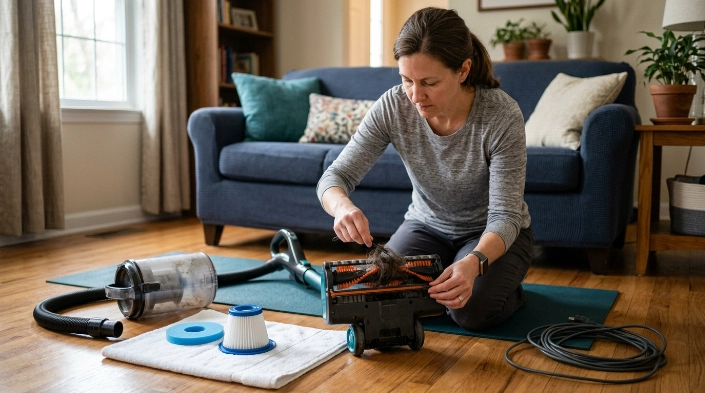
The most reliable fix is a complete source-removal cleaning. You want to remove the material producing the odor, not perfume the exhaust.
1. Disconnect the vacuum from power
Unplug a corded vacuum before touching its brush roll, belt area, hose, or filters. For cordless models, remove the battery first when the manufacturer allows it.
2. Empty the bag or dust bin
Take a bagless vacuum outside if practical and empty the container there. This reduces the amount of loose dust released back into the room.
If your machine uses disposable bags, replace a bag that smells sour, stale, or pet-like. Don’t try to wash a disposable vacuum bag.
3. Inspect the brush roll and floor head
Cut away hair, thread, string, and fibers using a suitable tool. Check the roller ends because compressed hair often collects around them.
- Pet odor: Look for hair packed around the roller and wheels.
- Sour odor: Look for crumbs or other organic debris.
- Hot-rubber odor: Look for a stalled brush or damaged belt.
4. Check the hose and wand
Remove the hose according to your manual and look through it toward a light source. A hidden wad of pet hair can hold crumbs and moisture for weeks.
Use only manufacturer-approved methods to clear a blockage. Sharp improvised tools can puncture flexible hoses.
5. Service the filters correctly
Some vacuum filters are washable, while others must stay dry. Follow the instructions for your exact model rather than assuming every foam or HEPA filter can be rinsed.
A HEPA filter is designed for fine-particle filtration. That doesn’t make it a deodorizer, and a dirty filter can still contribute to stale airflow.
The EPA explains that particle filtration and gas or odor control are different functions in household air cleaning. Source control also remains important, so removing contaminated debris matters more than simply masking its smell with fragrance.
You can review the EPA’s broader explanation of home air cleaners and filters for that distinction.
6. Let washable parts dry completely
Give washed bins and washable filters enough time to become dry throughout. Don’t judge only by the surface.
I prefer giving a filter more drying time rather than reinstalling it early. Putting moisture back into an enclosed airflow path can bring the musty smell straight back.
Section Takeaway: Empty, inspect, clean, and dry the vacuum in that order. If you skip the hidden hose or brush-roll debris, the odor may return immediately.
Which Vacuum Parts Should I Clean?
Focus on every removable component that touches dirty airflow. The exact cleaning method depends on your vacuum’s manual.
- Dust bin: Empty frequently and wipe or wash it only if the manufacturer allows.
- Vacuum bag: Replace disposable bags instead of washing or deodorizing them.
- Pre-filter: Remove loose dust and wash only if labeled washable.
- HEPA or exhaust filter: Follow the model-specific replacement or cleaning instructions.
- Brush roll: Remove hair, thread, and fibers from the bristles and roller ends.
- Floor head: Check narrow channels where damp dirt or crumbs may collect.
- Hose: Inspect for blockages and trapped organic debris.
- Attachments: Clean tools used on upholstery, pet beds, stairs, and food-prone areas.
Don’t pour water through a hose unless your manual specifically says the hose can be washed. Some designs contain electrical connections or materials that aren’t intended to become wet.
I also inspect seals while everything is apart. A badly seated filter or dust-bin seal can change airflow and allow dusty exhaust to escape around the filtration system.
Should I Put Deodorizers Inside My Vacuum?
Don’t add powders, sprays, oils, or fragrances to a vacuum unless its manufacturer specifically permits them. Odor masking is not the same as removing the odor source.
Baking soda is a common household deodorizer, but that doesn’t automatically make it suitable for every vacuum. Fine powders can place extra load on filters and may behave differently across vacuum designs.
I avoid spraying fragrance onto filters for the same reason. A wet or oily filter can collect dirt differently, and liquid should never be introduced near motors, batteries, or electrical parts.
What about activated carbon?
Activated carbon is a porous material used in some filters to adsorb certain gases and odors. If your vacuum was designed for a carbon filter, use the correct replacement specified for that model.
Adding loose charcoal or another homemade material is different. Stick with parts designed for the machine.
- Good strategy: Remove dirty debris and maintain approved filters.
- Poor strategy: Cover a sour smell with perfume.
- Risky strategy: Put liquids, oils, or unapproved powders into the airflow path.
How Can I Prevent Vacuum Odors?
Preventing smells is easier than rescuing a vacuum after months of dirty buildup. Most of my routine is simple airflow and debris management.
- Empty sooner: Don’t leave pet hair, food crumbs, and dirt sitting in the bin for long periods.
- Replace bags on time: Follow the vacuum manufacturer’s fill guidance.
- Remove roller hair: Check the brush after cleaning hair-heavy rooms.
- Inspect filters: Follow the recommended cleaning and replacement schedule.
- Keep dry debris dry: Don’t vacuum wet material with a standard dry vacuum.
- Check the hose: Investigate quickly when suction drops or the exhaust begins smelling stale.
- Store the vacuum dry: Avoid leaving damp washable components inside the machine.
Homes with pets may need more frequent attention because fur accumulates quickly. Kitchens and dining areas also deserve extra care because food debris can produce sour odors.
If household dust is your concern, don’t judge filtration by smell alone. A vacuum can smell fine while still needing filter maintenance.
Section Takeaway: A short maintenance routine after messy jobs prevents most recurring vacuum odors. Keep organic debris and moisture from sitting inside the machine.
When Is a Vacuum Smell a Warning Sign?
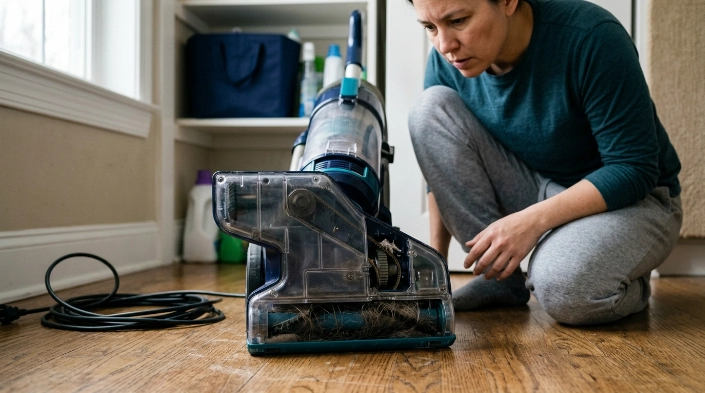
Burning rubber, melting plastic, electrical odors, smoke, sparks, or abnormal battery heat aren’t ordinary cleaning smells. Stop using the vacuum and disconnect it from power.
A rubbery smell may come from a jammed brush roll or slipping belt. Hair and thread can stop the roller while the drive system continues trying to move it.
A sharp electrical or melting-plastic odor requires more caution. Don’t repeatedly restart the machine to see whether the problem disappears.
Expert Alert: If the smell appears to come from the motor, wiring, plug, charger, or battery, have the vacuum checked by a qualified repair professional rather than opening electrical components yourself.
What if the smell is musty?
A musty vacuum doesn’t automatically mean you have a mold problem. First check for a damp filter, wet debris, or moisture trapped inside washable components.
If the musty odor also exists in the room, carpet, wall, or storage area, investigate the moisture source. The CDC’s mold guidance explains that mold growth is associated with moisture and recommends correcting the moisture problem when mold is present.
The EPA’s home mold cleanup guidance says homeowners can generally handle smaller mold areas of less than about 10 square feet, while larger or complicated problems may require more specialized help.
Expert Alert: Call a qualified mold-remediation or water-damage professional for extensive growth, major water damage, sewage contamination, or a moisture problem you can’t locate or safely correct.
Frequently Asked Questions
Why does my vacuum smell even after I empty it?
The odor may be coming from the filter, hose, brush roll, floor head, or attachments instead of the dust bin. Inspect the entire airflow path and look for damp material, pet hair, crumbs, or a filter that needs service.
Why does my vacuum smell like a wet dog?
Pet hair, dander, skin oils, and moisture can collect in the bin, brush roll, and filters. Remove accumulated hair, clean approved components, and make sure any washable parts are completely dry before reassembly.
Can a dirty filter make my vacuum smell?
Yes. A filter can hold dust, organic debris, and sometimes moisture, all of which may contribute to stale or musty exhaust. Clean or replace the filter according to your model’s instructions rather than automatically washing it.
Why does my vacuum smell musty after I wash the filter?
The filter may still contain moisture internally even when the outside feels dry. Remove it and allow it to dry completely for the period specified by the manufacturer before reinstalling it.
Is a burning smell from a vacuum dangerous?
It can be. A burning smell may come from a stalled brush, slipping belt, overheating component, battery problem, or electrical fault. Switch the vacuum off, disconnect power, and don’t restart it if you see smoke, sparks, melting, or abnormal heat.
Can I spray air freshener into my vacuum?
I wouldn’t unless the manufacturer specifically approves that method. Sprays introduce liquid and fragrance chemicals into the airflow system, while the original odor source remains inside the machine.
How often should I clean my vacuum to prevent smells?
There’s no single interval that fits every machine or household. Empty debris before it becomes packed, remove brush-roll hair regularly, and follow your vacuum manufacturer’s schedule for filter cleaning and replacement.
The simplest way to stop a vacuum from smelling is to remove what is producing the odor. Empty the debris, inspect the filters, clear the brush roll and hose, and keep washable components completely dry.
If the smell is burning, electrical, or accompanied by smoke or unusual heat, treat it as a safety problem instead of a deodorizing problem. That distinction can save both your vacuum and your home from a much bigger issue.
