
Sans vs Shark Air Purifier: Essential Choice

Choosing between Sans and Shark air purifiers means deciding on cleaner air for your home. This guide breaks down their features, performance, and value to help you make the essential choice for your health and comfort.
Breathing clean air at home is super important. Many of us worry about dust, pollen, and other tiny things floating around. Two popular brands that help with this are Sans and Shark. You might be wondering which one is better for your family. It can feel confusing with so many options. This article will walk you through everything you need to know. We’ll compare Sans and Shark air purifiers side-by-side. This will help you pick the best one for your needs.
Sans vs Shark Air Purifier: What’s the Big Difference?
When looking at Sans versus Shark air purifiers, the main difference lies in their core technologies, target features, and price points. Shark often focuses on versatile home cleaning solutions that include air purification as part of a broader product ecosystem. Sans, on the other hand, typically dedicates itself more specifically to air purification, often emphasizing advanced filtration and smart features. Understanding these brand philosophies helps you see why their purifiers are designed differently.
Understanding Air Purifier Technology: HEPA and Beyond
Air purifiers use filters to clean the air. The most common type is a HEPA filter. HEPA stands for High-Efficiency Particulate Air. These filters can capture at least 99.97% of airborne particles that are 0.3 microns in size. This includes things like dust, pollen, pet dander, and mold spores. Some purifiers also use activated carbon filters to remove odors and gases. Others might use UV-C light to kill germs.
How Sans Air Purifiers Work
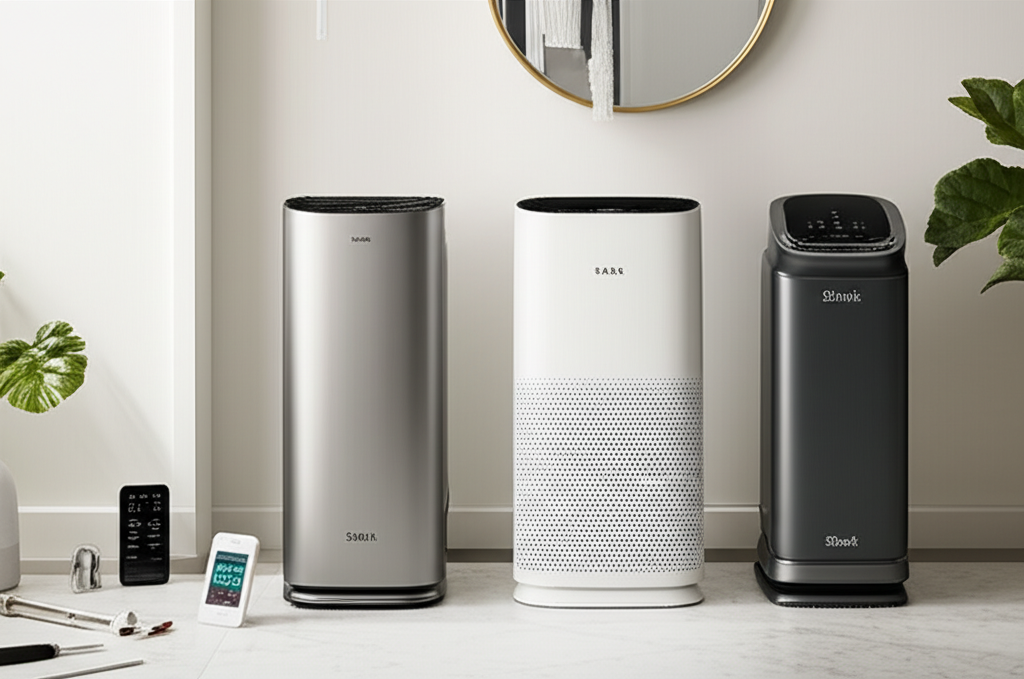
Sans air purifiers often come with multi-stage filtration systems. These typically include a pre-filter, a true HEPA filter, and an activated carbon filter. Some higher-end Sans models might also incorporate technologies like ionizers or UV-C light. They are designed for efficient particle removal and odor control, aiming for comprehensive air cleaning.
How Shark Air Purifiers Work
Shark air purifiers also use HEPA filtration as a core component. Many Shark models integrate their air purification technology into devices that might also offer other functionalities, or they focus on specific room sizes and air quality concerns. They often highlight ease of use and effective performance for common household allergens and pollutants.
Key Features to Compare: Sans vs. Shark
Both Sans and Shark offer air purifiers with various features. When comparing them, consider what matters most to you. This includes the type of filters used, the coverage area, noise levels, and any smart features. Looking at these details will make your decision much clearer.
Filtration Systems: True HEPA vs. Other Technologies
A crucial aspect is the filtration system. Both brands usually feature True HEPA filters, which are excellent for trapping small particles. However, the combination of filters can vary. Sans might offer more specialized carbon filters for odor removal, while Shark could focus on maximizing HEPA efficiency for allergens.
Coverage Area and Room Size Suitability
Air purifiers are rated for specific room sizes. This is often measured in square feet. A purifier designed for a small bedroom won’t be effective in a large living room. Always check the CADR (Clean Air Delivery Rate) for the room size the purifier is intended for. Sans and Shark offer models for different room dimensions.
Noise Levels: Quiet Operation Matters
Air purifiers run continuously, so noise is a big factor. Most purifiers have multiple fan speeds, with the highest speed being the loudest. Look for decibel (dB) ratings, especially for bedroom use. A quiet purifier operates below 50 dB on its lowest setting. Both Sans and Shark aim for user comfort regarding noise.
Smart Features and Connectivity
Some modern air purifiers come with smart features. This can include Wi-Fi connectivity, app control, and air quality sensors. These sensors can automatically adjust the fan speed based on the air quality. Sans and Shark both offer models with varying levels of smart functionality.
Performance Metrics: CADR and Energy Efficiency
Performance is key. The CADR tells you how quickly an air purifier cleans the air. Higher CADR means faster cleaning. Energy efficiency is also important, as purifiers run for long periods. Look for Energy Star certified models.
Understanding CADR Ratings
CADR stands for Clean Air Delivery Rate. It measures how effectively an air purifier removes specific pollutants like smoke, dust, and pollen. A higher CADR value indicates a more powerful and efficient unit for a given room size. It’s a standard measurement to compare different purifiers.
Energy Consumption and Certifications
Air purifiers can impact your electricity bill. Look for models with low wattage. Energy Star certification means a product meets strict energy efficiency guidelines set by the U.S. Environmental Protection Agency. This helps save money and reduce environmental impact. Many Sans and Shark models are designed with energy saving in mind.
Design and Aesthetics: Fit for Your Home
The look of an air purifier matters, especially if it will be in a prominent room. Both Sans and Shark offer different designs. Some are sleek and modern, while others are more compact. Consider where you plan to place the purifier and how it will blend with your decor.
Modern vs. Traditional Designs
Sans often leans towards a minimalist and modern aesthetic. Their purifiers tend to have clean lines and neutral colors that fit well in contemporary homes. Shark, while also offering modern designs, might have a more utilitarian or robust look, reflecting their broader appliance range.
Portability and Footprint
If you plan to move the air purifier between rooms, consider its weight and size. Some models have handles or wheels for easier transport. A smaller footprint is better if you have limited floor space. Both brands offer compact options and larger units.
Cost and Value: Budget Considerations
The price of an air purifier can vary significantly. Sans purifiers might be positioned as premium devices with advanced features, potentially at a higher cost. Shark purifiers can range from budget-friendly to mid-range, often offering good value for their performance. Consider not just the initial purchase price but also the cost of replacement filters.
Initial Purchase Price Comparison
Generally, Sans air purifiers might have a higher entry price due to their specialized focus and advanced technology. Shark offers a wider range of price points, making them accessible to more budgets. It’s important to see what features are included at each price level.
Ongoing Costs: Filter Replacement
Replacement filters are a recurring cost for all air purifiers. True HEPA filters need to be replaced typically every 6 to 12 months, depending on usage and air quality. Carbon filters may need more frequent replacement if odor control is a primary function. Compare the cost and availability of replacement filters for both Sans and Shark models.
User Reviews and Real-World Performance
What do actual users say about Sans and Shark air purifiers? Reading reviews can give you a good idea of how these machines perform in everyday situations. Look for feedback on effectiveness, noise, ease of use, and durability.
What Users Are Saying About Sans
Users often praise Sans for its quiet operation and effective filtration, especially for allergies and asthma. Many appreciate the smart features and the noticeable improvement in air quality. Some find the initial cost higher, but many feel the performance justifies it.
What Users Are Saying About Shark
Shark purifiers are frequently commended for their strong performance and ease of use. Users like how quickly they clear the air and remove odors. The versatility of some Shark models, integrating purification with other functions, is also a plus for many.
Making Your Essential Choice: Sans vs. Shark Air Purifier
Deciding between a Sans and a Shark air purifier depends on your priorities. If you need top-tier, specialized air purification with advanced features and are willing to invest more, Sans might be your choice. If you’re looking for a reliable, versatile air purifier that offers good performance at various price points, Shark is a strong contender.
Consider the specific needs of your home. Do you have severe allergies? Are odors a major concern? How large is the room you need to purify? Answering these questions will guide you to the right brand and model.
Frequently Asked Questions (FAQ)
Q1: Which brand is generally quieter, Sans or Shark air purifiers?
While both brands offer quiet models, Sans often receives slightly more consistent praise for exceptionally quiet operation, particularly on lower settings. Shark also aims for quiet performance, but some users report higher noise levels on their maximum settings.
Q2: Are Sans air purifiers better for allergies than Shark air purifiers?
Both brands use True HEPA filters, which are excellent for capturing allergens like pollen, dust mites, and pet dander. Sans may offer more advanced multi-stage filtration that can be slightly more effective for severe allergy sufferers, but Shark models are also very capable.
Q3: How often do I need to replace filters for Sans and Shark air purifiers?
Filter replacement frequency varies by model and usage, but typically True HEPA filters for both Sans and Shark purifiers need replacement every 6 to 12 months. Activated carbon filters, if present, might need replacement more often, possibly every 3 to 6 months, especially if dealing with strong odors.
Q4: Can I use an air purifier in any room of my house?
Yes, you can use an air purifier in any room. It’s most beneficial in bedrooms where you spend a lot of time sleeping, or in living areas where you relax. Ensure the purifier is rated for the size of the room for optimal performance.
Q5: Do air purifiers use a lot of electricity?
Modern air purifiers, including many Sans and Shark models, are designed to be energy-efficient. Look for Energy Star certification for the best performance with the least electricity usage. They generally consume less power than other common household appliances like refrigerators or air conditioners.
Conclusion: Your Healthier Home Air Awaits
Choosing the right air purifier between Sans and Shark is an investment in your home’s air quality and your well-being. Both brands offer effective solutions, but they cater to slightly different needs and budgets. For specialized, high-performance air purification, Sans often stands out. For reliable, versatile, and often more budget-friendly options, Shark is a compelling choice. Evaluate your specific requirements, such as room size, allergy concerns, and desired features, to make the essential choice that leads to cleaner, fresher air in your home.
Learn more about creating a healthier home environment by exploring our other guides on home air quality monitoring and best humidifiers for allergies.
