Sans vs Molekule Air Purifier: Essential Guide

Comparing Sans vs Molekule Air Purifier is crucial for finding the best clean air solution. This guide breaks down their technology, effectiveness, cost, and user experience to help you choose.
Breathing clean air at home is more important than ever. Many people are looking for air purifiers to help with allergies, dust, and even viruses. Two popular brands that often come up are Sans and Molekule. They both promise to deliver cleaner air, but they use very different methods. Understanding these differences is key to making the right choice for your home and health. Let’s dive in and see which one is the best fit for you.
Sans vs Molekule Air Purifier: What’s the Big Difference?
The core difference between Sans and Molekule air purifiers lies in their purification technology. Sans typically uses HEPA filtration for particles, while Molekule focuses on PECO technology for pollutants. This fundamental difference impacts how they clean your air and what they are best at removing.
Sans air purifiers generally rely on a multi-stage filtration system. This usually includes a pre-filter for larger particles like hair and dust, an activated carbon filter for odors and VOCs, and a True HEPA filter. The HEPA filter is designed to capture at least 99.97% of airborne particles down to 0.3 microns in size. This is a standard and proven method for removing allergens and fine dust.
Molekule, on the other hand, champions its proprietary Photo Electrochemical Oxidation (PECO) technology. This system works differently. Instead of just trapping pollutants, the PECO filter aims to destroy them at a molecular level. As air passes through the filter, it’s exposed to UV-A light and a catalyst, breaking down VOCs, bacteria, and viruses. This approach targets pollutants that traditional HEPA filters may not fully address.
How Sans Air Purifiers Work
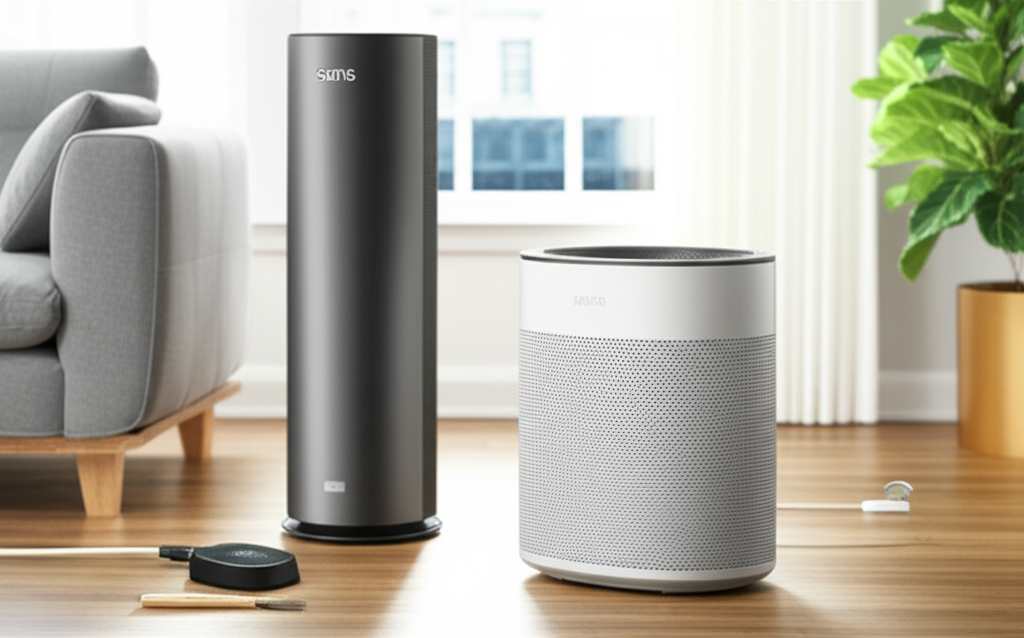
Sans air purifiers use a combination of physical filters to trap airborne particles. This traditional approach is effective against common allergens and dust. They capture pollutants as air passes through their system.
A typical Sans system starts with a pre-filter. This layer catches bigger things like pet hair and large dust bunnies. Next, an activated carbon filter tackles smells from cooking, pets, or smoke. It also helps remove some gases. The final and most crucial stage is the True HEPA filter. This filter is like a very fine net for the air. It catches tiny particles such as pollen, mold spores, and fine dust that you can’t even see.
These filters need to be replaced regularly to keep the purifier working well. The effectiveness of Sans purifiers is well-documented by independent testing standards for HEPA filters. You can find many Sans models that are Energy Star certified, meaning they are energy efficient.
How Molekule Air Purifiers Work
Molekule air purifiers use a unique PECO technology that aims to destroy pollutants. This method targets molecules, breaking them down rather than just trapping them. It’s a different approach to air cleaning.
The PECO filter in Molekule devices is a key component. When air is drawn into the purifier, it passes through this filter. Inside, a UV-A light shines on a special coating. This causes a chemical reaction that breaks down pollutants like VOCs, bacteria, and viruses into harmless substances like CO2 and water. Molekule claims this process also eliminates odors.
Unlike HEPA filters that get clogged with particles, the PECO filter is designed to destroy pollutants. However, the PECO filter itself does require replacement. The science behind PECO technology is still newer compared to HEPA filtration, and its real-world effectiveness against a wide range of pollutants is a subject of ongoing discussion and research.
Filtration Technology Comparison: HEPA vs. PECO
HEPA filtration physically traps particles, while Molekule’s PECO technology aims to destroy pollutants at a molecular level. Each has its strengths and weaknesses in tackling different types of air contaminants.
HEPA Filters (Sans):
Pros: Highly effective at capturing particulate matter like dust, pollen, pet dander, and mold spores. Certified standard (True HEPA). Widely understood and trusted.
Cons: Can get clogged over time, requiring regular replacement. Does not effectively destroy gases, VOCs, or viruses at a molecular level.
PECO Filters (Molekule):
Pros: Aims to destroy VOCs, viruses, and bacteria. Claims to eliminate odors by breaking down molecules. Innovative technology.
Cons: Newer technology, with less independent long-term data compared to HEPA. The effectiveness against a broad spectrum of pollutants is still being studied. PECO filters also need replacement and can be costly.
For a deeper understanding of air filtration standards, you can refer to resources from the Environmental Protection Agency (EPA).
Effectiveness Against Pollutants
Both Sans and Molekule aim to improve air quality, but they excel in different areas. Sans with HEPA is proven for particles, while Molekule targets molecular pollutants.
Sans air purifiers, with their True HEPA filters, are excellent at removing airborne particles. This includes common allergens like pollen and dust mites, which can significantly impact people with allergies or asthma. They also capture pet dander and mold spores, contributing to a healthier home environment. For these types of pollutants, Sans offers reliable and well-established performance.
Molekule’s PECO technology focuses on breaking down pollutants at a molecular level. This means it targets gases, VOCs (Volatile Organic Compounds) from paints or cleaning products, and potentially viruses and bacteria. If your main concern is odors or chemical pollutants, Molekule’s approach might be more appealing. However, it’s important to note that HEPA filters are still recommended for particulate matter.
Cost and Maintenance
The initial purchase price and ongoing filter replacement costs vary significantly between Sans and Molekule air purifiers. Budget and long-term expenses are important factors to consider.
Sans air purifiers come in a wide range of prices, from budget-friendly models to more premium options. The cost of replacement HEPA and carbon filters also varies but is generally more predictable. For example, a common HEPA filter might cost between $30-$80 and need replacement every 6-12 months, depending on usage and air quality.
Molekule air purifiers are typically positioned at a higher price point, both for the initial unit and for their proprietary PECO filter replacements. PECO filters can cost upwards of $50-$100 and may need replacing every 6 months. This recurring cost can add up over the lifespan of the purifier. It’s essential to factor in these ongoing expenses when comparing the total cost of ownership.
Design and Features
When choosing between Sans and Molekule, consider their physical design, user interface, and smart features. Both brands offer various models with different aesthetics and functionalities.
Sans offers a wide variety of designs, from compact units for small rooms to larger, more powerful machines for whole-house coverage. Many Sans models feature simple, intuitive controls. Some higher-end models might include smart features like app control, air quality sensors, and automatic modes that adjust fan speed based on detected pollution levels.
Molekule purifiers often have a sleek, modern aesthetic. They tend to be more minimalist in design. Their controls are usually straightforward, focusing on simplicity. Some Molekule models also offer app connectivity, allowing users to monitor air quality, control settings remotely, and track filter life. The focus is often on a seamless user experience that complements modern home decor.
Noise Levels
The sound a Sans or Molekule air purifier makes can be a crucial factor, especially for bedrooms or quiet living spaces. Noise levels vary by model and fan speed.
Many Sans air purifiers are designed to operate quietly, particularly on lower fan settings. However, as the fan speed increases to tackle higher pollution levels, the noise can become more noticeable. Manufacturers often provide decibel (dB) ratings for their units, allowing you to compare noise levels. Some models also feature a “sleep mode” that reduces fan speed and light indicators for quieter operation at night.
Molekule purifiers also have varying noise levels. On their lowest settings, they are generally quiet. As with any air purifier, higher fan speeds will produce more sound. It’s always a good idea to check user reviews or manufacturer specifications for noise level information if quiet operation is a top priority for you.
User Reviews and Real-World Performance
Real-world user experiences and reviews can offer valuable insights into the practical performance of Sans and Molekule air purifiers. Feedback often highlights effectiveness, ease of use, and reliability.
Many users praise Sans air purifiers for their effectiveness in reducing allergens and dust, especially those with True HEPA filters. Common positive comments relate to improved allergy symptoms and visibly cleaner air. Some users note that filter replacements are readily available and reasonably priced. Occasional complaints might involve noise on higher settings or the effectiveness of carbon filters for very strong odors.
Molekule users often appreciate the modern design and the perceived effectiveness against odors and specific pollutants. Some reviews mention a noticeable difference in air freshness. However, some users express concerns about the cost of replacement PECO filters and question the technology’s superiority over HEPA for all types of air purification needs. The long-term impact and consistent performance are areas where user feedback can be mixed.
Which Air Purifier is Right for You?
Deciding between Sans and Molekule depends on your specific needs, budget, and what you prioritize in an air purifier. Consider these points to make your choice.
If your primary concern is removing common airborne allergens like dust, pollen, pet dander, and mold spores, a Sans air purifier with a True HEPA filter is a highly effective and proven choice. They offer a reliable solution for general air purification and are available at various price points. The maintenance is straightforward, and filter replacements are widely accessible.
If you are looking for a solution that specifically targets VOCs, odors, and potentially viruses at a molecular level, and you are willing to invest in newer technology with potentially higher ongoing costs, a Molekule air purifier might be worth considering. It offers an innovative approach to air purification that goes beyond traditional particle capture.
Ultimately, both brands offer products designed to improve your indoor air quality. Evaluate your priorities, read detailed reviews for specific models, and consider the long-term costs before making your final decision.
Frequently Asked Questions (FAQ)
Q1: What is the main difference between Sans and Molekule air purifiers?
A: Sans typically uses True HEPA filters to capture particles, while Molekule uses PECO technology to destroy pollutants at a molecular level.
Q2: Which type of air purifier is better for allergies?
A: For allergies, a Sans air purifier with a True HEPA filter is generally recommended as it effectively captures common allergens like pollen and dust.
Q3: How often do I need to replace filters for Sans and Molekule?
A: Sans HEPA filters usually need replacement every 6-12 months, while Molekule PECO filters often require replacement every 6 months.
Q4: Are Molekule air purifiers expensive to maintain?
A: Yes, Molekule’s proprietary PECO filters can be more expensive than traditional HEPA filters, making their long-term maintenance cost higher.
Q5: Can Sans air purifiers remove odors and VOCs?
A: Many Sans models include activated carbon filters that help reduce odors and some VOCs, though their primary strength is particle removal.
Q6: Is Molekule’s PECO technology proven to kill viruses?
A: Molekule claims their PECO technology can destroy viruses and bacteria, but ongoing research and independent verification are important considerations.
Conclusion
Choosing between a Sans vs Molekule air purifier involves understanding their core technologies and how they align with your needs. Sans offers a well-established and effective solution for capturing airborne particles with its HEPA filters, making it a strong choice for allergy sufferers and general air quality improvement. Molekule presents an innovative approach with its PECO technology, aiming to destroy pollutants at a molecular level, which may appeal to those concerned with VOCs and odors. Consider your budget, the specific pollutants you want to address, and the long-term costs of filter replacements when making your decision. Both can contribute to a healthier home environment, but your personal priorities will guide you to the best fit.