
Sans Air Purifier Vs Blueair: Essential Clean Air

Choosing between a Sans air purifier and a Blueair model is crucial for essential clean air. This comparison helps you understand their core differences in filtration, features, and value to make the best choice for your home’s health.
Having clean air in your home is super important. Dust, pollen, and other tiny particles can make you sneeze or feel unwell. You might be thinking about getting an air purifier to help. Two popular brands are Sans and Blueair. They both promise to clean your air, but they do it a bit differently. It can be confusing to pick the right one. I’m here to break down the Sans air purifier vs Blueair question for you. We’ll look at how they clean the air, what extra features they have, and which might be a better fit for your needs.
Why Clean Air Matters for Your Home
Clean air helps you breathe easier. It reduces allergens like dust mites and pet dander. This is great for people with allergies or asthma. Good air quality can also help you sleep better. It can even make your home smell fresher by removing odors.
The Impact of Indoor Air Pollution
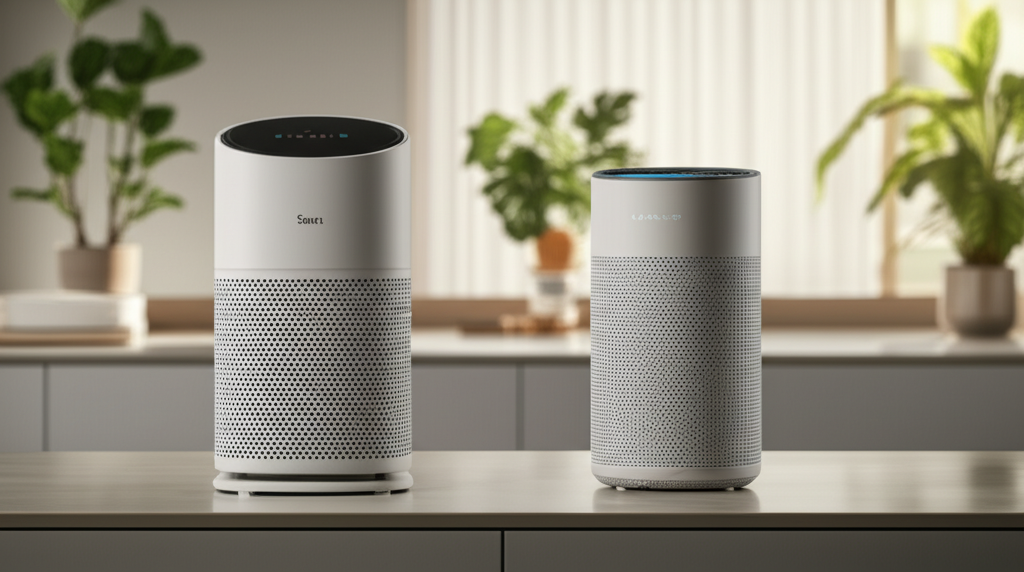
Indoor air can be more polluted than outdoor air. Things like cooking, cleaning products, and even furniture can release harmful chemicals. These can cause headaches or long-term health issues. Air purifiers work to capture these pollutants. They help create a healthier living space for everyone.
Understanding Air Purifier Technology: HEPA and Beyond
Air purifiers use different ways to clean the air. The most common is HEPA filtration. HEPA stands for High-Efficiency Particulate Air. These filters capture at least 99.97% of particles that are 0.3 microns in size. This includes dust, pollen, and pet dander.
How HEPA Filters Work
Imagine a very fine sieve. A HEPA filter is like that for the air. Air is pushed through the filter. Tiny particles get trapped in the filter fibers. This leaves the air that comes out much cleaner. Both Sans and Blueair often use HEPA filters.
Beyond HEPA: Activated Carbon Filters
Some air purifiers also use activated carbon filters. These filters are great for removing gases and odors. They work by trapping smells and chemicals. This is useful if your home has cooking smells or pet odors. Many Blueair models include this.
Sans Air Purifier: Key Features and Benefits
Sans air purifiers are known for their straightforward approach to air cleaning. They often focus on effective HEPA filtration. Many Sans models are designed to be simple to use. You can usually just plug them in and turn them on.
Filtration Power of Sans
Sans units typically use a multi-stage filtration system. This often includes a pre-filter to catch larger particles like hair. Then, a HEPA filter captures smaller allergens. Some models may also include an activated carbon filter for odors. This combination ensures a good level of air cleaning.
Design and User Experience of Sans
Sans often prioritizes a clean, minimalist design. Their purifiers tend to blend well into home decor. Controls are usually simple buttons. This makes them easy for anyone to operate without confusion. They are built for effective performance without too many complex settings.
Blueair Air Purifier: Innovation and Performance
Blueair is a brand that often highlights advanced technology. They focus on combining high performance with energy efficiency. Many Blueair purifiers use their own unique filtration system called HEPASilent. This system aims to filter air quickly and quietly.
Blueair’s HEPASilent Technology
HEPASilent technology uses both mechanical and electrostatic filtration. This means it attracts particles to the filter. It can filter more air at a lower fan speed. This makes them quieter and more energy-efficient. It’s a key difference in how Blueair cleans your air.
Smart Features and Connectivity in Blueair
Many Blueair air purifiers come with smart features. You can often control them using a smartphone app. This allows you to monitor air quality. You can also adjust settings remotely. Some models even connect to smart home systems. This offers a more connected experience.
Comparing Filtration Efficiency: Sans vs. Blueair
Both brands aim for clean air, but their methods can differ. Sans generally relies on robust HEPA filtration. Blueair also uses HEPA but enhances it with their HEPASilent technology. This can mean Blueair filters a higher volume of air.
Particle Removal Capabilities
A true HEPA filter in a Sans unit will capture 99.97% of particles. Blueair’s HEPASilent also achieves very high particle removal rates. The main difference might be how quickly they clean a room. Blueair often boasts higher CADR (Clean Air Delivery Rate) ratings. This means they can clean the air in a larger space faster.
Odor and Gas Removal
For odor and gas removal, activated carbon filters are key. Sans models may include these. Blueair models often feature substantial activated carbon filters. This can make Blueair more effective if odors are a major concern for you.
Noise Levels and Energy Consumption
Noise is a big factor for air purifiers. You don’t want a loud machine running in your living room. Blueair often excels here with its HEPASilent technology. It allows for quiet operation even at higher speeds.
Decibel Levels Explained
Higher decibel (dB) levels mean more noise. A whisper is about 30 dB. A normal conversation is around 60 dB. Blueair purifiers often operate in the 30-50 dB range. Sans models can vary. Some are very quiet, while others might be a bit louder on higher settings.
Energy Star Ratings and Power Usage
Energy efficiency is also important. Many Blueair models are Energy Star certified. This means they use less electricity. Sans models can also be energy efficient. Checking the wattage or Energy Star rating will help you compare. Lower wattage means lower electricity bills.
Design and Aesthetics: Fitting into Your Home
How an air purifier looks matters to many people. Both Sans and Blueair offer different styles. You want a unit that complements your home’s decor.
Modern vs. Minimalist Styles
Sans often goes for a clean, minimalist look. Their units are usually white or a neutral color. They are designed to be unobtrusive. Blueair also offers sleek designs. Some of their models have a more modern aesthetic. They might come in different colors or finishes.
Size and Portability
Consider the size of the room you need to purify. Air purifiers come in various sizes. Smaller units are good for bedrooms or small offices. Larger units are for living rooms or open spaces. Some units have wheels or handles for easier moving.
Price Point and Value for Money
The cost of an air purifier is a significant consideration. Sans models are often positioned as more budget-friendly. Blueair units can be more of an investment.
Initial Purchase Cost
Generally, Sans air purifiers have a lower upfront cost. This makes them accessible for many. Blueair purifiers can be more expensive. This is often due to their advanced technology and features.
Ongoing Costs: Filter Replacements
Remember to factor in the cost of replacement filters. Both Sans and Blueair filters need to be replaced regularly. This can be every 6-12 months depending on usage. Check the price of replacement filters for each brand. This is a key part of the total cost of ownership.
User Reviews and Real-World Performance
What do people who actually use these purifiers say? User reviews can offer valuable insights. They reflect real-world performance and reliability.
Common Feedback for Sans
Users often praise Sans for its simplicity and effectiveness. Many find them to be good value for the money. Some reviews might mention noise levels on higher settings. Overall, they are seen as reliable workhorses.
Common Feedback for Blueair
Blueair often receives high marks for quiet operation and smart features. Users appreciate the app control and air quality monitoring. Some reviews might mention the higher price point. The advanced filtration is frequently highlighted as a major benefit.
Sans Air Purifier vs Blueair: A Direct Comparison Table
Here’s a quick look at how they stack up. This table summarizes key differences.
| Feature | Sans Air Purifier | Blueair Air Purifier |
| :——————— | :————————————————- | :—————————————————– |
| Filtration Tech | Primarily HEPA, often with activated carbon | HEPASilent (HEPA + electrostatic), activated carbon |
| Noise Level | Varies, can be louder on high settings | Generally very quiet, especially on lower settings |
| Smart Features | Less common, often basic controls | Common, app control, air quality monitoring |
| Price Range | More budget-friendly | Higher initial investment |
| Energy Efficiency | Varies, check models | Often Energy Star certified, very efficient |
| Design Aesthetic | Minimalist, functional | Modern, sleek, varied finishes |
| Filter Replacement | Standard HEPA filter costs | Standard HEPA filter costs, check specific models |
Making Your Decision: Which is Right for You?
The best choice between a Sans air purifier and a Blueair depends on your priorities. Think about what matters most for your home.
For Budget-Conscious Buyers
If you’re looking for effective air cleaning without a high price tag, Sans is a great option. They provide solid HEPA filtration. They are a good choice for basic air purification needs. You get essential clean air at a good price.
For Tech-Savvy Users and Allergy Sufferers
If you want the latest technology, app control, and very quiet operation, Blueair might be better. Their HEPASilent system is also excellent for allergy sufferers. It can filter air quickly and efficiently. The investment often pays off in performance and features.
Frequently Asked Questions about Sans and Blueair Air Purifiers
Q1: How often do I need to replace the filters in a Sans air purifier?
You typically need to replace Sans air filters every 6 to 12 months. This depends on how much you use the purifier and the air quality in your home. Always check the manufacturer’s recommendations for your specific model.
Q2: Are Blueair air purifiers good for pet owners?
Yes, Blueair air purifiers are excellent for pet owners. They effectively capture pet dander, hair, and odors. Their advanced filtration systems help reduce allergens. This makes your home more comfortable for both you and your pets.
Q3: Can Sans air purifiers remove smoke from the air?
Many Sans air purifiers have activated carbon filters. These filters help remove smoke odors and some of the harmful particles from smoke. For heavy smoke issues, a model with a larger carbon filter or higher air cleaning capacity might be needed.
Q4: Is Blueair’s HEPASilent technology better than standard HEPA?
Blueair’s HEPASilent technology combines HEPA filtration with electrostatic charging. This allows it to filter more air at lower fan speeds. It’s generally quieter and more energy-efficient than traditional HEPA filters alone. Both offer excellent particle removal.
Q5: Which brand is better for a large room, Sans or Blueair?
Blueair often has higher CADR ratings, meaning they can clean the air in larger rooms faster. However, Sans also offers larger models designed for bigger spaces. Always check the recommended room size for the specific model you are considering from either brand.
Conclusion: Your Path to Essential Clean Air
Choosing between a Sans air purifier vs Blueair is about finding the right balance for your home. Sans offers reliable, straightforward air cleaning at a more accessible price. They are perfect for those who need essential clean air without many bells and whistles. Blueair provides advanced technology, superior quietness, and smart features. This makes them a great choice for allergy sufferers or tech enthusiasts. Both brands aim to improve your indoor air quality. Consider your budget, room size, and specific air purification needs. This will help you select the best air purifier for a healthier home environment.
If you found this comparison helpful, consider subscribing for more home health tips!
