Samsung vs Dyson Air Purifier: Essential Guide

Choosing between a Samsung and Dyson air purifier involves comparing their unique features, performance, and value. This guide helps you decide which brand best suits your needs for cleaner air at home.
Air purifiers are fantastic tools for making your home’s air healthier. They can remove dust, pollen, pet dander, and even tiny particles that cause allergies and breathing problems. But when you look to buy one, two big names often come up: Samsung and Dyson. Both make great products, but they do things a little differently. It can be tricky to figure out which one is right for you. Don’t worry, I’m here to help you understand the key differences so you can pick the best air purifier for your family.
Why Compare Samsung and Dyson Air Purifiers?
When you’re looking for a Samsung vs Dyson air purifier, you’re likely seeking the best solution for cleaner air. Both brands are known for innovation and quality. They aim to improve indoor air quality, but their approaches differ. Understanding these differences helps you make an informed choice for your home.
Samsung often focuses on smart features and integration with other home devices. Dyson tends to lead with cutting-edge technology and a strong emphasis on filtration and airflow. They both offer stylish designs that fit well in modern homes. This guide will break down what makes each brand stand out.
Design and Aesthetics: What They Look Like
The way an air purifier looks matters, especially if it’s going to be a visible part of your room. Both Samsung and Dyson create devices that are meant to be seen, not hidden away. They often have sleek, modern designs that complement home decor.
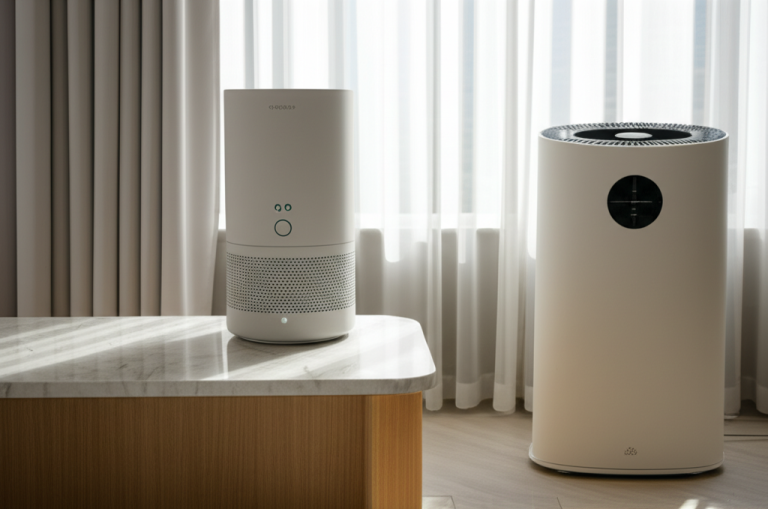
Samsung air purifiers frequently feature a minimalist look, often in white or silver. They can blend seamlessly into living rooms or bedrooms. Dyson purifiers often have a distinctive, futuristic design. They are known for their bladeless technology, which gives them a unique visual appeal.
Air Purification Technology: How They Clean the Air
The core job of an air purifier is to clean the air. Both Samsung and Dyson use advanced filtration systems to achieve this. However, their methods and filter types can vary.
Samsung purifiers typically use multi-layered filtration. This often includes a pre-filter for large particles, an activated carbon filter for odors, and a HEPA filter for fine particles. Some Samsung models also feature plasma technology to help neutralize airborne contaminants. Dyson purifiers also rely on HEPA and activated carbon filters. They often combine this with their unique Air Multiplier™ technology for powerful, widespread air circulation.
HEPA Filters: The Standard for Clean Air
A High-Efficiency Particulate Air (HEPA) filter is a crucial component in most air purifiers. It’s designed to capture at least 99.97% of airborne particles as small as 0.3 microns. This includes dust, pollen, mold spores, and bacteria.
Both Samsung and Dyson air purifiers use HEPA filters. They ensure that the smallest harmful particles are trapped. This is essential for people with allergies or respiratory issues. The effectiveness of the HEPA filter is a key factor in overall air purification performance.
Activated Carbon Filters: Tackling Odors and Gases
Beyond particles, many homes have unwanted odors and gases. These can come from cooking, pets, smoke, or even household chemicals. Activated carbon filters are excellent at absorbing these volatile organic compounds (VOCs) and smells.
Samsung and Dyson models commonly include activated carbon filters as part of their multi-stage purification process. This helps to remove smells and gases that HEPA filters cannot capture. A good activated carbon filter is vital for truly fresh-smelling air.
Smart Features and Connectivity: The Connected Home
In today’s world, many devices can connect to your phone or home network. Air purifiers are no exception. Smart features can offer convenience and better control over your air quality.
Samsung is well-known for its integration with its SmartThings ecosystem. Many Samsung air purifiers can be controlled remotely via a smartphone app. You can check air quality, change settings, and schedule operation from anywhere. This allows for seamless integration with other Samsung smart home devices.
Dyson also offers smart features in its purifiers, often controlled through the Dyson Link app. This app provides real-time air quality reports and allows for remote control. Dyson focuses on providing detailed data about your home’s air. This helps you understand what you’re breathing and how the purifier is working.
Performance and Coverage: How Well They Work
Ultimately, you want an air purifier that effectively cleans the air in your space. Performance is measured by how quickly and thoroughly it removes pollutants. Coverage area is also important; a purifier needs to be powerful enough for the room size.
Samsung air purifiers are designed for various room sizes. They often provide clear specifications on their recommended coverage areas. Many models feature sensors that monitor air quality and automatically adjust fan speed. This ensures efficient purification without constant manual input.
Dyson air purifiers are often praised for their powerful airflow. This allows them to circulate and purify air in larger rooms effectively. Their bladeless design contributes to a strong, consistent airflow. Dyson’s focus is on projecting purified air further into the room.
Noise Levels: How Loud They Are
The sound an air purifier makes can be a significant factor, especially if it’s running in a bedroom or living area. Some purifiers can be quite noisy, while others operate almost silently.
Samsung air purifiers generally offer a range of noise levels. Many models have a quiet mode or a sleep mode designed for minimal disruption. The noise level often increases with higher fan speeds. It’s good to check the decibel (dB) ratings for specific models.
Dyson air purifiers, with their bladeless technology, can be surprisingly quiet on lower settings. However, like any purifier, they will produce more noise when operating at maximum power. Dyson often highlights its commitment to quiet operation in its marketing.
Maintenance and Filter Replacement: Keeping It Running
All air purifiers require some maintenance to keep them working effectively. This usually involves cleaning pre-filters and replacing the main HEPA and carbon filters periodically. The cost and ease of this maintenance are important considerations.
Samsung air purifiers typically have washable pre-filters. The HEPA and carbon filters will need replacement, usually every 6 to 12 months, depending on usage and air quality. The app often reminds you when filters need changing. Replacement filter costs can vary.
Dyson air purifiers also require regular filter replacements. The HEPA and carbon filters are usually combined into a single unit that is easy to replace. Dyson recommends replacement intervals, and the app will notify you. The cost of Dyson replacement filters can sometimes be higher.
Price and Value: What You Pay
The cost of an air purifier is a major deciding factor for most people. Both Samsung and Dyson offer models across different price points, but generally, Dyson purifiers are considered premium and come with a higher price tag.
Samsung air purifiers can offer a good balance of features and price. You can often find Samsung models that provide excellent performance and smart capabilities without the highest cost. They represent good value for many households.
Dyson air purifiers are an investment. Their higher price reflects their advanced technology, unique designs, and strong performance. If budget is a primary concern, Samsung might offer more accessible options. However, if you prioritize cutting-edge features and design, Dyson may be worth the extra cost.
Samsung vs Dyson Air Purifier: Key Differences at a Glance
Here’s a quick look at how Samsung and Dyson air purifiers stack up against each other in key areas. This table highlights some of the main distinctions to help you decide.
| Feature | Samsung Air Purifiers | Dyson Air Purifiers |
| :—————— | :—————————————————– | :—————————————————– |
| Design | Minimalist, sleek, blends into decor | Futuristic, bladeless, often a statement piece |
| Smart Features | Strong SmartThings integration, app control | Dyson Link app, detailed air quality data |
| Filtration | Multi-stage (Pre, Carbon, HEPA), optional Plasma | HEPA, Activated Carbon, combined filter units |
| Airflow Tech | Focus on room coverage, automatic adjustment | Air Multiplier™ technology for powerful projection |
| Noise Level | Varies, often has quiet/sleep modes | Generally quiet on low settings, can increase with speed |
| Price Range | Mid-range to upper-mid-range | Premium, higher price point |
| Filter Type | Separate or combined filters, washable pre-filter | Often combined HEPA + Carbon units |
Which One is Right for You?
Deciding between a Samsung and Dyson air purifier really depends on your priorities. Think about what’s most important for your home and your budget.
If you’re already in the Samsung ecosystem and want an air purifier that integrates seamlessly with your other smart devices, a Samsung model is a great choice. They offer solid performance, good value, and convenient app control. They are a reliable option for everyday clean air needs.
If you’re looking for the latest in air purification technology, a unique design, and detailed insights into your air quality, a Dyson purifier might be the perfect fit. They are powerful, stylish, and offer advanced features for those who want the best. Dyson is for those who see an air purifier as a high-tech home appliance.
Frequently Asked Questions (FAQ)
Do Samsung air purifiers really clean the air?
Yes, Samsung air purifiers use multi-stage filtration, including HEPA filters, to effectively capture particles like dust, pollen, and pet dander. They also use activated carbon filters to remove odors and gases, contributing to cleaner air.
Are Dyson air purifiers worth the money?
Dyson air purifiers are an investment, often costing more than competitors. They offer advanced technology, powerful purification, and unique designs. For many, the performance and features justify the price, especially for those with severe allergies or who value cutting-edge appliances.
Which brand is better for allergies: Samsung or Dyson?
Both brands offer HEPA filters, which are essential for allergy sufferers. The effectiveness can depend on the specific model and its CADR (Clean Air Delivery Rate). Dyson’s powerful airflow might circulate and clean air in a room more quickly, which can be beneficial for allergies.
How often do I need to replace filters in Samsung vs Dyson air purifiers?
Filter replacement schedules vary by model and usage, but typically HEPA and carbon filters need replacing every 6-12 months. Both brands provide app notifications to remind you when it’s time. Always check your specific model’s manual for exact recommendations.
Can I use an air purifier in a small room?
Yes, you can use an air purifier in a small room. It’s important to choose a model that is appropriately sized for the room. A purifier that is too large might be overkill and noisy, while one that is too small won’t be effective. Both Samsung and Dyson offer different models suitable for various room sizes.
Do air purifiers help with COVID-19?
Air purifiers with HEPA filters can help reduce airborne virus particles, including coronaviruses, in indoor spaces. While they are not a substitute for other preventive measures like vaccination and ventilation, they can contribute to a safer indoor environment.
Conclusion: Your Best Choice for Cleaner Air
When it comes down to Samsung vs Dyson air purifier, both offer excellent solutions for improving your home’s air quality. Samsung provides a strong balance of smart features, effective purification, and accessible pricing, making it a great all-around choice for many families. They integrate well into a connected home and offer reliable performance.
Dyson, on the other hand, represents the premium end of the market, with innovative technology, striking designs, and powerful purification capabilities. If you seek cutting-edge features and are willing to invest more, Dyson delivers a high-performance experience. Ultimately, the best air purifier for you depends on your specific needs, budget, and what you value most in an appliance.
We hope this guide has helped clarify the differences between Samsung and Dyson air purifiers. Explore models from both brands to find the perfect fit for your healthy home.