
Hunter HEPA Air Purifier Reviews: Essential Guide

Hunter HEPA air purifier reviews reveal these units offer effective air cleaning for various spaces, combining advanced filtration with user-friendly designs. This guide explores key models, features, and performance to help you choose the best Hunter HEPA air purifier for your home.
Breathe easier knowing you’re making an informed choice about your home’s air quality. Many of us worry about what’s floating around in our living spaces, from dust and allergens to pet dander and even odors. It can feel overwhelming to find a solution that truly works and fits your needs. This comprehensive guide to Hunter HEPA air purifier reviews will walk you through everything you need to know, making the selection process simple and stress-free.
Why Choose a Hunter HEPA Air Purifier?
Hunter air purifiers are a popular choice for their blend of effective filtration and thoughtful design. They aim to tackle common indoor air pollutants, making your home a healthier environment. Many users praise their quiet operation and ease of use, which are crucial for everyday living.
Hunter has been a trusted name in home comfort for over a century, known for its durable fans and reliable products. This established reputation carries over to their air purifier line, giving consumers confidence in their performance and longevity.
Understanding HEPA Filtration in Hunter Air Purifiers
HEPA, or High-Efficiency Particulate Air, is a standard that mandates filters capture at least 99.97% of airborne particles down to 0.3 microns. This includes common irritants like pollen, dust mites, mold spores, and pet dander. Hunter air purifiers often incorporate true HEPA filters to ensure maximum particle capture.
Beyond the HEPA layer, many Hunter models also feature activated carbon filters. These are excellent at absorbing odors from cooking, pets, and smoke, further enhancing the air purification process.
Key Hunter HEPA Air Purifier Models Reviewed
When looking at Hunter HEPA air purifier reviews, you’ll encounter several popular models designed for different room sizes and needs. Understanding their specific features can help you narrow down your options. We’ll focus on models commonly cited for their performance and value.
Each model offers a unique combination of features, so consider your primary concerns—allergy relief, odor control, or general air quality improvement—when comparing them.
Hunter 30150 / 30151 Series: Best for Small to Medium Rooms
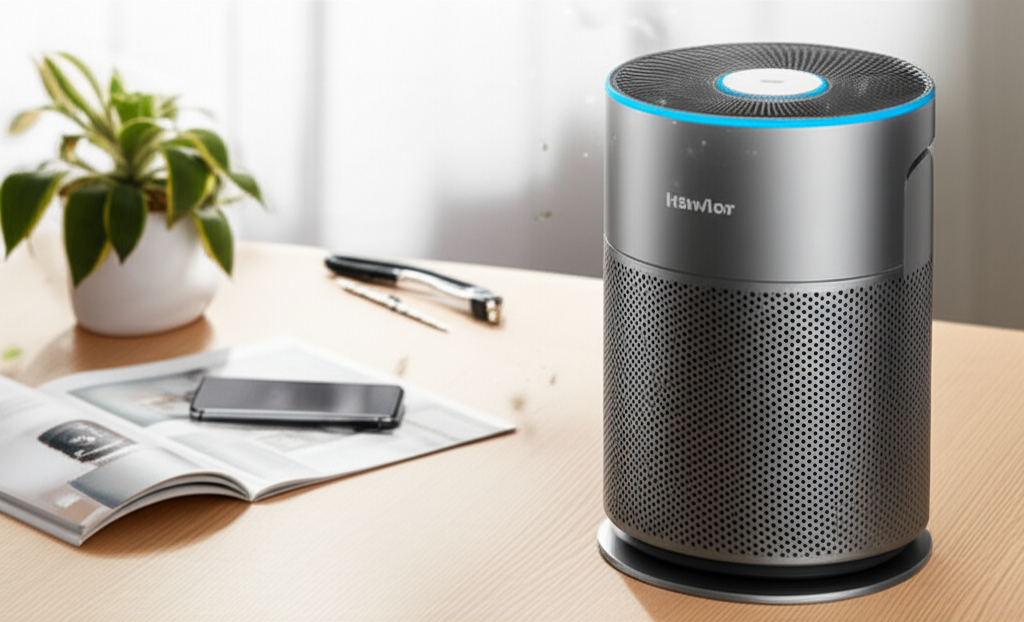
The Hunter 30150 and its variants, like the 30151, are frequently recommended for bedrooms or home offices. They are compact yet powerful, featuring a 3-stage filtration system. This typically includes a pre-filter for larger particles, a true HEPA filter for fine allergens, and an activated carbon filter for odors.
These units are praised for their quiet operation, especially on lower settings, making them ideal for sleeping environments. Their simple controls and filter replacement indicators add to their user-friendliness.
Hunter 30230 Series: Enhanced Coverage for Larger Spaces
For those needing to purify larger living areas or open-plan spaces, the Hunter 30230 series offers greater coverage. These models often boast higher CADR (Clean Air Delivery Rate) ratings, meaning they can clean the air in a larger room more quickly. The filtration stages are similar, ensuring comprehensive pollutant removal.
Users often highlight the effectiveness of these larger units in reducing airborne dust and pet dander throughout their homes. Their slightly larger footprint is a trade-off for increased purification capacity.
Hunter 30322 / 30324 Series: Advanced Features for Allergy Sufferers
The Hunter 30322 and 30324 series often include advanced features like air quality sensors and auto modes. These intelligent sensors monitor indoor air quality and automatically adjust the fan speed to maintain optimal purification levels. This hands-off approach is a significant benefit for busy households.
These models are particularly well-regarded by allergy sufferers who benefit from continuous, responsive air cleaning. The ability to monitor real-time air quality adds an extra layer of reassurance.
What to Look For in Hunter HEPA Air Purifier Reviews
When you’re sifting through Hunter HEPA air purifier reviews, pay attention to specific performance metrics and user experiences. Look for consistent feedback on effectiveness against different types of pollutants, noise levels, and ease of maintenance.
Consider the room size the unit is rated for and compare it to your own space. A unit that’s too small won’t be effective, while one that’s too large might be overkill and consume unnecessary energy.
Filtration Stages and Effectiveness
A robust filtration system is the heart of any good air purifier. Look for models that clearly state they use a “true HEPA” filter, not just a HEPA-type or HEPA-like filter, as the former meets stringent standards. The inclusion of a pre-filter and an activated carbon filter adds significant value by trapping larger particles and eliminating odors, respectively.
The effectiveness of these stages is often mentioned in user reviews, detailing improvements in allergy symptoms or a reduction in household odors.
CADR Ratings and Room Size Coverage
CADR, or Clean Air Delivery Rate, is a standardized measure of how quickly an air purifier can clean a room of smoke, dust, and pollen. Higher CADR numbers mean faster purification. Manufacturers typically specify the recommended room size for each model, often based on achieving a certain number of air changes per hour (ACH).
For example, an ACH of 4 means the purifier will circulate and clean the entire volume of air in the room four times per hour. This is a good benchmark for effective air cleaning, especially for allergy sufferers. According to the Association of Home Appliance Manufacturers (AHAM), a room size recommendation based on 4.8 ACH is considered optimal.
Noise Levels
Air purifiers can range from whisper-quiet to noticeably loud, depending on the fan speed and motor design. For bedrooms or quiet living areas, low noise levels are essential. Many Hunter HEPA air purifier reviews will mention specific decibel (dB) ratings for different settings or describe the sound as a gentle hum or white noise.
Look for units that offer multiple fan speeds, including a “sleep” or “low” mode that operates at around 20-30 dB, which is comparable to a quiet library.
Ease of Use and Maintenance
A good air purifier should be simple to operate and maintain. Look for intuitive controls, clear filter replacement indicators, and readily available replacement filters. The frequency of filter replacement will depend on usage and air quality, but typically HEPA filters need replacing every 6-12 months, and carbon filters may need more frequent changes.
Checking the cost and availability of replacement filters is also a crucial part of the long-term ownership consideration.
Comparing Hunter HEPA Air Purifier Performance
To give you a clearer picture, let’s compare some popular Hunter HEPA air purifier models based on key features. This table highlights differences in room coverage, filtration, and additional features.
| Model Series | Recommended Room Size (sq ft) | Filtration Type | Noise Level (Low/High) | Key Features |
| :———– | :—————————- | :————————— | :——————— | :—————————————– |
| 30150/30151 | Up to 160 | 3-Stage (Pre, HEPA, Carbon) | ~30 dB / ~50 dB | Compact, Quiet, Filter Indicator |
| 30230 | Up to 250 | 3-Stage (Pre, HEPA, Carbon) | ~35 dB / ~55 dB | Higher CADR, Larger Coverage |
| 30322/30324 | Up to 200 | 3-Stage (Pre, HEPA, Carbon) | ~32 dB / ~52 dB | Air Quality Sensor, Auto Mode, Energy Star |
Note: Noise levels are approximate and can vary based on specific conditions.
This comparison shows how different Hunter models cater to varying needs, from smaller, more personal spaces to larger common areas. Always check the most current specifications for the exact model you are considering.
User Experiences and Testimonials
Real-world experiences from users often provide the most valuable insights into an air purifier’s performance. Many Hunter HEPA air purifier reviews highlight significant improvements in allergy symptoms, such as reduced sneezing and congestion. Others commend the unit’s ability to eliminate pet odors and cooking smells effectively.
For instance, one user shared, “I was skeptical, but after running the Hunter 30150 in my bedroom, my morning congestion has almost disappeared. It’s quiet enough that I don’t even notice it’s on.” Such testimonials underscore the practical benefits of investing in a quality air purifier.
Installation and Setup of Your Hunter Air Purifier
Setting up your Hunter HEPA air purifier is typically a straightforward process. Most models come with the filters pre-installed or require minimal assembly. You’ll usually need to remove any plastic packaging from the filters before inserting them into the unit.
Once the filters are in place, simply plug in the air purifier, select your desired fan speed, and let it start working. Always refer to your specific model’s user manual for detailed instructions and any safety precautions.
Maintaining Your Hunter HEPA Air Purifier
Proper maintenance is key to ensuring your Hunter air purifier continues to operate efficiently for years to come. The most critical maintenance task is replacing the filters according to the manufacturer’s recommendations. A clogged filter will significantly reduce the unit’s effectiveness and strain the motor.
Regularly wipe down the exterior of the unit with a dry or slightly damp cloth. Ensure the air intake and outlet vents are kept clear of obstructions to allow for optimal airflow.
When to Replace Filters
Your Hunter air purifier will likely feature a filter change indicator light that illuminates when it’s time to replace the filters. However, this is a guideline, and actual replacement frequency can vary. Factors like the air quality in your home and how often you run the unit will influence filter life.
As a general rule, true HEPA filters should be replaced every 6 to 12 months, while activated carbon filters, which can become saturated with odors, might need replacing every 3 to 6 months. Always consult your user manual for specific recommendations for your model.
Hunter Air Purifier Energy Efficiency
Many modern Hunter HEPA air purifiers are designed with energy efficiency in mind. Look for models that have earned the ENERGY STAR certification, which indicates they meet strict energy efficiency guidelines set by the U.S. Environmental Protection Agency. These units consume less electricity, saving you money on your energy bills.
Even without an ENERGY STAR rating, choosing an appropriately sized unit and utilizing lower fan speeds when possible can help minimize energy consumption. Running your air purifier consistently on a lower setting is often more efficient than running it on high only intermittently. According to the EPA, ENERGY STAR certified air purifiers use about 40% less energy than standard models.
Frequently Asked Questions (FAQ)
Are Hunter HEPA air purifiers effective for allergies?
Yes, Hunter HEPA air purifiers are generally very effective for allergies. Their true HEPA filters are designed to capture 99.97% of airborne allergens like pollen, dust mites, pet dander, and mold spores, which are common allergy triggers.
How often should I replace the HEPA filter in my Hunter air purifier?
You should replace the HEPA filter in your Hunter air purifier approximately every 6 to 12 months, or when the filter change indicator light on the unit illuminates. This frequency can vary based on your home’s air quality and how often the purifier is used.
Can a Hunter HEPA air purifier remove pet odors?
Absolutely. Most Hunter HEPA air purifiers include an activated carbon filter layer alongside the HEPA filter. This carbon layer is specifically designed to absorb and neutralize odors from pets, cooking, smoke, and other common household smells.
What is the difference between a HEPA filter and a HEPA-type filter?
A “true HEPA” filter meets a specific standard, capturing at least 99.97% of particles 0.3 microns in size. A “HEPA-type” or “HEPA-like” filter may capture a high percentage of particles but doesn’t necessarily meet the same stringent standard as a true HEPA filter. Hunter models typically use true HEPA filters.
Are Hunter air purifiers noisy?
Hunter air purifiers are generally considered to have moderate noise levels. Many models offer multiple fan speeds, including a quiet “low” or “sleep” mode that produces a gentle hum or white noise, often below 50 dB. Higher speeds will be more audible, but this is typical for most air purifiers.
Where is the best place to put a Hunter HEPA air purifier in a room?
For optimal performance, place your Hunter HEPA air purifier in an open area away from walls or furniture that could obstruct airflow. Placing it on a flat, stable surface where air can circulate freely around the unit will allow it to effectively purify the room’s air.
Conclusion: Your Healthier Home Awaits
After exploring various Hunter HEPA air purifier reviews, it’s clear that these units offer a compelling blend of effective air purification, user-friendly design, and reliable performance. Whether you’re battling allergies, seeking to eliminate odors, or simply aiming for fresher, cleaner air in your home, a Hunter HEPA air purifier can be a valuable investment.
By understanding the different models, key features like HEPA filtration and CADR ratings, and the importance of maintenance, you can confidently choose the Hunter air purifier that best suits your needs. Take the step towards a healthier living environment today.
