
Humidifier Vs Air Purifier: Essential Guide

Humidifier vs air purifier: Understand the key differences to choose the right device for your home. A humidifier adds moisture to dry air, while an air purifier removes pollutants. Learn which one you need for better indoor air quality.
There’s a lot of confusion about humidifiers and air purifiers. Both can improve your home’s air, but they do very different jobs. You might be wondering if you need one, the other, or even both. Deciding between a humidifier vs air purifier can feel overwhelming with all the options available. Don’t worry, I’m here to break it down for you. We’ll explore exactly what each device does, who benefits most, and how to make the best choice for your comfort and health.
What is a Humidifier and How Does it Work?
A humidifier adds moisture to the air, increasing humidity levels. It’s essentially a machine that releases water vapor or steam into a room. This is particularly useful in dry climates or during winter months when heating systems can strip moisture from the air. By increasing humidity, humidifiers can help alleviate dry skin, chapped lips, and irritated sinuses.
Humidifiers work by using various methods to convert water into mist. Some use ultrasonic vibrations to create a cool mist, while others use evaporative wicks or boiling water to produce warm mist. The choice between warm and cool mist often comes down to personal preference and safety considerations, especially in homes with children or pets.
Why You Might Need a Humidifier
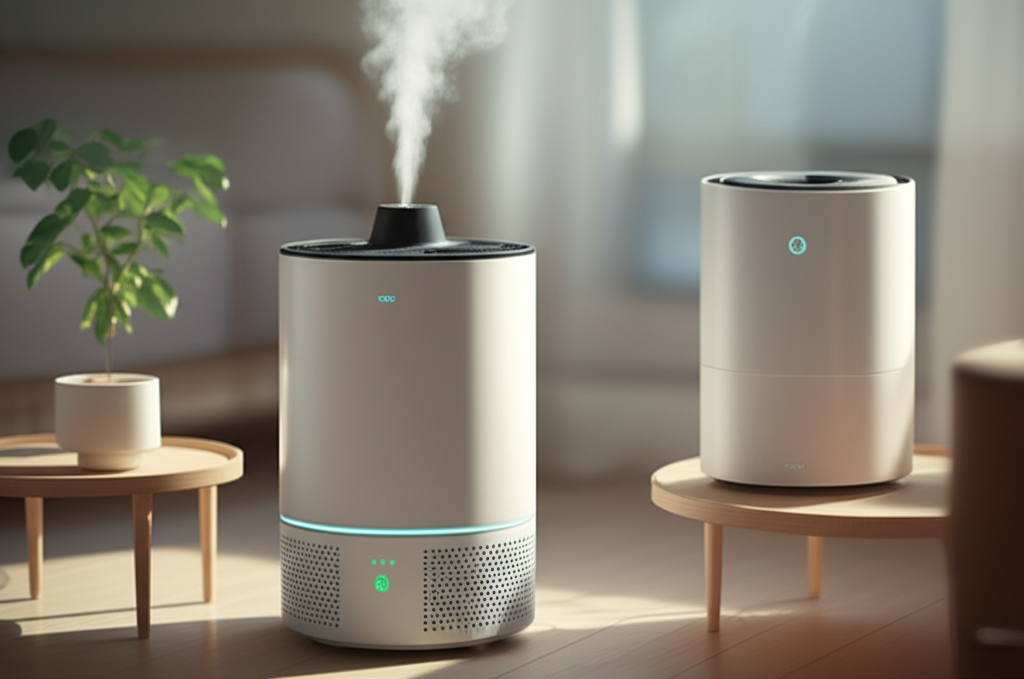
You might benefit from a humidifier if you frequently experience symptoms like dry throat, nosebleeds, or static electricity in your home. Dry air can worsen respiratory conditions such as asthma and allergies, making it harder to breathe comfortably. Consistent low humidity can also damage wooden furniture, musical instruments, and even your home’s structure by causing materials to crack and warp.
Benefits of Using a Humidifier
Soothes Dry Skin and Lips: Adds much-needed moisture to combat dryness and irritation.
Eases Cold and Flu Symptoms: Helps to loosen congestion and reduce coughing by keeping nasal passages moist.
Reduces Snoring: Moist airways are less likely to be irritated, which can help some individuals snore less.
Protects Wooden Items: Prevents furniture, floors, and instruments from drying out and cracking.
Lowers Static Electricity: Reduces annoying shocks and clingy clothing.
These benefits highlight how a humidifier can directly impact your comfort and the preservation of your belongings. It’s a simple solution for a common problem that many people face without realizing the cause.
What is an Air Purifier and How Does it Work?
An air purifier is a device designed to remove airborne contaminants from your home. It draws in air, passes it through a filtration system, and then releases cleaner air back into the room. The primary goal of an air purifier is to improve indoor air quality by trapping particles like dust, pollen, pet dander, mold spores, and even smoke and volatile organic compounds (VOCs).
Most air purifiers use a combination of filters, with HEPA (High-Efficiency Particulate Air) filters being the most common and effective. These filters are designed to capture at least 99.97% of particles that are 0.3 microns in size. Some purifiers also include activated carbon filters to absorb odors and gases.
Why You Might Need an Air Purifier
If you or someone in your household suffers from allergies, asthma, or other respiratory sensitivities, an air purifier can be a game-changer. It can significantly reduce the triggers in your environment, leading to fewer symptoms and a more comfortable living space. Air purifiers are also beneficial for households with pets, smokers, or those living in areas with high outdoor pollution levels.
Benefits of Using an Air Purifier
Reduces Allergens: Traps common allergens like pollen, dust mites, and pet dander.
Removes Odors: Activated carbon filters can neutralize smells from cooking, pets, and smoke.
Combats Airborne Germs: Captures bacteria and viruses, helping to reduce the spread of illness.
Improves Overall Air Quality: Removes fine particulate matter that can be harmful to your health.
Helps Those with Respiratory Issues: Provides cleaner air for individuals with asthma or COPD.
These advantages show how an air purifier actively works to create a healthier breathing environment within your home. It’s a proactive step towards better indoor air hygiene.
Humidifier vs Air Purifier: The Core Differences
The fundamental difference lies in their function: a humidifier adds moisture, while an air purifier removes particles. Think of it this way: a humidifier makes the air feel “wetter” and more comfortable in dry conditions, whereas an air purifier makes the air “cleaner” by filtering out impurities. They address distinct issues related to indoor air quality, though both can contribute to a healthier living space.
This distinction is crucial when deciding which device best suits your needs. If your primary concern is dryness and its associated discomforts, a humidifier is your answer. If airborne irritants and pollutants are the problem, then an air purifier is what you need.
When to Choose a Humidifier
You should consider a humidifier if your home consistently feels dry, especially during colder months. Symptoms like dry skin, itchy eyes, sore throat upon waking, or frequent nosebleeds are strong indicators that your indoor air lacks sufficient moisture. Low humidity can also cause static shocks and damage to wooden furniture or musical instruments.
A humidifier is your best bet for combating these issues. It directly addresses the lack of moisture in the air, providing relief and preventing related problems. It’s about enhancing comfort and protecting your belongings from the damaging effects of dry air.
When to Choose an Air Purifier
An air purifier is the right choice if you’re concerned about the cleanliness of your indoor air. This includes households with allergy sufferers, asthmatics, pet owners, or those living near busy roads or industrial areas. If you notice dust accumulating quickly, experience frequent allergy flare-ups, or want to reduce the presence of airborne germs and odors, an air purifier is essential.
It actively works to filter out pollutants that can impact your health and well-being. By removing these contaminants, an air purifier helps create a healthier environment for everyone, especially those with respiratory sensitivities.
Can You Use a Humidifier and Air Purifier Together?
Yes, you absolutely can and often should use a humidifier and an air purifier together. They perform complementary functions. An air purifier cleans the air by removing particles, while a humidifier adds moisture. Using both can create a balanced and healthier indoor environment, especially if you suffer from allergies or asthma and live in a dry climate.
Many people find that the combination provides the most comprehensive solution for indoor air quality. The air purifier tackles the invisible irritants, while the humidifier addresses the discomfort of dry air. This dual approach can lead to significant improvements in breathing comfort and overall well-being.
Key Features to Consider for Each Device
When looking at humidifiers, consider the type of mist (warm or cool), tank capacity (influencing how often you refill), coverage area, and ease of cleaning. For air purifiers, focus on the filter type (HEPA is standard), CADR (Clean Air Delivery Rate) for room size suitability, noise level, and additional features like activated carbon filters or smart connectivity.
| Feature | Humidifier | Air Purifier |
| :—————- | :——————————————— | :———————————————– |
| Primary Function | Adds moisture to the air | Removes airborne particles and pollutants |
| Main Benefit | Relieves dryness, soothes symptoms | Improves air cleanliness, reduces allergens |
| Key Technology| Water tank, mist generator (ultrasonic, evaporative, steam) | Filters (HEPA, activated carbon), fan |
| Maintenance | Regular cleaning to prevent mold/bacteria | Filter replacement or cleaning |
| Best For | Dry climates, winter, dry skin/sinuses | Allergies, asthma, pets, odors, pollution |
Understanding these features will help you compare models and select the best device for your specific needs. It’s about matching the technology to the problem you’re trying to solve.
Humidifier vs Air Purifier: Which is Right for Your Home?
The choice between a humidifier vs air purifier hinges on your primary indoor air concerns. If dryness is your main issue, leading to static, dry skin, or irritated sinuses, a humidifier is the clear winner. Conversely, if you’re battling dust, allergens, odors, or concerns about airborne germs, an air purifier is the more appropriate solution.
For many households, particularly those with allergies or asthma, the ideal scenario involves using both devices. This approach tackles both dryness and impurity issues, creating a more comfortable and healthier living space. You can often find combination units or simply place separate devices strategically.
Popular Brands and Models to Consider
When exploring options, you’ll find many reputable brands. For humidifiers, consider brands like Levoit, Coway, and Honeywell, known for their user-friendly designs and effective humidification. For air purifiers, leading names include Blueair, Dyson, Coway, and Winix, offering advanced filtration and smart features.
For example, the Levoit Classic 200S is a popular humidifier for small to medium rooms, while the Coway Airmega 200M is a highly-rated air purifier suitable for larger spaces. Always check reviews and specifications to match a model’s capabilities to your room size and specific needs. Researching specific models will give you a clearer picture of what’s available.
Maintaining Your Humidifier or Air Purifier
Proper maintenance is crucial for both devices to operate effectively and safely. Humidifiers require regular cleaning (often weekly) to prevent the growth of mold and bacteria, which can then be dispersed into the air. This typically involves rinsing the tank and wiping down components. Air purifiers need their filters replaced or cleaned periodically, as recommended by the manufacturer, to ensure optimal filtration.
Neglecting maintenance can render your device less effective or even introduce new problems. For humidifiers, this could mean releasing unhealthy spores, while for air purifiers, it means reduced ability to capture pollutants. Always follow the manufacturer’s guidelines for cleaning and filter changes.
Frequently Asked Questions (FAQ)
Q1: Can a humidifier help with allergies?
A humidifier doesn’t directly treat allergies, but by keeping nasal passages moist, it can help alleviate symptoms like congestion and dry coughs that often accompany allergies. However, it’s important to keep humidity levels between 30-50% to prevent mold growth, which can worsen allergies.
Q2: Do air purifiers remove viruses?
Yes, high-quality air purifiers with HEPA filters can capture a significant percentage of airborne viruses. While they can’t guarantee complete elimination, they can help reduce the concentration of viruses in the air, contributing to a healthier environment.
Q3: How often should I run my humidifier or air purifier?
For humidifiers, run them as needed to maintain desired humidity levels, typically between 30-50%. Air purifiers can often be run continuously, especially if you have allergies, pets, or live in a polluted area, to ensure consistent air cleaning.
Q4: What is the ideal humidity level for a home?
The ideal indoor humidity level is generally considered to be between 30% and 50%. Levels below 30% can lead to dryness and discomfort, while levels above 50% can promote the growth of mold, dust mites, and bacteria.
Q5: Can I use essential oils in an air purifier?
No, you should generally not add essential oils to an air purifier. Most air purifiers are not designed for this and adding oils can damage the filters and the unit itself. Some humidifiers, however, are designed with separate compartments for essential oils.
Q6: Which device is better for a baby’s room?
For a baby’s room, a cool-mist humidifier can help with congestion and dry air, making it easier for the baby to breathe. An air purifier can also be beneficial to remove allergens and pollutants. Many parents opt for a cool-mist humidifier and an air purifier with a HEPA filter for a balanced approach.
Conclusion: Making the Right Choice for Your Air
Ultimately, the decision between a humidifier vs air purifier, or using both, depends on your specific needs and the conditions in your home. If dry air is causing discomfort or damage, a humidifier is your solution. If airborne pollutants are your concern, an air purifier is essential. For comprehensive indoor air quality management, combining both devices offers the most benefits, creating a comfortable, healthy, and clean environment for you and your family. I hope this guide has clarified the roles of each and empowered you to make an informed decision for your home.
