
How to Vacuum Under Furniture Without Moving Everything

Quick Answer
To vacuum under furniture, remove nearby clutter and choose a low-profile floor head or flat attachment. Recline the vacuum handle, work from several angles, and use slow, overlapping passes. Regular cleaning also supports better indoor air quality by reducing settled dust and allergens.
Quick cleaning steps
- Check the clearance: Measure the gap before forcing a vacuum head underneath.
- Remove loose items: Pick up cords, toys, coins, and fabric that could enter the brush roll.
- Choose the right tool: Use a flat floor head, wand, crevice tool, or robot vacuum.
- Vacuum slowly: Make overlapping passes from the front and both sides.
- Inspect the result: Use a flashlight to find dust left around legs and corners.
Protect yourself and the furniture
- Never force the head: A tight attachment can scratch flooring, tear upholstery, or become stuck.
I used to clean every visible part of my rooms while ignoring the dusty strips beneath the sofa and bed. Once I looked underneath with a flashlight, I found lint, pet hair, crumbs, and several missing socks.
This guide explains how to vacuum under furniture safely. It covers useful attachments, difficult gaps, carpet and hard floors, and ways to prevent dust from building up again.
In This Guide
Why Should You Vacuum Under Furniture?
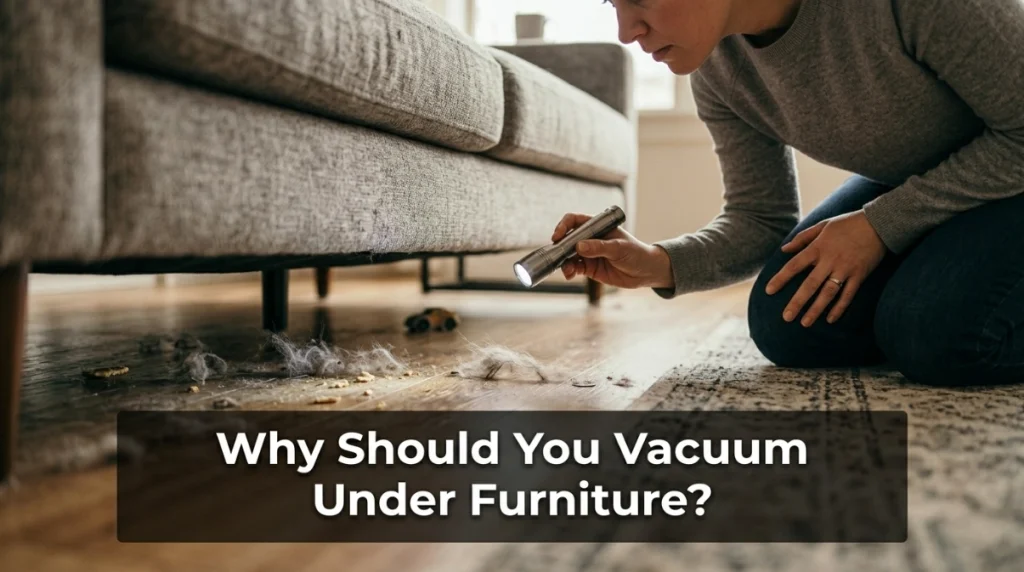
Vacuuming under furniture removes the dust, hair, crumbs, and small debris that ordinary surface cleaning misses. These hidden areas can hold a surprising amount of dirt.
Furniture slows normal airflow near the floor. Dust settles there and remains undisturbed until someone walks nearby or moves the furniture.
Hidden dust affects the whole room
Dust beneath a sofa does not always stay there. Foot traffic, fans, pets, and heating systems can move fine particles back into the room.
The Asthma and Allergy Foundation of America offers guidance for controlling common indoor allergens. Routine cleaning is one practical part of that wider approach.
- Dust: Fine household particles collect in still, sheltered spaces.
- Pet hair: Air movement pushes loose fur beneath beds and sofas.
- Dust mites: These microscopic organisms can live in household dust and soft materials.
- Food crumbs: Crumbs may attract ants and other pests.
- Mold spores: Spores may settle with dust, although vacuuming cannot solve an active moisture problem.
Vacuuming is a cleaning method that uses airflow and suction to lift loose debris from a surface. The machine then stores that debris in a bag or dust bin.
A vacuum does not remove every pollutant or fix moisture damage. However, regular use can keep visible debris and settled dust under better control.
It may reveal other household problems
I once moved a nightstand and found damp dust stuck along the baseboard. A small window leak had kept that corner moist.
Look for water stains, warped flooring, insect activity, damaged cords, or a musty smell while cleaning. Do not cover these warning signs with the furniture again.
Expert Alert: If you find widespread mold, ongoing moisture, damaged wiring, or signs of a serious pest problem, contact a qualified professional.
Section Takeaway: Hidden dust can return to the occupied room. Cleaning underneath furniture also gives you a chance to spot moisture and damage early.
How Do You Prepare the Area?
Start by checking the space, removing hazards, and preparing the vacuum. Two minutes of setup can prevent tangled brushes and scratched floors.
Measure the gap first
Measure from the floor to the lowest solid part of the furniture. Do not count flexible fabric hanging beneath a sofa.
Compare that measurement with the thickest part of your vacuum head. Leave some extra room so the attachment can move without rubbing.
- Use a flashlight: Check for cords, toys, glass, coins, and damp spots.
- Remove loose fabric: Lift bed skirts, curtains, and sofa covers away from the floor.
- Pick up large objects: Remove anything that could block the hose or damage the fan.
- Secure electrical cords: Unplug or move cords before vacuuming near them.
- Check the floor: Look for loose boards, lifted rug edges, or sharp debris.
Prepare the vacuum
Empty a nearly full dust bin or replace a full bag. Restricted airflow reduces pickup and may make the vacuum run hotter.
Check the brush roll for wrapped hair. Confirm that the filter and attachments are installed according to the manufacturer’s instructions.
I also wipe the wheels before cleaning a hard floor. Small grains caught in a wheel can leave marks on softer finishes.
Which Vacuum Tools Work Best?
A low-profile floor head usually offers the best balance of coverage and reach. Narrow or unusually low spaces may need a wand, crevice tool, or robot vacuum.
| Tool | Best use | Main limitation |
|---|---|---|
| Flat floor head | Wide spaces under beds and sofas | May not fit below low frames |
| Crevice tool | Edges, corners, and furniture legs | Cleans a narrow path |
| Flexible under-appliance tool | Low, deep gaps | Pickup varies with tool design |
| Canister vacuum wand | Deep reach and easy steering | The hose can catch on furniture |
| Stick vacuum | Quick routine cleaning | Some bodies do not recline flat |
| Robot vacuum | Frequent cleaning beneath open furniture | Can become trapped or miss corners |
Upright, canister, stick, or robot?
An upright vacuum can work if its head fits and the handle reclines far enough. Check that the body does not lift the cleaning head when you lower the handle.
A small vacuum cleaner is often easier to steer in tight bedrooms. A canister model can offer even better reach because its wand stays low.
Stick vacuums are convenient, but their dust bins or motors may hit the furniture frame. Test the movement before pushing the machine deeper.
A robot can clean open areas automatically. Read about how robot vacuums map a house before relying on one for cluttered rooms.
When should you use a HEPA vacuum?
HEPA means high-efficiency particulate air. A HEPA filter is designed to capture fine particles, but the vacuum’s seals and overall construction also matter.
People concerned about allergens may prefer a well-sealed model with suitable filtration. This guide to vacuums for allergies explains what to compare.
Do not assume every HEPA-labeled product offers identical performance. Check the manufacturer’s specifications and maintenance instructions.
Section Takeaway: Choose by clearance, reach, and floor type. A powerful vacuum is not useful if its head cannot enter the space.
How Do You Vacuum Without Moving Furniture?
Clean from every accessible side using slow, overlapping passes. Change direction because one pass rarely reaches around every leg and support rail.
- Start at the edges: Use a crevice tool along baseboards and around furniture legs.
- Recline the handle: Lower it slowly while keeping the floor head flat.
- Push toward the center: Use straight, controlled passes instead of rapid strokes.
- Overlap each path: Cover part of the previous pass to reduce missed strips.
- Approach from another side: Clean from the left, right, or rear when possible.
- Inspect with a flashlight: Look across the floor at a low angle.
Use slow passes
Fast movement can glide over hair and heavier crumbs. I get better results when I push forward slowly and pull back at the same pace.
A motorized brush can help on carpet. Turn it off on flooring that the manufacturer says should not use a rotating brush.
Clean around legs and support bars
Furniture legs create small pockets where dirt gathers. Use the crevice tool around each leg after cleaning the open center.
Do not strike wooden legs or painted frames with a hard plastic attachment. A soft brush or careful hand placement offers more control.
What if the vacuum cannot reach the center?
Try a flexible extension or a flat attachment made for low spaces. Confirm that it fits your vacuum and locks securely.
If no attachment reaches, move the furniture safely with help. Lift where possible instead of dragging heavy pieces across the floor.
- Remove drawers, cushions, or stored items to reduce weight.
- Ask another adult to help with large or unstable furniture.
- Use furniture sliders suitable for your flooring.
- Keep fingers and feet away from pinch points.
- Never tilt a tall cabinet that could fall.
Expert Alert: Hire a furniture mover when an item is exceptionally heavy, unstable, antique, or connected to electrical or plumbing lines.
Section Takeaway: Work slowly from several directions. Move furniture only when the center remains unreachable and you can do so safely.
What Changes for Carpet and Hard Floors?

Carpet usually needs stronger agitation, while hard flooring needs gentler contact. Always follow both the vacuum maker’s instructions and the flooring manufacturer’s care guidance.
Vacuuming carpet under furniture
Adjust the cleaner head to the carpet height when that setting is available. The head should move freely without sealing itself tightly to the carpet.
Use a rotating brush only when it suits the carpet. Delicate loops, fringes, and long fibers can wrap around an aggressive brush roll.
For mixed surfaces, a multi-surface vacuum cleaner may make adjustment easier. Test unfamiliar settings in a hidden spot.
Vacuuming hard floors
Use a hard-floor head or switch off the brush roll when directed. A spinning brush can scatter crumbs and may scratch sensitive finishes if grit becomes trapped.
- Hardwood: Use clean wheels and soft bristles approved for the finish.
- Laminate: Avoid scraping attachments and do not leave wet residue.
- Vinyl: Check for small stones that could mark the surface.
- Tile: Use a crevice tool along grout lines and room edges.
Area rugs and rug edges
Hold down a loose rug edge before vacuuming near it. Reduce suction or turn off the brush roll if the rug starts lifting.
Never vacuum loose fringe with a rotating brush. Clean fringe carefully with a suitable non-powered attachment.
For more surface-specific advice, review this rug vacuum cleaner guide.
How Often Should You Clean Under Furniture?
Vacuum accessible areas beneath furniture about once a week in busy homes. Low-traffic homes may only need this work every two to four weeks.
The right schedule depends on pets, allergies, flooring, ventilation, and how quickly dust returns. Inspect the area instead of following a rigid date.
| Household condition | Practical starting schedule |
|---|---|
| Pets or visible shedding | One to three times weekly |
| Allergy-sensitive household | At least weekly, adjusted as needed |
| Typical occupied room | Weekly or every two weeks |
| Low-use guest room | Every two to four weeks |
| Full furniture move | Every one to three months |
How can you reduce future buildup?
Keep floors clear so the vacuum can reach beneath furniture. Storage boxes should have lids and enough clearance for cleaning around them.
- Brush shedding pets regularly.
- Clean HVAC and appliance filters as directed.
- Use doormats and remove outdoor shoes.
- Repair moisture leaks promptly.
- Vacuum upholstery and nearby baseboards.
- Run a robot vacuum on a regular schedule if the space allows.
The CDC’s indoor environmental quality resources explain how indoor conditions can involve several sources. Vacuuming helps with settled debris, but it does not replace ventilation or source control.
As of 2026, robot vacuums make frequent under-furniture cleaning easier. A regular vacuum is still useful for edges, deep carpet cleaning, and areas the robot misses.
You can compare those roles in this guide to robot vacuums versus regular vacuums.
Section Takeaway: Begin with weekly cleaning, then adjust based on visible buildup. Consistent light cleaning is easier than removing months of compacted dust.
Frequently Asked Questions
How do I vacuum beneath a bed that is very low?
Measure the clearance and use a flat, flexible attachment that fits without rubbing. If no tool fits, remove stored items and safely lift or move the bed with another adult.
Can a robot vacuum clean under all furniture?
No. Its height must be lower than the furniture clearance, including any sensors mounted on top. Support bars, loose cords, rug fringe, and uneven flooring can also block or trap it.
Should I move my sofa every time I vacuum?
No. Use a low-profile attachment for routine weekly cleaning. Move the sofa every one to three months, or sooner if the attachment cannot reach the center.
What can I use if my vacuum attachment will not fit?
Try a compatible flexible under-appliance tool or a slimmer canister wand. Do not tape together homemade extensions because they may detach, leak air, or become stuck.
Why does so much dust collect under my bed?
The sheltered space has low foot traffic and catches airborne fibers, skin flakes, hair, and other particles. Bedding and clothing can also release lint near the bed.
Should I vacuum or dust first?
Dust higher surfaces first so fallen particles reach the floor. Then vacuum beneath and around the furniture, working from the room’s far side toward the exit.
Can vacuuming remove mold under furniture?
Ordinary vacuuming does not fix active mold or the moisture causing it. Stop cleaning, avoid disturbing a large affected area, correct the water source, and seek professional help when needed.
Vacuuming under furniture becomes simple once you have a tool that fits. Clear hazards, work slowly from several sides, and inspect the result with a flashlight.
Add the task to your normal floor-cleaning routine. Your rooms will stay cleaner without requiring a major furniture-moving session every week.