
How Do I Unclog a Vacuum Hose? A Safe Step-by-Step Guide

Quick Answer
To unclog a vacuum hose, unplug the vacuum, detach the hose, inspect both ends with a flashlight, and remove visible debris. For a deeper blockage, gently work a long, blunt tool through the hose without forcing it; also follow your model’s maintenance guidance and general vacuum cleaner guidance from Consumer Reports.
Quick unclogging steps
- Disconnect power: Unplug a corded vacuum or switch off a cordless model before opening anything.
- Remove the hose: Detach it according to your vacuum’s manual rather than pulling on the flexible tubing.
- Check both ends: Shine a flashlight inside and look closely behind each hose connector.
- Pull easy debris: Remove reachable hair, lint, paper, or other material by hand or with a blunt tool.
- Push gently: Use a smooth, blunt rod only when the obstruction sits deeper inside the hose.
- Test airflow: Reassemble the machine and confirm normal suction before continuing to vacuum.
Avoid these mistakes
- Don’t use sharp wire, knives, screwdrivers, or anything that could puncture the hose.
- Don’t rinse a hose that contains electrical wiring unless the manufacturer specifically says it is washable.
I’ve found that a sudden loss of suction often looks more serious than it is. A wad of hair, paper, lint, or pet fur can restrict an otherwise healthy vacuum.
The trick is clearing the obstruction without damaging the hose. This guide walks through the safest checks, tools, cleaning options, and prevention habits for everyday household vacuums.
In This Guide
How Can I Tell If My Vacuum Hose Is Clogged?
A clogged hose usually causes noticeably weaker suction at the hose or cleaning tool. You may also hear the motor sound different or notice debris failing to travel through the machine.
Definition: A vacuum hose clog is a physical obstruction inside the vacuum’s airflow path that prevents air and collected debris from moving normally through the hose.
Don’t assume every suction problem comes from the hose. A full bag, packed dust bin, dirty filter, blocked floorhead, or air leak can create similar symptoms.
Common signs of a blocked hose
- Weak hose suction: Airflow at the end of the hose suddenly feels much lower.
- Poor debris pickup: Crumbs, hair, and dust remain on the floor after several passes.
- Visible obstruction: A flashlight reveals hair, paper, fabric, or another object inside.
- Debris falls back out: Dirt enters the nozzle but cannot travel through the airflow path.
- Unusual motor sound: Restricted airflow may change how the vacuum sounds during operation.
Check the hose before taking the vacuum apart
Turn the vacuum off and disconnect its power. Detach the hose only if your model is designed for user removal.
Hold one end toward a bright light and inspect the airway from both directions. Flexible hose ribs and bends can hide debris, so rotate the hose as you look.
- Check directly behind both hose cuffs.
- Look where the hose bends most sharply.
- Inspect the wand connection.
- Check the opening where the hose enters the vacuum body.
If the hose looks clear, inspect the dust container, filter, brush roll, wand, and floorhead before forcing anything through it.
How Do I Unclog a Vacuum Hose Safely?
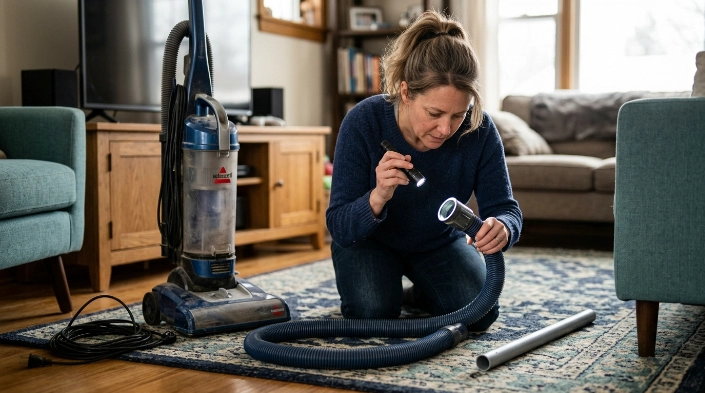
The safest approach is to start with the least aggressive method. Remove accessible debris first, then work toward a deeper obstruction only when needed.
Step 1: Disconnect the vacuum from power
Unplug a corded vacuum before starting. For cordless equipment, switch the machine completely off and follow the manufacturer’s maintenance instructions.
Never investigate a blockage while the vacuum is running. This matters even more near a powered brush roll.
Step 2: Remove the hose correctly
Detach the hose using its release button, twist-lock fitting, or other intended mechanism. Don’t pull hard on the flexible portion.
If it won’t release easily, check the owner’s manual. Forcing a connector can crack the hose cuff or locking mechanism.
Step 3: Inspect both hose openings
Use a flashlight to examine each end. Many clogs sit close to a connector rather than in the center.
Hair often combines with lint and dust into a dense plug. Paper, wrappers, small fabric pieces, and toy parts can also wedge across the airway.
- Pull loose debris out with your fingers when it is easy to reach.
- Use blunt pliers only for material already protruding from the opening.
- Never dig blindly into the hose with sharp metal.
Step 4: Straighten the hose as much as possible
Lay the detached hose on a clear floor. Relaxing tight bends makes it easier to identify where resistance occurs.
Don’t stretch an accordion-style hose aggressively. Excessive pulling can weaken the ribs or separate a cuff.
Step 5: Work the obstruction toward the closest opening
Use a smooth, blunt object that fits comfortably inside the hose. A suitable removable broom handle or rounded plastic rod may work on a simple, non-powered hose.
Push slowly. If you meet strong resistance, stop rather than forcing the tool through.
- Work from the end closest to the suspected blockage.
- Keep the hose as straight as its design comfortably allows.
- Use short, controlled movements.
- Stop if the hose stretches, kinks, or twists excessively.
Step 6: Recheck the entire airway
Look through both openings again after removing the debris. Small pieces may remain behind the main clog.
Also inspect the wand and inlet while everything is disconnected. Clearing only one section won’t help if another obstruction remains.
Step 7: Reassemble and test
Reconnect every component securely. Loose hose connections can create an air leak that feels like another clog.
Test the machine briefly on ordinary floor debris. Suction should feel normal without unusual noises or smells.
Section Takeaway: Start with visual inspection and accessible debris. Use a blunt tool only when necessary, and never trade a simple clog for a punctured hose.
What Should I Use to Remove a Vacuum Hose Clog?
A safe unclogging tool should be blunt, smooth, and narrower than the hose. Sharp objects can cut through flexible plastic surprisingly easily.
| Method | Best Use | Main Risk | My Approach |
|---|---|---|---|
| Hands | Visible debris near an opening | Limited reach | First choice when safe |
| Blunt plastic rod | Deeper dry obstruction | Damage if forced | Use gently |
| Smooth broom handle | Wide, straight removable hoses | Too large for narrow bends | Only if it fits freely |
| Water rinse | Manufacturer-approved washable hose | Electrical or moisture damage | Check the manual first |
| Wire or screwdriver | Not recommended | Punctures and internal damage | Avoid |
Why I avoid coat hangers
A straightened metal hanger looks convenient, but its end can catch a hose rib. One hard push can create a small puncture or tear.
A punctured hose leaks air. That means you may clear the original obstruction yet still have weak suction afterward.
Can I Wash a Vacuum Hose to Remove a Clog?
Some plain plastic hoses can be washed, but many should not get wet. Powered hoses may contain wiring, electrical contacts, switches, or connections for a motorized floorhead.
As of 2026, I still consider the owner’s manual the deciding factor. Never assume a hose is washable because its exterior looks like ordinary plastic.
If your hose is approved for washing
- Remove all loose debris first.
- Wash only according to the manufacturer’s directions.
- Drain the hose thoroughly.
- Leave it disconnected until the inside is completely dry.
- Inspect both cuffs before reinstalling it.
Trapped moisture can create odors and may carry moisture toward parts that should remain dry. Don’t reconnect a damp hose just because its outside feels dry.
For broader household moisture and indoor-air guidance, the U.S. Environmental Protection Agency provides homeowner information on indoor air quality and moisture control.
Expert Alert: If water has entered a powered hose, vacuum body, motor area, or electrical connector, stop using the appliance. Have the machine checked by the manufacturer or a qualified appliance technician.
Why Does My Vacuum Hose Keep Clogging?
Repeated clogs usually mean debris is getting caught somewhere before it can reach the bag or bin. Hair, fibers, oversized objects, restricted airflow, and dirty filters are common contributors.
Empty the bin or replace the bag on time
Don’t keep vacuuming after the dirt container reaches its intended fill level. Follow the markings and instructions provided for your model.
A packed collection system can interfere with normal airflow. It can also make troubleshooting confusing because the symptoms resemble a hose obstruction.
Maintain the filters correctly
A filter loaded with dust may reduce airflow even when the hose is open. Clean or replace filters according to the manufacturer’s schedule.
- Don’t wash a filter unless it is labeled washable.
- Let washable filters dry completely before installation.
- Replace damaged or deteriorated filters.
- Seat every filter correctly after maintenance.
Pick up large objects before vacuuming
I scan the floor before using the vacuum when small toys, paper scraps, socks, or craft materials may be present. It takes less time than clearing a blockage later.
Be especially careful around children’s play areas and under furniture. That’s where larger objects often hide.
Remove long hair and thread from the brush roll
Long fibers can wrap tightly around a rotating brush. They can also combine with dust and pet fur near narrow intake passages.
Switch the machine off before servicing the floorhead. Use only the brush-roll cleaning method approved for your model.
Match the vacuum to the mess
A normal household dry vacuum isn’t designed for every type of debris. Liquids, wet material, construction dust, ash, and large debris may require equipment made specifically for that task.
- Pick up coins and hard objects by hand.
- Collect large paper pieces before vacuuming.
- Avoid sucking up damp debris with a dry-only vacuum.
- Follow the appliance instructions for fine powders.
Good vacuum maintenance also matters in homes where dust and allergens are a concern. The Asthma and Allergy Foundation of America provides broader information about indoor allergens and household exposure control.
Section Takeaway: Recurring clogs aren’t solved by repeatedly pushing debris through the hose. Keep the entire airflow path clear, maintain filters, and remove oversized debris before vacuuming.
What If Suction Is Still Weak After Clearing the Hose?

If the hose is open but suction remains poor, continue troubleshooting the complete airflow path. Don’t keep inserting tools into a hose that is already clear.
Check these areas next
- Dust bin or bag: Empty or replace it according to the manufacturer’s instructions.
- Pre-motor filter: Inspect it for heavy dust buildup.
- Exhaust filter: Service it only as specified by the manufacturer.
- Extension wand: Look through rigid tubes for lodged objects.
- Floorhead: Inspect narrow passages where debris enters the hose.
- Brush roll: Remove hair and fibers using the approved procedure.
- Hose seals: Make sure cuffs and connectors are seated properly.
Look for an air leak
A split hose can mimic a blockage because air enters through the damaged area instead of the cleaning end. Inspect the flexible tubing while gently bending it.
Pay particular attention to the cuffs. Those areas move frequently and can loosen over time.
Stop if you notice overheating or a persistent burning smell
Switch the vacuum off if it becomes unusually hot, repeatedly shuts down, or produces a persistent burning odor. Continuing to run it may worsen an electrical or mechanical problem.
Expert Alert: Persistent overheating, electrical smells, damaged wiring, sparking, or an inaccessible internal blockage should be handled by a qualified appliance technician or the manufacturer’s service team.
Frequently Asked Questions About Unclogging a Vacuum Hose
What is the easiest way to unclog a vacuum hose?
Disconnect the vacuum from power, remove the hose, and inspect both openings with a flashlight. Pull out reachable material first, then gently use a smooth, blunt tool if the clog sits deeper inside.
Can I use a broom handle to unclog a vacuum hose?
A smooth broom handle can work with some wide, straight, non-powered hoses if it fits without force. Don’t use one when it is too wide or when the hose contains internal wiring or delicate components.
Can I use a wire coat hanger?
I don’t recommend it. Metal wire can catch flexible hose ribs, scratch internal surfaces, or puncture the hose when pressure is applied.
Can I rinse my vacuum hose with water?
Only wash the hose when the manufacturer confirms it is washable. Never rinse a powered hose or one containing electrical contacts unless its instructions explicitly permit water cleaning.
Why does my vacuum have weak suction even though the hose is clear?
Check the bag or bin, filters, wand, floorhead, brush roll, seals, and hose for leaks. Weak airflow can come from several parts of the vacuum, not just the flexible hose.
How do I prevent hair from clogging the hose?
Remove heavy hair buildup from the floor before vacuuming, keep the brush roll clean, and inspect narrow intake passages regularly. Empty the collection container and maintain filters according to your model’s instructions.
Should I repair or replace a damaged vacuum hose?
Replacement is usually the safer option when a hose has a significant split, damaged electrical connection, broken cuff, or repeated air leak. Check the manufacturer’s parts guidance before attempting a permanent repair.
A clogged vacuum hose is usually manageable when you work slowly and protect the hose itself. Start with power disconnected, inspect the easiest areas first, and never force a sharp object through the tubing.
Once the hose is clear, check the rest of the airflow path before declaring the job finished. A few minutes of routine maintenance can prevent the same clog from returning.
