Can You Use Soap to Wash a Vacuum Filter?

Quick Answer
You should use soap to wash a vacuum filter only when the manufacturer specifically allows it. Some washable foam filters can be cleaned with mild detergent, while other washable filters must be rinsed with water only; for example, Dyson’s vacuum filter-care guidance says not to use detergents.
Before Adding Soap
- Check the manual: The instructions for your exact vacuum and filter decide whether detergent is safe.
- Confirm it’s washable: Never put a disposable or non-washable filter in water.
- Use mild soap only: If detergent is permitted, follow the manufacturer’s amount and cleaning method.
- Rinse thoroughly: Don’t leave visible suds or cleaning residue in reusable filter material.
- Dry completely: Never reinstall a washed filter while it is still damp.
Safest Default
- If you cannot confirm that soap is permitted, skip it and follow the manufacturer’s water-only or replacement instructions.
Soap seems like an obvious way to get a dirty vacuum filter cleaner, but vacuum filters aren’t all made the same. I’ve handled foam, pleated, pre-motor, post-motor, and HEPA-style filters, and the care instructions can differ even between similar-looking machines.
This guide explains when soap is safe, when it should stay away from the filter, and what to do if you’ve already used it. The safest rule is simple: treat the manufacturer’s instructions as the final authority.
In This Guide
Is Soap Safe for a Vacuum Filter?
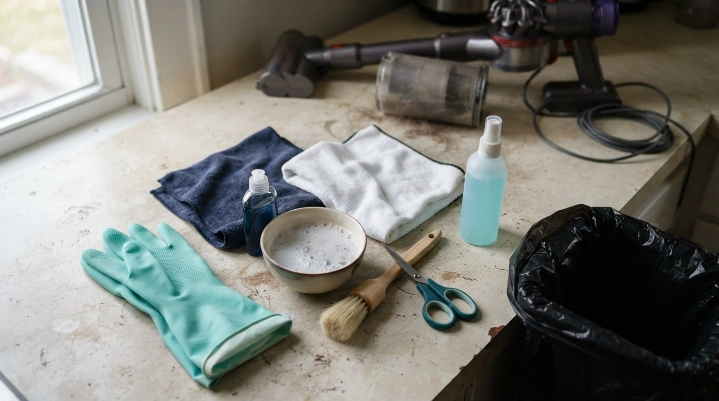
Soap is safe for some vacuum filters, but there is no universal rule. A manufacturer may approve mild detergent for one washable foam filter while banning detergent completely on another filter.
Definition: A washable vacuum filter is reusable filter media that its manufacturer specifically approves for cleaning with water. “Washable” does not automatically mean “safe to wash with soap.”
That distinction matters. The words washable, rinseable, and reusable tell you that the filter may tolerate a certain cleaning method, not every cleaning product in your laundry room or kitchen.
Manufacturer instructions can be completely different
Dyson gives a clear water-only example. Its filter-care instructions tell owners of supported cordless models to use cold tap water and not detergent.
BISSELL provides a useful counterexample. Its PowerForce Compact filter-maintenance guidance says the filter can be hand-washed in warm water and that mild detergent may be used.
Neither company is contradicting the other. They’re giving instructions for different filter designs.
- Water-only filter: Don’t add dish soap, laundry detergent, disinfectant, or another cleaner.
- Detergent-approved filter: Use only the mild cleaning method the manufacturer specifies.
- Non-washable filter: Keep it out of water and follow replacement or dry-cleaning instructions.
- Unknown filter: Find the model number and check the official manual before cleaning.
Section Takeaway: “Washable” and “soap-safe” are not interchangeable. The instructions for your exact filter determine what belongs in the sink.
Why Do Some Manufacturers Tell You Not to Use Soap?
Some filter media are designed to be rinsed with plain water and nothing else. Adding detergent introduces chemicals and residue that the manufacturer did not include in its approved maintenance procedure.
The concern isn’t that every drop of soap will instantly destroy every filter. The problem is that you cannot assume an unapproved cleaner is compatible with the filter’s fibers, seals, coatings, adhesives, or structure.
Soap can be difficult to remove from porous material
Foam and pleated filters contain many small spaces where dust collects. Those same spaces can hold suds or detergent if the filter is not rinsed thoroughly.
A filter may look clean on the surface while still holding cleaning solution deeper inside. That’s one reason I don’t judge a washed filter by appearance alone.
- Extra residue: Detergent can remain trapped if rinsing is incomplete.
- Added fragrance: Scented products introduce substances the filter wasn’t necessarily designed to handle.
- Uncertain compatibility: Cleaners may interact differently with foam, paper-like pleats, seals, or bonded materials.
- Longer rinsing: Removing suds can require more water and handling than a simple rinse.
More soap does not mean a cleaner filter
A vacuum filter doesn’t need to smell like freshly washed clothes. Its job is to maintain the filtration and airflow characteristics intended for that machine.
As of 2026, there still isn’t one cleaning method that applies to every household vacuum filter. Even well-known brands use different maintenance instructions across product lines.
Consumer Reports also notes in its vacuum cleaner buying guide that vacuum filters require periodic cleaning or replacement. The correct maintenance method depends on the equipment rather than one universal cleaning recipe.
Section Takeaway: Don’t add soap simply because a filter looks especially dirty. Use detergent only when the filter’s official care instructions authorize it.
Which Vacuum Filters Can Be Washed With Soap?
You cannot determine soap compatibility from the filter category alone. Foam, felt, pleated, pre-motor, post-motor, and HEPA filters all vary by manufacturer and model.
| Filter or Example | Soap or Detergent? | Cleaning Rule |
|---|---|---|
| Dyson supported washable cordless filter | No | Cold tap water; Dyson says not to use detergent. |
| BISSELL PowerForce Compact filter | Mild detergent permitted | Hand-wash in warm water; rinse well and dry completely. |
| Generic washable foam filter | Model-dependent | Check the filter label and official manual before adding detergent. |
| Washable pleated filter | Model-dependent | Use only the manufacturer’s approved rinse method. |
| Non-washable HEPA or paper filter | No | Do not wash unless the manufacturer explicitly identifies it as washable. |
What does HEPA mean?
HEPA means high-efficiency particulate air. The U.S. Environmental Protection Agency’s HEPA explanation describes HEPA as a type of pleated mechanical air filter and defines its filtration performance.
That performance designation doesn’t tell you whether a particular vacuum filter can be washed. It also doesn’t tell you whether soap is acceptable.
What about allergy and dust-sensitive households?
Correct filter maintenance becomes more important when you are trying to manage household dust and allergens. A filter should fit correctly and be maintained without damaging the media or seals.
The National Institute of Environmental Health Sciences includes a HEPA-filter vacuum or double-layer microfilter bag among its dust-mite prevention strategies. That makes following the vacuum manufacturer’s filter instructions especially sensible in dust-sensitive homes.
Section Takeaway: Filter material can provide clues, but it cannot replace the manual. A HEPA label, foam construction, or reusable appearance does not prove that soap is safe.
How Do You Wash a Vacuum Filter Without Soap?
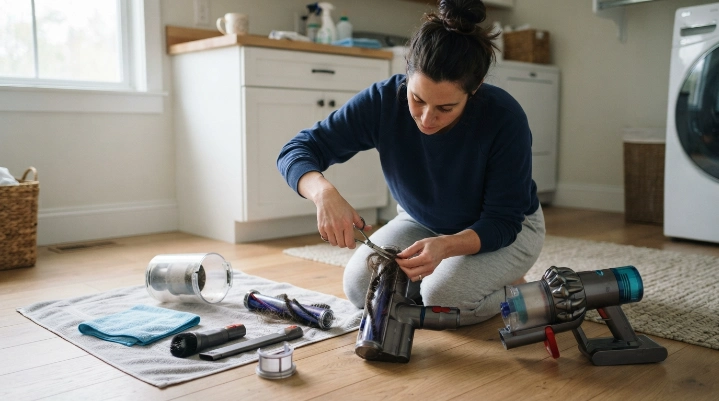
If the manufacturer confirms that the filter is washable but doesn’t authorize detergent, use its water-only method. Keep the process gentle and give the filter enough time to dry.
- Turn off the vacuum. Unplug a corded machine or switch off a cordless model before removing parts.
- Remove the filter. Note how it fits so you can reinstall it correctly.
- Remove loose dust first. Gently tap away loose debris if the manufacturer’s instructions permit it.
- Rinse as directed. Use the approved water temperature and rinse direction for your model.
- Continue until clean. Let water carry away loose dirt without scraping delicate media.
- Remove excess water gently. Don’t twist or crush pleated material unless the instructions specifically allow squeezing.
- Air-dry completely. Reinstall the filter only when no moisture remains.
How long should a vacuum filter dry?
Drying times vary. For example, Dyson says supported filter units should dry for a minimum of 24 hours in an area with good airflow.
Don’t assume that 24 hours applies to every filter. A thick foam filter in humid conditions may behave differently from a thinner filter in a dry room.
- Don’t reinstall it damp: Wait until the filter is completely dry.
- Don’t use high heat: Avoid ovens, microwaves, dryers, or other unapproved heat sources.
- Don’t vacuum without required filters: Leave the machine unused while the filter dries.
- Don’t rush because the surface feels dry: Moisture can remain deeper inside thick material.
I usually wash reusable filters after the day’s cleaning is finished. That removes the temptation to put one back before it has fully dried.
Expert Alert: If water enters the vacuum’s motor, battery compartment, wiring, charging contacts, or another electrical area, stop using the appliance and have it inspected by a qualified technician.
What Should You Do If You Already Used Soap?
Don’t panic if you washed a filter with soap before checking the instructions. First identify whether that specific filter is washable and whether detergent is permitted.
If the manufacturer allows mild detergent
Rinse the filter according to the instructions until the approved cleaning process is complete. Then let it air-dry fully before reinstalling it.
Don’t add extra detergent because the filter still looks stained. Permanent discoloration doesn’t always mean the filter remains dirty.
If the manufacturer says water only
Rinse away the detergent with the approved water-cleaning method without aggressively scrubbing the filter. Then inspect it for deformation, damaged pleats, loose seals, or other visible changes.
If you’re unsure whether the filter remains usable, replacement with the correct manufacturer-approved part is the safer choice. Don’t experiment by running the vacuum with a questionable filter.
If the filter was never washable
A non-washable filter that has been soaked may need replacement. Check the official instructions before attempting to dry and reuse it.
Also inspect the filter compartment for moisture. Keep the vacuum switched off until every area that should remain dry is completely dry.
Frequently Asked Questions
Can I use dish soap to clean a vacuum filter?
Only if your vacuum manufacturer specifically allows mild dish soap or detergent for that filter. Some BISSELL filters permit mild detergent, while supported Dyson washable filters specify water without detergent, so there is no universal dish-soap rule.
Can I use Dawn on a vacuum filter?
Don’t use Dawn or another dishwashing liquid unless the official care instructions permit a mild detergent. The brand of soap doesn’t override the filter manufacturer’s cleaning requirements.
Can you wash a HEPA vacuum filter with soap?
Only when that specific HEPA filter is both washable and approved for detergent cleaning. “HEPA” describes filtration performance, not washability, so check the model’s manual before using either water or soap.
Can you use laundry detergent on a vacuum filter?
Avoid laundry detergent unless your manufacturer explicitly recommends it, which is uncommon in normal vacuum-filter care. Laundry products may contain fragrances and other additives that aren’t part of the filter’s approved maintenance process.
Can I wash a foam vacuum filter with soap?
Some foam filters can be washed with warm water and mild detergent, but others have different instructions. Confirm the exact filter model first rather than assuming all foam is soap-safe.
What happens if I put a wet filter back in the vacuum?
Don’t operate a vacuum with a filter that the manufacturer requires to be dry. Remove the filter, let it air-dry completely, and make sure the filter compartment is dry before reinstalling it.
Should a stained vacuum filter look completely white after washing?
Not necessarily. Filter material can remain discolored even after approved cleaning, so don’t keep adding soap or scrubbing simply to restore its original color. Replace the filter when its condition or manufacturer schedule calls for replacement.
What Is the Safest Takeaway?
Yes, you can use soap to wash some vacuum filters, but only when the manufacturer permits it. Other washable filters require plain water, while disposable or non-washable filters should never be soaked at all.
I use one rule whenever a filter reaches the sink: check the model-specific instructions before adding anything to the water. That simple habit prevents most avoidable filter-cleaning mistakes.
- Confirm the filter is washable.
- Check whether detergent is specifically permitted.
- Use only the approved cleaning method.
- Rinse thoroughly when detergent is allowed.
- Let the filter dry completely before reinstalling it.
- Replace damaged or uncertain filters rather than experimenting.
Maintaining the filter correctly helps you protect the vacuum’s intended airflow and filtration system. When the manual and generic internet advice disagree, follow the manual.