10 Best In-Ground Pool Vacuum Cleaners for a Spotless Pool

Keeping an in-ground pool clean takes regular work. Leaves, dirt, and fine debris can settle on the floor and walls, even when the pool’s filter runs every day. A pool vacuum cleaner helps remove this buildup and reduces the need for manual brushing and skimming.
In-ground pool vacuums include suction-side, pressure-side, and robotic models. Each type connects to or uses the pool’s cleaning system differently, so we consider how well each vacuum cleans, how easy it is to set up, and how much maintenance it needs. The most important factors are the vacuum’s cleaning coverage, pool compatibility, debris capacity, and long-term operating cost. We evaluated the leading options to find the in-ground pool vacuum cleaners that make routine maintenance simpler and more consistent.
Best In-Ground Pool Vacuum Cleaners
We reviewed in-ground pool vacuum cleaners for cleaning performance, ease of use, pool compatibility, and overall value. Below, we list our top picks to help us choose a cleaner that fits our pool and maintenance needs.
Dolphin Nautilus CC Robotic Pool Cleaner

We recommend this cleaner for in-ground pools up to 33 feet because it scrubs floors and walls with little setup or supervision.
Pros
- Climbs pool walls and removes stuck-on debris
- Top-load filter makes emptying simple
- Runs a cleaning cycle in about two hours
Cons
- The cord can twist during use
- May need extra passes around steps and corners
- Filter care requires regular attention
We found the setup simple: connect the power supply, place the cleaner in the pool, and start the cycle. Its active brush picked up common dirt, leaves, and smaller debris without requiring us to connect it to the pool’s pump system.
The wall-climbing feature worked well on straight sections and helped clean more of the pool than a floor-only model. We noticed that steps, tight corners, and some waterline areas may still need manual brushing.
After each cycle, we could lift out the top-access filter and rinse it quickly. The power cord gave the cleaner useful reach, but we had to straighten it occasionally to limit tangles. Overall, this is a practical choice for routine cleaning, backed by a one-year limited warranty.
Hayward Poolvergnuegen 2-Wheel Pool Cleaner
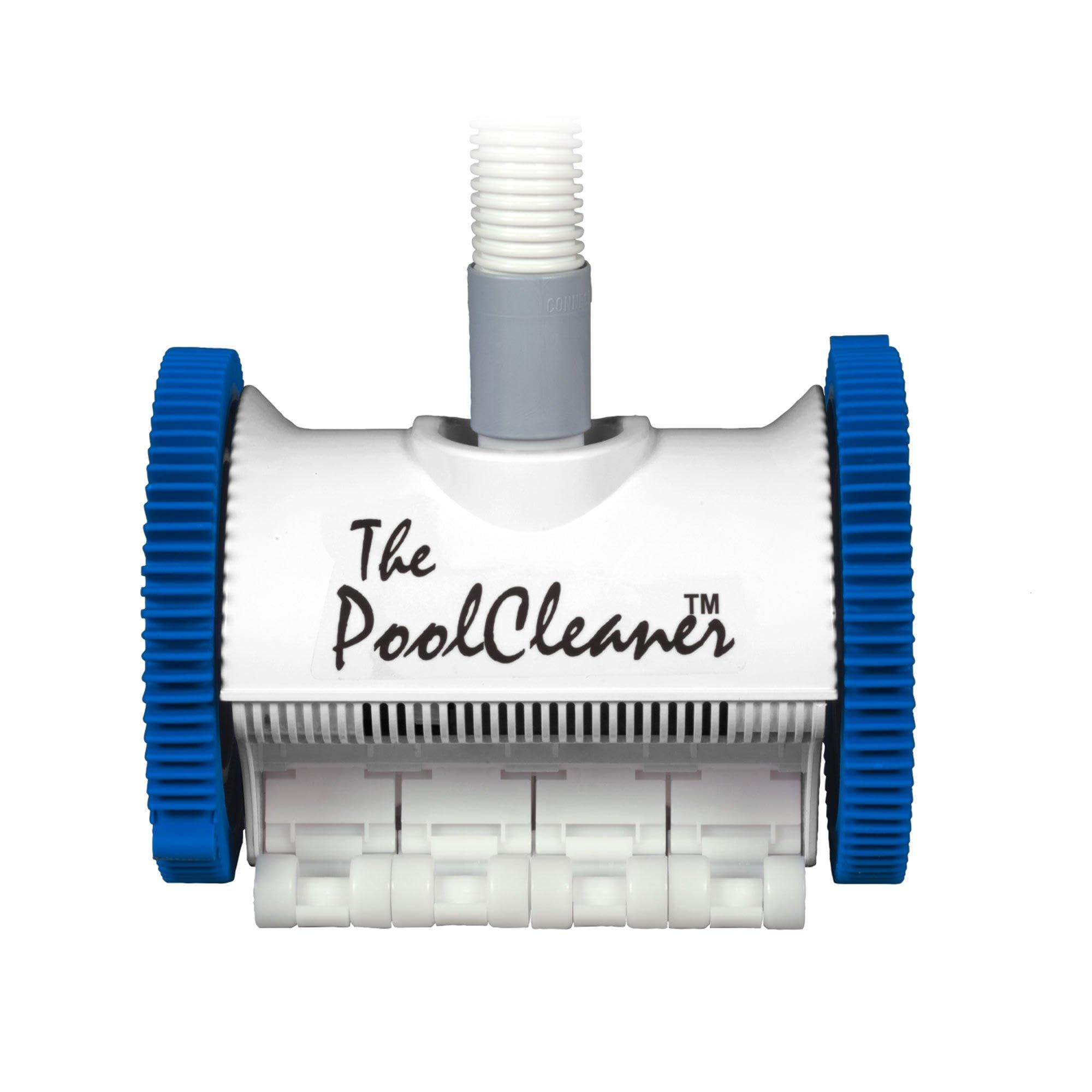
We recommend this suction-side cleaner for average-sized pools because it installs easily, handles uneven surfaces well, and rarely loses its path.
Pros
- Connects to the skimmer or suction port without a booster pump
- Moves well over drains, steps, and uneven pool surfaces
- Turbine vanes help reduce clogs from larger debris
Cons
- Depends on the pool pump and filter for power
- Heavy leaf buildup may require manual cleanup first
- Works best within its recommended pool size
We connected the cleaner to the suction port and found the setup simple. Once the pump started, its two wheels moved steadily across the pool floor without needing a separate power cord or booster pump.
The tire tread helped it climb over common obstacles, while the adjustable roller skirt kept suction steady on uneven areas. Its steering pattern also changed direction regularly, which helped prevent it from sitting in one place.
The cleaner reached the floor, steps, and waterline during use. We still needed to remove large piles of leaves after storms, and the pump and filter required regular cleaning. For pools up to 16 by 32 feet, this Hayward offers dependable everyday cleaning with little hands-on work.
CoasTeering Ultra Nebula Pool Vacuum

We recommend this cordless robot for pool owners who want strong floor, wall, and waterline cleaning without managing a power cord.
Pros
- Cleans floors, walls, and waterlines
- Runs for up to 180 minutes
- Returns to a pickup point automatically
Cons
- Charging can take several hours
- Its larger size may be harder to lift
- Results can vary with pool shape and debris
We found the Ultra Nebula simple to start: drop it into the pool, press the button, and let it work. Its tracked design held onto sloped walls well, while the brushes helped remove leaves, sand, and other small debris from the pool surface.
The cordless design kept the pool area tidy and eliminated cord management. We also liked the automatic return feature, which brought the cleaner near the wall when the cycle ended or the battery ran low. That made retrieval easier, especially in a deep pool.
Its long runtime suits larger in-ground pools, but the battery needs several hours to recharge. The cleaner also feels substantial when lifting it from the water, so some users may find removal less convenient.
With floor, wall, and waterline coverage, four cleaning modes, and support for saltwater and freshwater pools, the CoasTeering Ultra Nebula offers a well-rounded option for routine pool maintenance.
Zodiac G3 In-Ground Pool Cleaner

We recommend the Zodiac G3 for pool owners who want a quiet, low-maintenance cleaner that works with low-speed pumps.
Pros
- Handles floors, walls, steps, and several pool surfaces
- Sets up quickly without tools
- Moves well around corners and fittings
Cons
- Struggles with large debris
- Needs proper water flow to move consistently
- Can become stuck on some pool floor lines
We found the G3 simple to assemble and connect to the skimmer or suction line. Its long hose provides useful coverage, while the wheel deflector helps it turn around corners and pool features.
During use, the cleaner stayed fairly quiet and handled dust, leaves, and other small debris well. The finned disc held to the surface without frequently catching on drains or lights.
The FlowKeeper valve helped maintain cleaning performance with lower-flow pumps. We still needed to check the pump and filter regularly, since suction cleaners depend on good water flow.
The G3 uses a diaphragm instead of gears or wheels inside the cleaner. That design keeps maintenance simple, although the diaphragm will eventually need replacement. We also found that larger debris may require manual removal first.
WYBOT C2 Cordless Pool Vacuum
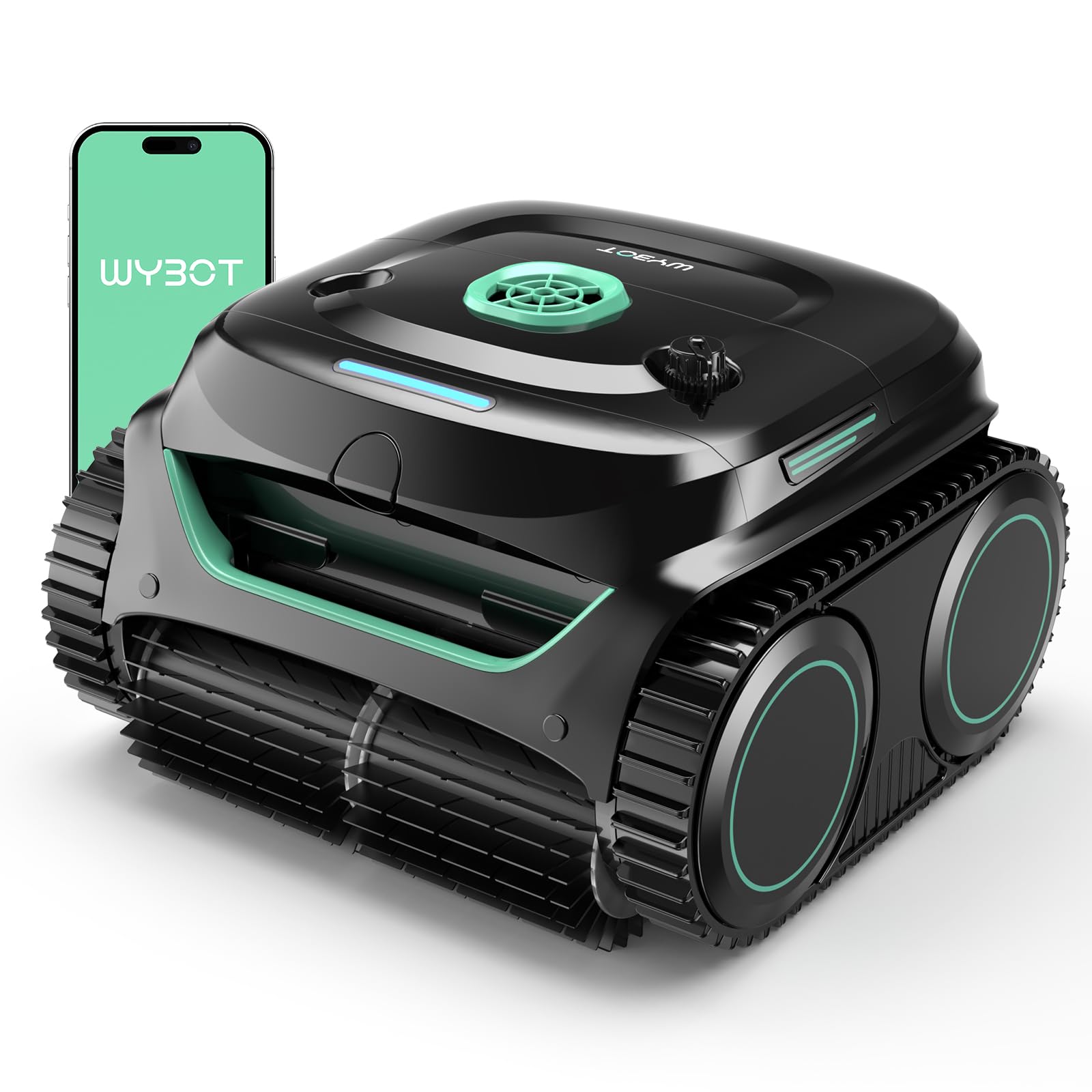
We recommend the WYBOT C2 for in-ground pool owners who want cordless cleaning, wall coverage, and app controls in one robot.
Pros
- Cleans floors, walls, steps, and the waterline
- Runs for up to 180 minutes
- Uses dual filters for leaves and fine dirt
Cons
- Its 24-pound weight makes removal harder
- Charging takes about 3.5 hours
- App controls may feel unnecessary for simple cleaning
We found the C2 easy to start: charge it, place it in the pool, and choose a cleaning mode. Its cordless design kept us from managing a long hose or power cable during each cycle.
The robot handled floor cleaning well and climbed walls and steps with steady movement. Its built-in navigation helped it cover the pool without wandering as much as basic robotic cleaners. We also liked the fine filter, which caught smaller particles along with leaves and sand.
After cleaning, the C2 automatically moved toward the pool edge when its battery ran low or the cycle ended. That made lifting it out easier, although its heavier body still required some effort. We needed to rinse the filters and clear hair from the brushes after each use.
Bluetooth and seven cleaning modes give us useful control, but some owners may prefer physical controls. We also recommend checking the pool surface before use, since the care instructions warn against sharp or abrasive areas.
Zebary C5-M Cordless Robotic Pool Cleaner
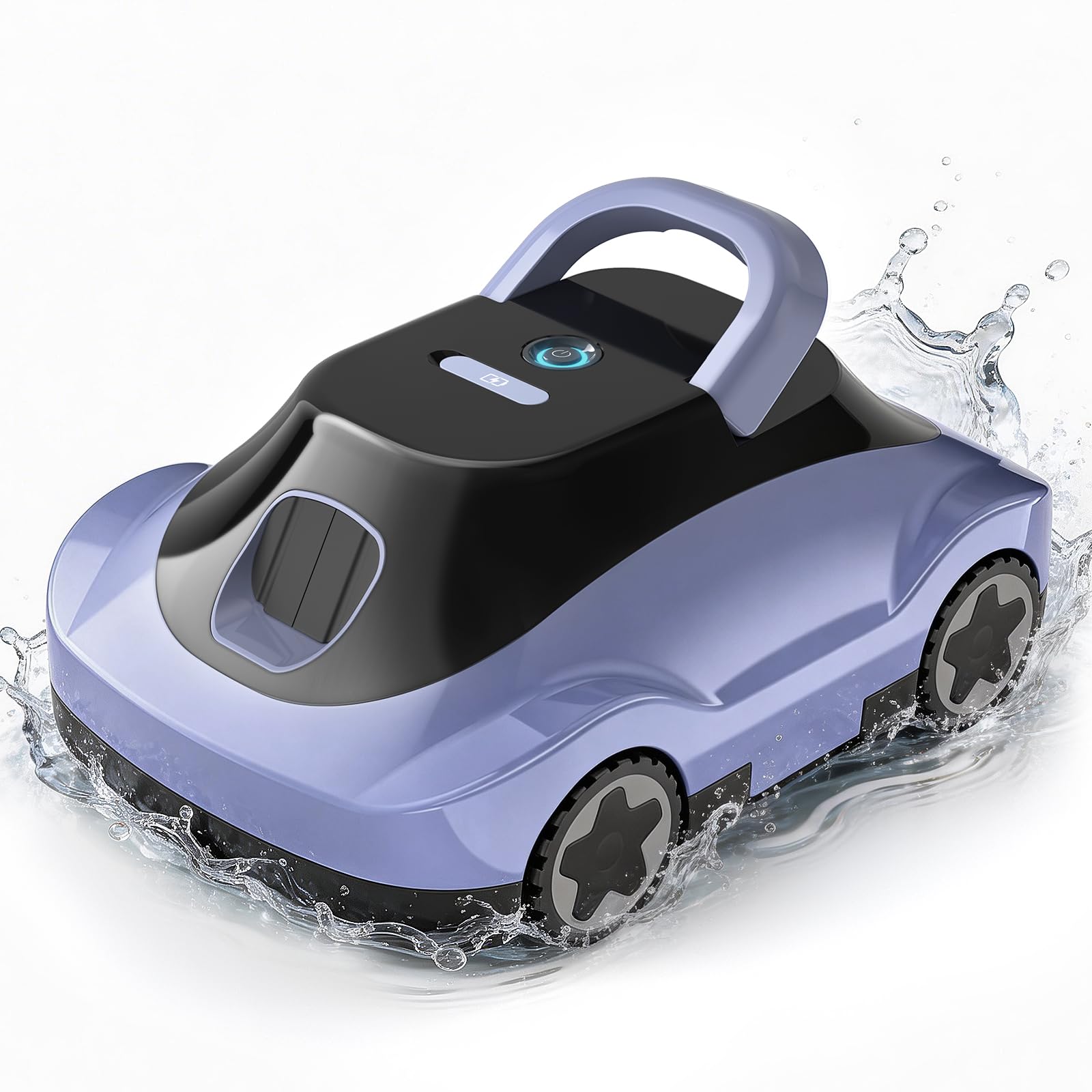
We recommend the Zebary C5-M for pool owners who want a lightweight, cordless cleaner with a long runtime and simple controls.
Pros
- Cordless design avoids hose and cable tangles
- Large 3-liter basket holds plenty of debris
- Auto-parking makes removal easier
Cons
- Best suited to flat floors and slopes up to 10 degrees
- Fine mesh basket may need frequent rinsing
- It does not replace a wall-scrubbing cleaner
We found the one-button setup easy to use. We placed the cleaner in the pool, started it, and let it work without connecting a hose or external pump. Its cordless design kept the cleaning cycle free from cable snags.
The dual inlets picked up leaves, dirt, and sand from the pool floor. We liked the steady movement across flat areas, though the cleaner is designed for surfaces with only a modest slope. Buyers with steep floors or complex pool shapes may need a different model.
The 3-liter basket gave us useful capacity between cleanings. Its fine mesh also caught smaller particles, but we needed to rinse the filter after use to maintain good water flow.
When the cycle ended or the battery ran low, the cleaner moved toward the pool wall. The included retrieval hook helped us lift it out without reaching into the water. Its advertised runtime is up to 180 minutes, although actual use can vary with debris, pool size, and surface conditions.
Polaris Vac-Sweep 280

We recommend the Polaris Vac-Sweep 280 for in-ground pools with a dedicated pressure-side return line and a separate booster pump.
Pros
- Cleans pool floors and walls
- Captures leaves, acorns, and pebbles
- Works with many pool surfaces
Cons
- Requires a booster pump
- May need professional installation
- Uses a separate debris bag
During use, we found that the 280 covers the pool steadily and reaches both the floor and walls. Its large inlet handles bigger debris that could otherwise fill the skimmer basket or clog the main filter.
The included 31-foot hose provides useful reach for many pool layouts. The backup valve also helps free the cleaner when it becomes trapped near corners or obstacles.
This cleaner works with vinyl, fiberglass, gunite, pebble, and tile surfaces. However, it needs a dedicated return line and booster pump, so it may not suit pools without that setup.
The debris bag is easy to remove and keeps larger waste out of the pool’s main filtration system. We would choose the Polaris 280 for reliable pressure-side cleaning, but buyers should consider ongoing parts and pump costs.
WYBOT C1 Cordless Pool Vacuum
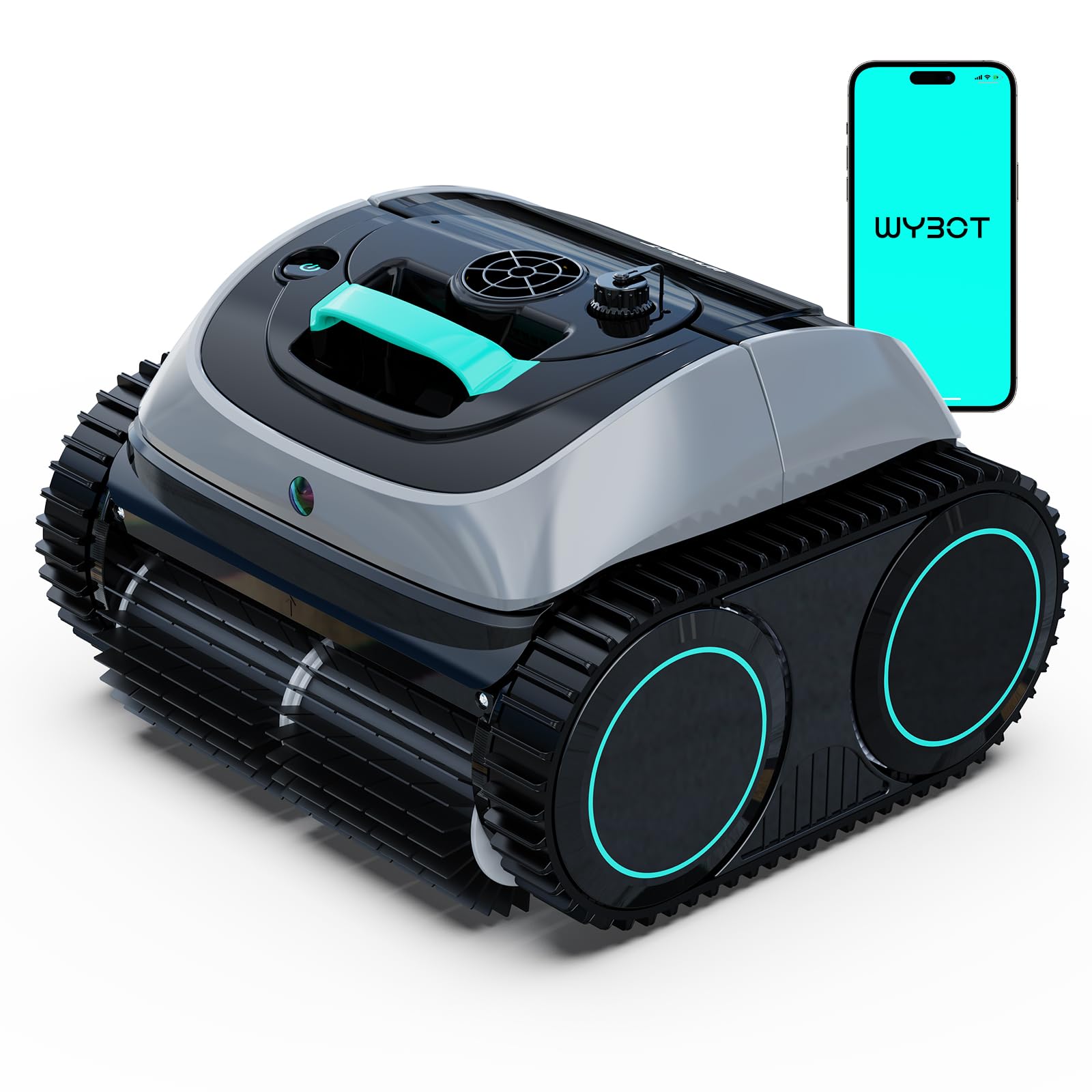
We recommend the WYBOT C1 for inground pool owners who want cordless floor, wall, waterline, and stair cleaning with little setup.
Pros
- Cleans fine dirt, sand, leaves, and algae
- Covers pools up to 1,614 square feet
- Large top-load filter rinses out quickly
Cons
- App connection may be unreliable
- Needs regular rinsing after use
- Takes about three hours to recharge
We found the cordless design easy to use. We simply charged the unit, placed it in the pool, and selected a cleaning mode. Without a power cable or hose, the setup felt less tiring than manual vacuuming.
The C1 handled common pool debris well, including sand, dirt, leaves, and small algae buildup. Its dual brushes gripped tile, mosaic, and glass surfaces, while the three-motor design helped it climb walls and manage slopes.
Navigation worked well across the pool floor and walls. The robot used different paths for each area and avoided drains without getting stuck often. It also reached the waterline and stairs, although coverage can vary with pool shape and surface design.
The 180-micron filter basket held a useful amount of debris and lifted out from the top. We could rinse it without tools, but we still needed to clean the robot with fresh water after each cycle.
Battery life lasted up to about two and a half hours in testing conditions, while charging took roughly three hours. The app offers route controls and an automatic mode, but some users may need to run the cleaner without app access if the connection fails.
Letexpool C1 Robotic Pool Cleaner
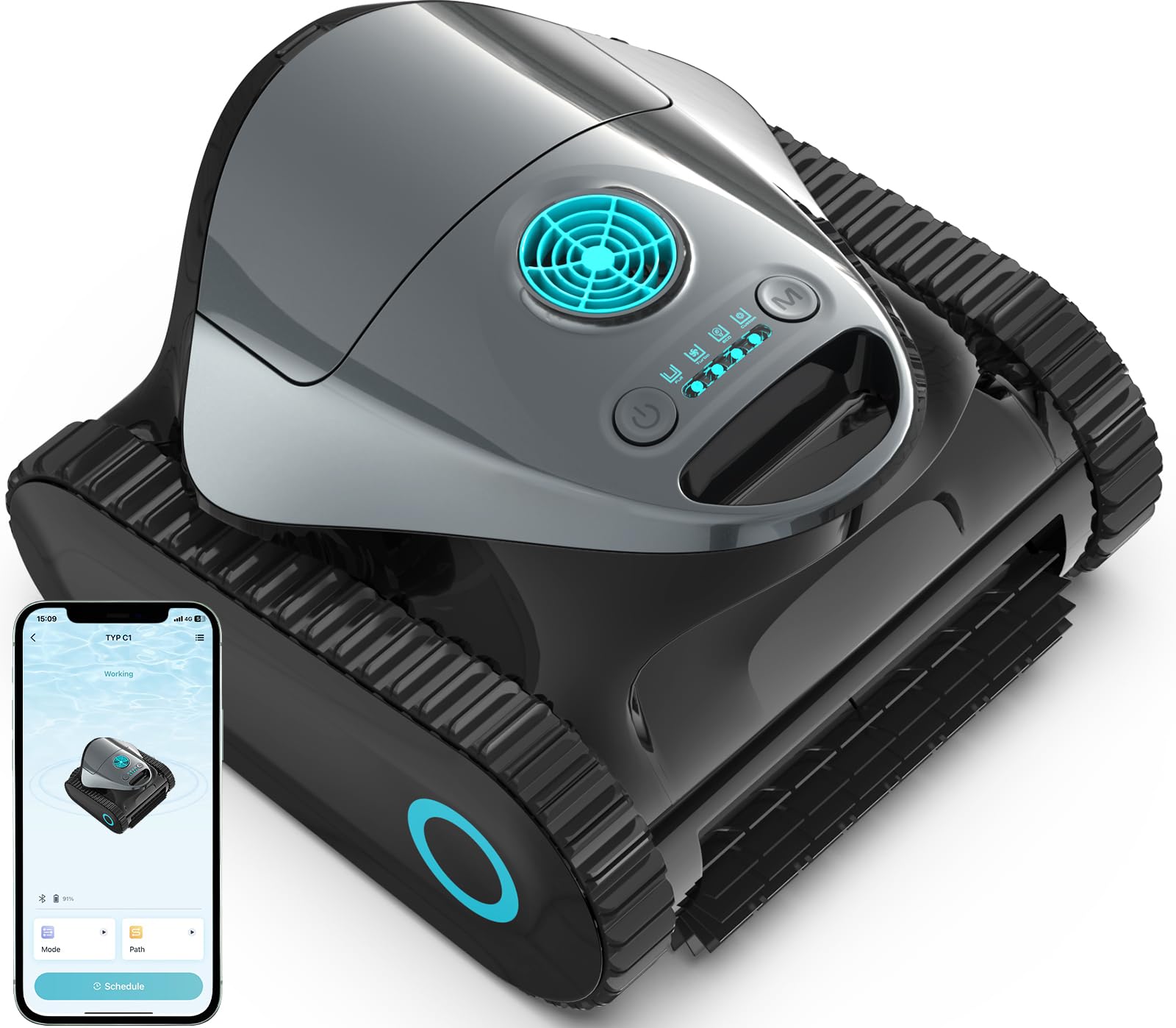
We recommend this cordless cleaner for in-ground pool owners who want broad floor, wall, and waterline coverage with little hands-on work.
Pros
- Climbs walls and reaches the waterline
- Runs for up to 180 minutes
- App control and dual filtration
Cons
- Requires setup before entering the water
- May need help with stubborn stains
- Best suited to pools up to 1,615 square feet
We found the C1 easy to place in the pool because it has no power cord to manage. Its three motors and rolling brushes gave it steady movement across the floor, while the wall-climbing mode helped cover areas many pool robots miss.
Fine dirt, leaves, and sand collected in the dual filter system during testing. We still checked and emptied the filters after each cycle, but the cleaner reduced the amount of manual vacuuming our pool needed.
The app lets us choose cleaning modes and paths before the robot enters the water. Its 2.5-hour charging time and claimed 180-minute runtime worked well for regular cleaning, though larger or dirtier pools may need more than one cycle.
The C1 fits pools up to 1,615 square feet and includes automatic shutoff. We would choose it for routine maintenance, but we would not rely on it alone to remove heavy algae or deeply stuck stains.
Zodiac MX6 Suction-Side Pool Cleaner
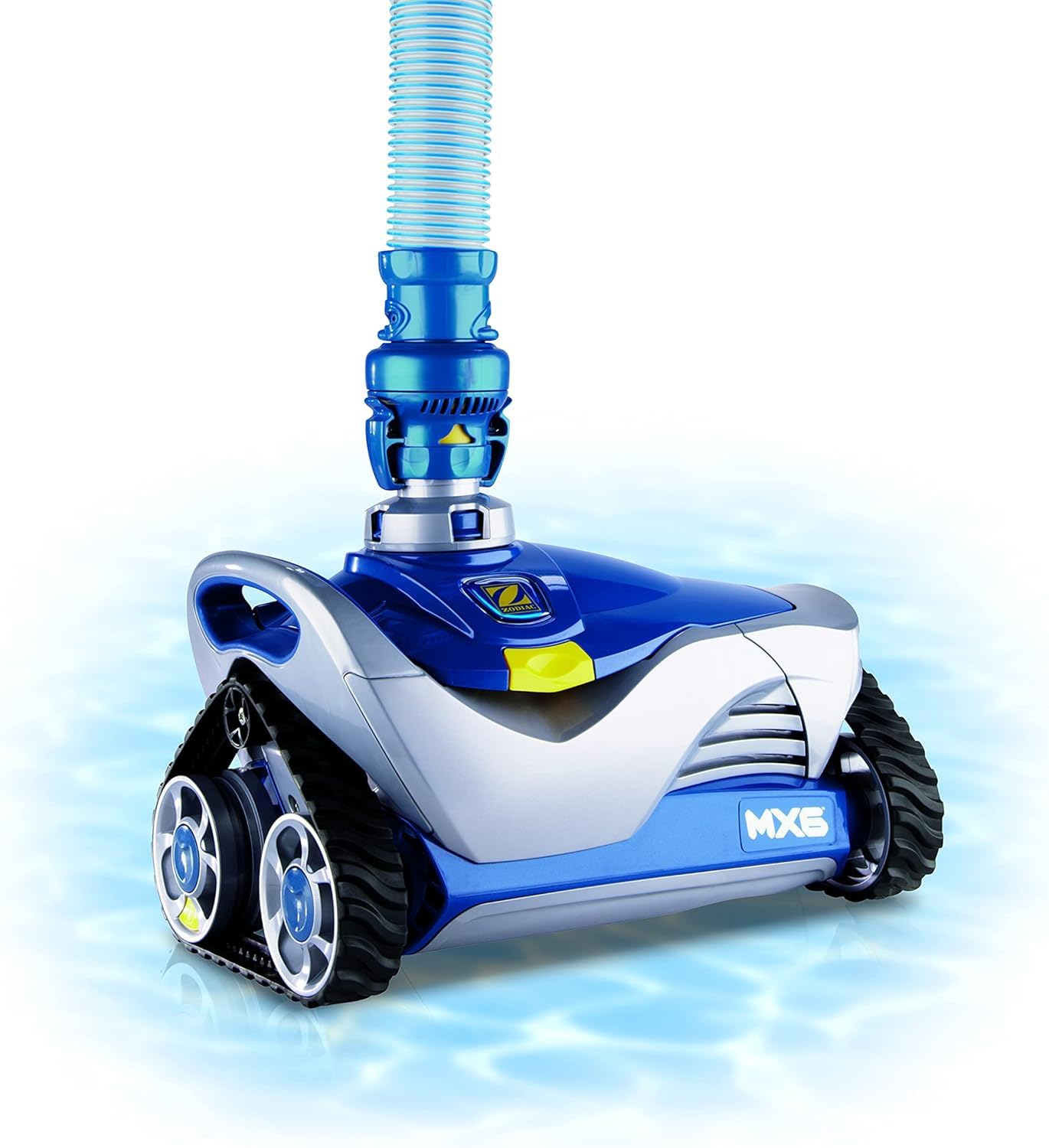
We recommend the Zodiac MX6 for in-ground pool owners who want a compact cleaner that uses the existing pool pump and filtration system.
Pros
- Uses low water flow and works with many variable-speed pumps
- Climbs walls when we set the water flow correctly
- Needs no batteries or internal debris filter
Cons
- Small leaves can clog the cleaner
- Wall climbing depends on pump strength and flow settings
- Some parts may wear out with regular use
When we connected the MX6 to the skimmer, setup took little effort. The included 32-foot hose gave us enough reach for many standard pools, though larger or unusual layouts may need extra hose.
The compact body moved well across the pool floor and handled curves without much trouble. Its tracks helped it climb the walls, but we had to adjust the flow control before it covered the pool evenly.
Because the MX6 sends debris into the pool’s filtration system, we did not need to empty a separate debris canister. That also means the skimmer basket and filter can fill faster, especially after heavy leaf fall.
We found the cleaner most useful for routine dirt and small debris. Larger leaves sometimes blocked the intake, and suction-side cleaning also depends on the pool pump running at the right setting. Overall, the MX6 offers simple daily cleaning without batteries or extra electrical power.
Buying Guide
We should match the vacuum to our pool’s surface, shape, and cleaning needs. Check whether it works with vinyl, fiberglass, tile, or concrete, and confirm that it can handle slopes, steps, and tight corners.
| Feature | What we should check |
|---|---|
| Pool size | Choose a cable or hose length that reaches every area. |
| Cleaning type | Look for models that scrub floors, walls, or the waterline if needed. |
| Navigation | Review the steering system and coverage pattern for fewer missed spots. |
| Power source | Compare corded, battery-powered, and suction options. |
| Debris handling | Check the filter basket or bag size and how easy it is to empty. |
| Pool compatibility | Confirm the cleaner works with our pump, filter, and pool surface. |
We should consider maintenance before buying. A removable filter, accessible brushes, and easy-to-replace parts can reduce cleaning time and upkeep.
For a robotic cleaner, we should compare cycle length, control options, and storage needs. For a suction or pressure cleaner, we should check installation requirements and whether our pool system provides enough water flow.
Safety features also matter. We should look for sealed electrical parts, automatic shutoff functions, and clear instructions for use and storage. The warranty length and available customer support can help us manage repair or replacement costs.
Editor’s Choice
We choose the Dolphin Nautilus CC Plus as our top in-ground pool vacuum cleaner for most homeowners. It cleans walls and floors in pools up to 50 feet long and uses an electric motor instead of the pool’s pump system.
Its dual scrubbing brushes help remove dirt, algae, and fine debris. The filter basket also lifts out easily, which makes routine maintenance faster and reduces contact with collected debris.
| Feature | Details |
|---|---|
| Pool size | Up to 50 feet |
| Cleaning coverage | Floors and walls |
| Filter type | Reusable top-load basket |
| Power source | Plug-in electric |
| Best for | Regular, hands-free cleaning |
We like the simple setup and automatic cleaning cycle. The cleaner does not require a separate booster pump, which can reduce installation needs compared with some pressure-side models.
The Nautilus CC Plus may not clean every tight corner or step perfectly. We recommend checking the filter after each cycle and storing the unit out of direct sunlight to help protect its cable and plastic parts.
Conclusion
We can choose the best in-ground pool vacuum cleaner by matching its cleaning method to our pool, surface, and maintenance needs. Robotic models suit us when we want strong cleaning with little effort, while suction-side and pressure-side cleaners may work well with existing pool equipment.
Before buying, we should check the cleaner’s pool-size rating, cord or hose length, filter access, and ability to handle steps, walls, and tight corners. Easy maintenance also helps us spend less time preparing the cleaner and more time using the pool.
Our key checks:
- Pool size and shape
- Surface and debris type
- Cleaning coverage
- Filter or bag capacity
- Energy use and operating cost
- Warranty and replacement parts
A reliable vacuum will not replace regular brushing, skimming, or water testing. It will reduce the amount of manual cleaning and help us keep the pool ready for use.
FAQS
What type of vacuum works best for an in-ground pool?
We usually recommend a robotic pool vacuum for convenient, consistent cleaning. It runs independently and removes dirt from the floor, walls, and waterline, depending on the model.
Can we use an above-ground pool vacuum in an in-ground pool?
We should use a cleaner rated for in-ground pools. In-ground pools often have greater depth, stronger circulation, and more complex shapes, which require compatible equipment.
How often should we run a pool vacuum?
We can run a robotic cleaner once or twice a week during regular use. Pools near trees or exposed to heavy debris may need more frequent cleaning.
Do robotic pool vacuums use the pool’s filtration system?
Most robotic models use their own filter and motor. This reduces the load on the pool pump and lets us clean the pool without connecting the vacuum to the skimmer.
Can a pool vacuum clean steps and corners?
Performance varies by design. Flexible brushes and advanced navigation help some models reach steps, tight corners, and curved surfaces more effectively.
What maintenance does a pool vacuum need?
We should empty the filter after each cleaning cycle, rinse the unit, and inspect the brushes and cable or hose. Regular care helps maintain cleaning performance and extends equipment life.