10 Best Industrial Strength Vacuum Cleaners for Heavy-Duty Cleaning

Industrial-strength vacuum cleaners handle demanding cleanup jobs in workshops, warehouses, garages, and commercial spaces. They offer stronger suction, larger tanks, and more durable parts than typical household models, making them better suited for heavy debris, fine dust, and frequent use.
When choosing one, we focus on the type of debris, tank capacity, filtration, hose size, noise, and ease of emptying. The best industrial vacuum should match the material you clean most often while providing strong filtration and enough capacity for your work. We compared leading models for performance, durability, usability, and value to identify the best industrial-strength vacuum cleaners.
Best Industrial Strength Vacuum Cleaners
We reviewed industrial strength vacuum cleaners for power, durability, capacity, and ease of use. Our list highlights models suited for demanding jobs in workshops, garages, construction sites, and commercial spaces.
Oreck Commercial XL Upright Vacuum

We recommend this vacuum for buyers who need a lightweight commercial machine with strong carpet cleaning and a large bag.
Pros
- Lightweight and easy to carry
- Strong brush roll for embedded dirt
- Long cord and large bag
Cons
- Runs louder than many household vacuums
- Limited tools for above-floor cleaning
- Performance may vary across carpet types
We found the Oreck Commercial XL easy to move between rooms and up stairs. Its low weight helps reduce strain, while the long cord lets us cover larger areas without switching outlets often.
The high-speed brush roll worked well on carpet, especially where dirt had settled into the fibers. Side brushes also helped collect debris along edges. On hard floors, the vacuum handled routine dust and crumbs, though it offers fewer controls than more advanced models.
The bag holds plenty of debris, so we did not need to change it often during regular cleaning. The automatic height adjustment made transitions between surfaces simple, and the bumpers helped protect walls and furniture.
Noise stands out as the main drawback. The vacuum also has limited onboard tools, making it less useful for upholstery, stairs, and tight spaces. Its corded design provides steady power but requires more planning during cleanup.
CRAFTSMAN 16-Gallon Wet/Dry Vac
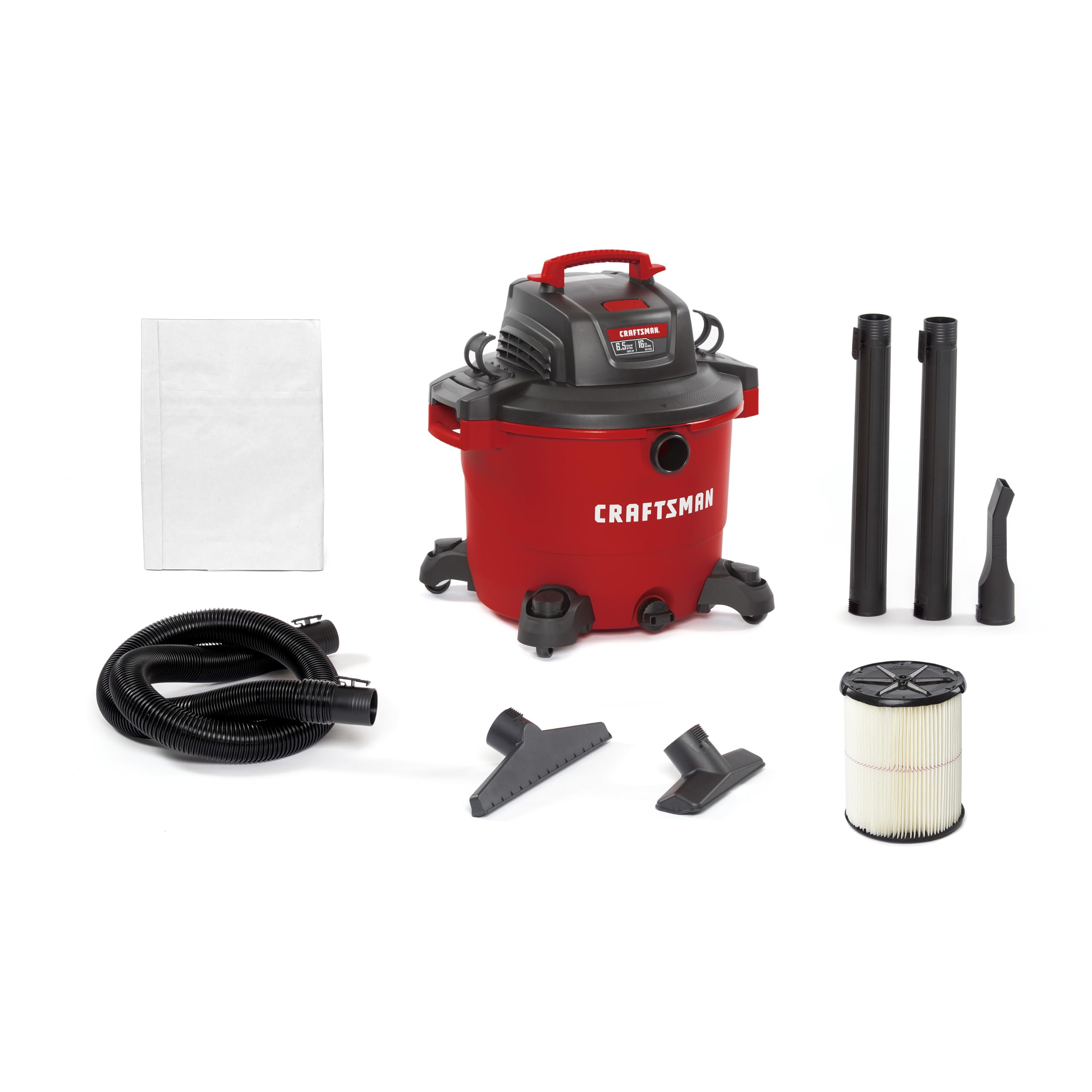
We recommend this shop vacuum for large garage, workshop, renovation, and water-cleanup jobs that need strong suction and a roomy tank.
Pros
- Strong pickup for heavy debris and liquids
- Flexible hose resists kinks during use
- Large drain and built-in storage simplify cleanup
Cons
- Bulky for small spaces and quick jobs
- Corded design limits movement
- Its power can feel excessive for car detailing
We found the CRAFTSMAN handled large messes with ease, including sawdust, loose dirt, and heavier workshop debris. Its wide hose moved plenty of material without clogging easily, while the included nozzles covered floors, cars, and wet spills.
The large tank reduced how often we needed to stop and empty it. When we collected liquids, the oversized drain made disposal faster and less messy than tipping the full unit.
Its hose connects firmly and bends well without constant kinking. On-board storage also kept the wands and nozzles together, which made the vacuum easier to put away after a project.
This model takes up more room than a compact shop vac and needs a nearby outlet. We also found its strong motor better suited to construction cleanup and heavy garage work than delicate interior detailing.
Farag Janitorial JM773 Industrial Wet/Dry Vacuum
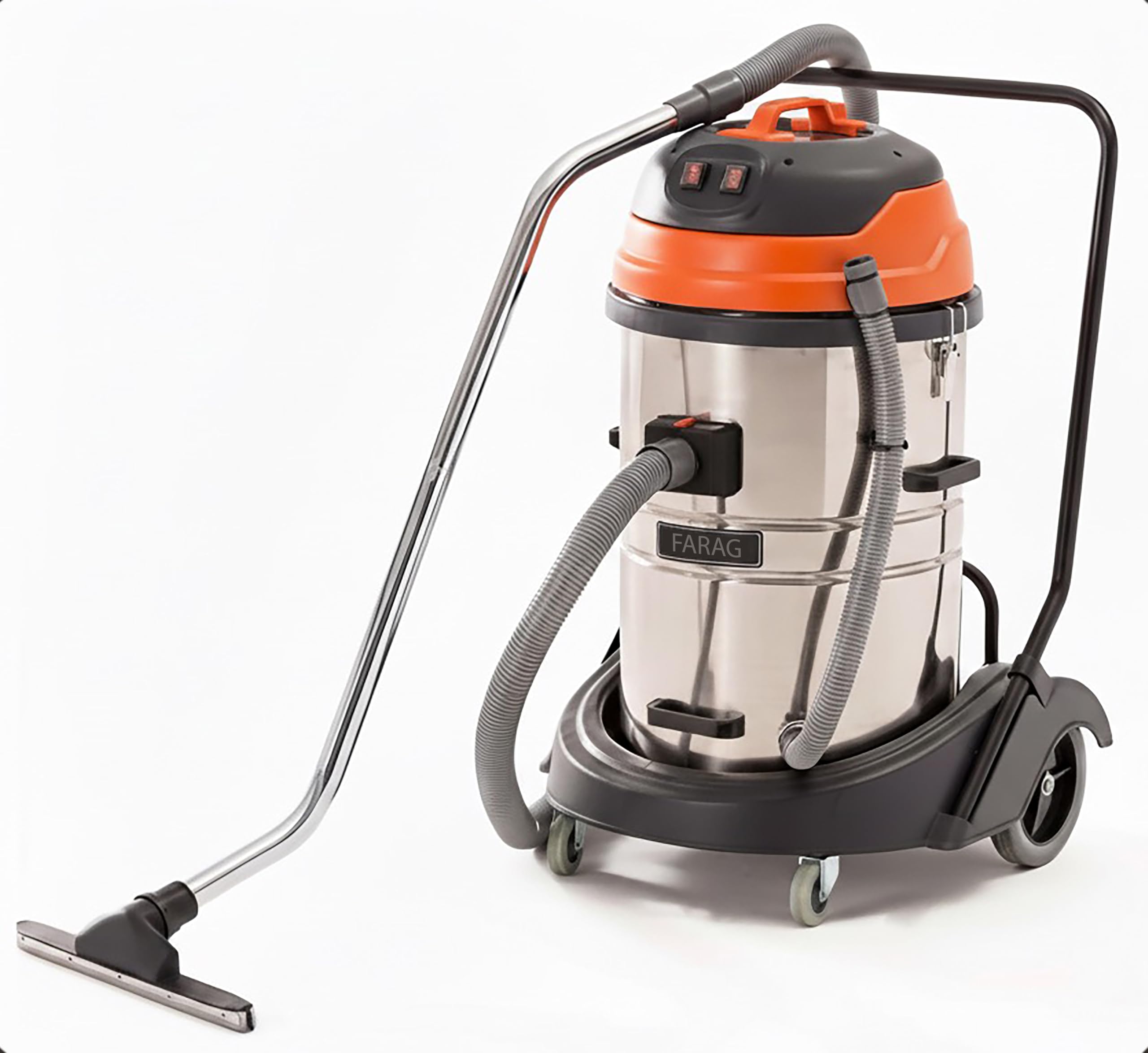
We recommend this vacuum for workshops, factories, and maintenance crews that need strong wet and dry pickup with a large tank.
Pros
- Strong suction from two motors
- Large 21-gallon stainless steel tank
- Stable four-wheel trolley with a tilt-to-dump design
Cons
- Large and heavy for small work areas
- The hose connection may loosen over time
- Its 110-volt power draw may require a dedicated circuit
When we used the JM773 for shop debris, its dual-motor setup handled dust, chips, and metal particles with little strain. The 225 CFM airflow helped clear larger messes quickly, while the 24-foot power cord reduced the need for extension cords.
The stainless steel tank felt sturdy and resisted rust during wet cleanup. We also found the tipping design useful when emptying collected water, although the machine took up more storage space than a standard shop vacuum.
The included cloth filter worked well for dry jobs and cleaned easily. For wet pickup, we removed the dry filter before use, as recommended for this type of vacuum.
Its four wheels made it easy to move across hard floors, but the large body was less convenient in tight spaces. We also noticed that the hose connection could need occasional checking during frequent use.
With a 4.5-star rating from 133 customers, the JM773 offers strong performance for commercial cleanup. We would choose it for demanding indoor work rather than light household tasks.
Bissell Pro Cup BGU1937T
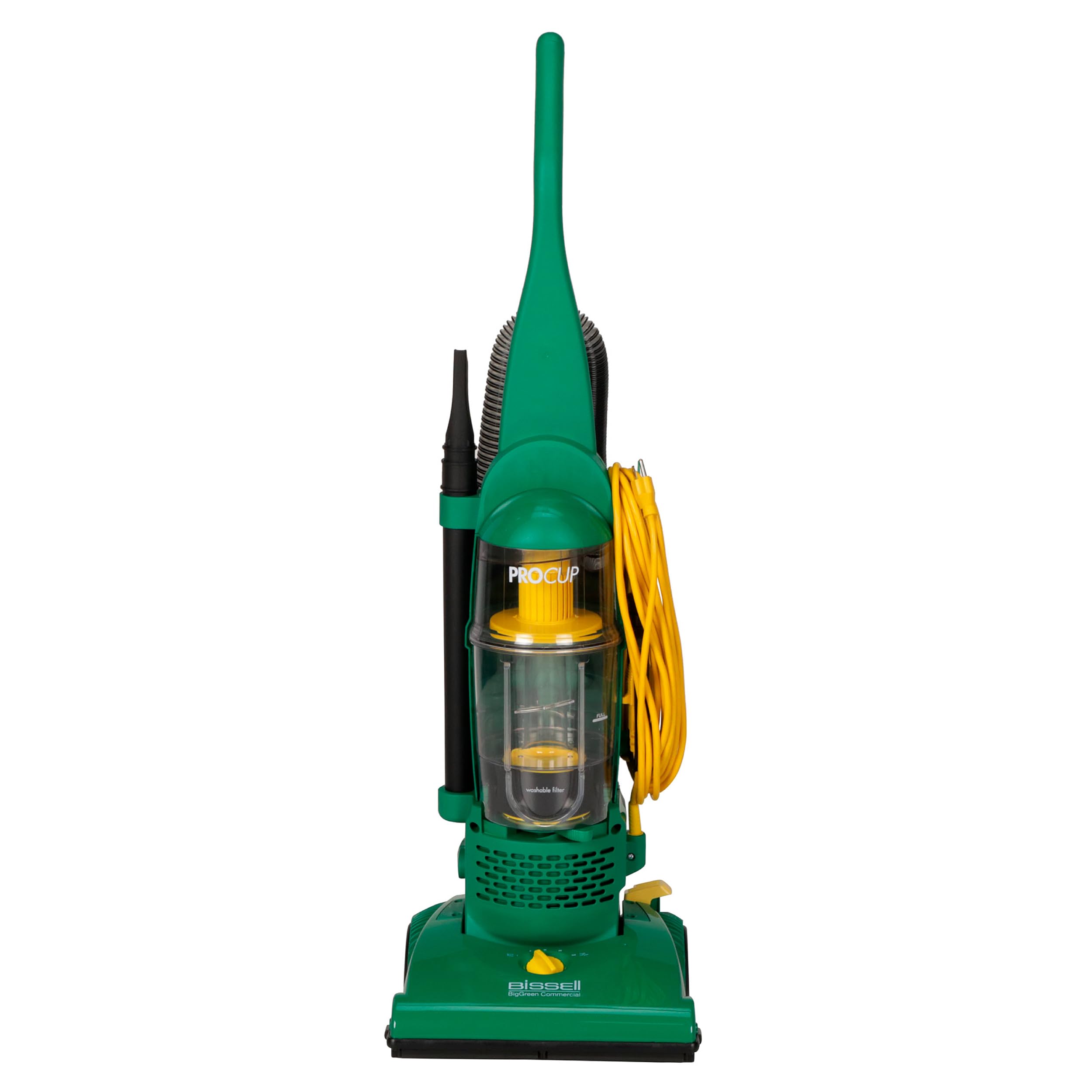
We recommend this commercial upright for offices and janitorial teams that need strong cleaning, simple maintenance, and useful attachments.
Pros
- Strong cleaning on carpets and hard floors
- Bagless design reduces ongoing supply costs
- Replaceable cord and washable filters simplify upkeep
Cons
- Runs louder than many home vacuums
- The upright body may feel bulky on stairs
- Some users report switch problems over time
We found the Pro Cup effective on busy floors with tracked-in dirt and debris. Its wide cleaning path helps us cover open areas quickly, while the five height settings let us adjust the brush for different carpet types and bare floors.
The large dirt cup holds plenty for routine office cleaning, so we spend less time emptying it. We also like the on-board crevice tool, dusting brush, upholstery tool, and extension wand because they keep common detail-cleaning tools close at hand.
At about 80 decibels, this vacuum is fairly loud, which may matter in occupied offices. Its corded design provides steady power, and the cord clamp makes future replacement easier than rewiring the machine. Still, reports of failing power switches mean we should inspect the unit during regular maintenance.
DEWALT 9-Gallon Wet/Dry Vac

We recommend this vacuum for workshops, renovations, and heavy household cleanup because it delivers strong wet-and-dry performance with useful storage and mobility.
Pros
- Strong suction handles sawdust, dirt, debris, and spilled water
- Long cord, durable hose, and rolling casters improve reach and movement
- Blower and inflator attachments add useful functions
Cons
- The hose can feel stiff during tight turns
- Its 78-decibel motor is noticeable indoors
- The 9-gallon tank still needs frequent emptying during large wet pickups
We found the DEWALT DXV09PA easy to move across workshop floors, thanks to its rubberized casters and sturdy handles. The 7-foot hose and extra-long power cord also gave us enough reach for cleaning around workbenches and vehicles.
Its suction handled plaster pieces, rocks, hay, and general shop debris without trouble. The wet pickup feature worked well for spills, while the built-in drain made liquid removal less messy than tipping the tank.
The blower port added value when we cleared sawdust and leaves from tight areas. We also liked the accessory bag, which kept the nozzles, wands, filter, and inflator parts together instead of scattered around the workspace.
The main drawback was the hose stiffness, which made some corners harder to reach. The motor also produces noticeable noise, though we found it reasonable for a heavy-duty shop vacuum. Overall, the DEWALT offers practical power and useful attachments for demanding cleanup jobs.
Sanitaire Tradition SC679K Upright Vacuum
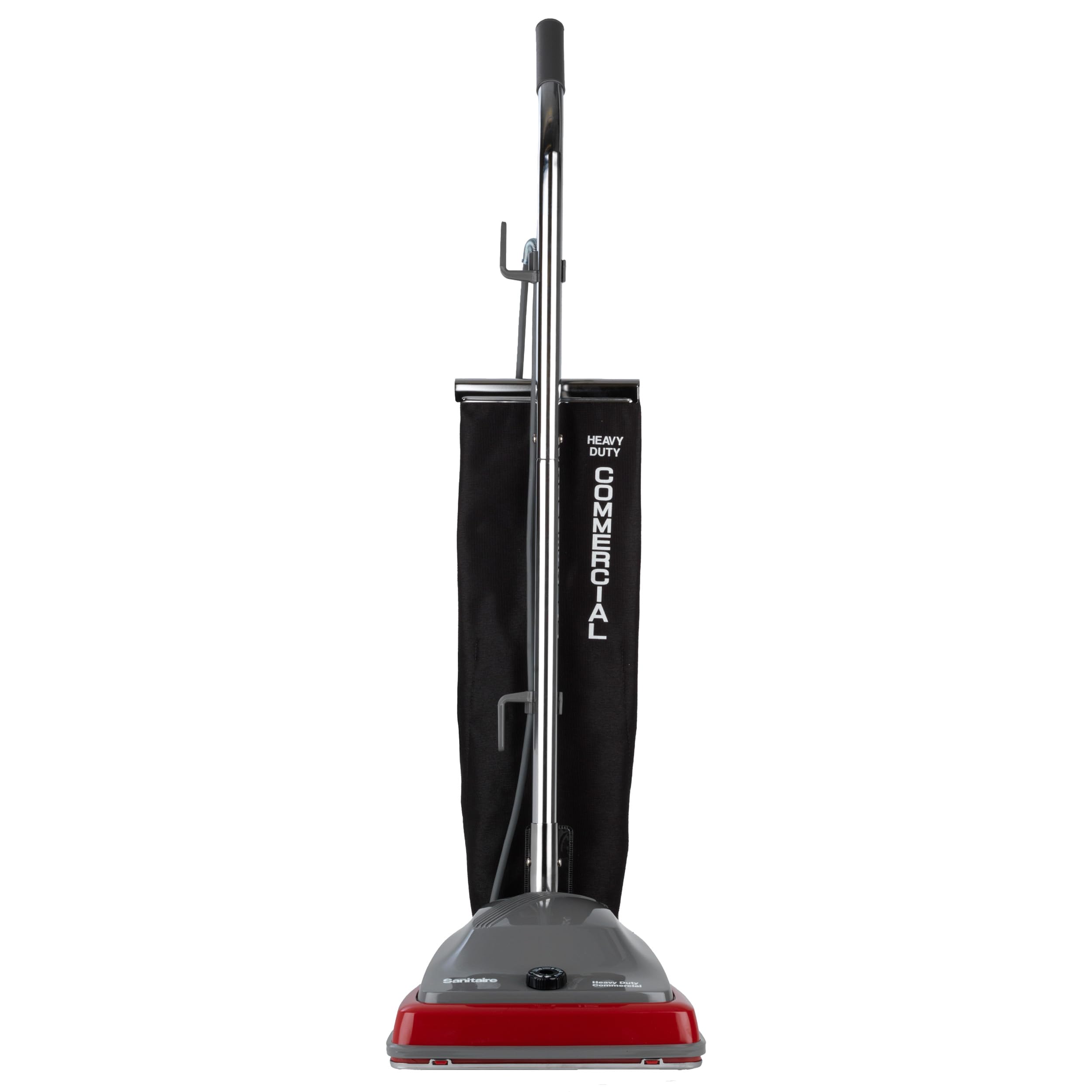
We recommend this lightweight commercial vacuum for carpet cleaning when strong suction, a long cord, and simple maintenance matter most.
Pros
- Lightweight body makes extended cleaning easier
- Large shake-out bag reduces emptying stops
- Tool-free belt and brush-roll replacement
Cons
- Loud during operation
- Designed mainly for carpet
- Some users report belt and switch problems
We found the Sanitaire Tradition SC679K easy to move across carpet, thanks to its 12.2-pound frame. Its 30-foot power cord also helped us cover larger areas without changing outlets often.
The 18-quart shake-out bag gives this vacuum useful capacity for offices, childcare centers, and other busy spaces. We liked the metal clip release because it made bag removal quick and less messy than handling a small disposable bag.
Maintenance stays straightforward. We could replace the belt and brush roll without special tools, and replacement parts remain easy to find. The polycarbonate hood also gives the machine a sturdy feel for regular commercial use.
This vacuum does make noticeable noise, and its single power setting offers limited adjustment. While many users praise its suction and durability, some report repeated belt failures or problems with the power switch. We would choose it for low-pile and standard carpet, but not for quiet environments or varied floor types.
Sanitaire Professional Upright Vacuum

We recommend this vacuum for small businesses that need a light-duty commercial cleaner with useful attachments and low ongoing bag costs.
Pros
- Strong pickup on many carpet types
- Removable one-quart dirt cup
- Long 30-foot power cord
Cons
- Designed for light-duty commercial use
- Produces noticeable operating noise
- Height adjustment may need careful handling
We found the Sanitaire easy to move because it weighs about 13.8 pounds. Its 13-inch cleaning path covers a useful area without making the machine feel bulky in tighter rooms.
The five height settings helped us adjust the cleaner for different carpets. The vacuum picked up visible dirt well, though we would not choose it for heavy debris or demanding industrial work.
The onboard crevice tool, dusting brush, upholstery tool, and extension wand made above-floor cleaning more convenient. We could clean edges, furniture, and other hard-to-reach areas without carrying a separate canister.
The removable dirt cup avoids replacement bags and was simple to empty. However, frequent cleaning jobs may require emptying the one-quart container several times.
Its 30-foot cord reduced plug changes in larger spaces. We would choose the Sanitaire Professional Upright Vacuum for offices, small retail areas, and routine carpet maintenance, but not as a substitute for a heavy-duty industrial vacuum.
Hoover Shoulder Vac Pro

We recommend this backpack vacuum for commercial cleaners who want strong suction, easy movement, and less noise during indoor work.
Pros
- Strong pickup on carpets and hard floors
- Comfortable backpack design for extended cleaning
- Long cord and useful attachments
Cons
- Shoulder strap buckles may not hold up to heavy use
- Bagged design requires replacement bags or regular emptying
- Corded operation limits use outdoors
We found the Hoover easy to carry between rooms because the backpack design avoids dragging a heavy canister behind us. The harness spreads the load well, although we still needed to adjust it carefully for a comfortable fit.
Suction handled dust, hair, fuzz, and other stubborn debris across hard floors and rugs. The included tools also helped us clean edges, upholstery, and tight spaces. The HEPA media filter adds useful filtration for indoor cleaning.
The long power cord reduced how often we needed to change outlets in larger spaces. Its quieter operation made it more suitable for offices, hotels, and homes where loud equipment could cause problems.
The main concern involves the plastic strap hardware, which may wear or break with frequent commercial use. We also had to manage the cord and keep replacement bags available. Despite those limits, this Hoover offers a practical balance of power, comfort, and portability for indoor cleaning.
BISSELL PowerForce BGU1451T
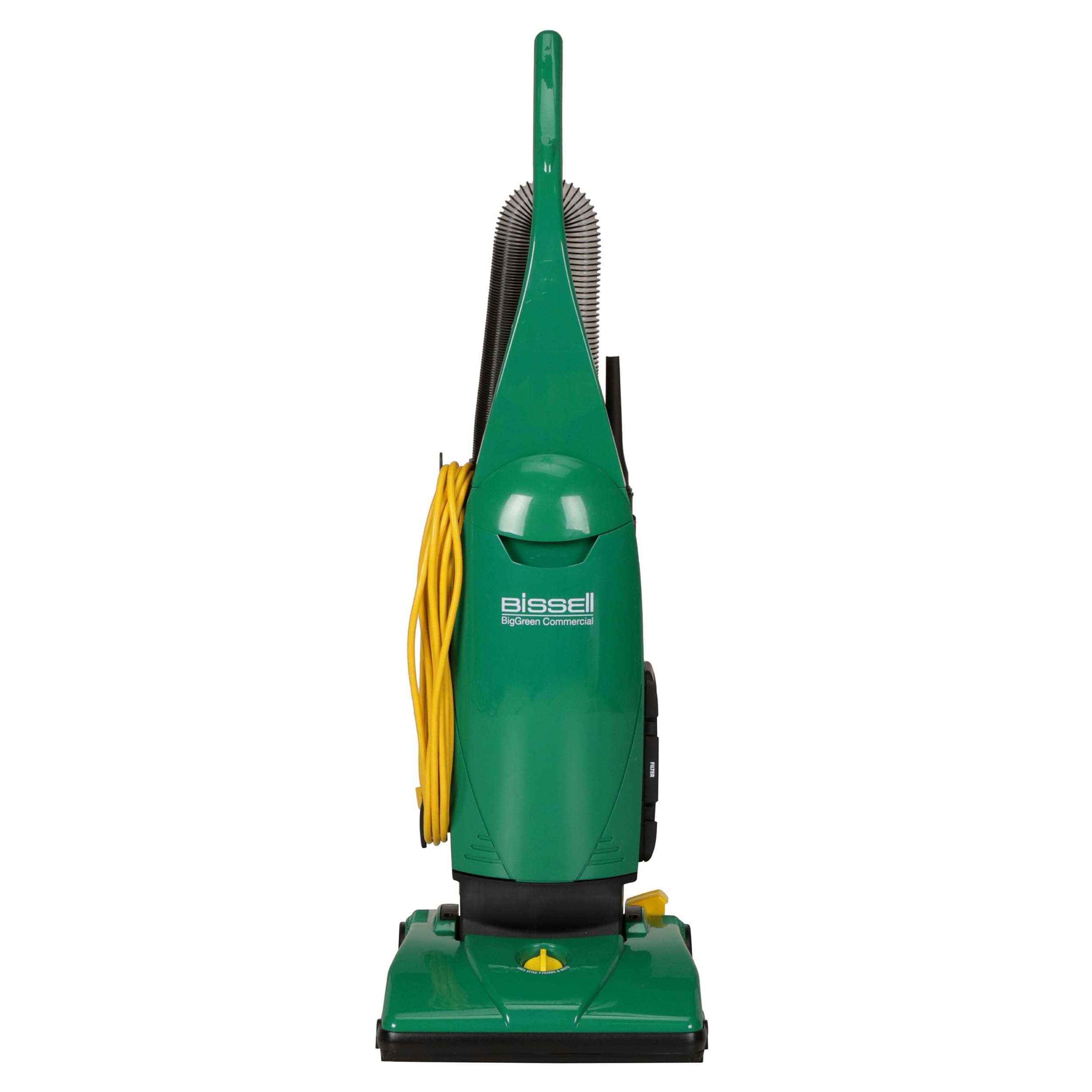
We recommend this lightweight commercial upright for teams that need easy handling, strong carpet cleaning, and a long reach at a reasonable price.
Pros
- Light and easy to move
- Long 30-foot power cord
- Bagged design helps control dust
Cons
- Noticeably loud during use
- Basic build feels less rugged than heavier commercial models
- Assembly instructions may cause confusion
We found the 12-pound body simple to push through offices, shops, and other busy spaces. Its 13-inch cleaning path covers a useful area without making the vacuum difficult to steer around desks and furniture.
The five height settings helped us move between low-pile carpet and bare floors. Suction felt strong for routine dirt, crumbs, and tracked-in debris, though this model may not satisfy users who need the toughest deep-cleaning performance.
The long cord reduced outlet changes during larger jobs. We also liked having the crevice tool, dusting brush, upholstery tool, and extension wand available for edges and detail work.
Its bagged system kept emptied dirt contained better than many bagless vacuums. However, the machine runs loudly, and its lighter construction may not feel as durable as a heavier upright built for constant, demanding use.
Vacmaster Professional Beast 14-Gallon Wet/Dry Vac

We recommend this vacuum for workshops, garages, and cleanup jobs that need strong suction and plenty of tank space.
Pros
- Strong suction for sawdust, dirt, and water
- Long reach and useful onboard storage
- Fine-dust cartridge filter included
Cons
- Large body takes up storage space
- Hose may disconnect from some attachments
- Suction can drop when using collection bags
We found the 14-gallon tank useful for larger cleanup jobs because we did not need to stop often to empty it. The motor handled heavy debris well, and the stainless steel tank felt suited to regular workshop use.
The 20-foot cord and long hose gave us good coverage around a garage or work area. Its wheels moved the vacuum across hard floors, though the large body felt less convenient in tight spaces.
The included accessories covered common wet and dry tasks, while the onboard storage helped keep parts together. We also liked the flat top for placing tools during work.
The fine-dust filter helped with sawdust and other small particles. However, collection bags reduced suction for some users, and the hose connection may need extra care if it does not stay firmly attached.
Buying Guide
We should match the vacuum cleaner to the work area, debris type, and cleaning schedule. Start by checking whether we need a model for dry materials, wet spills, fine dust, or hazardous particles.
| Feature | What to look for |
|---|---|
| Suction power | Strong, steady airflow for heavy debris |
| Filtration | A filter rated for the dust we collect |
| Capacity | A tank or bag size that fits our workload |
| Build quality | Durable housing, hose, wheels, and attachments |
| Noise level | A quieter design for occupied work areas |
| Maintenance | Easy filter cleaning and debris disposal |
We should check the vacuum’s airflow and sealed suction ratings, not just its motor wattage. Airflow often affects how well the machine moves debris through the hose, while sealed suction helps with heavier materials.
The filter must suit the material being removed. Fine dust may require high-efficiency filtration, while wet pickup needs a compatible filter or filter removal process. We should also confirm whether replacement filters and bags are easy to obtain.
Hose diameter, hose length, cord length, and attachment options affect daily use. A wide hose can help with larger debris, while smaller tools may work better for corners, machinery, and narrow spaces.
We should review the warranty, service support, and safety features before buying. For commercial or regulated environments, we must verify that the vacuum meets the required electrical, dust-control, and workplace safety standards.
Editor’s Choice
We choose the DEWALT DXV16P 16-gallon wet/dry vacuum for most demanding workshop and job-site tasks. Its large tank, strong suction, and built-in drain help us handle sawdust, dirt, water, and larger debris with less downtime.
We also value its practical design. The long power cord, sturdy wheels, accessory storage, and included hose make it easier for us to move between work areas and switch cleaning tools.
| Feature | Why it matters |
|---|---|
| 16-gallon tank | Holds more debris and liquid |
| Wet/dry operation | Cleans both solid and liquid messes |
| Built-in drain | Speeds up liquid removal |
| Large wheels | Improves movement across rough floors |
| Accessory storage | Keeps tools close at hand |
We recommend checking the filter setup before each job. A clean filter helps maintain airflow, while the correct filter type improves performance when we collect fine dust or liquids.
For professional crews that need longer cleaning cycles, we suggest pairing this vacuum with a compatible dust separator. It can reduce filter loading and help extend the time between emptying the tank.
Conclusion
We should match the vacuum cleaner to the work, debris, and site conditions. A model with strong suction, a durable motor, and the right filters can handle demanding daily use better than a basic household unit.
For wet and dry cleanup, we should choose a machine with a sealed tank, a reliable float shutoff, and simple drain access. For fine dust, HEPA filtration and a sealed design help limit airborne particles when used correctly.
We should also consider practical details:
- Tank size: Larger tanks reduce emptying during long jobs.
- Hose and cord length: Longer reach can improve efficiency.
- Filter access: Easy maintenance helps preserve suction.
- Noise and mobility: Casters, handles, and lower noise support safer work.
- Parts and service: Available filters, hoses, and repairs extend useful life.
The best industrial strength vacuum cleaner gives us the right balance of power, capacity, filtration, durability, and operating cost. Checking the manufacturer’s specifications and safety guidance helps us choose a machine that fits our workspace and cleaning needs.
FAQS
What makes a vacuum cleaner industrial strength?
We look for a strong motor, durable parts, large capacity, and filters suited to demanding work. Many models also handle fine dust, liquids, or job-site debris.
Can industrial vacuums pick up wet and dry materials?
Some models can collect both wet and dry materials, but not all can. We should check the product manual before vacuuming liquids. We also need to empty and dry the tank as directed.
Which filter should we use for fine dust?
We should choose a model with a high-efficiency filter, such as a certified HEPA filter, when removing fine dust. The right filter depends on the material and the work area.
How large should the vacuum tank be?
We can choose the tank size based on the amount of debris we expect to collect. Larger tanks reduce emptying, while smaller tanks improve portability.
| Need | Useful feature |
|---|---|
| Construction debris | Large tank and rugged body |
| Fine dust | High-efficiency filter |
| Liquid cleanup | Wet pickup system |
| Frequent movement | Wheels and a long power cord |
How often should we clean the filter?
We should follow the manufacturer’s schedule and clean the filter when suction drops. Some models include filter-shaker systems that help remove trapped dust.
Can we use an industrial vacuum at home?
We can, but these machines may be louder, larger, and heavier than household vacuums. We should select one that matches the cleaning task and available storage space.