
How to Find a Good Air Purifier: Essential Guide

Finding a good air purifier involves understanding your needs and key features like CADR, filter types, and room size. This guide helps you navigate the options to breathe cleaner air at home.
There’s nothing quite like that feeling of stale, stuffy air in your home, especially when allergies flare up or you’re concerned about invisible pollutants. You want to breathe easy, but with so many air purifiers on the market, how do you even begin to choose the right one? It can feel overwhelming, but don’t worry. I’m here to walk you through exactly how to find a good air purifier that fits your home and your budget, ensuring you make an informed decision for a healthier living space.
What Makes an Air Purifier “Good”?
A good air purifier effectively removes airborne contaminants like dust, pollen, smoke, and odors from your indoor environment. Its performance hinges on key specifications, certifications, and suitability for your specific room size and air quality concerns. Understanding these elements is crucial for making a wise purchase.
This means looking beyond just the price tag and considering the technology and features that will deliver the best results for your health. We’ll break down what truly matters.
Understanding Your Air Quality Needs
Before diving into models, take a moment to assess your home’s air. Are you dealing with seasonal allergies, pet dander, or lingering cooking smells? Perhaps you live near a busy road or are concerned about VOCs from furniture. Identifying your primary air quality concerns will guide your search.
Knowing your specific issues helps you prioritize features like HEPA filtration for allergens or activated carbon for odors. This focused approach prevents you from overspending on unnecessary features.
Key Features to Look For in an Air Purifier
When you’re evaluating air purifiers, several technical aspects stand out. These are the features that directly impact how well a unit cleans your air. Paying attention to these will be your compass in the selection process.
We’ll explore the essential components that make an air purifier effective.
1. CADR: The Engine of Your Air Purifier
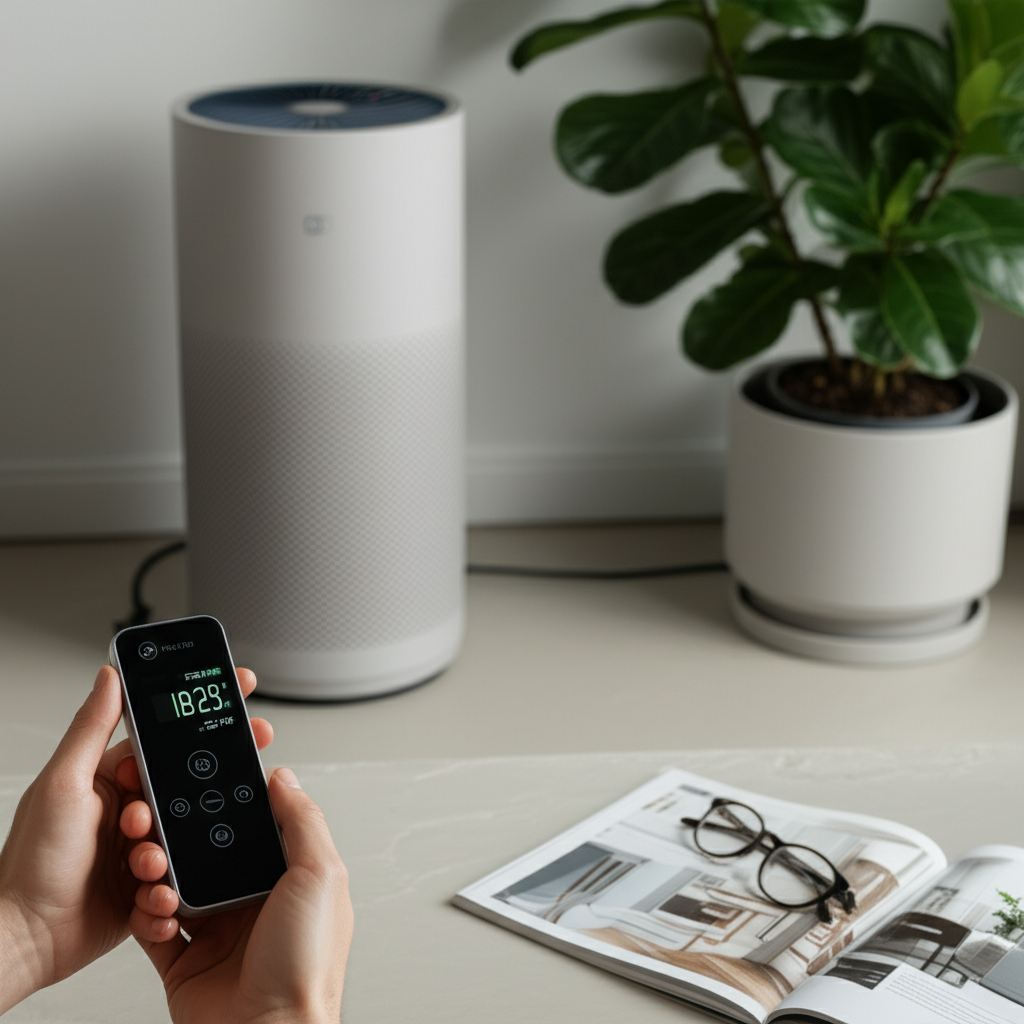
CADR, or Clean Air Delivery Rate, is a crucial metric indicating how quickly an air purifier can clean a room of specific pollutants. It’s measured for smoke, dust, and pollen, with higher numbers signifying faster purification. Always match the CADR to your room’s square footage for optimal performance.
A higher CADR means the unit can circulate and clean the air in your room more efficiently. This is especially important for larger spaces or for those with severe air quality issues.
2. Filter Types: Your First Line of Defense
The heart of any air purifier lies in its filtration system. Most good purifiers use a multi-stage approach, combining different filter types to tackle various pollutants. Understanding each filter’s role is key to selecting the most effective unit for your needs.
Here’s a look at the common filter types:
Pre-filters: These capture larger particles like pet hair and dust bunnies, extending the life of more sensitive filters. They are often washable, offering cost savings.
HEPA Filters (High-Efficiency Particulate Air): These are the gold standard for removing at least 99.97% of airborne particles 0.3 microns in size. This includes allergens, mold spores, and bacteria.
Activated Carbon Filters: These are excellent for adsorbing odors, gases, and volatile organic compounds (VOCs) from cooking, pets, smoke, and household chemicals. The more carbon, the better the odor and gas removal.
UV-C Light: Some purifiers include UV-C lamps, which can help neutralize airborne germs like bacteria and viruses. However, their effectiveness can vary, and they aren’t a substitute for robust particle filtration.
When looking for a good air purifier, prioritize units with true HEPA filters and substantial activated carbon. These offer the most comprehensive air cleaning.
3. Room Size and ACH
Matching the air purifier’s capacity to your room size is non-negotiable for effective air cleaning. Manufacturers usually provide coverage areas, but it’s also helpful to look at the ACH rating. ACH stands for Air Changes per Hour, indicating how many times the unit can circulate and filter all the air in a room within one hour.
For optimal air quality, especially for allergy sufferers, aim for a unit that provides at least 4-5 ACH in the room you intend to use it. This ensures the air is being cleaned frequently enough to make a noticeable difference.
4. Noise Levels: A Quiet Companion
Air purifiers can range from whisper-quiet to quite noisy, especially on higher settings. If the purifier will be in a bedroom or living area, noise level is a critical consideration. Look for units that specify their decibel (dB) ratings for different fan speeds.
Many modern air purifiers offer a “sleep mode” or low setting that operates at around 30-40 dB, comparable to a quiet library. This is usually acceptable for most people.
5. Energy Efficiency and Certifications
An air purifier running 24/7 can impact your electricity bill. Look for ENERGY STAR certified models, which meet strict energy efficiency guidelines set by the U.S. Environmental Protection Agency. This ensures you’re getting effective purification without excessive energy consumption.
Certifications from organizations like the Association of Home Appliance Manufacturers (AHAM) also provide reliable CADR ratings, adding another layer of trust. Always check for these marks of quality and efficiency.
Understanding Different Air Purifier Technologies
Beyond the basic filter types, air purifiers employ various technologies to clean your air. Some are highly effective, while others come with potential drawbacks. It’s important to be aware of these to make an informed choice.
Let’s explore the common technologies you’ll encounter.
HEPA vs. HEPA-Type Filters
It’s vital to distinguish between “True HEPA” and “HEPA-Type” or “HEPA-like” filters. True HEPA filters are certified to capture 99.97% of particles 0.3 microns in size. Filters labeled “HEPA-Type” or “HEPA-like” may capture a high percentage of particles, but they don’t meet the stringent True HEPA standard.
Always opt for “True HEPA” filters for the most effective removal of fine airborne particles. This distinction is crucial for allergy and asthma sufferers.
Activated Carbon for Odor and Gas Removal
Activated carbon filters are porous materials that trap odor molecules and harmful gases through a process called adsorption. The effectiveness of these filters depends on the amount of activated carbon used and the contact time the air has with it.
Look for purifiers with substantial, not just a thin layer, of activated carbon for effective odor and chemical fume reduction. Some units offer specialized carbon filters for specific issues like pet odors or smoke.
Ionizers and Ozone Production
Some air purifiers use ionizers to release negatively charged ions into the air, which then attach to airborne particles, causing them to clump together and fall to the ground or stick to surfaces. While this can help remove particles, some ionizers can produce ozone as a byproduct. Ozone is a lung irritant and can worsen respiratory conditions.
Always choose air purifiers that are certified as ozone-free or have very low ozone emissions. Organizations like CARB (California Air Resources Board) provide lists of compliant air purifiers.
UV-C Light Effectiveness
UV-C light is used to kill bacteria, viruses, and mold spores. However, for UV-C light to be truly effective in an air purifier, the air must be exposed to the light for a sufficient amount of time at the correct wavelength. This is often difficult to achieve in typical home air purifiers.
While UV-C can offer an additional layer of germicidal action, it shouldn’t be the primary reason you choose an air purifier. Focus on robust HEPA and carbon filtration first.
Comparing Popular Air Purifier Brands and Models
Navigating the market can be daunting with so many brands. While I can’t recommend specific models without knowing your exact needs, I can highlight some reputable brands known for their quality and effectiveness. Researching these can be a great starting point for your search.
Here’s a general overview of what to expect from some well-regarded brands:
| Brand Name | Key Strengths | Typical Price Range | Best For |
| :————– | :————————————————— | :—————— | :———————————————- |
| Coway | Excellent performance, quiet operation, stylish design | $$ – $$$ | Allergy sufferers, general home use |
| Blueair | High CADR, energy efficiency, modern aesthetics | $$ – $$$$ | Larger rooms, busy households |
| Levoit | Affordable, user-friendly, good value for money | $ – $$ | Budget-conscious, smaller rooms |
| Winix | Good all-around performance, plasma wave technology | $$ – $$$ | Pet owners, those seeking multi-stage filtration |
| Honeywell | Durable, reliable, strong brand reputation | $$ – $$$ | General home use, those prioritizing longevity |
Note: Prices are approximate and can vary based on model and retailer.
When comparing models, always check independent reviews and lab test results to verify performance claims. Websites like Wirecutter and Consumer Reports often provide detailed comparisons.
What About Smart Features?
Many modern air purifiers come with “smart” capabilities, allowing you to control them via a smartphone app, voice assistants like Alexa or Google Assistant, or even receive air quality alerts. These features can add convenience and provide insights into your home’s air quality.
Consider if these smart features are important to you. They can be handy for remote control and monitoring, but they also add to the cost of the unit.
Maintenance: Keeping Your Purifier Running Smoothly
To ensure your air purifier continues to perform optimally, regular maintenance is essential. This primarily involves cleaning and replacing the filters according to the manufacturer’s recommendations. Neglecting this can significantly reduce the unit’s effectiveness and even lead to secondary pollution.
Filter replacement schedules vary by model and usage, but most HEPA filters need replacing every 6-12 months, and carbon filters every 3-6 months. Always check your owner’s manual for specific guidelines.
Budget Considerations: Finding Value
Air purifiers can range from under $100 to over $1,000. Your budget will significantly influence your choices, but remember that the cheapest option isn’t always the best value. Consider the long-term costs, including replacement filters and energy consumption.
Investing in a slightly more expensive unit with a true HEPA filter and a higher CADR might be more cost-effective in the long run due to better performance and fewer filter replacements needed.
Frequently Asked Questions About Air Purifiers
Q1: How often should I replace the filters in my air purifier?
A: Filter replacement frequency depends on the model and how often you use the purifier, but typically HEPA filters last 6-12 months and carbon filters 3-6 months. Always consult your user manual for specific recommendations.
Q2: Can an air purifier really help with allergies?
A: Yes, a good air purifier with a True HEPA filter can significantly reduce allergens like pollen, dust mites, pet dander, and mold spores in the air, providing relief for allergy sufferers.
Q3: Are air purifiers noisy?
A: Noise levels vary by model and fan speed. Many units have a quiet “sleep mode” that operates at around 30-40 decibels, similar to a library. Always check the decibel ratings before purchasing.
Q4: Do air purifiers remove viruses and bacteria?
A: True HEPA filters can capture a high percentage of airborne bacteria and virus particles. Some purifiers also include UV-C light, which can help neutralize germs, but its effectiveness can vary.
Q5: What is the most important factor when choosing an air purifier?
A: The most important factors are the CADR (Clean Air Delivery Rate) relative to your room size and the presence of a True HEPA filter. These ensure the unit can effectively clean your air.
Q6: Can air purifiers remove pet odors?
A: Yes, air purifiers with a substantial activated carbon filter are very effective at adsorbing pet odors and other household smells. The more carbon, the better the odor removal.
Q7: Are there any air purifiers that produce ozone?
A: Some older or less reputable models might produce ozone, which is a lung irritant. It’s crucial to choose ozone-free certified air purifiers, often indicated by CARB compliance.
Conclusion: Breathing Easier with the Right Choice
Finding how to find a good air purifier boils down to understanding your specific needs and prioritizing key features like True HEPA filtration, adequate CADR for your room size, and effective activated carbon. By considering noise levels, energy efficiency, and reputable brands, you can make a confident choice. A well-chosen air purifier is an investment in your health and comfort, bringing cleaner, fresher air into your home.
Ready to take the next step? Explore our guide to the best air purifiers for allergies to see specific recommendations.
