How to Empty a Bagless Vacuum Without Ruining Your Indoor Air Quality

If you suffer from allergies, asthma, or just want to keep your home clean, vacuuming is a critical chore. But there is a hidden trap that many homeowners fall into: the dreaded dust cloud that erupts when you open the canister. You spend time and money running HEPA air purifiers, only to undo all that hard work in seconds. Figuring out how to empty a bagless vacuum the right way is essential for protecting your indoor air quality.
This guide will show you exactly how to empty your vacuum without releasing a plume of pet dander, dust mites, and pollen back into your breathing space. We will cover step-by-step techniques, filter maintenance tips, and the best ways to keep your home’s air pure while you clean.
Quick Answer
To safely empty a bagless vacuum, take the canister outside to a trash bin. Place a large plastic garbage bag completely over the bottom of the canister. Unlatch the vacuum door from outside the bag, allowing the dust to fall directly into the bottom without creating an airborne dust cloud. Seal the trash bag immediately.
The Hidden Air Quality Risks of Bagless Vacuums
Bagless vacuums are incredibly popular because they save you money on replacement bags and let you easily retrieve accidentally vacuumed items. However, from an indoor air quality (IAQ) perspective, they introduce a significant point of vulnerability.
When you vacuum, you are collecting heavy concentrations of household pollutants. These include skin flakes, pet hair, dried saliva, pollen tracked in from outdoors, and volatile organic compounds (VOCs) that attach to dust. According to the EPA’s guide on indoor particulate matter, fine particles can easily become airborne during cleaning activities and trigger respiratory issues if inhaled.
When you simply open a bagless canister over your kitchen trash can, you release millions of microscopic particles back into your home. These particles are so light that they can float in the air for hours before settling back onto your floors and furniture, essentially undoing your cleaning efforts.
Step-by-Step Guide: How to Empty a Bagless Vacuum Safely
If you have sensitive airways or just want a truly clean home, you need a strategy. Follow these steps to minimize airborne dust.
Step 1: Prepare and Protect
Before you even touch the latch on your vacuum, make sure you are prepared. If you have severe allergies, consider putting on an N95 mask. This simple barrier prevents you from inhaling allergens during the emptying process.
Always take the canister outside. Emptying a bagless vacuum indoors is the fastest way to contaminate your indoor air. Take the canister to your outdoor garbage bin or garage.
Step 2: The “Bag-in-Bag” Method
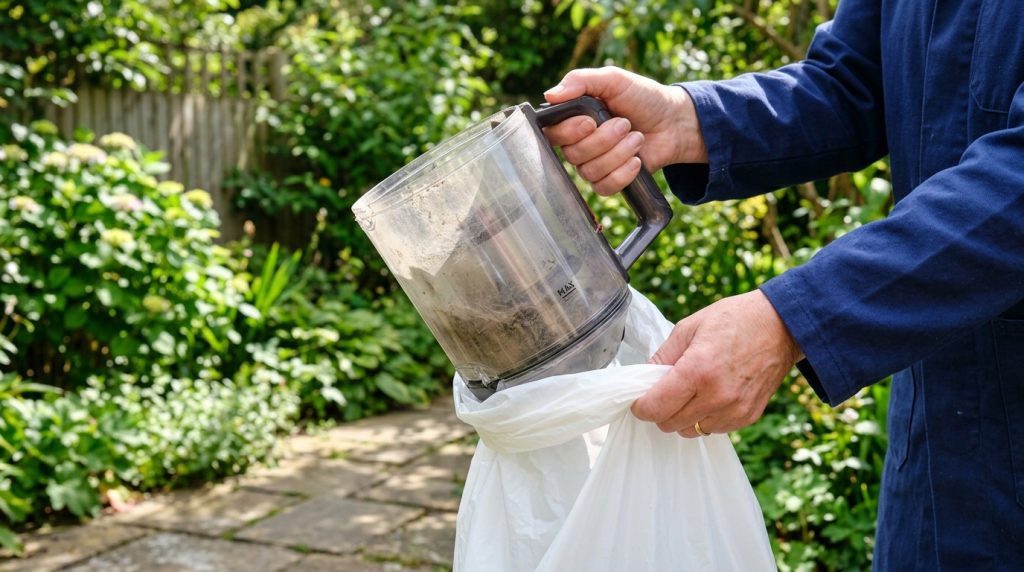
This is the most crucial step for homeowners who want to keep their air clean. Instead of holding the canister high above the trash can and letting the dust fall, use a plastic grocery bag or a small garbage bag to contain the mess.
- Slip the plastic bag entirely over the bottom half of the vacuum canister.
- Hold the bag tight against the sides of the canister to create a seal.
- Reach through the plastic bag (or press the button from the outside) to release the canister door.
- Let the dust fall into the plastic bag. Give the canister a gentle tap to dislodge stuck hair and dirt.
- Wait about 10 seconds for the dust to settle inside the bag before pulling the canister out.
- Tie the plastic bag tightly shut and place it in your outdoor trash bin.
Step 3: Wipe Down the Canister
Once the bulk of the debris is gone, you will likely notice a fine layer of dust clinging to the inside of the plastic canister due to static electricity.
Do not blow into the canister to clean it. Instead, use a slightly damp microfiber cloth to wipe down the inside walls. The moisture grabs the fine dust particles rather than launching them into the air.
Step 4: Check Your Vacuum Filters
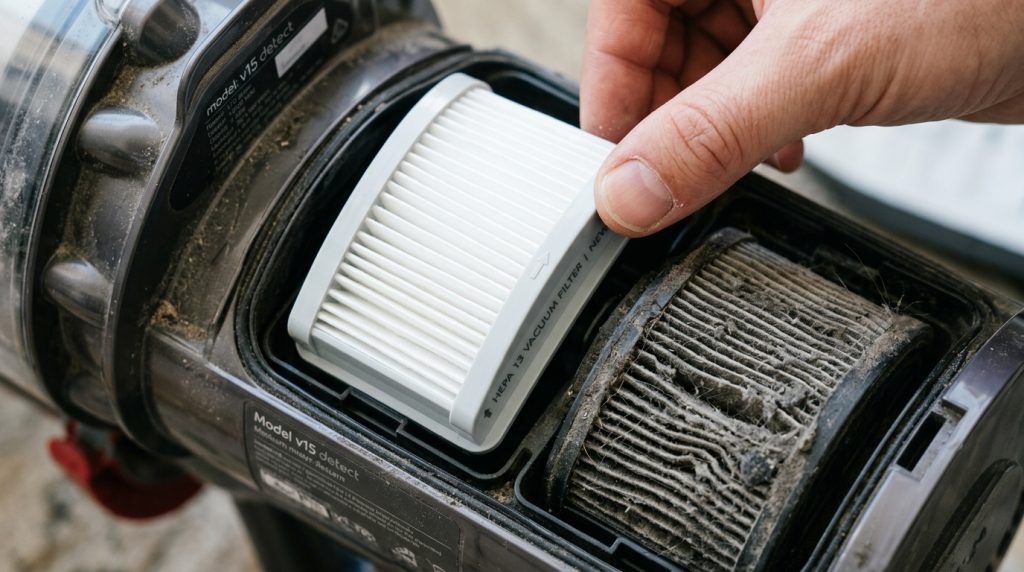
Bagless vacuums rely heavily on secondary filters (often foam and HEPA filters) to keep dust out of the motor and your room. After emptying the bin, inspect these filters. If you notice a musty odor when you vacuum, it is usually a sign that these filters are overdue for a cleaning or replacement.
To ensure your machine doesn’t pollute your home, it is highly recommended to use a vacuum equipped with true HEPA filtration. The Asthma and Allergy Foundation of America notes that certified vacuums trap dust mites and dander inside the machine instead of blowing them back into your breathing zone.
Running Your Air Purifier While Vacuuming
Even with the best techniques, vacuuming kicks up microscopic dust from your carpets and hard floors. To protect your home’s air quality, use your air purifiers strategically.
Before you start vacuuming, turn your room’s HEPA air purifier to its maximum fan speed. Leave it running on high for at least 30 to 60 minutes after you finish cleaning. This allows the purifier to achieve several Air Changes per Hour (ACH), pulling the freshly disturbed airborne particles out of the room before they have a chance to settle on your furniture.
Expert Tip: Never try to vacuum the pre-filter of your home air purifier with a bagless vacuum indoors. If you use your vacuum brush attachment to clean your purifier’s pre-filter, the vacuum exhaust will inevitably blow some of that concentrated dust around the room. Always take washable pre-filters outside to brush them off or wash them in the sink.
Bagged vs. Bagless Vacuums: An Air Quality Perspective
If you are highly sensitive to indoor allergens, you might wonder if a bagless vacuum is really the right choice. Here is a breakdown of how they compare regarding indoor air quality.
| Feature | Bagless Vacuums | Bagged Vacuums |
|---|---|---|
| Emptying Process | High risk of dust cloud if not done carefully outdoors. | Low risk; bags self-seal and contain the dust entirely. |
| Allergen Exposure | Direct exposure to collected dust when cleaning the canister. | Minimal exposure; dust remains trapped inside the bag. |
| Ongoing Costs | Lower (no bags to buy), but HEPA filters still need replacing. | Higher (must purchase replacement bags regularly). |
| Maintenance | Requires frequent washing of canisters and foam filters. | Simple; just throw away the full bag and insert a new one. |
| Best For | General cleaning, budget-conscious homeowners. | Asthma sufferers, severe allergy sufferers, pet owners. |
Common Mistakes Homeowners Should Avoid
When trying to maintain a healthy home environment, small mistakes during your cleaning routine can have a big impact on your air quality. Avoid these common pitfalls:
- Emptying indoors: Dumping the canister into your kitchen trash can releases millions of allergens directly into your home’s air.
- Tapping filters against indoor trash cans: Banging a dusty vacuum filter on the side of a trash can creates a massive plume of fine particulate matter.
- Putting wet filters back in the vacuum: If you wash your vacuum’s foam filters, they must air-dry for at least 24 hours. A damp filter will grow mold, which the vacuum will then spray all over your house.
- Ignoring the cyclone assembly: Hair and lint get wrapped around the inner cyclone of bagless vacuums. Failing to pull this debris out restricts airflow, reducing suction and leaving more dirt on your floors.
- Relying on standard filters: If your vacuum only has a basic sponge filter rather than a sealed HEPA system, you are essentially recycling fine dust back into the air as you clean.
When to Consult an Air Quality or HVAC Professional
Sometimes, no matter how carefully you vacuum or how often you empty your bagless canister, your home still feels impossibly dusty. If you are constantly finding a thick layer of dust on your furniture just days after cleaning, your vacuum might not be the problem.
Excessive indoor dust is often a sign of underlying HVAC issues. Leaky ductwork can pull dust, fiberglass, and insulation particles from your attic or crawlspace and blow them directly into your living areas. In fact, ENERGY STAR’s advice on leaky HVAC ducts highlights that poorly sealed ductwork can drastically increase indoor dust and lower your home’s energy efficiency.
You should consult a certified HVAC technician or indoor air quality professional if you notice:
- Visible dust blowing out of your air vents when the AC or heater turns on.
- Your HVAC system’s air filter clogs within just a few weeks.
- Allergy symptoms worsen primarily when you are at home, despite regular cleaning and air purifier usage.
- You have high humidity alongside the dust, which can promote dust mite proliferation.
An expert can assess your home for proper ventilation, test for duct leaks, and recommend whole-home filtration systems (like MERV 13 furnace filters or in-duct purifiers) that work alongside your standalone HEPA units to keep your air clean.
FAQs
Can I wash the inside of my bagless vacuum canister?
Yes, most clear plastic dust canisters can be washed with mild soap and warm water. However, you must remove all attached filters first and ensure the plastic canister is 100% dry before reattaching it to the vacuum to prevent mold growth and motor damage.
How often should I empty my bagless vacuum?
You should empty the canister after every single use, or whenever the dirt reaches the “Max Fill” line. Leaving dirt, pet hair, and dander sitting inside the vacuum can lead to foul odors and bacteria growth.
Why does my vacuum smell bad when I turn it on?
A bad smell usually means the vacuum’s pre-motor or HEPA filters are clogged with organic material like pet dander or food crumbs. Washing or replacing the filters and washing the plastic dust bin usually resolves the odor.
Does emptying a vacuum outside really make a difference?
Yes. Emptying the bin inside releases a cloud of fine particulate matter that can stay suspended in your home’s air for hours. Emptying it outside completely eliminates this massive source of indoor air pollution.
Are bagged vacuums better for air quality?
Generally, yes. Bagged vacuums use a self-sealing bag that traps dirt, dust mites, and allergens. When you throw the bag away, you never have to come into contact with a dust cloud, making them a much safer choice for severe allergy and asthma sufferers.
Conclusion
Knowing exactly how to empty a bagless vacuum is a small but vital part of protecting your home’s air quality. By taking the canister outside, using the “bag-in-bag” method, and keeping your vacuum’s HEPA filters clean, you can stop the cycle of blowing dust back into your breathing space.
Your vacuum and your air purifiers are a team. When you maintain your vacuum properly, your air purifiers don’t have to work nearly as hard to clear the room. Take the extra sixty seconds to step outside the next time you empty your vacuum—your lungs, your allergies, and your indoor air quality will thank you.