How to Remove Hair from a Vacuum Brush (and Protect Your Indoor Air Quality)

If you have pets or long-haired family members, you already know the struggle of a jammed vacuum cleaner. You flip your machine over, only to find the brush roll completely choked by a thick, matted cylinder of tangled hair.
When your vacuum brush is clogged, it stops agitating your carpets. This leaves behind a massive amount of pet dander, dust mites, and pollen trapped deep in the fibers. Eventually, foot traffic kicks these particles back into your breathing space, completely defeating the purpose of your air purifiers.
Knowing exactly how to remove hair from a vacuum brush is one of the easiest ways to protect your home’s indoor air quality. In this guide, we will walk you through the safest, most effective ways to clean your brush roll, extend the life of your HEPA vacuum, and keep allergens out of your air.
Quick Answer
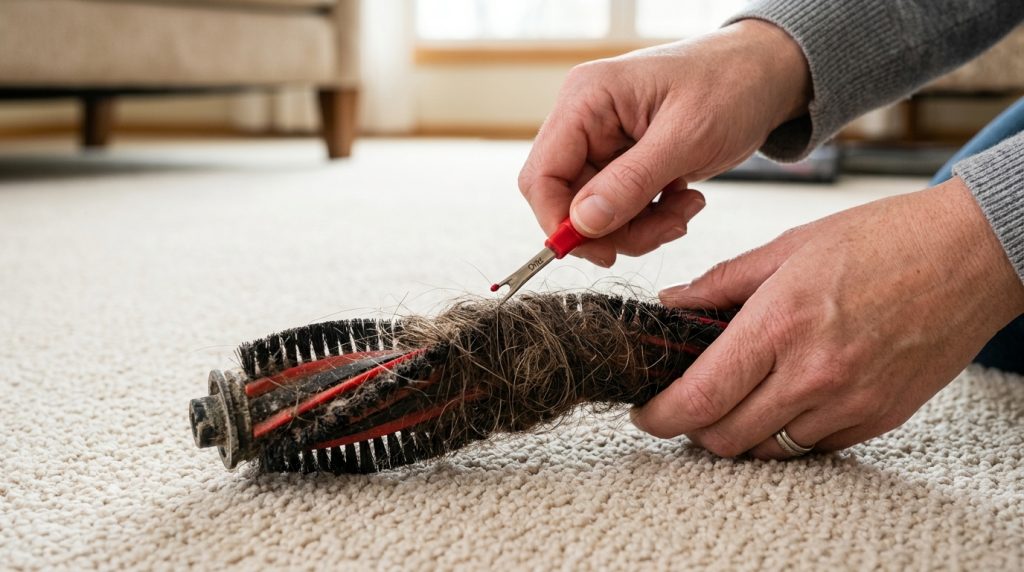
To quickly remove hair from a vacuum brush, unplug the vacuum and lay it flat on the floor. Locate the groove on the brush roll. Use a seam ripper or small scissors to carefully cut along the groove, severing the tightly wrapped hair. Pull the cut hair away with your fingers or tweezers, and wipe the brush clean.
Why a Clean Vacuum Brush Matters for Home Air Quality
It is easy to think of a vacuum cleaner as just a tool for keeping floors looking tidy. However, for homeowners with allergies or respiratory sensitivities, a vacuum is your first line of defense against poor indoor air quality.
According to the EPA’s guidelines on improving indoor air quality, regular cleaning and vacuuming are essential for controlling asthma triggers like dust mites and pet dander.
A vacuum brush roll (or beater bar) is designed to sweep and vibrate carpet fibers. This action loosens microscopic debris so the vacuum’s suction can pull it through the HEPA filter. When hair wraps tightly around this brush, the bristles can no longer reach the carpet. Instead of sucking up allergens, a clogged vacuum simply glides over them, leaving indoor pollutants behind to circulate in your home’s air.
Tools You Need for the Job
Before you start pulling at tangled hair with your bare hands, gather a few basic tools. Having the right equipment makes this chore take two minutes instead of twenty.
- A Seam Ripper: This is the ultimate secret weapon. Normally used for sewing, a seam ripper slides easily under tight hair wraps without dulling its blade or damaging the brush bristles.
- Small Scissors: If you don’t have a seam ripper, small grooming scissors or sturdy kitchen shears work well.
- Tweezers: Helpful for pulling out stubborn knots of hair near the side bearings.
- Microfiber Cloth: For wiping down the plastic housing once the hair is removed.
- A Trash Bag: Keep it close so you don’t drop dust and dander back onto your floor.
Step-by-Step: How to Remove Hair from a Vacuum Brush
Cleaning your vacuum brush is a simple process, but doing it correctly prevents accidental damage to the belt and motor.
Step 1: Unplug and Prep for Safety
Never perform maintenance on a vacuum while it is plugged in. If the brush roll accidentally engages, it can cause serious injury to your fingers. Unplug the unit, remove the dirt canister to prevent spills, and lay the vacuum flat on its back so the bottom plate is facing up.
Step 2: Access the Brush Roll
Some modern vacuums have a quick-release button that allows you to slide the entire brush roll out of the machine. If yours has this feature, remove the brush roll entirely for easier cleaning. If your brush roll is fixed behind a plastic faceplate, you may need to use a coin or a screwdriver to unlock the base plate and lift it off.
Step 3: Cut the Hair (The Seam Ripper Trick)
Look closely at the cylinder of your brush roll. Most manufacturers design a small, bristle-free groove that runs the entire length of the roller.
Slide the pointed edge of your seam ripper (or the bottom blade of your scissors) into this groove. Push the tool firmly along the track to cut a straight line through the matted hair. Do not cut across the bristles, as this will permanently ruin the brush.
Step 4: Pull and Clear Debris
Once you have sliced through the hair, it will loosen its grip on the roller. Use your fingers to peel the thick mat of hair away from the brush. Drop the hair directly into your trash bag. Use tweezers to pull out any remaining clumps caught near the edges or wrapped around the side bearings.
Step 5: Check the Belt and Bearings
While the brush is clean, take a moment to inspect the rubber vacuum belt. If it looks stretched, cracked, or loose, it is time for a replacement. Wipe down the brush roll housing with a dry microfiber cloth to remove stuck-on dust before reattaching the bottom plate.
The Impact of Pet Hair on HEPA Vacuums and Allergies
If you rely on your vacuum to keep your home’s air clean, you need to understand how pet hair impacts machine performance. Pet hair itself isn’t usually the primary cause of allergic reactions; the issue is the microscopic proteins found in pet dander, saliva, and urine that stick to the hair.
The Asthma and Allergy Foundation of America recommends using a vacuum with a Certified HEPA filter to trap these microscopic dander particles. However, HEPA filters rely entirely on strong motor suction.
When pet hair jams the brush roll, the motor has to work twice as hard to spin the belt. This reduces the overall suction power of the vacuum. As a result, the heavy allergens stay embedded in the rug, while the lighter dust gets kicked up into the air as you push the machine around. Keeping the brush roll completely clear ensures your vacuum maintains the maximum suction required to pull allergens through the HEPA filtration system.
Warning Signs Your Vacuum Brush is Clogged
Homeowners often don’t realize their vacuum brush is jammed until the machine stops working entirely. Watch out for these common warning signs:
Helpful Table: Vacuum and Air Quality Maintenance Schedule
To keep your home’s air fresh and your floors free of allergens, follow this basic maintenance timeline.
| Maintenance Task | How Often to Perform | Why It Matters for Air Quality |
|---|---|---|
| Empty the Dust Bin | After every use | Prevents the motor from overheating and losing suction. |
| Cut Hair off Brush Roll | Once a month (or bi-weekly for pets) | Ensures bristles can agitate carpets to lift deep-seated allergens. |
| Wash/Tap Pre-Filters | Once a month | Keeps airflow strong so the HEPA filter can trap microscopic dust. |
| Replace HEPA Filter | Every 6 to 12 months | Guarantees that 99.97% of exhausted particles are trapped and not blown back into the room. |
| Check/Replace Belt | Every 12 months | Keeps the brush spinning at optimal speeds to lift pet hair. |
Expert Tip
Expert Tip: To drastically reduce how much hair wraps around your vacuum brush, try using a rubber “pet hair squeegee” or a damp mop head lightly brushed over your carpets before you vacuum. This pulls up the longest, thickest surface hairs so your vacuum only has to deal with fine dust and dander, saving your brush roll from massive tangles.
Common Mistakes Homeowners Should Avoid
When trying to clear a jammed vacuum, many people accidentally damage their machines. Avoid these common pitfalls:
- Using a knife: Kitchen knives are too thick and slippery. They can easily slice into the plastic roller housing or cut through the bristles.
- Pulling without cutting: Trying to rip thick hair tangles out with your bare hands can warp the plastic brush roll and stretch the internal bearings.
- Washing the brush roll with water: Unless your manual explicitly says it is safe, do not wash a motorized brush roll under the sink. Water can rust the metal bearings and ruin the electrical connections.
- Ignoring the side bearings: Hair loves to wrap tightly around the metal pins at the very ends of the brush roll. If left unchecked, this hair can melt into the plastic due to friction heat.
When to Consult an Air Quality or HVAC Professional
While cleaning a vacuum brush is a basic DIY task, severe allergen buildup in a home is not. You might have perfectly clean carpets but still suffer from sneezing, watery eyes, and stale odors.
If your vacuum is well-maintained and you are running standalone air purifiers, but your indoor air quality is still poor, it may be time to consult an HVAC professional. According to the American College of Allergy, Asthma, & Immunology, whole-home air filtration systems or upgraded HVAC filters (MERV 11 to MERV 13) may be necessary to properly manage severe pet allergies.
Seek professional help if:
- Your home has persistent, heavy dust buildup on furniture just days after cleaning.
- Your HVAC system constantly smells like pet hair or musty odors.
- Your standalone air purifiers require filter changes every few weeks due to extreme particulate loads.
- Your vacuum repeatedly overheats, smells like electrical smoke, or shuts off mid-use despite having a clean brush roll (indicating a burnt-out motor).
FAQs
How often should I clean the hair out of my vacuum brush?
If you have pets or long hair in the household, you should check and clean the brush roll once a month. If your home is pet-free, checking it every three months is usually sufficient.
Can a clogged vacuum brush ruin the vacuum?
Yes. When hair stops the brush from spinning, the motor continues to turn the rubber belt against the stationary brush. This friction will quickly snap or melt the belt, and the extra strain can permanently burn out the vacuum’s motor.
Will a clogged vacuum affect my air purifier’s performance?
Indirectly, yes. If your vacuum isn’t picking up dust and pet dander from the floor, walking on the carpet will kick those allergens into the air. This forces your air purifier to work significantly harder, clogging its HEPA filter much faster.
Why does my vacuum smell like burning rubber when I use it?
A burning rubber smell usually means the brush roll is jammed with hair, but the motor is still forcing the rubber drive belt to spin. Turn off the vacuum immediately, unplug it, and clear the hair from the brush.
Is it safe to wash my vacuum’s brush roll?
Usually, no. Most brush rolls have metal bearings on the ends that can rust if exposed to water. Instead of washing it, wipe it down with a dry or very slightly damp microfiber cloth after removing the hair.
What is the best tool for cutting hair off a vacuum?
A seam ripper is the absolute best tool. Its hooked design slides safely under the tightly wound hair, cutting it cleanly without risking damage to the vacuum bristles or the plastic roller.
Conclusion
Learning how to remove hair from a vacuum brush is a small chore that yields massive benefits for your home. A clean, freely spinning brush roll is the only way to ensure your vacuum successfully lifts pet hair, dust mites, and dander out of your carpets.
By taking five minutes a month to slice away tangled hair with a seam ripper, you protect your vacuum’s motor, extend the life of your rubber belts, and dramatically reduce the number of airborne allergens in your living space. When your vacuum does its job effectively at ground level, your air purifiers can focus on keeping your home’s air fresh, clean, and healthy. Check your vacuum today—your lungs will thank you.