Does a Dyson Air Purifier Remove Dust? Essential Guide

Yes, a Dyson air purifier is highly effective at removing dust from your home, utilizing advanced filtration systems to capture even microscopic particles. This guide will explain precisely how Dyson purifiers tackle dust and other common allergens, ensuring cleaner air for you and your family.
Breathing in dust can be a real nuisance, triggering allergies and making your home feel less fresh. You might be wondering if your Dyson air purifier is truly up to the task of banishing those pesky particles. It’s a common question, and I’m here to give you a clear, step-by-step answer. We’ll dive deep into the technology behind Dyson’s purification and confirm that, yes, a Dyson air purifier removes dust effectively, leaving your air noticeably cleaner.
How Dyson Air Purifiers Capture Dust
Dyson air purifiers are engineered with multi-stage filtration systems designed to capture a wide range of airborne pollutants, including dust. These systems work in tandem to trap particles of various sizes, ensuring that dust doesn’t recirculate back into your living space. The core of their dust-removal capability lies in their advanced HEPA filters.
The Power of HEPA Filtration
HEPA, which stands for High-Efficiency Particulate Air, is a standard for air filters. A true HEPA filter must capture at least 99.97% of particles as small as 0.3 microns. Dyson air purifiers typically incorporate HEPA filters that meet or exceed these rigorous standards. This means they are incredibly effective at trapping common household dust, which often consists of a mix of larger and smaller particles.
Beyond Dust: Capturing Ultrafine Particles
While HEPA filters are excellent for dust, Dyson purifiers often go a step further by including activated carbon filters. These filters are crucial for capturing gases, odors, and volatile organic compounds (VOCs). These can sometimes be attached to dust particles, meaning the carbon filter indirectly helps remove some of these associated pollutants as well, contributing to a more comprehensive air cleaning experience.
Understanding Dyson’s Airflow and Capture Technology
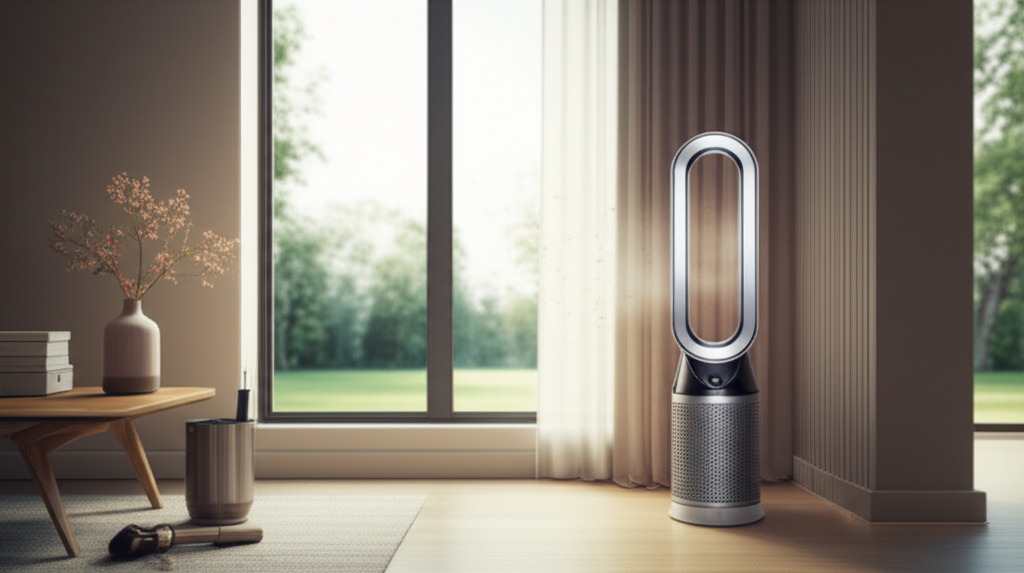
Dyson’s innovation isn’t just in the filters themselves, but also in how they design their machines to efficiently draw air in and push purified air out. Their bladeless fan technology, a signature feature, plays a role in creating a powerful yet controlled airflow. This directed airflow ensures that more of the air in your room is drawn into the purifier.
Air Multiplier™ Technology for Room-Wide Purification
The Air Multiplier™ technology, found in many Dyson purifiers, is key to their effectiveness. It projects a steady stream of purified air, circulating it throughout the entire room. This means that dust and other particles are consistently drawn towards the machine, rather than just settling in one area. This continuous circulation ensures that even hard-to-reach dust is eventually captured.
360° Sealed Filtration System
A critical aspect of Dyson’s design is their fully sealed filtration system. This ensures that no air bypasses the filters. In less advanced purifiers, dirty air can leak around the edges of the filter, reducing their overall effectiveness. Dyson’s commitment to a sealed system guarantees that every particle captured by the filter stays trapped.
How Dyson Air Purifiers Tackle Different Types of Dust
Household dust is a complex mixture. Dyson’s multi-layered approach ensures it can handle various components of this mixture. From larger visible dust bunnies to microscopic allergens, the purification process is designed to be comprehensive.
Capturing Larger Dust Particles
The initial layers of Dyson’s filtration system are designed to capture larger particles. This includes visible dust, pet hair, and larger pollen grains. By trapping these larger items first, the system prevents them from clogging the more sensitive HEPA filters prematurely.
Eliminating Fine and Ultrafine Dust
The HEPA filter is the workhorse for fine and ultrafine dust. These are the particles that can easily become airborne and are often associated with allergies and respiratory issues. Dyson’s HEPA filters are exceptionally good at trapping these tiny particles, significantly reducing their presence in your home’s air.
The Role of Sensors and Smart Technology
Modern Dyson air purifiers are equipped with advanced sensors that continuously monitor air quality. This intelligent feature allows the purifier to adapt its performance based on the detected levels of pollutants, including dust. This ensures optimal purification without constant manual adjustment.
Real-Time Air Quality Monitoring
These sensors detect particulate matter, gases, and other airborne pollutants in real-time. When dust levels rise, perhaps due to cleaning or an open window, the Dyson purifier automatically increases its fan speed to capture more particles. This proactive approach ensures your air remains clean.
App Connectivity and Data Insights
Many Dyson models connect to the Dyson Link app, providing users with detailed insights into their home’s air quality. You can see the levels of different pollutants, including dust, and track how effectively the purifier is working. This transparency offers peace of mind and helps you understand your indoor environment better.
Maintaining Your Dyson Air Purifier for Peak Dust Removal
Like any appliance, regular maintenance is key to ensuring your Dyson air purifier continues to perform at its best, especially when it comes to dust removal. Neglecting maintenance can lead to reduced efficiency and even a decrease in air quality.
Filter Replacement Schedule
The most crucial maintenance task is replacing the filters. Dyson air purifiers will typically indicate when the filters need changing, often through the machine itself or the Dyson Link app. Following these recommendations is vital for maintaining the HEPA filter’s effectiveness against dust.
Cleaning the Machine’s Exterior and Sensors
Keeping the exterior of your Dyson air purifier clean is also important. Dust can accumulate on the casing and around the sensors, potentially affecting their accuracy. A simple wipe-down with a soft, dry cloth usually suffices.
Comparing Dyson Air Purifiers for Dust Removal
Dyson offers a range of air purifiers, each with slightly different features and capacities. While all are designed to effectively remove dust, some models might be better suited for larger rooms or specific needs. Understanding these differences can help you choose the right purifier.
Key Features to Look For
When selecting a Dyson air purifier for dust removal, consider its CADR (Clean Air Delivery Rate) for dust, room coverage area, and the type of filtration system. Look for models that explicitly state their HEPA filtration capabilities and sealed systems.
Model-Specific Dust Removal Capabilities
Different Dyson models, such as the Dyson Purifier Cool™ or Dyson Purifier Hot+Cool™, are designed with various functionalities. However, their core dust removal mechanism, relying on HEPA and activated carbon filtration within a sealed system, remains consistent across their range.
Frequently Asked Questions About Dyson Air Purifiers and Dust
Here are some common questions users have about how Dyson air purifiers handle dust.
Does a Dyson air purifier remove all types of dust?
Dyson air purifiers are highly effective at removing a vast majority of common household dust particles, including fine and ultrafine dust, thanks to their HEPA filtration. They capture at least 99.97% of particles 0.3 microns in size.
How often should I replace the filters in my Dyson air purifier for dust removal?
Filter replacement frequency depends on usage and air quality, but Dyson typically recommends replacement every 6-12 months. Your purifier will notify you when it’s time.
Can a Dyson air purifier help with dust allergies?
Absolutely. By effectively removing dust, pet dander, and pollen from the air, Dyson air purifiers can significantly reduce common allergens and alleviate symptoms for allergy sufferers.
Will a Dyson air purifier eliminate dust that has already settled?
No, air purifiers work by filtering airborne particles. While a Dyson will capture dust as it becomes airborne, you will still need to perform regular dusting and cleaning to remove settled dust.
What is the difference between a Dyson fan and a Dyson air purifier regarding dust?
A Dyson fan circulates air, while a Dyson air purifier actively filters and cleans the air. Dyson purifiers are specifically designed with advanced filtration systems to capture dust and other pollutants.
Are Dyson air purifiers noisy when removing dust?
Dyson purifiers are designed for quiet operation, especially on lower fan speeds. Noise levels can increase on higher settings when the purifier is working harder to clean very dusty air.
Conclusion: Your Dyson Air Purifier is a Dust-Busting Champion
In conclusion, the answer to “does a Dyson air purifier remove dust?” is a resounding yes. Dyson air purifiers are specifically engineered with advanced HEPA filtration, sealed systems, and intelligent airflow technology to effectively capture and remove dust from your home. By understanding how they work and maintaining them properly, you can ensure your Dyson continues to provide cleaner, fresher air, significantly reducing the presence of dust and its associated allergens. Investing in a Dyson air purifier is a reliable step towards a healthier indoor environment, making it an essential tool for combating household dust.