
Do Air Purifiers Create CO2: Essential Facts Revealed

No, air purifiers do not create carbon dioxide (CO2). They filter existing pollutants from the air, rather than generating gases. Understanding how they work clarifies this common misconception.
Air purifiers are a fantastic tool for improving indoor air quality, but a common question often arises: “Do air purifiers create CO2?” It’s a valid concern, especially if you’re focused on creating the healthiest possible environment. The good news is, you can put your mind at ease. Air purifiers are designed to remove pollutants, not add to them. Let’s dive into the essential facts and clear up any confusion about how these devices work and why they are beneficial, not detrimental, to your air.
How Do Air Purifiers Work?
Air purifiers work by drawing in air from your room, passing it through a series of filters, and then releasing cleaner air back into the space. They are designed to capture microscopic particles like dust, pollen, pet dander, mold spores, and even volatile organic compounds (VOCs). This process effectively cleanses your indoor environment without introducing harmful gases.
The Filtration Process Explained
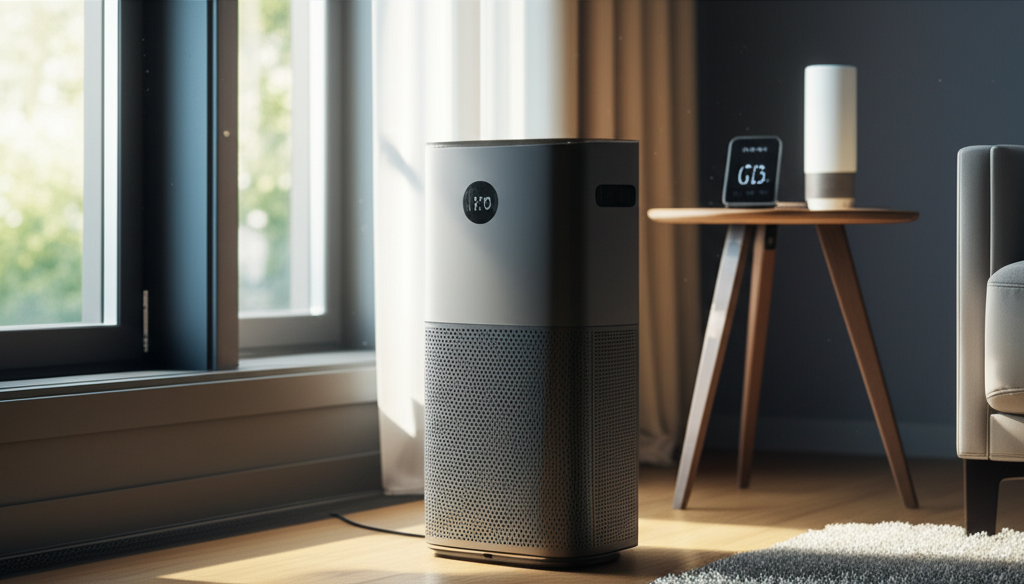
Most air purifiers utilize a multi-stage filtration system. This typically includes a pre-filter for larger particles, an activated carbon filter to absorb odors and gases, and a High-Efficiency Particulate Air (HEPA) filter to trap the smallest airborne contaminants. Some models may also incorporate UV-C light or ionization, but these technologies are also focused on purification.
What Air Purifiers Remove, Not Create
The primary function of an air purifier is to remove harmful substances from the air. This includes allergens, pollutants, and odors, leading to a healthier living space. They actively work to reduce the concentration of these unwanted elements, making your air cleaner and fresher.
Do Air Purifiers Produce Carbon Dioxide?
Let’s address the core question directly: No, air purifiers do not produce carbon dioxide (CO2). Their operation involves physical filtration and, in some cases, other purification methods that do not generate CO2.
The misconception might stem from a misunderstanding of what “purification” entails. It’s crucial to differentiate between filtering existing air and actively generating gases. Air purifiers are not combustion devices or biological processes that would release CO2.
Understanding Gas Exchange in Air Purifiers
Air purifiers do not involve any chemical reactions or processes that would release CO2. They physically capture particles and, in the case of activated carbon filters, adsorb gases like VOCs. This adsorption process traps gases on the surface of the carbon, rather than breaking them down into other substances like CO2.
The Science Behind Air Purification
The science behind air purification relies on physical principles like mechanical filtration and adsorption. HEPA filters, for example, use a dense mesh to trap particles. Activated carbon filters use a porous structure with a large surface area to attract and hold gas molecules.
The Role of Activated Carbon Filters
Activated carbon filters are a key component in many air purifiers, particularly for tackling odors and VOCs. These filters are highly effective at adsorbing gaseous pollutants. However, this adsorption process does not create CO2; it simply traps existing molecules.
How Activated Carbon Works
Activated carbon is treated to be extremely porous, creating a vast internal surface area. When air passes through, odor molecules and VOCs bind to this surface. This effectively removes them from the air without producing any byproducts like CO2.
What About Other Gases?
While activated carbon is excellent for many gases, it’s not designed to remove CO2. CO2 is a naturally occurring gas in the atmosphere, and air purifiers are not intended to reduce its levels. If CO2 is a concern, ventilation is the primary solution.
HEPA Filters and CO2 Production
HEPA (High-Efficiency Particulate Air) filters are designed to capture very fine particulate matter. They are made of a mat of randomly arranged fibers that trap particles. This physical trapping mechanism has absolutely no potential to create CO2.
The Mechanics of HEPA Filtration
A HEPA filter works by physical interception, diffusion, and impaction. Air is forced through the filter medium, and particles are caught in the fibers. This process is entirely mechanical and does not involve any chemical reactions that could produce CO2.
Particle Removal vs. Gas Generation
It’s important to distinguish between removing solid or liquid particles and generating gases. HEPA filters excel at the former, while other filter types (like activated carbon) handle certain gases. Neither process involves CO2 creation.
Ionizers and Ozone Concerns
Some air purifiers use ionizers, which release negatively charged ions into the air. These ions attach to airborne particles, causing them to clump together and fall out of the air or stick to surfaces. While generally safe, some older or poorly designed ionizers can produce small amounts of ozone as a byproduct.
Ozone and Its Effects
Ozone is a gas that, at ground level, can be harmful to respiratory health. However, most modern air purifiers that use ionizers are designed to produce ozone levels well below safety standards, as set by organizations like the California Air Resources Board (CARB). It’s crucial to choose certified devices.
Ionizers Do Not Create CO2
Even if an ionizer produces ozone, it does not create CO2. Ozone (O3) is a different molecule altogether. The concern with ionizers is ozone production, not CO2.
UV-C Light Technology
Air purifiers with UV-C light technology use ultraviolet radiation to kill or inactivate microorganisms like bacteria and viruses. The UV-C light is directed at the air as it passes through the unit. This process is a form of sterilization.
How UV-C Works
UV-C light damages the DNA or RNA of microorganisms, preventing them from reproducing. This is a highly effective method for reducing the presence of airborne pathogens. The UV-C lamp itself emits light and does not produce CO2.
No CO2 from UV-C Lamps
Similar to HEPA filters and activated carbon, UV-C technology is not a source of carbon dioxide. Its purpose is to neutralize biological contaminants through light exposure.
Ventilation vs. Air Purification
While air purifiers are excellent at improving indoor air quality by removing pollutants, they do not replace the need for ventilation. Ventilation is the process of exchanging indoor air with outdoor air, which is the primary way to reduce the concentration of CO2.
The Importance of Fresh Air
CO2 is a natural byproduct of human respiration. When we are indoors with limited airflow, CO2 levels can increase. Opening windows or using an HVAC system with fresh air intake helps to dilute and remove this CO2.
Air Purifiers and CO2 Levels
Air purifiers do not impact CO2 levels. They focus on filtering out particles and certain gases, but they don’t bring in fresh air or remove CO2. For optimal air quality, a combination of air purification and ventilation is recommended.
When CO2 Levels Might Be High
Elevated CO2 levels indoors can lead to symptoms like headaches, fatigue, and difficulty concentrating. This is usually a sign that ventilation is insufficient. If you suspect high CO2 levels, consider these factors:
Occupancy: More people in a room generate more CO2.
Room Size: Smaller, enclosed spaces can see CO2 rise faster.
Ventilation Rate: Poorly ventilated homes or offices are prone to higher CO2.
Building Tightness: Modern, energy-efficient buildings can sometimes trap air if ventilation isn’t adequate.
Monitoring CO2 Levels
If you are concerned about CO2, you can use a CO2 monitor. These devices measure the concentration of carbon dioxide in the air and can alert you when levels become too high, indicating a need for more fresh air.
Solutions for High CO2
The most effective solution for high CO2 is to increase ventilation. This can involve opening windows, using exhaust fans, or ensuring your HVAC system is set to bring in fresh outside air.
Choosing the Right Air Purifier
When selecting an air purifier, focus on its ability to tackle the pollutants that concern you most. Look for certifications and features that ensure effective and safe operation. Remember, an air purifier’s goal is to clean the air you already have.
Key Features to Consider
CADR (Clean Air Delivery Rate): Higher CADR means faster air cleaning.
Filter Type: HEPA and activated carbon are essential for most homes.
Room Size Coverage: Ensure the purifier is sized appropriately for your space.
Certifications: Look for CARB certification for ozone safety.
* Noise Level: Consider how loud the unit is, especially for bedrooms.
Reputable Brands and Models
Many reputable brands offer effective air purifiers. Some well-regarded options include Coway, Blueair, Levoit, and Molekule. Always research specific models and read reviews to ensure they meet your needs. For example, the Coway Airmega series is known for its robust filtration and smart features.
Frequently Asked Questions (FAQ)
Do air purifiers make the air drier?
No, air purifiers do not typically affect humidity levels or make the air drier. Their primary function is to filter particles and gases, not to alter moisture content.
Can air purifiers filter out CO2?
No, standard air purifiers are not designed to filter out carbon dioxide (CO2). CO2 is a gas that requires ventilation to reduce its concentration.
Are air purifiers safe for people with asthma?
Yes, air purifiers can be very beneficial for individuals with asthma by removing common triggers like dust, pollen, and pet dander from the air. Always choose a unit with a HEPA filter.
Do air purifiers produce harmful gases?
Reputable air purifiers, especially those certified by bodies like CARB, produce negligible amounts of harmful gases like ozone. Always check for certifications.
How often should I replace the filters in my air purifier?
Filter replacement frequency varies by model and usage, but generally, pre-filters need cleaning every few weeks, and HEPA and carbon filters need replacing every 6-12 months. Consult your manufacturer’s guidelines.
Can air purifiers get rid of smoke smell?
Yes, air purifiers with activated carbon filters are very effective at adsorbing and removing smoke odors from the air.
Conclusion: Breathe Easy with Clean Air
To definitively answer the question: Do air purifiers create CO2? Absolutely not. Air purifiers are sophisticated devices designed to enhance your indoor environment by removing pollutants, allergens, and odors. They operate through mechanical filtration, adsorption, and other safe purification technologies that do not generate carbon dioxide. While they can’t reduce CO2 levels (for that, you need ventilation), they play a crucial role in making your home a healthier sanctuary. By understanding how they work and choosing the right unit, you can confidently improve your air quality and breathe easier, knowing your air purifier is working for you, not against you.
