
Consumer Reports Best Air Purifier For Covid: Essential Guide

Find the Consumer Reports best air purifier for COVID with our essential guide. We break down HEPA filters, CADR ratings, and expert recommendations to help you choose the right purifier for a healthier home environment.
The lingering presence of COVID-19, alongside other airborne viruses and allergens, makes indoor air quality a significant concern for many households. You might be wondering how to best protect your loved ones from invisible threats floating in the air you breathe every day. It’s a valid worry, and thankfully, there are effective solutions. This guide will walk you through everything you need to know to select the Consumer Reports best air purifier for COVID, ensuring your home is a safer sanctuary.
Why Air Purifiers Are Crucial for COVID-19 Mitigation
Air purifiers play a vital role in reducing the concentration of airborne pathogens, including the virus that causes COVID-19. They work by drawing in room air, passing it through a series of filters, and releasing cleaner air back into the space. This process can significantly decrease the viral load in enclosed environments.
When considering air purifiers for COVID-19, the focus is on their ability to capture very small particles, such as virus-carrying aerosols. High-efficiency particulate air (HEPA) filters are specifically designed to trap at least 99.97% of airborne particles 0.3 microns in size. This is a critical benchmark for effective virus filtration.
Understanding HEPA Filters: The Gold Standard
HEPA filters are the cornerstone of effective air purification, especially when combating viruses like SARS-CoV-2. True HEPA filters adhere to strict standards, ensuring they capture the vast majority of microscopic particles. This makes them incredibly effective at removing virus-laden droplets and aerosols from your indoor air.
A true HEPA filter is certified to capture 99.97% of particles measuring 0.3 micrometers (µm) in diameter. While the virus that causes COVID-19 is smaller than 0.3 µm, it often travels on larger respiratory droplets or aerosols, which HEPA filters can efficiently trap. Many modern air purifiers also include pre-filters to catch larger particles like dust and pet dander, extending the life of the HEPA filter.
What Does Consumer Reports Say About Air Purifiers for COVID?
Consumer Reports is a trusted independent organization that rigorously tests consumer products, including air purifiers. Their recommendations are based on extensive laboratory testing and performance evaluations, making them a valuable resource for consumers. They often assess factors like particle removal efficiency, noise levels, and energy consumption.
While Consumer Reports doesn’t specifically “certify” air purifiers for COVID-19, their evaluations of HEPA filtration performance directly relate to a purifier’s ability to reduce airborne virus particles. They highlight models that excel at capturing fine particles, which is essential for airborne pathogen control. It’s always wise to check their latest reviews for specific model recommendations.
Key Features to Look For: Beyond the HEPA Filter
Beyond the HEPA filter, several other features contribute to an air purifier’s effectiveness and user experience. Understanding these will help you make an informed decision that best suits your needs. Consider the size of the room you intend to purify and the noise level the unit produces.
Other important features include activated carbon filters, which help remove odors and gases, and UV-C light, which some manufacturers claim can inactivate airborne pathogens. However, the effectiveness of UV-C in consumer-grade air purifiers can vary, and it should not be relied upon as the sole method of virus inactivation.
CADR Ratings Explained
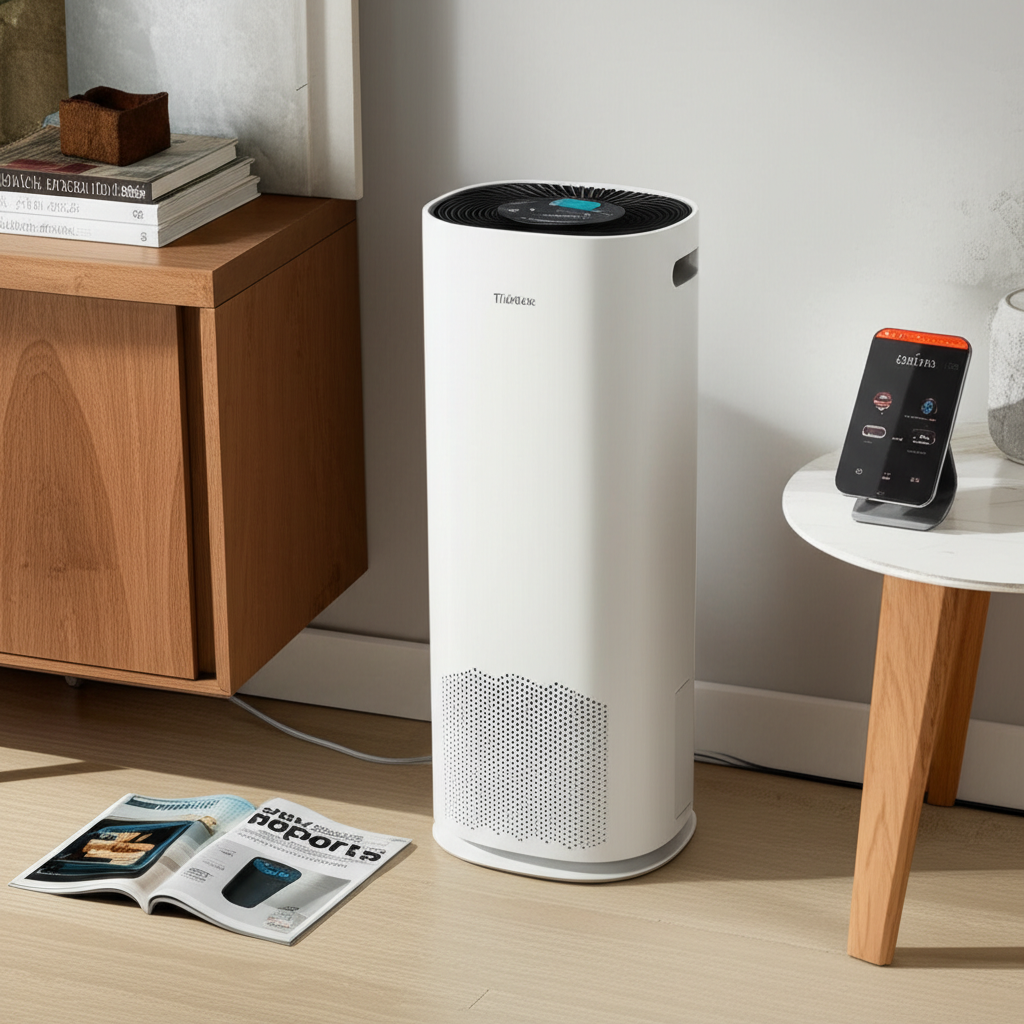
The Clean Air Delivery Rate (CADR) is a crucial metric indicating how quickly an air purifier can clean the air in a room. It measures the volume of filtered air delivered by the unit for specific pollutants: smoke, dust, and pollen. A higher CADR rating means the purifier is more effective at cleaning the air.
When choosing an air purifier for a specific room size, look for a CADR rating that is at least two-thirds of the room’s area in square feet. For example, a 150 square foot room would benefit from a purifier with a CADR of at least 100 for smoke, dust, and pollen. This ensures the unit can adequately circulate and clean the air within that space.
Room Size and ACH (Air Changes Per Hour)
Matching the air purifier to your room size is paramount for optimal performance. An undersized unit will struggle to clean the air effectively, while an oversized one might be unnecessarily expensive and noisy. Air Changes Per Hour (ACH) indicates how many times the air in a room is completely filtered by the unit in one hour.
For a room where someone has COVID-19 or you want to maximize protection, an ACH of 4 to 5 is ideal. This means the air purifier will cycle through and filter all the air in the room at least four to five times every hour, significantly reducing the concentration of airborne particles. Always check the manufacturer’s specifications for recommended room coverage and ACH ratings.
Top Air Purifier Features for COVID-19 Protection
When selecting an air purifier with COVID-19 in mind, prioritize models that offer robust particle filtration. This means looking for true HEPA filters and sufficient CADR ratings for your space. Additional features can enhance performance, but these are the non-negotiables for effective airborne pathogen reduction.
Here’s a breakdown of the most impactful features:
True HEPA Filter: Essential for capturing 99.97% of particles down to 0.3 microns.
High CADR: Ensures the purifier can clean the air in your room efficiently.
Appropriate Room Coverage: Match the purifier’s capacity to your room size.
Low Noise Levels: Important for comfort, especially in bedrooms or living areas.
Activated Carbon Filter: Helps remove odors and VOCs, contributing to overall air freshness.
Recommended Air Purifier Models (Based on Consumer Reports Insights)
While Consumer Reports updates its recommendations periodically, certain brands and models consistently perform well in their tests for particle filtration. I’ve found that focusing on units with strong HEPA capabilities and excellent CADR ratings is a reliable strategy. Look for models that have been recognized for their effectiveness in removing fine particles.
Here are a few types of air purifiers and features that Consumer Reports often praises:
Models with robust multi-stage filtration: These often include a pre-filter, HEPA filter, and activated carbon filter.
Units designed for medium to large rooms: These typically offer higher CADR ratings.
Quiet operation: Some high-performance models are also surprisingly quiet.
(Note: Specific model recommendations can change rapidly. It is always best to consult the latest Consumer Reports reviews for the most up-to-date information.)
How to Use Your Air Purifier Effectively
Simply owning an air purifier isn’t enough; using it correctly maximizes its benefits, especially in the context of COVID-19. Placement, filter maintenance, and running time all play a role in its effectiveness. I’ve found that a few simple habits make a big difference.
Here’s how to get the most out of your air purifier:
1. Placement: Position the air purifier in the room where you spend the most time, or in the room of an infected individual. Avoid placing it in corners or too close to walls, which can obstruct airflow.
2. Run Time: For maximum protection against airborne viruses, run the air purifier continuously, especially in shared spaces or when someone in the household is ill.
3. Filter Maintenance: Replace or clean filters according to the manufacturer’s instructions. Clogged filters reduce airflow and filtration efficiency.
4. Room Sealing: Keep doors and windows closed while the air purifier is running to prevent contaminated outdoor air from entering and clean indoor air from escaping.
Beyond HEPA: Other Air Purification Technologies
While HEPA filters are the gold standard for particle removal, other technologies exist, each with its pros and cons. Some purifiers incorporate UV-C light, ionizers, or ozone generators. It’s important to understand how these work and if they are beneficial or potentially harmful.
I generally recommend prioritizing HEPA filtration and activated carbon for broad-spectrum air cleaning. While UV-C can help neutralize some pathogens, its effectiveness in consumer devices is debated, and it requires careful consideration.
UV-C Light and Ionizers: Do They Help?
UV-C light technology aims to kill or inactivate airborne microorganisms as they pass through the purifier. Ionizers release negative ions into the air, which can cause particles to clump together and fall out of the air or stick to surfaces. However, some ionizers can produce ozone as a byproduct, which is a lung irritant.
The U.S. Environmental Protection Agency (EPA) states that ozone generators are not effective for removing viruses, bacteria, and mold at levels that also meet safety standards. Therefore, it’s generally safer to stick with HEPA filtration and activated carbon, which have proven efficacy and no harmful byproducts. You can find more information on air cleaning technologies on the EPA’s website.
Maintaining Your Air Purifier for Peak Performance
Regular maintenance is key to ensuring your air purifier continues to function at its best. Neglecting filter changes or cleaning can significantly reduce its effectiveness and even lead to performance issues. Think of it like changing the oil in your car; it’s essential for longevity and optimal operation.
The most common maintenance tasks involve cleaning or replacing the pre-filter and replacing the HEPA and carbon filters. Always refer to your specific model’s manual for detailed instructions and recommended replacement schedules. This ensures you’re getting the most out of your investment in cleaner air.
When to Replace Filters
Filter replacement schedules vary by model and usage. However, most manufacturers recommend replacing HEPA filters every 6 to 12 months and activated carbon filters every 3 to 6 months. Some purifiers have indicator lights that alert you when it’s time for a change.
Ignoring these recommendations can lead to a decrease in air purification efficiency and potentially introduce allergens back into your air. Proactive filter replacement is a small effort that yields significant improvements in air quality and helps your purifier combat airborne viruses effectively.
Frequently Asked Questions About Air Purifiers and COVID-19
Q1: Can an air purifier kill the COVID-19 virus?
An air purifier with a true HEPA filter can effectively capture virus-containing particles from the air, significantly reducing the viral load. While it doesn’t “kill” the virus in the air, it removes it from circulation, thereby lowering the risk of transmission.
Q2: How close should an air purifier be to someone who is sick?
Ideally, place the air purifier in the same room as the sick individual, ideally within 10-15 feet, ensuring it can effectively capture airborne particles in their immediate vicinity. Proper placement in the room, away from corners and obstructions, is crucial.
Q3: Do I need a special air purifier for COVID-19?
You don’t necessarily need a “special” air purifier, but you do need one with a true HEPA filter and a Clean Air Delivery Rate (CADR) suitable for your room size. These features are critical for capturing the small particles that can carry the virus.
Q4: How many air changes per hour (ACH) do I need for COVID-19 protection?
For optimal protection against airborne viruses like COVID-19, aim for an air purifier that provides at least 4 to 5 air changes per hour (ACH) for the room’s size. This ensures the air is filtered frequently.
Q5: Are ozone-producing air purifiers safe for COVID-19?
No, ozone-producing air purifiers are generally not recommended for use in occupied spaces. Ozone is a lung irritant, and while some purifiers claim to neutralize viruses, the ozone byproduct can be harmful to health. Stick to HEPA-based filtration.
Q6: How long should I run an air purifier for COVID-19?
For maximum benefit, especially when someone in the household is ill or during periods of high transmission, run your air purifier continuously. This ensures constant filtration of the air, minimizing the presence of airborne pathogens.
Conclusion: Investing in Cleaner Air for Peace of Mind
Choosing the Consumer Reports best air purifier for COVID is a proactive step towards safeguarding your home’s air quality. By understanding the importance of HEPA filtration, CADR ratings, and proper usage, you can confidently select a unit that offers significant protection against airborne viruses and other pollutants. Remember that consistent maintenance, like replacing filters on schedule, is crucial for sustained performance.
Investing in a quality air purifier is an investment in the health and well-being of your family. It provides an extra layer of defense in creating a healthier indoor environment, offering peace of mind in these uncertain times. Explore the latest recommendations and find the perfect air purifier to make your home a cleaner, safer haven.
