Can You Use Air Purifier On Carpet: Essential Guide

Yes, you can use an air purifier on carpet, and it can be highly beneficial for improving indoor air quality by capturing dust, allergens, and pet dander that settle into carpet fibers. Proper placement and understanding your air purifier’s capabilities are key to maximizing its effectiveness on carpeted floors.
Are you wondering if your trusty air purifier can lend a hand in tackling the dust and allergens lurking in your carpets? It’s a common question, especially when you’re aiming for the cleanest air possible in your home. Carpets can trap a surprising amount of microscopic particles, and it’s natural to want your air purifier to address this. Don’t worry, I’m here to guide you through exactly how and why using an air purifier on carpet is not only possible but also a smart move for a healthier living space. We’ll cover everything you need to know to get the best results.
Can You Use Air Purifier On Carpet? The Simple Answer
Yes, you absolutely can use an air purifier on carpet. In fact, placing your air purifier directly on a carpeted surface can enhance its ability to capture airborne particles that have settled into the carpet fibers. This direct contact helps draw in dust, pet dander, and other allergens more effectively than if it were placed on a raised surface or far from the source.
This direct interaction with the carpet fibers allows the air purifier to work more efficiently in removing settled allergens. It’s a simple yet impactful strategy for improving your home’s air quality.
Why Carpets are a Magnet for Allergens
Carpets act like a large, porous sponge for your home’s air. Tiny particles like dust mites, pet dander, pollen tracked in from outside, and even mold spores can easily become embedded deep within the carpet fibers. These trapped allergens can then be stirred up into the air with everyday activities like walking, vacuuming, or even just air currents.
These microscopic invaders can significantly impact indoor air quality and trigger allergy or asthma symptoms. Understanding this makes it clear why addressing carpet-bound allergens is crucial for a truly clean environment.
How Air Purifiers Work with Carpets
Air purifiers work by drawing in the surrounding air, passing it through a filtration system, and then releasing cleaner air back into the room. When placed on carpet, the intake vents, often located at the bottom or sides of the unit, can directly pull in air that is laden with particles that have settled into the carpet. This process helps to capture these allergens before they have a chance to become airborne again.
The effectiveness depends on the air purifier’s design, particularly the placement of its air intake. Units with lower intake vents are generally better suited for direct placement on carpets.
Benefits of Using an Air Purifier Directly on Carpet
Placing your air purifier on carpet offers several key advantages for air quality management. It allows for more direct capture of settled dust and allergens, reducing the likelihood of them being re-suspended into the air. This is especially beneficial for households with pets or individuals suffering from allergies.
The proximity to the carpet means the purifier can tackle a significant source of indoor pollutants. This proactive approach contributes to a noticeably cleaner and healthier living atmosphere.
Choosing the Right Air Purifier for Carpeted Rooms
When selecting an air purifier for a carpeted room, consider models with air intake vents located at the bottom or on the lower sides of the unit. This design allows the purifier to effectively draw in air from the carpet surface. Look for HEPA filters, which are essential for capturing fine particles like dust mites and pet dander.
The CADR (Clean Air Delivery Rate) should also be appropriate for the room size. A higher CADR means the purifier can clean the air more quickly and efficiently, which is beneficial in rooms with significant carpet coverage.
Optimal Placement of Your Air Purifier on Carpet
The best spot for your air purifier on carpet is typically in a high-traffic area or near common sources of allergens, such as pet beds or seating areas. Ensure the unit is placed on a flat, stable surface and that the air intake vents are not blocked by the carpet pile or furniture. Leaving at least a foot of clearance around the unit allows for optimal airflow.
Consider placing it in corners or along walls where air circulation might be naturally lower. This strategic positioning maximizes the purifier’s ability to capture airborne and settled pollutants.
Maintaining Your Air Purifier When Used on Carpet
Regular maintenance is crucial, especially when your air purifier is operating on carpet. You’ll likely need to clean or replace the pre-filter more frequently, as it will capture more dust and debris from the carpet. Check the pre-filter weekly and clean or replace it as needed to maintain efficient airflow and filtration.
Regularly inspect the main HEPA and activated carbon filters according to the manufacturer’s recommendations. Keeping these filters clean ensures the best possible air purification performance and extends the lifespan of your unit.
Potential Challenges and How to Overcome Them
One potential challenge is that the carpet pile can sometimes obstruct the air intake vents, reducing the unit’s efficiency. To overcome this, ensure the vents are clear and consider using a small, stable mat or riser under the air purifier if the carpet is particularly thick. This elevates the unit slightly, improving airflow without compromising stability.
Another consideration is noise. Some air purifiers might sound slightly louder on carpet due to vibrations. Placing the unit on a solid mat can sometimes help dampen vibrations and reduce noise levels.
Air Purifier Effectiveness: Carpet vs. Hardwood Floors
While air purifiers are effective on both carpet and hardwood floors, their primary function differs slightly. On hardwood floors, they excel at capturing airborne dust that hasn’t settled. On carpets, they gain an added advantage by directly addressing pollutants embedded within the fibers.
Both settings are beneficial, but the ability to capture settled allergens makes carpet placement particularly valuable for allergy sufferers. The overall goal is to remove pollutants from the air, whether they are currently airborne or resting on surfaces.
Understanding Air Purifier Filters and Carpet Dust
The type of filters in your air purifier plays a critical role in managing carpet dust. A true HEPA filter is designed to capture 99.97% of airborne particles as small as 0.3 microns, which includes common allergens like dust mites, pet dander, and pollen that can be found in carpets. An activated carbon filter works in tandem by absorbing odors and volatile organic compounds (VOCs) that may also emanate from carpet materials or spills.
Regular cleaning or replacement of these filters is essential, as carpet dust can clog them faster. This ensures the continued effectiveness of your air purifier in providing clean air.
Frequently Asked Questions (FAQ)
Will placing an air purifier on carpet damage the carpet?
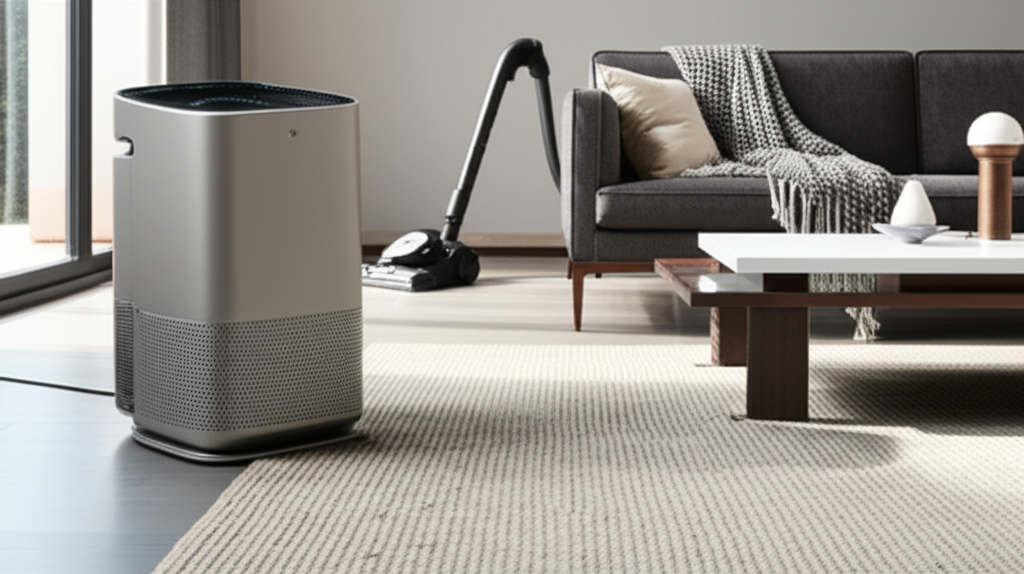
Generally, no. Most air purifiers are designed to be placed on various surfaces, including carpet. However, if your unit is particularly heavy or has sharp edges, it’s wise to place a small, protective mat underneath to prevent any potential crushing or indentations in the carpet pile.
How often should I clean the air purifier’s pre-filter when using it on carpet?
You should check and clean the pre-filter more frequently when using the air purifier on carpet, ideally every week. Carpets tend to shed more debris, and the pre-filter will capture more of this dust and pet hair, so regular cleaning is key to maintaining performance.
Can an air purifier help with pet odors embedded in carpets?
Yes, an air purifier with a substantial activated carbon filter can significantly help reduce pet odors that have seeped into carpets. The carbon filter absorbs odor molecules from the air, making your home smell fresher.
What if my air purifier has vents on the bottom? Is it still okay for carpet?
Yes, air purifiers with bottom vents are often ideal for carpet placement. These vents are designed to draw air directly from the floor surface, making them very effective at capturing dust and allergens that settle into carpet fibers.
Should I elevate my air purifier off the carpet?
While not always necessary, elevating your air purifier slightly can improve airflow, especially with very thick carpets. A small, stable riser or a firm, flat mat can help ensure the intake vents aren’t completely smothered by carpet pile, enhancing efficiency.
How do I know if my air purifier is working effectively on my carpet?
You’ll notice improved air quality, fewer allergy symptoms, and less visible dust settling on surfaces. If your air purifier has an air quality indicator, you might see it improve. Also, check how quickly the pre-filter gets dirty – this indicates it’s actively capturing particles from the carpet.
Conclusion: Breathe Easier with Carpet-Friendly Air Purification
In conclusion, the answer to “can you use air purifier on carpet” is a resounding yes, and it’s a highly effective strategy for enhancing your home’s air quality. By understanding how your air purifier interacts with carpet fibers and by choosing the right unit with appropriate placement and maintenance, you can significantly reduce allergens, dust, and odors. This proactive approach ensures that your air purifier isn’t just cleaning the air, but actively tackling pollutants at their source within your carpets, leading to a healthier and more comfortable living environment for everyone.