
Ammonia for Carpet Cleaning: When to Use It and How to Do It Safely

Quick answer
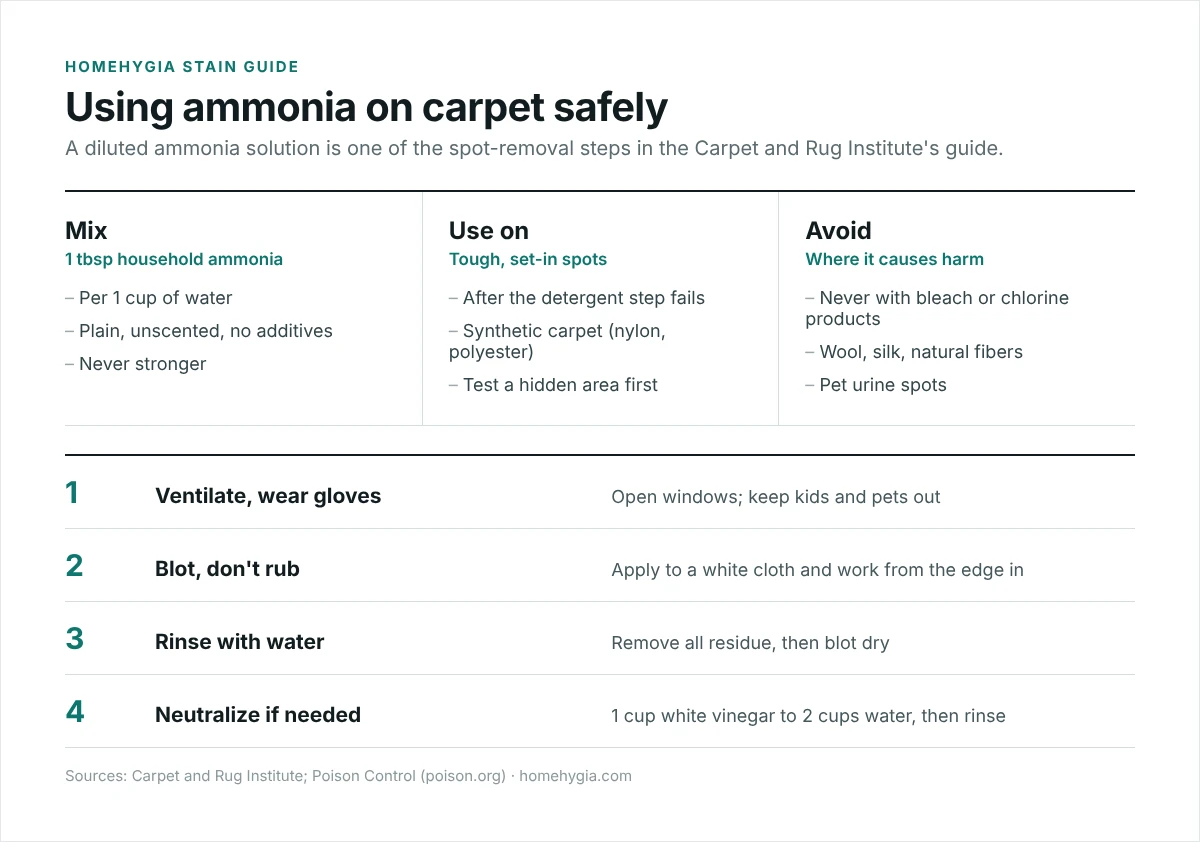
Yes, a diluted ammonia solution can help lift some stubborn carpet stains. The Carpet and Rug Institute’s spot guide uses 1 tablespoon of plain household ammonia per cup of water, and warns that ammonia can change carpet color, so test a hidden area first. Apply it by blotting, rinse thoroughly with water, and keep the room ventilated. Never mix ammonia with bleach or any chlorine product, because that releases toxic chloramine gas. Skip it on wool and silk and on pet urine spots, where a mild dish-soap and vinegar method works better.
Household ammonia is a strong, inexpensive grease-cutter, which is why it turns up in so many DIY carpet recipes. Used at the right strength and in the right situations, it’s a useful tool. Used wrong, it can bleach dyes, damage natural fibers, or create dangerous fumes. This guide covers when to reach for it and exactly how to use it.

Is ammonia safe for carpet?
On most synthetic carpets, a weak solution is generally fine when you test it first. The Carpet and Rug Institute (CRI) includes an ammonia solution, 1 tablespoon of household ammonia per cup of water, among its spot-removal solutions, alongside a mild detergent solution and a vinegar solution. It adds a caution: “ammonia, if used improperly, can cause a color change. Be sure to test a hidden area” (CRI Spot Solver).
The bigger risk is to you, not the carpet. Poison Control explains that ammonia should never be mixed with chlorine or bleach products, because it releases a highly irritating gas called chloramine, and recommends ventilating the room and following label directions (Poison Control: cleaning products safety).
When ammonia helps, and when to avoid it
| Situation | Use ammonia? | Better approach |
|---|---|---|
| Set-in food, grease or dirt spots on synthetic carpet | Yes, as a second step after mild detergent | Detergent solution first, then ammonia, then rinse |
| Wool, silk or other natural-fiber rugs | No | Wool-safe cleaner or a professional |
| Pet urine | No | Dish-soap solution, then vinegar solution (CRI) |
| Carpet already treated with bleach or a chlorine cleaner | No, never | Rinse with plain water, ventilate, and wait |
| Whole-room cleaning in a carpet cleaner machine | No | Use the machine maker’s solution |
For pet accidents, CRI recommends blotting with a solution of ¼ teaspoon of non-bleach dish detergent per cup of lukewarm water, then a solution of one cup white vinegar to two cups water (CRI: Pet Urine and Carpet). Many pet owners also avoid ammonia because urine itself smells of ammonia. See our homemade carpet cleaner for pet stains.
How to use ammonia on a carpet stain
- Ventilate and protect yourself. Open a window, put on gloves, and keep children and pets out of the room.
- Blot up as much as you can with a white cloth or paper towel. Scrape off any solids.
- Try the mild step first. Blot with ¼ teaspoon of dish soap per cup of lukewarm water. If the stain is still there, move on to ammonia.
- Mix the ammonia solution: 1 tablespoon of plain, clear household ammonia per 1 cup of water. Don’t use a stronger mix or scented “sudsy” ammonia.
- Test a hidden spot such as inside a closet. Wait and check for color change.
- Apply with a cloth, not by pouring. Dampen a white cloth, blot from the edge of the stain toward the center, and switch to clean sections as the stain transfers.
- Rinse thoroughly with plain water and blot until no residue is left. Leftover cleaner attracts dirt.
- Neutralize if needed. A blot with 1 cup white vinegar to 2 cups water can help after alkaline cleaners; rinse again.
- Dry. Lay a thick pad of paper towels on the spot, weigh it down, and change the towels until the carpet is dry.
Safety rules
- Never mix ammonia with bleach, chlorine cleaners or products that may contain them (some mildew removers and toilet cleaners). Don’t use them one after the other on the same spot without rinsing thoroughly in between.
- Store ammonia in its original bottle, out of reach of children.
- If someone breathes in fumes and feels unwell, get them to fresh air and call Poison Control (1-800-222-1222 in the U.S.).
Thinking of using bleach on hard floors instead? Read can I mop with bleach first.
Gentler alternatives
- Dish-soap solution: the first step for most spills.
- White vinegar solution: good after detergent and for urine.
- CRI-certified spot cleaners: products tested not to damage carpet; see the CRI Seal of Approval list.
- For a carpet cleaning machine: use the maker’s formula, or read about homemade Bissell carpet cleaner solution and its limits.
Frequently asked questions
What is the ratio of ammonia to water for carpet cleaning?
The Carpet and Rug Institute uses 1 tablespoon of household ammonia per 1 cup of water. Don’t make it stronger.
Can I put ammonia in my carpet cleaner machine?
It’s not recommended. Use the machine maker’s cleaning formula; homemade mixes can damage parts or void a warranty.
Does ammonia remove carpet stains?
It can help with some set-in or greasy stains after a mild detergent fails, but it isn’t right for every stain and can change carpet color.
Is ammonia safe for pets on carpet?
Keep pets away until the area is rinsed and dry. For pet urine, use the dish-soap and vinegar method instead of ammonia.
Can I use ammonia on a wool rug?
No. Wool and silk are sensitive to alkaline cleaners. Use a wool-safe product or call a professional cleaner.
Sources
- Carpet and Rug Institute: Spot Solver (cleaning solutions)
- Carpet and Rug Institute: Pet Urine and Carpet
- Poison Control: Cleaning products safety
Related guides
- Best Brush For Carpet Cleaning: Proven Results
- Before And After Carpet Cleaning: Proven Results
- Carpet Cleaning Eco Friendly: Proven Safe Results
- Carpet Cleaning at Home: Genius, Effortless Results