
Can Air Purifiers Kill Mosquito: Proven Defense

While air purifiers primarily focus on air quality, certain models with specific features can indirectly contribute to mosquito control by attracting and trapping them, though they are not a direct mosquito killer.
Can Air Purifiers Kill Mosquitoes: A Proven Defense Strategy
Mosquitoes are more than just a nuisance; they can carry diseases and disrupt outdoor and indoor comfort. Many homeowners seek effective ways to combat these pests, and the question arises: can air purifiers, devices designed for air quality, play a role in mosquito control? This article delves into the science behind air purifiers and their potential to help manage mosquito populations, offering a comprehensive look at their capabilities and limitations.
Understanding Mosquitoes and Their Attraction Triggers
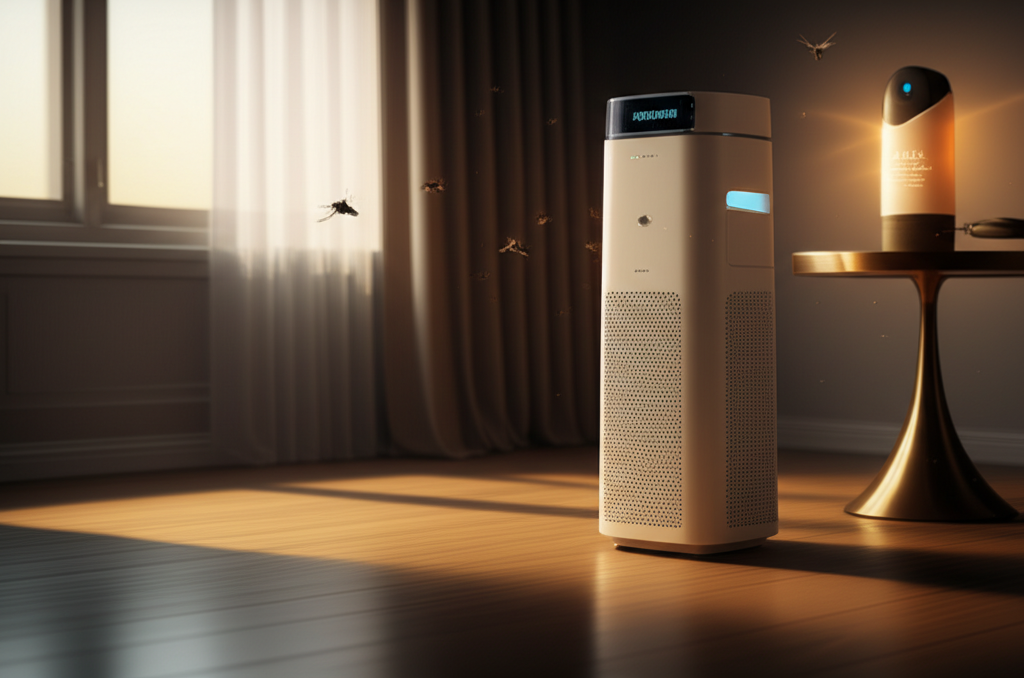
Mosquitoes are drawn to specific environmental cues, making them predictable targets for certain control methods. They primarily locate hosts by sensing carbon dioxide (CO2) exhaled by living beings, body heat, and specific odors like lactic acid. Understanding these attractants is key to devising effective strategies against them.
The Science of CO2 and Mosquitoes
Carbon dioxide is a primary attractant for mosquitoes, signaling the presence of potential blood meals. As humans and animals breathe, they release CO2 into the air, creating a scent trail that mosquitoes follow. This reliance on CO2 makes it a critical element in attracting mosquitoes to trapping devices.
Body Heat and Odors: A Mosquito’s Radar
Beyond CO2, mosquitoes also use body heat and specific chemical compounds found in human and animal sweat, such as lactic acid and octenol. These olfactory cues further guide them towards their targets, acting as a secondary navigation system.
How Air Purifiers Work: Beyond Air Purification
Traditional air purifiers are designed to remove airborne particles like dust, pollen, and pet dander using filters such as HEPA and activated carbon. However, some advanced models incorporate features that can also attract and trap insects. These features often mimic the natural attractants that mosquitoes seek.
The Role of HEPA and Activated Carbon Filters
HEPA filters capture microscopic particles, while activated carbon filters absorb odors and VOCs. While these filters are excellent for air quality, they do not directly target or kill mosquitoes. Their primary function remains the purification of the air from allergens and pollutants.
Advanced Features for Insect Attraction
Certain air purifiers are designed with additional features specifically to attract and trap insects, including mosquitoes. These often involve UV light technology, which can attract flying insects, and sticky traps or fan-based suction mechanisms to capture them. These dual-purpose devices offer a unique approach to pest control.
Can Air Purifiers Directly Kill Mosquitoes? The Nuance
The direct answer to whether air purifiers kill mosquitoes is nuanced. While most standard air purifiers do not have mechanisms to kill them, specialized units can be effective at attracting and trapping them, thus reducing their presence. It’s crucial to differentiate between general air purifiers and those designed with insect control in mind.
Standard Air Purifiers: Limited Impact
A typical air purifier, focusing solely on particle filtration, will not actively kill mosquitoes. They might inadvertently trap a mosquito that flies into the unit, but this is not a reliable or intended method of mosquito control. Their primary purpose remains air quality improvement.
Specialized Insect Trapping Air Purifiers
Air purifiers equipped with UV lights, fans, and sticky traps or collection chambers are designed to lure and capture mosquitoes. The UV light attracts insects, and the fan then draws them into a trap where they are either dehydrated or caught on an adhesive surface. These units offer a more direct approach to mosquito management.
The Effectiveness of UV Light and Fans
UV light is a common attractant for many flying insects, including mosquitoes. When combined with a fan and a trapping mechanism, UV light can draw mosquitoes into the device. The fan then creates airflow to pull the insects into a containment area, preventing their escape.
UV Light as a Mosquito Lure
Many studies have shown that mosquitoes are attracted to specific wavelengths of UV light, particularly those emitted by blue and black lights. This attraction is similar to how they are drawn to natural light sources at dusk. This makes UV a key component in insect-targeting devices.
Fan-Assisted Trapping Mechanisms
The fan in these specialized purifiers plays a dual role: it helps circulate air for purification and creates a vortex to draw in unsuspecting insects. Once inside, the insects are typically caught on a sticky surface or fall into a collection tray, effectively removing them from the environment.
Air Purifiers vs. Dedicated Mosquito Traps
It’s important to compare air purifiers with specialized mosquito traps. While some air purifiers offer insect control, dedicated mosquito traps are engineered with mosquito behavior and attraction in mind, often using a wider range of attractants like CO2 and heat.
Dedicated Mosquito Traps: A Deeper Dive
Dedicated mosquito traps often mimic human breath by releasing CO2, octenol, or heat. These sophisticated attractants are highly effective at drawing mosquitoes from a distance. They are specifically designed for maximum mosquito capture.
Comparing Features and Efficacy
| Feature | Standard Air Purifier | Air Purifier with Insect Trap | Dedicated Mosquito Trap |
| :——————- | :——————– | :—————————- | :———————- |
| Primary Function | Air Purification | Air Purification & Insect Trap | Mosquito Trapping |
| Mosquito Attraction | Minimal/Incidental | UV Light, Fan | CO2, Heat, Odors, UV |
| Mosquito Killing | No | Trapping/Dehydration | Trapping/Dehydration |
| Area Coverage | Indoor Air Quality | Indoor Air Quality & Pests | Targeted Outdoor/Indoor |
| Effectiveness Against Mosquitoes | Very Low | Moderate | High |
While air purifiers with insect traps can help reduce mosquito populations indoors, dedicated mosquito traps are generally more effective for significant mosquito control, especially in outdoor or heavily infested areas.
Where to Place Your Air Purifier for Mosquito Control
Strategic placement is key to maximizing any potential mosquito-trapping capabilities of your air purifier. Positioning the unit in areas where mosquitoes are most likely to enter or congregate can improve its effectiveness. Consider proximity to entry points or areas where you spend time.
Indoor vs. Outdoor Placement Considerations
Most air purifiers are designed for indoor use. If you have a model with insect-trapping features, placing it near open windows or doors during warmer months can help capture mosquitoes before they fully enter your living space. Outdoor placement should only be considered with units specifically designed for outdoor use.
Maximizing Attraction and Capture
To enhance the mosquito-trapping performance, place the unit in a darkened area of the room, as this can make the UV light more appealing to mosquitoes. Avoid placing it directly next to a window where natural light might compete with the UV attraction.
Limitations and What Air Purifiers Can’t Do
It’s essential to understand that air purifiers, even those with insect-trapping features, are not a silver bullet for mosquito eradication. They have limitations in terms of coverage area and the types of mosquitoes they can attract. For severe infestations, a multi-pronged approach is often necessary.
Coverage Area and Mosquito Density
Air purifiers are typically designed to purify the air within a specific room size. Their ability to attract and trap mosquitoes is also limited to this area. In large yards or areas with very high mosquito populations, an air purifier alone will likely be insufficient.
Targeting Specific Mosquito Species
While UV lights and fans can attract many flying insects, their effectiveness against specific mosquito species can vary. Some mosquitoes are more strongly attracted to CO2 and heat, which are not always primary features of air purifier-based traps.
Beyond Air Purifiers: A Holistic Mosquito Defense Strategy
For comprehensive mosquito control, it’s best to integrate air purifiers with other proven methods. A multi-faceted approach tackles mosquitoes at various stages of their life cycle and through different attraction points. This layered defense is the most effective way to reclaim your space.
Eliminating Breeding Grounds
Mosquitoes breed in stagnant water. Regularly emptying containers that collect water, such as flower pots, bird baths, and clogged gutters, is crucial. This disrupts their life cycle at the source.
Physical Barriers and Repellents
Using screens on windows and doors prevents mosquitoes from entering your home. Mosquito repellents containing DEET, picaridin, or oil of lemon eucalyptus can provide personal protection when outdoors.
Other Trapping Technologies
Consider using dedicated mosquito traps that utilize CO2 or other attractants for broader outdoor coverage. These can significantly reduce the mosquito population in your yard, complementing indoor air purification efforts.
Frequently Asked Questions (FAQ)
Can an air purifier kill mosquito eggs?
No, air purifiers cannot kill mosquito eggs. Eggs are typically laid on or near stagnant water and require specific conditions to hatch. Air purifiers only deal with airborne particles and insects.
Will a standard HEPA air purifier catch mosquitoes?
A standard HEPA air purifier might catch a mosquito if it flies directly into the unit, but it’s not designed for this purpose and is highly unlikely to be effective for mosquito control.
Are air purifiers with UV lights effective against mosquitoes?
Air purifiers with UV lights can attract mosquitoes, but their effectiveness depends on the specific UV wavelength, the presence of other attractants, and the design of the trapping mechanism. They can be moderately effective indoors.
How far away can mosquitoes detect an air purifier?
Mosquitoes are primarily attracted to cues like CO2 and odors. An air purifier without these specific attractants will have a very limited range of detection, if any. Those with UV lights might attract mosquitoes within a visual range.
Should I run my air purifier with insect trap features all night?
Yes, running an air purifier with insect trap features throughout the night, especially during peak mosquito activity hours, can help reduce the number of mosquitoes in your home.
What is the best type of air purifier for mosquito control?
The best type of air purifier for mosquito control is one specifically designed with features like UV lights, sticky traps, or fan-based suction mechanisms to attract and capture flying insects.
Conclusion: A Complementary Tool for Mosquito Management
In summary, while standard air purifiers are not designed to kill mosquitoes, specialized air purifiers with insect-attracting features can offer a supplementary method for reducing mosquito presence indoors. They work by luring mosquitoes with UV light and trapping them. However, for comprehensive mosquito defense, it is vital to combine these devices with other strategies such as eliminating breeding grounds, using physical barriers, and employing effective repellents or dedicated mosquito traps. By understanding the capabilities and limitations, you can make informed decisions to create a more comfortable and pest-free living environment.
