
Can Air Purifier Help With Snoring: Proven Sleep Solution

Yes, an air purifier can help with snoring by improving air quality, reducing irritants like allergens and dust that can inflame airways, and promoting clearer breathing. By creating a cleaner sleep environment, it addresses common snoring triggers, potentially leading to quieter, more restful nights for both snorers and their partners.
Snoring can be a disruptive and frustrating issue, affecting not only the snorer but also their bed partner. If you’re searching for a natural way to quiet those nightly rumblings, you might be wondering, “Can air purifier help with snoring?” Many factors contribute to snoring, and often, the air we breathe plays a significant role. This article will explore how improving your bedroom’s air quality with an air purifier can be a surprisingly effective solution for reducing snoring and enhancing your overall sleep quality.
Understanding Snoring and Its Common Causes
Snoring occurs when airflow is obstructed during sleep, causing tissues in the throat to vibrate. This blockage can stem from various factors, including nasal congestion, relaxed throat muscles, and the position you sleep in. When airways narrow, the air struggles to pass through, leading to the characteristic sound of snoring.
Nasal Congestion: The Sneaky Culprit
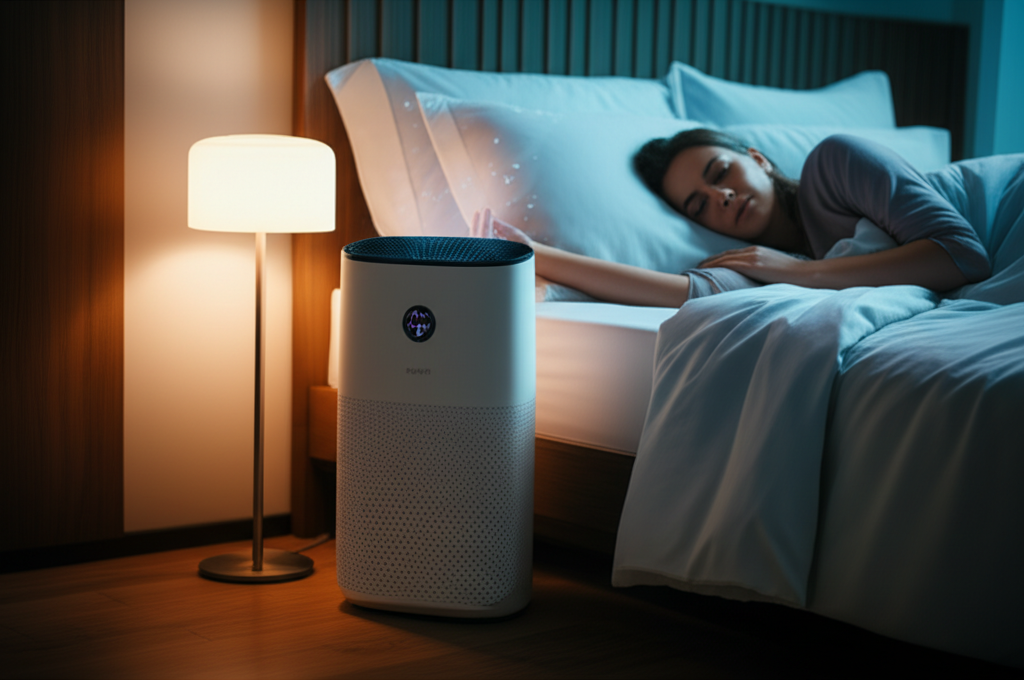
Nasal congestion is a primary driver of snoring. When your nasal passages are blocked by swollen tissues, mucus, or allergens, you’re forced to breathe through your mouth. This oral breathing allows the soft palate and uvula at the back of your throat to relax more, increasing the likelihood of vibration and snoring.
Allergens and Irritants in the Bedroom
Dust mites, pet dander, pollen, and mold spores are common indoor allergens that can wreak havoc on your respiratory system. When inhaled, these irritants can cause inflammation and swelling in the nasal passages and throat, exacerbating congestion and contributing to snoring. A clean bedroom environment is crucial for breathing freely.
The Role of Air Quality in Sleep
Poor air quality can trigger or worsen conditions like allergies and asthma, both of which are closely linked to snoring. Breathing in stale, polluted air can irritate your airways, making them more prone to collapse and vibration during sleep. Improving air quality is therefore a direct pathway to better breathing.
How Air Purifiers Combat Snoring Triggers
Air purifiers work by filtering out airborne pollutants, effectively cleaning the air you breathe while you sleep. By removing allergens, dust, and other irritants, they can reduce inflammation and congestion, leading to clearer airways and less snoring. This makes them a valuable tool for a more peaceful night.
Filtering Out Allergens and Irritants
High-quality air purifiers, especially those with HEPA filters, are designed to capture microscopic particles like dust mites, pet dander, pollen, and mold spores. Removing these allergens from your bedroom air can significantly reduce the triggers that cause nasal and throat irritation, thus alleviating snoring.
Reducing Dust Buildup
Dust is a common bedroom inhabitant and a major allergen. Air purifiers actively trap dust particles before they can settle on surfaces or be inhaled, contributing to a cleaner sleep environment. Less dust means fewer irritants to inflame your airways and cause congestion.
Eliminating Odors and VOCs
Volatile Organic Compounds (VOCs) and unpleasant odors can also irritate the respiratory system. Some air purifiers feature activated carbon filters, which are excellent at absorbing these airborne chemicals and smells, further promoting clearer breathing and potentially reducing snoring.
Scientific Evidence: Do Air Purifiers Really Work for Snoring?
While direct, large-scale studies specifically on air purifiers and snoring are limited, the underlying science is robust. By reducing the factors that cause nasal and throat irritation, air purifiers indirectly address common snoring triggers. Improving air quality is a well-established method for managing respiratory issues that contribute to snoring.
Indirect Benefits for Airway Health
The primary benefit of an air purifier for snoring lies in its ability to improve overall airway health. When allergens and irritants are removed, nasal passages and throat tissues are less likely to become inflamed and swollen. This reduction in inflammation can lead to a more open airway during sleep, decreasing the intensity and frequency of snoring.
Studies on Allergies and Sleep Apnea
Research has shown that controlling allergens can improve sleep quality for individuals with allergies and even those with sleep apnea, a more severe breathing disorder often accompanied by snoring. For instance, studies have indicated that reducing dust mite exposure can lead to better sleep outcomes for asthmatic children. This suggests that cleaner air has a positive impact on sleep-related breathing.
Expert Opinions and Anecdotal Evidence
Many sleep specialists acknowledge the role of environmental factors in snoring. While not a primary treatment, they often recommend improving bedroom air quality as a complementary measure. Numerous individuals report experiencing reduced snoring after using air purifiers, highlighting the practical benefits.
Choosing the Right Air Purifier for Snoring Relief
Not all air purifiers are created equal. For snoring relief, you’ll want a unit that effectively tackles common allergens and irritants. Key features to look for include HEPA filtration, activated carbon filters, and appropriate room coverage.
HEPA Filters: The Gold Standard
High-Efficiency Particulate Air (HEPA) filters are essential for capturing at least 99.97% of airborne particles as small as 0.3 microns. This includes dust, pollen, pet dander, and mold spores – all common snoring culprits. Ensure the air purifier explicitly states it has a True HEPA filter.
Activated Carbon Filters: For Odors and Gases
An activated carbon filter is crucial for absorbing VOCs, smoke, and other odors that can irritate airways. While HEPA filters capture particles, carbon filters target gases and smells, providing a more comprehensive air purification solution that can indirectly benefit snorers.
Room Size and CADR Ratings
It’s vital to choose an air purifier rated for the size of your bedroom. Check the Clean Air Delivery Rate (CADR) for smoke, dust, and pollen. A higher CADR indicates faster and more efficient air cleaning. Ensure the unit is powerful enough for your space to effectively clean the air throughout the night.
Noise Levels: A Crucial Factor for Sleep
Since you’ll be using the air purifier while sleeping, noise level is a critical consideration. Look for models with low decibel ratings, especially on their lower fan settings. Many purifiers offer a “sleep mode” that operates at a quieter level.
How to Maximize Air Purifier Effectiveness for Snoring
Simply plugging in an air purifier isn’t always enough. Proper placement, regular maintenance, and combining it with other good sleep hygiene practices will enhance its effectiveness in reducing snoring. Consistency is key to seeing results.
Optimal Placement in the Bedroom
Place your air purifier in a location where it can effectively circulate air throughout the room. Avoid placing it directly behind furniture or in corners, as this can impede airflow. Positioning it near your bed can be beneficial, ensuring you breathe the cleanest air.
Regular Maintenance and Filter Replacement
Air purifiers are only effective if their filters are clean and functioning correctly. Regularly clean pre-filters and replace HEPA and carbon filters according to the manufacturer’s recommendations. Clogged filters reduce airflow and purification efficiency.
Combining with Other Sleep Hygiene Practices
An air purifier is a powerful tool, but it works best as part of a holistic approach to sleep. Maintaining a cool, dark, and quiet bedroom, establishing a regular sleep schedule, and avoiding alcohol before bed can further reduce snoring triggers.
Other Factors Contributing to Snoring That Air Purifiers Don’t Address
While air purifiers can significantly help by cleaning the air, they cannot address all causes of snoring. Factors like weight, alcohol consumption, and certain medical conditions require different approaches. It’s important to have a comprehensive understanding of snoring causes.
Lifestyle Factors: Weight and Alcohol
Excess weight, particularly around the neck, can narrow the airway, leading to snoring. Similarly, alcohol relaxes throat muscles, making them more prone to vibration. Air purifiers cannot directly influence these lifestyle choices, which often require personal commitment to change.
Sleeping Position
Sleeping on your back can cause your tongue and soft palate to collapse backward, obstructing your airway. While an air purifier can’t change your sleeping position, techniques like using a body pillow or elevating your head can help.
Medical Conditions: Sleep Apnea and Deviated Septum
More serious conditions like obstructive sleep apnea (OSA) or a deviated septum require medical diagnosis and treatment. Snoring can be a symptom of OSA, which needs to be addressed by a healthcare professional. An air purifier may offer some relief but is not a cure for these conditions.
When to Consult a Doctor About Snoring
If your snoring is severe, persistent, or accompanied by other symptoms like gasping for air, daytime sleepiness, or headaches, it’s essential to seek medical advice. These could be indicators of obstructive sleep apnea or other underlying health issues that require professional attention.
Recognizing Signs of Sleep Apnea
Symptoms of sleep apnea include loud, irregular snoring, pauses in breathing during sleep, choking or gasping sounds, and excessive daytime sleepiness. If you or your partner notice these signs, it’s crucial to consult a doctor for proper diagnosis and treatment.
Addressing Structural Airway Issues
Conditions like a deviated septum, enlarged tonsils, or a long palate can physically narrow the airway. While an air purifier can help with inflammation, it cannot correct these structural issues. Medical interventions may be necessary for significant obstructions.
Frequently Asked Questions About Air Purifiers and Snoring
Q1: Can an air purifier cure snoring completely?
While an air purifier can significantly reduce snoring by improving air quality and clearing airways, it’s unlikely to cure it completely if the cause is unrelated to air quality, such as structural issues or lifestyle factors. It’s a supportive solution.
Q2: How long does it take for an air purifier to help with snoring?
The time it takes for an air purifier to show effects on snoring can vary. Some people notice a difference within a few nights, while others may take a few weeks as their airways adjust to the cleaner air and reduced irritants.
Q3: Which type of air purifier is best for snoring?
An air purifier with a True HEPA filter and an activated carbon filter is generally best for snoring. These filters work together to remove allergens, dust, and odors that can irritate the airways.
Q4: Can air purifiers help with snoring caused by allergies?
Yes, absolutely. Air purifiers are highly effective at removing allergens like dust mites, pollen, and pet dander, which are common triggers for allergy-related nasal congestion and snoring.
Q5: Is it safe to run an air purifier all night?
Yes, it is generally safe to run an air purifier all night, especially if it has a low noise level or a dedicated sleep mode. They are designed for continuous operation to maintain clean air.
Q6: Do air purifiers make noise that can disrupt sleep?
Some air purifiers can produce noise, but many modern units are designed to be very quiet, particularly on lower fan settings or in sleep mode. Check the decibel (dB) rating before purchasing.
Conclusion: Breathe Easier, Snore Less
In conclusion, the question “can air purifier help with snoring” has a promising answer: yes, it can be a valuable part of your strategy for quieter nights. By diligently removing allergens, dust, and other irritants from your bedroom air, an air purifier can reduce inflammation and congestion, leading to clearer breathing and less snoring. While it’s not a universal cure, especially for snoring caused by factors beyond air quality, its benefits in creating a healthier sleep environment are undeniable. For a truly restful night, consider integrating a quality air purifier into your bedroom, alongside other healthy sleep habits, and breathe easier knowing you’re taking a proactive step towards a more peaceful sleep.


