Can Air Purifier Be Used In Kitchen? Genius Solution!

Yes, an air purifier can absolutely be used in the kitchen, offering a genius solution to common cooking odors, smoke, and airborne grease particles, significantly improving your kitchen’s air quality and overall comfort.
Cooking is a joy, but the lingering smells, smoke, and grease particles can often detract from the experience. Many of us wonder if our trusty air purifiers can tackle these kitchen-specific challenges. The good news is, with the right approach, your air purifier can become a powerful ally in maintaining a fresh and healthy kitchen environment. Let’s explore how to make this work for you.
Why Consider an Air Purifier for Your Kitchen?
Kitchens are hotspots for airborne pollutants. From the sizzle of frying to the steam from boiling, a variety of particles and odors are released into the air. These can include volatile organic compounds (VOCs), fine particulate matter (PM2.5), and unpleasant smells that can permeate your home. An air purifier can effectively capture these, leading to a cleaner and more pleasant cooking space.
Using an air purifier in the kitchen can significantly improve your home’s air quality. It helps combat cooking fumes and odors. This makes your kitchen a more enjoyable space to be in.
Key Takeaway: Kitchens generate unique air pollutants that an air purifier can effectively address, enhancing your living environment.
Understanding Kitchen Air Pollutants
When we cook, especially with high heat or certain ingredients, we release a complex mix of airborne substances. These range from visible smoke and grease aerosols to invisible VOCs emitted from cooking oils and food. Even seemingly harmless steam can carry microscopic particles. Understanding these pollutants is the first step to effectively managing them.
Common kitchen pollutants include grease particles, smoke, VOCs from cooking oils, and food odors. These can settle on surfaces and affect air quality. An air purifier can capture many of these airborne contaminants.
Key Takeaway: Identifying the specific pollutants generated during cooking helps in choosing the right air purifier and strategy.
Can Air Purifier Be Used In Kitchen? The Short Answer
Yes, an air purifier can be used in the kitchen, and it can be a highly effective solution for improving air quality. However, it’s crucial to choose the right type of purifier and place it strategically. Not all air purifiers are created equal, and some are better suited for the unique demands of a kitchen environment than others.
The direct answer is a resounding yes. An air purifier can be a game-changer for your kitchen’s air. It tackles odors and particles that traditional ventilation might miss.
Key Takeaway: An air purifier is a viable and beneficial addition to your kitchen, provided you select and use it wisely.
Choosing the Right Air Purifier for Your Kitchen
When selecting an air purifier for kitchen use, prioritize models with robust pre-filters and activated carbon filters. The pre-filter is essential for capturing larger particles like grease and dust, protecting the more sensitive HEPA filter. An ample amount of activated carbon is crucial for effectively adsorbing strong cooking odors and VOCs. Consider the CADR (Clean Air Delivery Rate) to ensure it’s sufficient for your kitchen’s size.
Look for units with a strong activated carbon filter for odor control. A good pre-filter is also vital for capturing grease. Ensure the CADR is appropriate for your kitchen size.
Key Takeaway: Select an air purifier with a strong pre-filter and a substantial activated carbon filter for optimal kitchen performance.
HEPA Filters and Kitchen Air
HEPA (High-Efficiency Particulate Air) filters are excellent at capturing 99.97% of airborne particles as small as 0.3 microns. This includes fine smoke particles and some allergens. While they don’t directly tackle odors or VOCs, they are crucial for removing the solid particulate matter generated during cooking, such as tiny grease droplets and smoke residue.
HEPA filters capture fine particles like smoke and grease. They are essential for removing solid pollutants from the air. However, they don’t neutralize odors or VOCs on their own.
Key Takeaway: HEPA filters are vital for removing fine particles, but should be paired with other filter types for comprehensive kitchen air purification.
Activated Carbon Filters: The Odor Eliminators
Activated carbon filters are the workhorses for tackling kitchen smells. These filters are porous and have a massive surface area, allowing them to adsorb a wide range of gaseous pollutants, including cooking odors, VOCs, and chemical fumes. The more activated carbon a purifier contains, the more effective it will be at neutralizing persistent smells. Regular replacement is key for maintaining their effectiveness.
Activated carbon filters are key to removing cooking odors and VOCs. They work by adsorbing these gases onto their porous surface. The more carbon, the better the odor elimination.
Key Takeaway: Activated carbon filters are indispensable for adsorbing and eliminating cooking odors and VOCs from your kitchen air.
Pre-filters: The First Line of Defense
A washable pre-filter is a must-have for any kitchen air purifier. Its primary role is to capture larger airborne particles, such as dust, hair, and importantly, airborne grease. This not only improves the air quality but also protects the more sensitive HEPA and carbon filters from becoming clogged too quickly. A clean pre-filter means a longer lifespan and better performance from your purifier.
The pre-filter captures larger particles like dust and grease. It protects the HEPA and carbon filters. A washable pre-filter is ideal for easy maintenance.
Key Takeaway: A robust pre-filter is crucial for capturing grease and extending the life of other filters in your kitchen air purifier.
Strategic Placement for Maximum Effectiveness
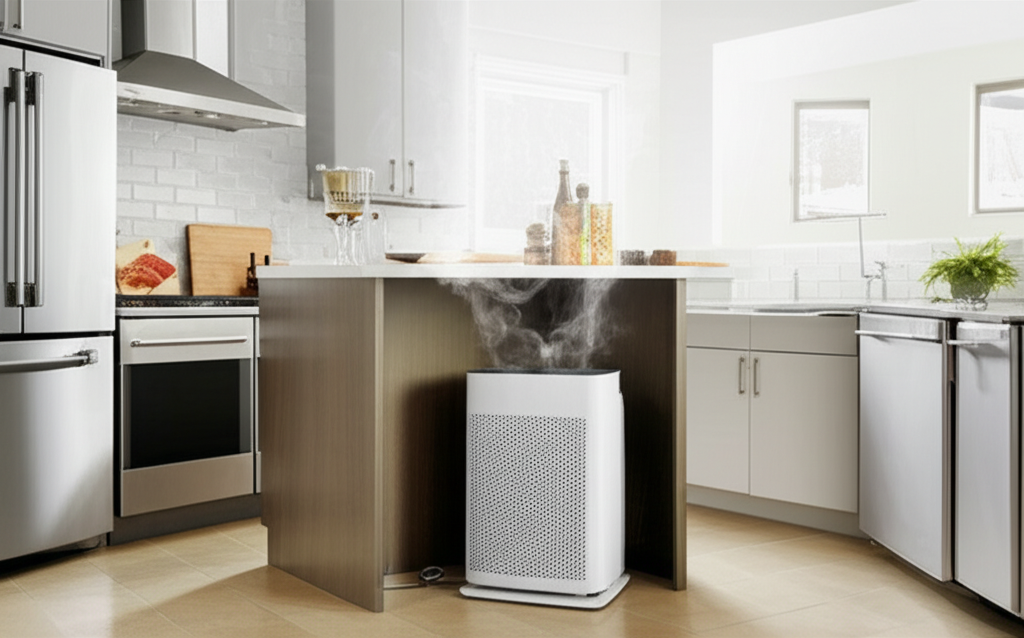
Where you place your air purifier in the kitchen can significantly impact its performance. Ideally, position it near the primary source of pollution, such as the stove or cooking area, but not so close that it obstructs your cooking or becomes a safety hazard. Ensure there’s adequate space around the unit for air intake and exhaust. Placing it on a countertop or a stable surface away from direct heat and water is recommended.
Place the purifier near the cooking area, but not too close. Ensure good airflow around the unit. Avoid areas with direct heat or moisture.
Key Takeaway: Strategic placement near the cooking zone, with clear airflow, maximizes the air purifier’s efficiency in the kitchen.
When to Run Your Kitchen Air Purifier
For the best results, run your air purifier during cooking and for a period afterward. This allows it to capture pollutants as they are generated and continue to clean the air once cooking has finished. Some models have an auto mode that adjusts fan speed based on air quality, which can be very convenient. Even running it on a low setting when you’re not actively cooking can help maintain a fresher kitchen environment.
Run the purifier while cooking and for an hour or two afterward. Auto mode can be very useful. Continuous low-speed operation also helps.
Key Takeaway: Operate your air purifier during cooking and for a while afterward to effectively manage airborne pollutants.
Maintenance: Keeping Your Kitchen Purifier Running Smoothly
Regular maintenance is key to ensuring your air purifier continues to perform optimally in the kitchen. This includes cleaning or replacing the pre-filter frequently, as it will likely capture a significant amount of grease. Follow the manufacturer’s recommendations for replacing HEPA and activated carbon filters. Dirty filters reduce efficiency and can even become a breeding ground for bacteria.
Clean the pre-filter regularly, especially for grease. Replace HEPA and carbon filters as recommended. Dirty filters reduce performance and can harbor bacteria.
Key Takeaway: Consistent maintenance, including pre-filter cleaning and timely filter replacement, is crucial for optimal kitchen air purifier performance.
Potential Drawbacks and Considerations
While beneficial, there are a few considerations when using an air purifier in the kitchen. Some units can be noisy, which might be distracting during cooking or dining. The filters, especially activated carbon ones, will need more frequent replacement due to the heavy pollutant load, adding to the running cost. Also, ensure the unit is placed away from water sources and high heat to prevent damage or accidents.
Noise levels can be a concern for some users. Filter replacement frequency may be higher, increasing costs. Safety dictates keeping the unit away from water and heat.
Key Takeaway: Be mindful of potential noise, increased filter costs, and the need for safe placement away from water and heat sources.
Alternatives and Complementary Solutions
While an air purifier is a great addition, it’s not a replacement for proper kitchen ventilation. Always use your range hood when cooking, especially when frying or sautéing, as it directly vents pollutants outside. Opening windows can also help circulate fresh air. An air purifier complements these methods by capturing residual particles and odors that might escape traditional ventilation.
Always use your range hood while cooking. Opening windows can also improve air circulation. An air purifier works best alongside these methods.
Key Takeaway: Combine air purifiers with range hoods and open windows for comprehensive kitchen air management.
Can Air Purifier Be Used In Kitchen? A Genius Solution
In conclusion, the question “Can air purifier be used in kitchen?” is answered with a confident yes. By selecting an air purifier with the right filter combination—a strong pre-filter, a HEPA filter, and ample activated carbon—and by placing and maintaining it correctly, you can effectively combat cooking odors, smoke, and grease. It’s a smart, proactive step towards a cleaner, fresher, and healthier kitchen environment. Embrace this genius solution to elevate your cooking experience and your home’s overall air quality.
Yes, an air purifier is a genius solution for kitchens. It tackles odors, smoke, and grease effectively. Choose wisely and maintain it for a fresher kitchen.
Key Takeaway: An air purifier is a powerful tool for kitchen air quality, offering a genius solution when used correctly.
Frequently Asked Questions (FAQ)
Will an air purifier remove cooking smells?
Yes, air purifiers with activated carbon filters are very effective at removing cooking smells. The carbon adsorbs odor-causing molecules, leaving your kitchen smelling fresher.
How often should I replace filters in a kitchen air purifier?
Filter replacement frequency depends on usage and the level of pollutants. For kitchens, pre-filters may need cleaning weekly or bi-weekly, and carbon/HEPA filters might need replacement every 6-12 months, or sooner if odors persist.
Can an air purifier handle grease particles?
A good air purifier with a washable pre-filter can capture a significant amount of airborne grease. This protects the internal filters and improves overall air quality.
Is it safe to place an air purifier near the stove?
It’s best to keep air purifiers a safe distance from direct heat and water sources. Place it near the cooking area for effectiveness but ensure it’s not a fire hazard or at risk of water damage.
What is the best type of air purifier for a kitchen?
The best type typically includes a multi-stage filtration system: a pre-filter for grease and dust, a HEPA filter for fine particles, and a substantial activated carbon filter for odors and VOCs.
Will an air purifier make my kitchen quieter?
Air purifiers have fans and can produce noise. The noise level varies by model. Some have quieter modes or auto settings that adjust fan speed, potentially reducing noise during less demanding times.