
Best Placement for Air Purifier in Living Room: Genius

Discover the genius behind the best placement for your air purifier in the living room to maximize its effectiveness and create a healthier home environment. Learn simple, actionable tips to ensure clean air circulates where you need it most.
Have you ever wondered if your air purifier is truly working its hardest in your living room? It’s a common question, as small adjustments can make a big difference in air quality. Many people place their air purifiers as an afterthought, but the “best placement for air purifier in living room” is a strategic decision. This guide will walk you through the optimal spots, ensuring you get the most out of your investment and breathe easier. Let’s unlock the secrets to superior air purification in your favorite gathering space.
Why Air Purifier Placement Matters in the Living Room
Strategic placement is crucial for an air purifier to effectively capture airborne pollutants and ensure optimal air circulation throughout your living room, making a noticeable difference in air quality.
The living room is often the heart of the home, a place for relaxation, entertainment, and family gatherings. It’s also a common area where allergens, dust, pet dander, and even cooking odors can accumulate. Simply plugging in your air purifier anywhere might not yield the best results. Understanding the airflow dynamics within your room is key to maximizing its cleaning power.
Understanding Airflow: The Secret to Optimal Placement
Understanding how air moves in your living room is fundamental to positioning your air purifier for maximum pollutant capture and efficient circulation, ensuring clean air reaches all corners.
Air purifiers work by drawing in air, filtering out pollutants, and releasing clean air back into the room. For this cycle to be most effective, the purifier needs to be placed where it can easily access the air that needs cleaning and where the purified air can circulate freely. This involves understanding natural air currents, as well as the placement of windows, doors, and furniture.
The Concept of Air Circulation Zones
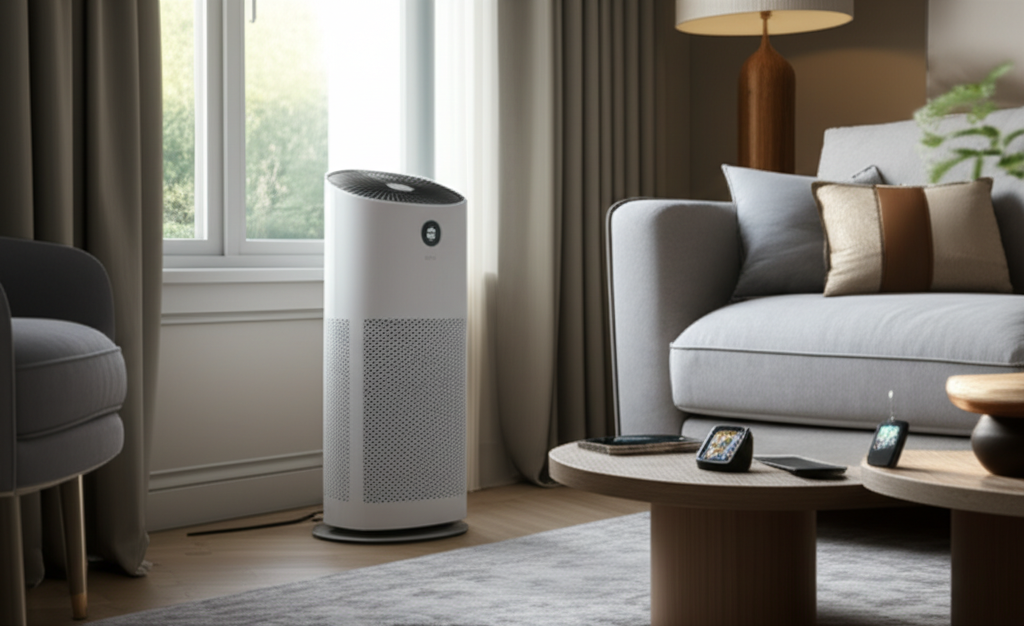
Identifying key air circulation zones in your living room helps pinpoint the most effective locations for your air purifier to capture and filter pollutants efficiently.
Think of your living room as having natural air pathways. Air tends to move from cooler to warmer areas, and drafts can create currents. Placing your air purifier in a spot that intercepts these pathways ensures that a larger volume of air is processed. This also helps to prevent stagnant air pockets where pollutants can gather undisturbed.
Identifying Pollutant Hotspots
Recognizing where pollutants tend to concentrate in your living room allows for targeted placement of your air purifier to address the most common sources of poor air quality.
Pollutants like dust and pet dander often settle on surfaces and are stirred up when people move around. They can also be introduced from outside through open windows or doors. Identifying areas where these activities are most frequent, such as near seating areas or entryways, can guide you to the best placement.
Top Locations for Your Air Purifier
The best placement for an air purifier in the living room often involves corners, areas near high-traffic zones, or strategically positioned near pollutant sources for maximum air cleaning efficiency.
While there isn’t a single “perfect” spot for every living room, certain locations consistently offer superior performance. These spots leverage natural airflow and target areas where air purification is most needed. Let’s explore the most effective placements.
The Power of Corners: A Surprisingly Effective Spot
Placing your air purifier in a corner can be surprisingly effective as it allows for unimpeded 360-degree airflow, drawing in air from multiple directions and distributing clean air more broadly.
Many people avoid corners, thinking they are dead zones. However, for an air purifier with a 360-degree intake, a corner is ideal. It provides ample space for air to be drawn in from all sides without being blocked by furniture. This allows the unit to process more air volume and disperse it more evenly throughout the room.
Near High-Traffic Areas: Capturing Pollutants in Motion
Positioning your air purifier near high-traffic areas ensures that airborne pollutants stirred up by movement are captured quickly, leading to a more consistently clean living room environment.
Think about where people walk the most in your living room. Placing the purifier in proximity to these areas means it can intercept dust, dander, and other particles as they become airborne. This is particularly useful if you have pets or frequently open doors and windows.
Proximity to Pollutant Sources: Targeted Cleaning
Placing your air purifier close to known pollutant sources, like pet beds or windows, enables targeted and efficient removal of specific airborne contaminants before they spread widely.
If you have a specific concern, such as pet dander or allergens coming in from outside, positioning the purifier near that source makes sense. For example, placing it near a pet’s favorite resting spot or a frequently used window can significantly reduce the concentration of those particular pollutants.
Factors to Consider for Optimal Placement
Several key factors, including airflow, proximity to pollution sources, and clearance, must be considered when determining the best placement for an air purifier in your living room.
Beyond just choosing a spot, several environmental factors within your living room can influence how well your air purifier performs. Addressing these will ensure you’re not hindering its effectiveness.
Ensure Adequate Clearance
Maintaining sufficient clearance around your air purifier is essential for unobstructed airflow, allowing it to draw in polluted air and expel clean air efficiently without strain.
Most air purifiers require a certain amount of space around them to function correctly. Check your manufacturer’s manual for specific recommendations, but generally, aim for at least 1-2 feet of clearance on all sides, especially the intake and exhaust vents. This prevents the unit from working harder than necessary and improves its overall performance.
Avoid Obstructions and Drafts
Placing your air purifier away from direct drafts and major obstructions ensures consistent air intake and prevents the disruption of its filtration cycle, maximizing its effectiveness.
While you want air to move, you don’t want it to be too turbulent. Placing your purifier directly in a strong draft from an open window or a fan can disrupt its ability to draw in air steadily. Similarly, ensure it’s not blocked by large furniture items that impede airflow.
Consider Room Size and Layout
Tailoring the placement of your air purifier to your specific living room’s size and layout ensures it can effectively cover the entire space and address potential dead zones.
A large, open-plan living room might benefit from a purifier placed centrally or near the main seating area. A smaller, more compartmentalized room might require a placement that targets the most used area. Always consider the unique dimensions and flow of your space.
Air Purifier Placement: Dos and Don’ts
Adhering to simple dos and don’ts for air purifier placement in your living room can significantly enhance its performance and ensure you’re breathing the cleanest possible air.
To simplify the process, here’s a quick guide to what you should and shouldn’t do when deciding where to put your air purifier.
| Do | Don’t |
| :———————————————— | :—————————————————– |
| Place on a flat, stable surface. | Place on soft surfaces like carpets or beds. |
| Ensure at least 1-2 feet of clearance. | Block the intake or exhaust vents with furniture. |
| Position in a central location or near activity. | Place directly in a strong draft from a window/fan. |
| Consider areas with higher pollutant concentration. | Hide it behind curtains or large decorative items. |
| Allow for 360-degree airflow if possible. | Place it too close to heat sources or humidifiers. |
Following these guidelines will help you avoid common mistakes and ensure your air purifier operates at its peak efficiency. This simple table summarizes the key principles for the best placement for an air purifier in your living room.
Advanced Placement Strategies
Exploring advanced placement strategies, such as using multiple units or considering specific airflow patterns, can further optimize air purification in larger or more complex living room layouts.
For those seeking to maximize air quality even further, consider these more advanced techniques. These can be particularly beneficial in larger homes or for individuals with severe allergies or respiratory conditions.
The Benefit of Multiple Units
Using multiple air purifiers strategically placed throughout a large living room ensures comprehensive coverage and tackles localized pollutant buildup more effectively.
In expansive living areas, a single unit might struggle to purify the entire space. Deploying two smaller units in different zones, or one larger unit complemented by a smaller one, can provide more consistent and effective air cleaning. This is a powerful approach to achieving superior air quality.
Leveraging Natural Airflow Patterns
Observing and utilizing natural airflow patterns within your living room can help you strategically place your air purifier to intercept and filter air most effectively.
Pay attention to how air moves when windows are open or when heating/cooling systems are running. You can often feel subtle drafts. By placing your purifier in the path of these natural currents, you can enhance its ability to circulate and clean air throughout the room.
Placement Near HVAC Vents
Placing an air purifier near your HVAC vents can complement your central air system, helping to capture airborne particles before they are circulated throughout your home.
While your HVAC system has filters, they may not capture the finest particles. An air purifier placed near a supply or return vent can act as a secondary filter, catching additional pollutants. However, ensure it doesn’t obstruct the vent’s primary function.
Common Air Purifier Placement Mistakes to Avoid
Avoiding common air purifier placement mistakes, such as blocking vents or placing them on soft surfaces, is crucial for maintaining optimal performance and ensuring clean air.
Even with the best intentions, it’s easy to make placement errors that diminish your air purifier’s effectiveness. Being aware of these pitfalls can save you from unnecessary frustration and ensure your device works as intended.
Blocking Air Intake or Exhaust
Blocking the air intake or exhaust of your air purifier forces it to work harder, reduces its efficiency, and can even lead to overheating and damage.
This is perhaps the most critical mistake. The intake vents draw in the dirty air, and the exhaust vents release the clean air. If either is blocked by furniture, walls, or curtains, the unit cannot function properly. Always check that these vents are completely unobstructed.
Placing on Unstable or Soft Surfaces
Placing an air purifier on unstable or soft surfaces can lead to vibrations, noise, and reduced airflow, impacting its stability and filtration effectiveness.
Air purifiers are designed to sit on solid, flat surfaces. Placing them on thick carpets, rugs, or uneven surfaces can cause them to vibrate, making them noisy. It can also impede the airflow underneath the unit, reducing its efficiency.
Ignoring Manufacturer Instructions
Always consult and follow your air purifier’s manufacturer instructions for placement, as specific models may have unique requirements for optimal performance.
Every air purifier is designed differently. The manufacturer knows their product best and will provide specific guidance on optimal placement, clearance, and any unique considerations for their model. It’s always wise to refer to the user manual.
Frequently Asked Questions (FAQ)
Where is the absolute best place for an air purifier in the living room?
The absolute best placement for an air purifier in the living room is typically in a corner with 360-degree airflow, or in a central location that intercepts natural air currents and is near high-traffic areas.
Can I place an air purifier behind my couch?
Placing an air purifier behind a couch is generally not recommended unless there is significant space for airflow around the unit. The couch can obstruct the air intake and exhaust, reducing its effectiveness.
Should an air purifier be on the floor or a table?
It’s best to place an air purifier on a flat, stable surface like a table or the floor, ensuring there is adequate clearance around it. Avoid soft surfaces like thick carpets or beds that can impede airflow.
Does an air purifier need to be in the center of the room?
Placing an air purifier in the center of the room can be effective, especially if it has 360-degree intake, as it allows for even distribution of clean air. However, strategic placement near pollutant sources or high-traffic areas can also be highly beneficial.
How close should an air purifier be to a window?
An air purifier can be placed near a window to capture outdoor pollutants, but avoid placing it directly in a strong draft from an open window, which can disrupt airflow. Ensure at least a foot of clearance.
Can I run my air purifier all the time?
Yes, most modern air purifiers are designed to run continuously for optimal air quality. Check your model’s specifications and energy consumption, but consistent operation is generally recommended.
Conclusion: Achieving Genius Air Quality in Your Living Room
Implementing the right strategies for the best placement for an air purifier in your living room is a genius move that significantly enhances air quality, health, and overall comfort.
You’ve now unlocked the secrets to positioning your air purifier for maximum impact. By understanding airflow, identifying pollutant hotspots, and avoiding common mistakes, you can transform your living room into a sanctuary of clean, fresh air. Remember, the best placement for an air purifier in your living room isn’t about finding a hidden spot, but a strategic one that allows the device to work efficiently. Enjoy breathing easier and living healthier!
