
Best Dehumidifier for RV (2026): 7 Picks for Campers and Motorhomes

Quick answer
The Ivation 13-Pint Desiccant Dehumidifier is the best dehumidifier for most RVs. It’s compact, works from 33°F to 104°F so it handles cold-weather camping, and it can drain through a hose into a sink or shower. For a large fifth wheel or Class A motorhome on shore power, the Frigidaire 22-Pint removes more water and adds Wi-Fi control. For an RV in storage with no power, a Camco Moisture Absorber Bucket is the simple, proven choice.
HomeHygia is reader-supported. When you buy through links on this page, we may earn a small commission from Amazon at no extra cost to you.
RVs are small, tightly sealed spaces that produce a surprising amount of moisture. Cooking, showering, drying wet gear and even breathing add water vapor to a few hundred square feet of air. In cool weather, that moisture condenses on single-pane windows, metal frames and inside cabinets, and it can lead to mildew, musty smells and soft spots in walls and floors over time.
Choosing a dehumidifier for an RV is different from choosing one for a house. Space is tight, so size and weight matter. Power can be limited when you’re boondocking or on a 30-amp hookup, so wattage matters. Camping in fall and winter means the unit needs to work in cool air, where many compressor dehumidifiers slow down. And when the RV is parked in storage, you may need a solution that works with no power at all.
We compared seven dehumidifiers and moisture absorbers on size, power use, cold-weather performance, drainage and suitability for storage. Our picks are based on maker specifications and design rather than our own testing, so capacity and temperature figures are maker claims. We include both electric units for when you’re camping and passive absorbers for when the rig is parked.
Our picks at a glance
| Product | Model | Best for | Type / capacity | Buy |
|---|---|---|---|---|
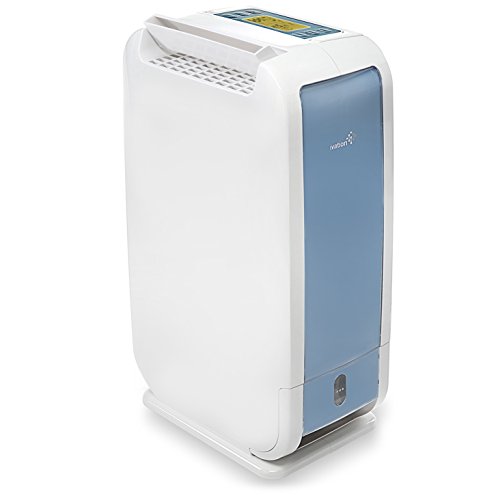 | Ivation 13-Pint Small-Area Desiccant Dehumidifier | Best dehumidifier for an RV overall | 13 pints at 68°F / works to 33°F | Check price |
 | Frigidaire 22-Pint Wi-Fi Dehumidifier | Best for large RVs and fifth wheels | 22 pints / low temp to 41°F | Check price |
 | Midea Cube 20 Pint Dehumidifier | Best space-saving design for a motorhome | 20 pints / nests for storage | Check price |
 | AEOCKY X1-Pro Rotary Desiccant Dehumidifier | Best for winter camping | 10 pints / no coil icing | Check price |
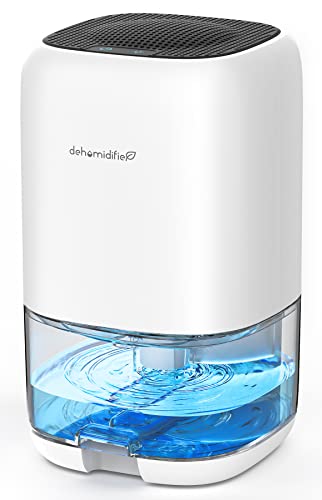 | TABYIK 35 oz Mini Dehumidifier | Best mini dehumidifier for a small camper | Peltier / 28 dB | Check price |
 | Eva-Dry E-333 Wireless Mini Dehumidifier | Best cordless option for cabinets and closets | Cordless / rechargeable | Check price |
 | Camco Moisture Absorber 5 lb Bucket | Best for an RV in storage | No power / fragrance-free | Check price |
The best dehumidifiers for RVs and campers, reviewed
1. Best dehumidifier for an RV overall
Ivation 13-Pint Small-Area Desiccant Dehumidifier
| Technology | Desiccant rotor, no compressor |
| Capacity | Up to 13 pints per day at 68°F, 60% RH (maker) |
| Coverage | Up to 270 sq ft (maker) |
| Operating range | 33°F to 104°F (maker) |
| Power | 470 W high / 280 W low |
| Drainage | 3.8-pint tank or continuous drain hose (included) |
| Extras | Auto-restart, timer, sleep mode, tilt and overflow stop |
Ivation’s 13-pint desiccant dehumidifier fits the way most people use their RVs. It’s sized for spaces up to about 270 sq ft, which matches the living area of most travel trailers and many motorhomes, and Ivation rates it at 13 pints a day at a cool 68°F, not just at hot summer conditions.
Because it uses a desiccant rotor rather than a compressor, it keeps working in cold weather. Ivation says it runs from 33°F to 104°F, so it handles shoulder-season and winter camping when condensation is worst. It gently warms the air as it works, which is a bonus in a chilly camper.
It has a removable 3.8-pint tank with a level indicator, or you can connect the included hose and drain into a shower or sink. Tilt and overflow protection stop it if it tips, which is useful in a vehicle. The main trade-off is power: at up to 470 W on high, it’s not ideal for boondocking on batteries, but the 280 W low setting is manageable on most hookups.
What works
- Works in cold weather
- Compact and light
- Continuous drain hose included
- Tilt and overflow protection
What to watch
- Up to 470 W on high
- Warms the air slightly in summer
- Not for battery-only camping
2. Best for large RVs and fifth wheels
Frigidaire 22-Pint Wi-Fi Dehumidifier
| Capacity | 22 pints per day (maker) |
| Efficiency | ENERGY STAR |
| Cold handling | Low-temperature operation down to 41°F (maker) |
| Drainage | Bucket with auto shut-off, or continuous drain |
| Smart | Frigidaire app, Alexa and Google |
| Filter | Washable, with clean-filter alert |
| Model | FHDD2234W1 |
If you have a big rig, live in your RV full-time or camp in humid regions, a compact compressor dehumidifier like Frigidaire’s 22-pint model removes far more water than a mini unit. It’s ENERGY STAR certified, so it uses less electricity per pint than most small units.
Frigidaire says it works down to 41°F, which covers most camping weather. You can drain it into its bucket, which shuts it off when full, or set up a continuous drain into a shower pan. Wi-Fi lets you check humidity and change settings from your phone, handy when you’re away from the rig during the day.
It’s larger and heavier than the desiccant and mini options, so you’ll need a stable floor spot. Secure it before you drive, and empty the bucket first.
What works
- Strong capacity for its size
- ENERGY STAR
- Wi-Fi and voice control
- Works to 41°F
What to watch
- Takes floor space
- Heavier than mini units
- Must be secured for travel
3. Best space-saving design for a motorhome
Midea Cube 20 Pint Dehumidifier
| Capacity | 20 pints per day (maker) |
| Coverage | Up to 1,500 sq ft (maker) |
| Humidity range | 35% to 85% |
| Tank | Large removable bucket, up to 3× a standard tank (maker) |
| Smart | SmartHome app, Alexa and Google |
| Design | Extends for use, nests down for storage |
| Extras | Auto-defrost, auto-restart, ENERGY STAR |
Midea’s Cube has a clever design that suits RV life. It extends for use and nests down into a smaller cube for storage, so you can tuck it in a basement bay or closet when you’re on the road. When extended, its bucket holds much more than a typical tank, which means fewer trips to empty it.
It’s rated at 20 pints a day, offers auto-defrost for cooler weather and auto-restart after a power cut, which happens when you switch from generator to shore power. Wi-Fi and voice control let you manage it from your phone.
Like the Frigidaire, it’s a compressor unit, so it’s best on shore power and in mild to warm conditions. It’s ENERGY STAR certified.
What works
- Nests down for travel storage
- Large bucket
- Auto-restart after power cuts
- App control
What to watch
- Compressor, so weaker in cold air
- Needs shore power
- Bulkier than desiccant units
4. Best for winter camping
AEOCKY X1-Pro Rotary Desiccant Dehumidifier
| Technology | Zeolite rotary desiccant (maker) |
| Capacity | Up to 10 pints per day (maker) |
| Power | About 340 W (maker) |
| Drainage | 85 oz tank or drain hose |
| Noise | Down to 25 dB (maker) |
| Use | Small spaces, RVs, bedrooms (maker) |
AEOCKY names RVs among the target spaces for its X1-Pro, and its design suits cold-weather camping. Like the Ivation, it uses a desiccant rotor instead of cold coils, so it doesn’t ice up or stop for defrost cycles when the air is chilly.
It draws about 340 W, a little less than the Ivation on high, and AEOCKY quotes noise as low as 25 dB, which matters when the dehumidifier is a few feet from where you sleep. It can drain into its 85-ounce tank or through a hose.
AEOCKY rates it at up to 10 pints a day. It also gives off some warmth while running, which helps on cold nights but can be unwelcome in summer.
What works
- Very quiet
- Works in cold weather
- Lower power than many desiccants
- Tank or hose drain
What to watch
- Lower capacity
- Warms the air
- Not for battery-only use
5. Best mini dehumidifier for a small camper
TABYIK 35 oz Mini Dehumidifier
| Technology | Thermoelectric (Peltier) |
| Capacity | Up to about 16 oz per day at 86°F, 80% RH (maker) |
| Coverage | Up to 280 sq ft claimed |
| Tank | 35 oz, auto shut-off |
| Noise | 28 dB (maker) |
| Size | 5.9 × 5.9 × 10.1 in. |
For a teardrop, a small travel trailer or a van, a mini Peltier dehumidifier like the TABYIK is the most compact and lowest-power electric option. It’s about the size of a large water bottle, has a carry handle and shuts off when its 35-ounce tank is nearly full.
TABYIK quotes up to about 16 ounces of water a day in warm, humid conditions. That’s far less than the desiccant or compressor picks, so think of it as a way to keep condensation down in a small sleeping area, not to dry out a soaked rig.
It runs very quietly at 28 dB and has an optional color light. Peltier units stop being effective in cool air, so this is a warm-weather pick.
What works
- Very small and light
- Very low power draw
- Quiet
- Auto shut-off
What to watch
- Low capacity
- Weak in cool air
- Small tank to empty often
6. Best cordless option for cabinets and closets
Eva-Dry E-333 Wireless Mini Dehumidifier
| Technology | Renewable silica gel, no cord while working |
| Coverage | Up to 333 cu ft (maker) |
| Absorbs | Up to 6 oz before recharge (maker) |
| Recharge | Plug in to dry out every 20 to 30 days |
| Warranty | 5-year (maker) |
Electric dehumidifiers dry the open living space, but RV cabinets, wardrobes and under-bed storage can still get musty. Eva-Dry’s E-333 is a small, cordless silica gel unit you can hang or set in those spots.
It absorbs up to 6 ounces of moisture and lasts about 20 to 30 days before you need to recharge it, which you do by plugging it into an outlet to dry out the beads. An indicator changes color when it’s full. There’s nothing to spill, and it’s child and pet safe.
It’s not a replacement for a powered dehumidifier, but it’s a useful companion for small enclosed spaces, and it works in storage as long as you can recharge it occasionally.
What works
- No cord while in use
- Reusable
- Nothing to spill
- Long warranty
What to watch
- Small capacity
- Needs a recharge every few weeks
- Only for small enclosed spaces
7. Best for an RV in storage
Camco Moisture Absorber 5 lb Bucket
| Type | Disposable moisture-absorbing beads |
| Size | 5 lb bucket |
| Absorbs | Up to 3× its weight in moisture (maker) |
| Scent | Fragrance-free |
| Replace | When the contents turn gel-like |
When your RV sits in a storage lot for the winter, you usually can’t leave an electric dehumidifier running. Camco, a well-known RV accessory brand, makes this 5-pound bucket of moisture-absorbing beads specifically for RV storage.
Camco says it absorbs up to three times its weight in moisture and eliminates musty odors at the source. It’s fragrance-free, so it won’t leave a perfume smell in your upholstery. You simply open the lid, set it in the living area and replace it when the contents turn gel-like.
For a large rig, use two or three buckets in different areas. Check them every few weeks, because a full bucket stops working.
What works
- Needs no power
- Made for RV storage
- Fragrance-free
- Easy to use
What to watch
- Disposable, needs replacing
- Slower than electric units
- Check it periodically
How to choose a dehumidifier for an RV
1. Match the type to how you camp
On shore power in mild weather, a compact compressor dehumidifier removes the most water for the least electricity. In cold weather, a desiccant model like the Ivation or AEOCKY keeps working when compressors slow down. For storage with no power, use a moisture absorber bucket or a rechargeable silica unit.
2. Check the power draw
RV electrical systems are limited. A 30-amp hookup can run a dehumidifier, but watch what else is running, such as the air conditioner or microwave. Desiccant units draw 300 to 500 W; mini Peltier units draw far less but remove much less water. Battery-only camping usually rules out anything but a mini unit or passive absorbers.
3. Think about size and securing it
Measure the space you have. Compact units are easier to store and to secure while driving. Always empty the tank and secure the dehumidifier before you move the RV.
4. Plan drainage
In a motorhome or trailer, a drain hose into the shower or sink is the easiest way to avoid emptying a tank every day. Check whether a hose is included. Our dehumidifier cleaning guide explains how to keep the tank and filter fresh.
5. Combine with ventilation
A dehumidifier works best alongside good habits. Use the roof vent and range hood when cooking, run the bathroom fan after showers, and crack a window when it’s safe. Aim for roughly 30% to 50% indoor humidity; our guide to ideal indoor humidity explains why.
FAQ
Do I need a dehumidifier in my RV?
If you see condensation on windows, smell mustiness or camp in humid or cold weather, a dehumidifier helps protect your RV from mold and water damage.
What size dehumidifier do I need for an RV?
Most travel trailers and motorhomes do well with a compact unit removing about 10 to 22 pints a day. Small campers can use a mini unit.
Will a dehumidifier work in a cold RV?
Desiccant dehumidifiers work well in cold weather. Compressor units slow down below about 60°F, and mini Peltier units are weak in cool air.
Can I run a dehumidifier on RV batteries?
Only small Peltier units are practical on batteries. Desiccant and compressor dehumidifiers need shore power or a generator.
How do I keep my RV dry in storage?
Use moisture absorber buckets or rechargeable silica units, crack a roof vent if it’s covered, and check for leaks before storage.
Bottom line
For most RVs, the Ivation 13-Pint Desiccant Dehumidifier is our top pick for its compact size, cold-weather performance and drain hose. Choose the Frigidaire 22-Pint or Midea Cube for a large rig on shore power, the TABYIK for a tiny camper and the Camco bucket for storage. For small enclosed spaces at home, see our best small dehumidifiers for closets and best dehumidifiers for bedrooms.