
Best Air Purifier For Home Mold: Essential Defense

The best air purifier for home mold is your essential defense against airborne spores, improving indoor air quality and protecting your health. Look for HEPA filters, activated carbon, and sufficient CADR for effective mold spore removal.
Dealing with mold in your home can feel overwhelming, leading to health concerns and a general sense of unease. The good news is that you can take proactive steps to combat it. One of the most effective tools in your arsenal is a high-quality air purifier specifically designed to tackle mold spores. This guide will walk you through everything you need to know to find the best air purifier for home mold, ensuring a healthier living environment for you and your family.
Why Air Purifiers Are Crucial for Moldy Homes
Air purifiers are vital in mold-affected homes because they actively capture and remove airborne mold spores, preventing their spread and reducing inhalation risks. They act as a crucial layer of defense, especially when visible mold remediation is in progress or when you suspect hidden mold issues.
These devices can significantly improve indoor air quality by filtering out microscopic contaminants that traditional cleaning methods might miss. By trapping these spores, air purifiers help alleviate allergy symptoms and respiratory problems associated with mold exposure.
Understanding Mold and Its Health Impacts
Mold is a type of fungus that thrives in damp, humid environments, producing microscopic spores that can easily become airborne. Exposure to these spores can trigger a range of health issues, from mild allergic reactions like sneezing and itchy eyes to more severe respiratory problems, particularly for those with asthma or compromised immune systems.
According to the Centers for Disease Control and Prevention (CDC), mold exposure can cause nasal stuffiness, throat irritation, coughing or wheezing, eye irritation, and skin irritation. For individuals with mold allergies, even short-term exposure can lead to significant discomfort.
Key Features to Look for in the Best Air Purifier for Home Mold
When selecting the best air purifier for home mold, prioritize models with true HEPA filters, as they are scientifically proven to capture at least 99.97% of airborne particles, including mold spores as small as 0.3 microns. Additional features like activated carbon filters for odor removal and a high Clean Air Delivery Rate (CADR) are also essential for effective mold control.
Consider the size of the room the purifier will be used in and choose a unit with an appropriate CADR rating for that space. Many air purifiers also come with pre-filters to catch larger particles, extending the life of the main filters and enhancing overall performance.
True HEPA Filters: The Gold Standard for Mold Spore Capture
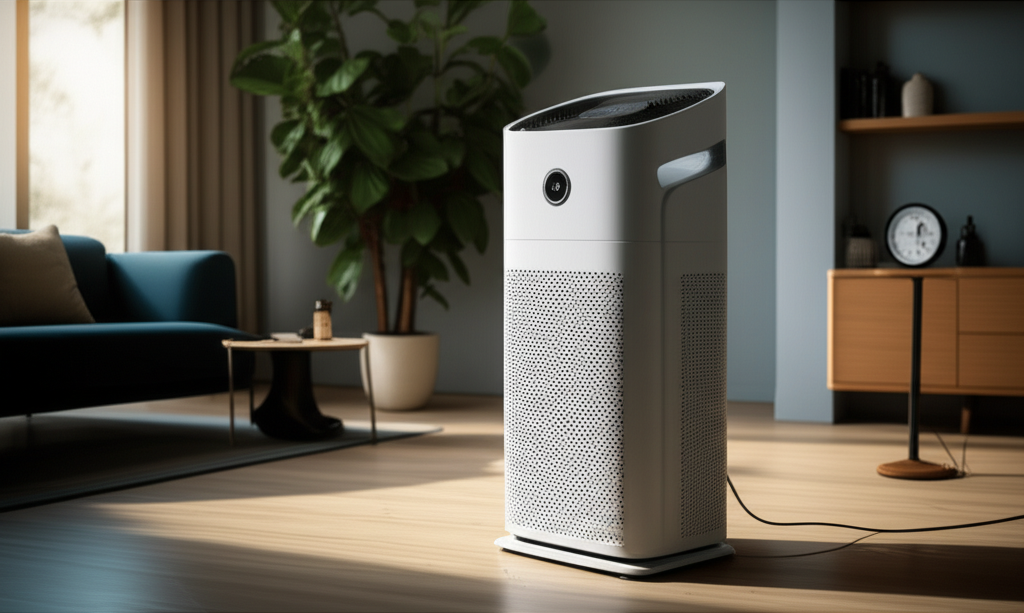
True HEPA (High-Efficiency Particulate Air) filters are the most critical component for an air purifier targeting mold. These filters are designed to trap extremely small particles, including the mold spores that cause health issues and spread contamination.
A true HEPA filter guarantees a high level of filtration efficiency, ensuring that the air passing through is significantly cleaner. This makes them indispensable for anyone concerned about mold in their living space.
Activated Carbon Filters: Tackling Odors and VOCs
While HEPA filters capture mold spores, activated carbon filters are excellent at absorbing the odors often associated with mold growth. They also help remove volatile organic compounds (VOCs) that can be released by mold and other household sources, further improving air quality.
These filters work by adsorption, where odor molecules and gases stick to the porous surface of the carbon. This dual-action filtration provides a more comprehensive solution for a mold-affected environment.
CADR Rating: Ensuring Effective Room Coverage
The Clean Air Delivery Rate (CADR) indicates how quickly an air purifier can clean the air in a specific room size. For mold control, a higher CADR is generally better, as it means the unit can process more air more efficiently, capturing spores faster.
Look for CADR ratings for smoke, dust, and pollen, as these indicate the purifier’s ability to handle various particle sizes, including mold spores. Ensure the CADR matches the square footage of the room you intend to use it in for optimal performance.
Coverage Area and Room Size Considerations
Choosing an air purifier with an appropriate coverage area is paramount to effectively combat mold spores. A unit that is too small for a large room will struggle to circulate and clean the air adequately, leaving mold spores unchecked.
Always check the manufacturer’s recommended room size and compare it to the dimensions of your space. It’s often better to choose a purifier rated for a slightly larger room than you need to ensure maximum effectiveness.
Top Air Purifier Technologies for Mold Defense
Beyond HEPA and carbon filters, some air purifiers incorporate additional technologies to enhance their mold-fighting capabilities. These can include UV-C light, ionization, and photocatalytic oxidation (PCO), each offering a unique approach to air purification.
It’s important to research these technologies, as some, like ozone-generating ionizers, can potentially create byproducts that exacerbate respiratory issues. Always opt for purifiers that prioritize safe and effective air cleaning methods.
UV-C Light: Neutralizing Mold Spores
Some air purifiers feature UV-C light technology, which can help neutralize mold spores and other microorganisms as they pass through the unit. This offers an additional layer of defense by damaging the DNA of mold spores, rendering them inactive.
While UV-C light can be effective, it’s crucial that the exposure time and intensity are sufficient to kill the spores. It works best in conjunction with HEPA filtration, which physically removes the dead or damaged spores from the air.
Ionizers and Ozone Concerns
Ionizers release negative ions into the air, which attach to airborne particles like mold spores, causing them to clump together and fall out of the air. However, some ionizers can produce ozone as a byproduct, which is a lung irritant and can worsen respiratory conditions.
If considering an ionizer, ensure it is certified as ozone-free or has a very low ozone output. Many health organizations, like the American Lung Association, advise caution with ozone-generating air purifiers. Therefore, HEPA filtration remains the safest and most reliable method for mold spore removal.
Best Air Purifiers for Home Mold: Our Top Picks
Based on advanced filtration, effective CADR ratings, and user reviews, here are some of the best air purifiers that excel in tackling home mold issues. These models combine powerful HEPA filtration with other beneficial features for comprehensive air cleaning.
We’ve considered units suitable for various room sizes and budgets, ensuring you can find a solution that fits your specific needs and provides essential defense against airborne mold.
Coway Airmega 200M: Powerful and Quiet Performance
The Coway Airmega 200M is a highly-rated air purifier that offers excellent value, combining a true HEPA filter with an activated carbon filter. It’s designed for medium to large rooms, boasting a high CADR and an energy-efficient design.
Its multiple-stage filtration system effectively captures mold spores, dust, pollen, and odors, making it a strong contender for mold-prone homes. The unit also features an auto mode and air quality sensor, adjusting fan speed automatically for optimal performance.
Blueair Blue Pure 211+ Auto: Large Room Coverage and Simplicity
For larger spaces, the Blueair Blue Pure 211+ Auto stands out with its impressive coverage area and simple, effective filtration technology. It utilizes a combination of a pre-filter and a HEPASilent™ filter, which captures 99.97% of particles down to 0.1 microns.
This model is known for its quiet operation and low energy consumption, making it an excellent choice for continuous use. Its ability to handle large rooms makes it ideal for tackling mold spores throughout an entire living area.
Levoit Core 300S: Smart Features and Compact Design
The Levoit Core 300S is a popular choice for smaller to medium-sized rooms, offering a compact design with smart capabilities. It features a three-stage filtration system, including a true HEPA filter, activated carbon filter, and a fine preliminary filter.
Its smart features allow for app control and voice commands, adding convenience. The Core 300S is highly effective at capturing mold spores and common allergens, providing a healthy breathing environment without a hefty price tag.
Winix 5500-2: All-Around Performance with PlasmaWave Technology
The Winix 5500-2 is a well-rounded air purifier that includes a true HEPA filter, activated carbon filter, and the brand’s PlasmaWave technology. While PlasmaWave can be turned off if you have concerns about ionization, the HEPA and carbon filters alone provide robust mold spore and odor control.
It’s suitable for medium to large rooms and offers an auto mode that adjusts fan speed based on detected air quality. This makes it a reliable option for maintaining clean air in a mold-affected home.
How to Use Your Air Purifier Effectively for Mold Control
Maximizing the effectiveness of your air purifier against mold involves strategic placement, regular maintenance, and understanding its limitations. Proper usage ensures you get the most out of your investment in cleaner air.
Continuous operation, especially in areas prone to dampness or where mold has been present, is key. Always follow the manufacturer’s guidelines for filter replacement and unit cleaning.
Placement is Key: Where to Put Your Air Purifier
Place your air purifier in the room where mold is most problematic or where you spend the most time. For maximum air circulation, ensure it’s not blocked by furniture or curtains and is placed at least a few feet away from walls and corners.
Consider placing it near the source of the mold if known, or in bedrooms and living areas where air quality is most critical. If you have multiple affected areas, consider using more than one unit.
Maintenance Schedule: Filter Replacement and Cleaning
Regular maintenance is crucial for your air purifier to perform optimally. This includes cleaning the pre-filter regularly (often weekly or bi-weekly) and replacing the HEPA and activated carbon filters according to the manufacturer’s recommended schedule, typically every 6-12 months.
Neglecting filter replacement will reduce the purifier’s efficiency and can even lead to it becoming a source of contamination. Check your model’s manual for specific cleaning and replacement instructions.
When an Air Purifier Isn’t Enough: Professional Remediation
While the best air purifier for home mold is an excellent tool for managing airborne spores, it is not a substitute for professional mold remediation. If you have a significant mold problem, visible mold growth, or suspect it behind walls, professional intervention is necessary.
Air purifiers help capture spores that are already in the air, but they cannot remove the mold source or repair water-damaged materials. For extensive mold issues, consulting a certified mold remediation specialist is the safest and most effective approach, as recommended by the EPA.
Frequently Asked Questions (FAQ)
Can an air purifier completely get rid of mold?
An air purifier can significantly reduce airborne mold spores and help prevent their spread, but it cannot completely eliminate mold. Mold thrives on moisture and organic materials, so addressing the source of dampness and removing contaminated materials is essential for complete eradication.
How often should I run my air purifier for mold?
For effective mold control, it’s recommended to run your air purifier continuously, especially in areas prone to mold or during periods of high humidity. Running it 24/7 ensures consistent air cleaning and spore capture.
What is the most important filter type for mold?
The most important filter type for mold is a true HEPA filter. It is designed to capture at least 99.97% of airborne particles, including mold spores as small as 0.3 microns, which are too small to be seen with the naked eye.
Are air purifiers with UV light effective against mold?
Air purifiers with UV-C light can help neutralize mold spores and other microorganisms. However, their effectiveness depends on the intensity and duration of exposure. They are most effective when used in conjunction with HEPA filtration, which physically removes the neutralized spores.
Should I get an air purifier if I don’t see mold but suspect it?
Yes, if you suspect mold due to musty odors, recurring allergies, or a history of water damage, an air purifier with a HEPA filter and activated carbon can still be beneficial. It helps capture any airborne spores that may be present, even if they are not visible.
How do I know if my air purifier is working effectively against mold?
You’ll know your air purifier is working effectively if you notice a reduction in musty odors and a decrease in allergy symptoms like sneezing, coughing, or itchy eyes. Regularly checking and replacing filters as per the manufacturer’s instructions also ensures optimal performance.
Conclusion: Your Best Defense Against Airborne Mold
Investing in the best air purifier for home mold is a proactive and essential step towards safeguarding your family’s health and improving your living environment. By understanding the critical features like true HEPA filtration, activated carbon, and appropriate CADR ratings, you can make an informed choice.
Remember that while air purifiers are powerful allies, they work best as part of a comprehensive strategy that includes addressing moisture issues and professional remediation for significant mold problems. Take control of your indoor air quality today and breathe easier knowing you have a robust defense against airborne mold.
