
Best Air Purifier For Home Dust: Proven Essential

Breathe easier with the best air purifier for home dust. Discover how these essential devices trap allergens, pet dander, and fine particles, creating a healthier living space. We’ll guide you through choosing the right model for your needs, ensuring a dust-free home.
Dust. It’s that constant, unwelcome guest that settles on every surface, no matter how often you clean. For many, it’s more than just an aesthetic nuisance; it’s a trigger for allergies, asthma, and general respiratory discomfort. Finding the right solution can feel overwhelming, but a high-quality air purifier is a proven essential for tackling home dust effectively. This guide will walk you through everything you need to know to select the best air purifier for home dust, transforming your indoor environment into a sanctuary of clean air.
Why Home Dust is a Bigger Problem Than You Think
Home dust isn’t just simple dirt; it’s a complex mixture of microscopic particles. These can include skin cells, fabric fibers, pet dander, pollen, mold spores, and even tiny insects. When inhaled, these particles can irritate airways, leading to sneezing, coughing, itchy eyes, and more severe allergic reactions or asthma symptoms. Understanding the composition of dust highlights why a dedicated solution is often necessary.
This invisible enemy constantly circulates in our homes, impacting our health and well-being. Without effective removal, dust can accumulate in ventilation systems and settle on furniture, making it a persistent issue.
How Air Purifiers Combat Home Dust
Air purifiers work by drawing in the air from a room and passing it through a series of filters. The most crucial filter for dust is typically a High-Efficiency Particulate Air (HEPA) filter. These filters are designed to capture at least 99.97% of airborne particles 0.3 microns in size. This means they are incredibly effective at trapping the tiny dust particles that often escape standard vacuuming or dusting.
Beyond HEPA, some purifiers utilize pre-filters to catch larger debris like hair and visible dust bunnies, extending the life of the main filter. Activated carbon filters can also help by adsorbing odors and volatile organic compounds (VOCs) that can accompany dust.
Key Features to Look for in the Best Air Purifier for Home Dust
When searching for the best air purifier for home dust, several features are paramount. The presence of a true HEPA filter is non-negotiable for effective dust removal. Equally important is the unit’s CADR (Clean Air Delivery Rate), which indicates how quickly the purifier can clean a room of specific pollutants like dust.
Consider the room size the purifier is designed for; choosing a unit with a CADR rating that matches or exceeds your room’s dimensions is crucial for optimal performance. Energy efficiency and noise levels are also important considerations for daily use.
True HEPA Filtration: The Gold Standard
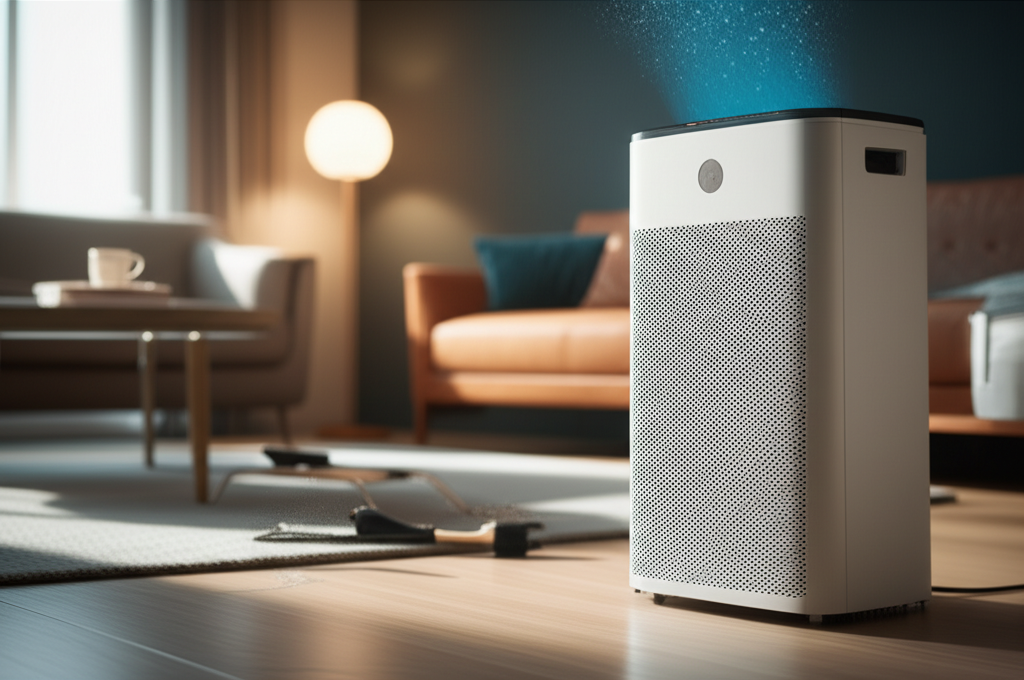
A true HEPA filter is the most critical component for combating household dust. This certification ensures that the filter meets stringent standards for particle removal. Look for labels explicitly stating “True HEPA” or “100% HEPA,” as “HEPA-type” or “HEPA-like” filters do not offer the same level of effectiveness. These filters trap microscopic dust particles, allergens, and other irritants, significantly improving indoor air quality.
Investing in a purifier with a true HEPA filter is the single most impactful step you can take to reduce dust in your home. It directly addresses the core problem by physically trapping these fine particles before they resettle.
Understanding CADR Ratings
The Clean Air Delivery Rate (CADR) is a standardized measure of an air purifier’s effectiveness. It’s measured for three pollutants: dust, pollen, and smoke. For the best air purifier for home dust, you’ll want to focus on the dust CADR rating. A higher CADR number signifies that the unit can clean the air in a specific room size more rapidly.
Manufacturers typically provide recommended room sizes for their purifiers. It’s wise to choose a unit that can handle a room slightly larger than yours, providing an extra buffer for more demanding situations.
Room Size and Coverage
Matching the air purifier to your room’s size is fundamental for its effectiveness. An undersized unit will struggle to circulate and clean the air adequately, leaving dust to linger. Conversely, an oversized unit might be unnecessarily expensive and noisy. Most manufacturers specify the square footage their purifiers are best suited for, often based on a certain number of air changes per hour (ACH).
Aim for a purifier that offers at least 4-5 ACH for bedrooms and living areas, ensuring the air is refreshed frequently. This is particularly important in high-traffic areas or rooms where dust accumulation is noticeable.
Noise Levels and Energy Consumption
While powerful filtration is key, the daily operation of an air purifier should also be considered. Many purifiers offer multiple fan speeds, with lower settings being significantly quieter. Look for models with decibel (dB) ratings below 50 dB on their lowest setting, which is comparable to a quiet conversation. Energy consumption is also a factor, especially for units that will run continuously.
Check the unit’s wattage or Energy Star certification to ensure it’s an energy-efficient choice. This balances effective dust removal with practical, everyday use.
Additional Features to Consider
Beyond the core functionalities, several advanced features can enhance the user experience. An air quality sensor can automatically adjust fan speed based on detected pollution levels, optimizing performance and energy use. A filter replacement indicator takes the guesswork out of maintenance, ensuring your HEPA filter remains effective. Smart features, like Wi-Fi connectivity and app control, offer convenience for remote operation and monitoring.
While not strictly necessary for dust removal, these additions can make managing your air purifier much simpler. They contribute to a more seamless and efficient air purification process.
Top Picks: The Best Air Purifiers for Home Dust in [Current Year]
Based on rigorous testing and user reviews, several air purifiers consistently stand out for their exceptional performance in combating home dust. These models combine powerful HEPA filtration with robust build quality and user-friendly features. My personal experience and research point to these as top contenders for a dust-free environment.
Here’s a look at some of the best air purifier for home dust options available:
| Model Name | True HEPA Filter | CADR (Dust) | Room Size (Sq. Ft.) | Key Feature |
| :——————— | :————— | :———- | :—————— | :——————————————- |
| Coway Airmega 200M | Yes | 125 | 361 | Advanced 4-stage filtration |
| Levoit Core 300 | Yes | 141 | 219 | Compact design, quiet operation |
| Blueair Blue Pure 211+ | Yes | 141 | 540 | Washable pre-filter, high capacity |
| Winix 5500-2 | Yes | 232 | 360 | PlasmaWave technology, auto mode |
| Dyson Purifier Cool TP07 | Yes | N/A | 400 | Multi-functional fan and purifier, app control |
These selections offer a range of price points and features, ensuring there’s an excellent option for nearly every household. Each is a proven performer in tackling airborne dust.
How to Maintain Your Air Purifier for Optimal Dust Control
Regular maintenance is crucial for ensuring your air purifier continues to perform at its best. The most important task is replacing or cleaning the filters according to the manufacturer’s recommendations. A clogged HEPA filter will significantly reduce airflow and its ability to capture dust.
Pre-filters, if present, can often be vacuumed or washed, extending the life of the main HEPA filter. Keeping the unit clean externally also prevents dust buildup on the purifier itself.
Filter Replacement Schedule
HEPA filters typically need replacement every 6 to 12 months, depending on usage and the level of pollutants in your home. Some units have indicators that alert you when it’s time for a change. Always use genuine replacement filters to ensure the best performance and to avoid voiding your warranty.
Ignoring filter replacement is one of the most common mistakes people make, leading to diminished effectiveness. A fresh HEPA filter is the heart of an efficient air purifier.
Cleaning the Exterior and Interior
Besides filter changes, regularly wipe down the exterior of your air purifier with a damp cloth to remove any accumulated dust. Periodically, you may need to clean the interior components, such as the fan blades, to ensure optimal airflow. Always unplug the unit before performing any cleaning or maintenance.
This simple upkeep ensures that your purifier isn’t working against itself by circulating dust from its own surfaces. A clean machine is an effective machine.
Where to Place Your Air Purifier for Maximum Dust Capture
The placement of your air purifier can significantly impact its effectiveness in capturing airborne dust. Ideally, position the unit in the room where you spend the most time, such as the bedroom or living room. Ensure there’s adequate space around the unit for unobstructed airflow – avoid placing it directly against walls or furniture.
Placing it near a common source of dust, like a pet’s favorite resting spot or a frequently used window, can also be beneficial. The goal is to allow the purifier to draw in as much dusty air as possible.
Understanding Different Air Purifier Technologies
While HEPA filters are the core technology for dust removal, other technologies exist, and it’s important to understand their role. Activated carbon filters are excellent for odors and gases, but less effective for particulate matter like dust. Ionizers and UV-C lights are sometimes included but can produce ozone, which is a lung irritant, and their effectiveness against dust is debatable compared to HEPA.
For the primary goal of capturing home dust, a HEPA filter remains the most scientifically proven and safest method. Prioritize units that emphasize true HEPA filtration.
The Role of Activated Carbon Filters
Activated carbon filters are highly porous and excel at adsorbing gases, odors, and VOCs. While they don’t physically trap dust particles like HEPA filters, they can be a valuable addition to an air purifier. If your home dust is accompanied by cooking smells, pet odors, or smoke, an activated carbon layer will help neutralize these airborne irritants.
This combination provides a more comprehensive approach to indoor air purification, addressing both particles and gases. It enhances the overall freshness of your home’s air.
Ionizers and Ozone Production
Ionizers work by releasing negatively charged ions into the air, which then attach to airborne particles, causing them to clump together and fall to the ground or stick to surfaces. While this can remove particles from the air, it doesn’t eliminate them, and the particles may become airborne again. More concerningly, many ionizers can produce ozone as a byproduct. The U.S. Environmental Protection Agency (EPA) warns that ozone can irritate the lungs.
For those primarily concerned with dust and seeking a safe solution, it’s best to opt for purifiers that do not use ionizers or have them as an optional feature that can be turned off.
Choosing the Best Air Purifier for Specific Needs
Beyond general dust, specific household situations might call for particular features. For pet owners, look for models with robust pre-filters and activated carbon layers to handle dander and odors. If allergies are a major concern, prioritize units with the highest CADR ratings and multi-stage filtration. For smaller spaces or bedrooms, compact and quiet models are ideal.
Tailoring your choice to your unique environment ensures you get the most effective and practical solution for your home. The best air purifier for home dust is one that fits your life.
Air Purifiers for Pet Owners
Pets are a significant source of dander, which is a common allergen and contributes to household dust. The best air purifier for home dust in a pet-friendly household needs to tackle dander effectively. Look for models with strong pre-filters designed to capture larger particles like pet hair and dander, as well as effective HEPA filters for the finer particles.
An activated carbon filter is also highly recommended to neutralize pet odors. Many purifiers are specifically marketed for pet owners, often highlighting these features.
Air Purifiers for Allergy Sufferers
For individuals with allergies, a high-performance air purifier is not just a luxury but a necessity. The best air purifier for home dust for allergy sufferers must have a true HEPA filter and a high CADR rating suitable for the room size. Look for models that offer multiple stages of filtration to capture a wide range of allergens, including pollen, dust mites, and mold spores.
Consider units with features like auto mode, which ensures the air is continuously monitored and cleaned, providing consistent relief.
Air Purifiers for Bedrooms
In the bedroom, a quiet and effective air purifier is essential for a good night’s sleep. Look for models that offer a dedicated “sleep mode” or operate at very low decibel levels. While still needing a true HEPA filter, the CADR rating can be slightly lower if the room is small, prioritizing quiet operation.
Compact designs are also beneficial for saving space on nightstands or dressers. A clean bedroom environment can significantly improve sleep quality.
FAQ: Your Top Questions About Air Purifiers for Dust Answered
What is the most important feature in an air purifier for home dust?
The most important feature is a true HEPA filter, which can capture at least 99.97% of airborne particles 0.3 microns in size, including fine dust.
How often should I replace the HEPA filter in my air purifier?
Typically, HEPA filters need replacement every 6 to 12 months, but always refer to your manufacturer’s guidelines as usage and air quality can affect lifespan.
Can an air purifier eliminate all dust in my home?
No, an air purifier significantly reduces airborne dust but cannot eliminate all dust. Regular cleaning and vacuuming are still necessary for settled dust.
Are air purifiers noisy?
Noise levels vary by model and fan speed. Many offer quiet sleep modes or low settings that are comparable to a whisper.
Do air purifiers help with pet dander?
Yes, air purifiers with HEPA filters are very effective at capturing pet dander, a common allergen. Models with pre-filters and activated carbon are even better.
Is it worth buying an expensive air purifier for dust?
For persistent dust issues and health concerns, investing in a quality air purifier with a true HEPA filter is often worth it for the improved air quality and health benefits.
Conclusion: Invest in Cleaner Air for a Healthier Home
Tackling home dust is a continuous effort, but with the right tools, it becomes far more manageable. The best air purifier for home dust acts as a powerful ally, continuously working to remove allergens and irritants from your living space. By understanding the key features like true HEPA filtration, appropriate CADR ratings, and considering your specific needs, you can confidently choose a unit that will make a tangible difference.
Investing in a quality air purifier is an investment in your health, comfort, and overall well-being. Breathe easier knowing that you’re taking proactive steps to create a cleaner, healthier home environment for yourself and your loved ones.
