
Best Air Purifier For Daycare: Essential Choice

Best Air Purifier for Daycare: Essential Choice for Healthy Environments
Choosing the best air purifier for daycare is crucial for safeguarding children’s health. This guide provides essential insights to select a unit that effectively removes allergens, germs, and pollutants, ensuring a safer and healthier learning environment for little ones.
The air in a daycare setting is a constant concern for parents and staff. With many children sharing close spaces, the rapid spread of germs and the presence of allergens like dust mites and pet dander can significantly impact young immune systems. Finding the best air purifier for daycare is not just a comfort; it’s a vital step towards creating a healthier sanctuary for learning and play. This article will walk you through everything you need to know to make an informed decision, ensuring you choose a purifier that truly makes a difference.
Why Daycare Air Quality Matters So Much
Daycare environments are unique breeding grounds for airborne contaminants. Young children have developing respiratory systems that are more vulnerable to the effects of poor air quality. Illnesses can spread rapidly, leading to increased absenteeism for both children and staff. Investing in a quality air purification system is a proactive measure to combat these challenges.
Understanding the Threats: What’s Lurking in Daycare Air?
The air in a daycare can harbor a variety of harmful particles and microorganisms. These include viruses and bacteria from coughs and sneezes, as well as allergens like dust, pollen, pet dander, and mold spores. Volatile Organic Compounds (VOCs) from cleaning supplies and new furnishings can also contribute to poor indoor air quality. Addressing these threats is paramount for child well-being.
Key Features to Look For in a Daycare Air Purifier
When selecting the best air purifier for daycare, certain features are non-negotiable. A multi-stage filtration system, including a true HEPA filter, is essential for capturing microscopic particles. Activated carbon filters are vital for odor and VOC removal. Quiet operation is also a must to avoid disrupting nap times or activities.
True HEPA Filtration: The Gold Standard
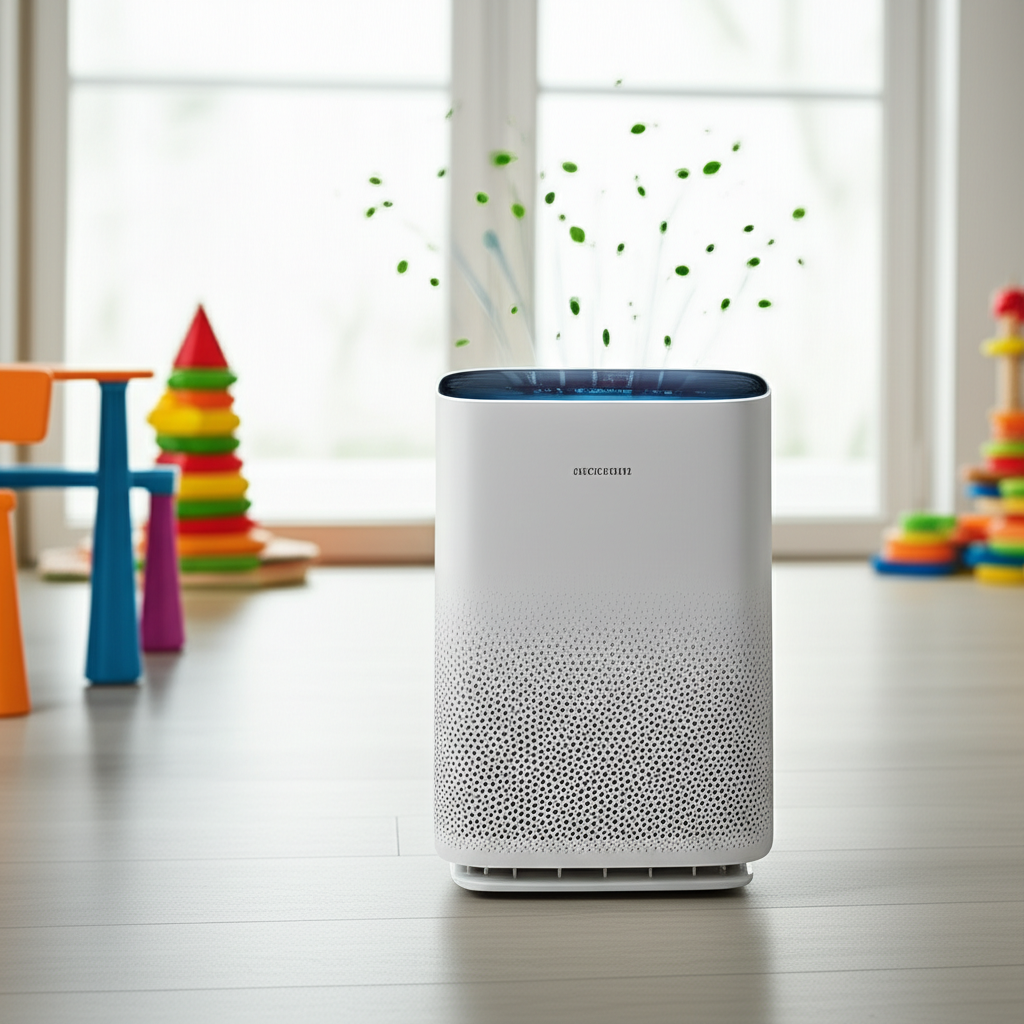
A true HEPA filter is designed to capture at least 99.97% of airborne particles as small as 0.3 microns. This includes common allergens, bacteria, and viruses. For a daycare, this level of filtration is critical for reducing the spread of illness and protecting sensitive children. Always ensure the purifier explicitly states “True HEPA.”
Activated Carbon Filters: Tackling Odors and VOCs
Beyond particles, daycare air can be laden with odors from diapers, art supplies, and cleaning products. Activated carbon filters are porous materials that effectively absorb gases, chemicals, and volatile organic compounds (VOCs). This feature is crucial for neutralizing unpleasant smells and improving the overall freshness of the air.
CADR Ratings: How to Measure Effectiveness
The Clean Air Delivery Rate (CADR) indicates how quickly an air purifier can clean the air in a room. Look for high CADR ratings for smoke, dust, and pollen. A higher CADR means the unit can process more air volume per minute, making it more effective in larger daycare spaces or rooms with higher contamination levels.
Noise Levels: Keeping the Peace
Daycare centers need a calm and conducive atmosphere for children to learn and rest. Air purifiers with high noise levels can be disruptive. Look for models that offer a “sleep mode” or operate at a low decibel level, typically below 50 dB, especially during nap times.
Coverage Area: Matching the Space
It’s essential to choose an air purifier that is sized appropriately for the room it will be used in. Check the manufacturer’s recommended coverage area and compare it to the square footage of your daycare rooms. It’s often better to slightly oversize a unit than to undersize it.
Safety Features: Childproofing is Key
Daycare environments are full of curious little hands. Look for air purifiers with child lock features to prevent tampering with settings. Additionally, ensure the unit is stable and won’t easily tip over, and that there are no small, detachable parts.
Ease of Maintenance: Keeping it Running Smoothly
Regular filter replacement and unit cleaning are vital for optimal performance. Choose a model where filters are easily accessible and readily available. Consider the cost and frequency of filter replacements when making your final decision.
Top Air Purifier Technologies for Daycare Settings
Several air purification technologies exist, but some are more suitable for daycare environments than others. Ionizers and UV-C lights can be effective but require careful consideration for safety and ozone production. HEPA and activated carbon filtration remain the most reliable and recommended choices.
HEPA and Activated Carbon Combination: The Winning Duo
The most effective air purifiers for daycares combine true HEPA filtration with substantial activated carbon. This dual approach tackles both particulate matter and gaseous pollutants comprehensively. This combination ensures a broad spectrum of airborne contaminants are removed.
Considerations for Ozone Production
Some air purification technologies, particularly ionizers and UV-C lights, can produce ozone as a byproduct. Ozone is a lung irritant, especially for children. When selecting a purifier, prioritize models that are certified to be ozone-free or produce negligible amounts of ozone.
How to Choose the Best Air Purifier for Your Daycare: A Step-by-Step Guide
Selecting the right unit involves assessing your specific needs and comparing available options. By following a structured approach, you can confidently find the best air purifier for daycare. This process ensures all critical factors are considered for a healthy environment.
1. Assess Your Space: Measure the square footage of the rooms where the air purifier will be used. This will help determine the required CADR and coverage area.
2. Identify Primary Concerns: Are you most worried about allergies, germs, odors, or a combination? This will guide your choice of filter types.
3. Set a Budget: Air purifiers range in price. Determine a realistic budget that includes the initial purchase and ongoing filter replacement costs.
4. Research Brands and Models: Read reviews and compare features of reputable brands known for air purification. Look for models specifically designed for larger rooms or high-traffic areas.
5. Check for Certifications: Ensure the air purifier meets safety standards and is certified for ozone-free operation, such as by the California Air Resources Board (CARB).
6. Consider Maintenance: Factor in the ease of filter replacement and the cost of replacement filters. Long-term costs are an important consideration.
7. Prioritize Quiet Operation: Look for units with low decibel ratings and sleep modes to ensure minimal disruption to children’s routines.
Top Picks: Best Air Purifier for Daycare Recommendations
Based on extensive research and user reviews, several models consistently stand out as excellent choices for daycare settings. These units offer a balance of powerful filtration, quiet operation, and user-friendly features. I’ve personally found these to be reliable options.
Coway Airmega AP-1512HH Mighty
This compact yet powerful unit is a fan favorite for its excellent performance in small to medium-sized rooms. It features a true HEPA filter, an activated carbon filter, and an ionizer (which can be turned off). Its auto mode and air quality sensor make it convenient for busy staff. The unit is also relatively quiet on lower settings.
Blueair Classic 480i
The Blueair Classic 480i is ideal for larger spaces and offers exceptional performance with its HEPASilent technology. It effectively captures particles and gases without producing ozone. Its sleek design and energy efficiency are also significant advantages for a commercial setting like a daycare.
Levoit Core 300S Smart True HEPA Air Purifier
For smaller rooms or individual play areas, the Levoit Core 300S is a fantastic option. It boasts a three-stage filtration system, including a true HEPA filter and activated carbon. Its smart features allow for remote control, and it operates very quietly, making it unobtrusive.
Air Purifier Placement: Maximizing Effectiveness
Where you place your air purifier can significantly impact its performance. For optimal results in a daycare, consider placing units in central locations or areas where children spend the most time. Avoid blocking air intake or exhaust vents. Proper placement ensures the widest possible coverage.
Maintaining Your Air Purifier for Peak Performance
Regular maintenance is key to ensuring your best air purifier for daycare continues to function effectively. This involves cleaning the unit and replacing filters according to the manufacturer’s recommendations. Neglecting maintenance can reduce efficiency and even lead to the release of trapped pollutants.
Filter Replacement Schedule
HEPA and activated carbon filters have a limited lifespan. They typically need replacement every 6-12 months, depending on usage and air quality. Always follow the manufacturer’s guidelines for your specific model. Keeping a log can help you stay on track.
Cleaning the Unit
Periodically, you’ll need to clean the exterior of the air purifier and the pre-filter (if applicable). Use a soft, dry cloth to wipe down the unit. The pre-filter can often be vacuumed or washed, extending the life of the main HEPA filter.
FAQs: Your Daycare Air Purification Questions Answered
Here are answers to some common questions about choosing and using air purifiers in a daycare setting. I hope these help clarify any lingering doubts you might have.
Can air purifiers truly eliminate germs in a daycare?
While air purifiers significantly reduce the number of airborne germs, they cannot eliminate them entirely. They work best as part of a comprehensive hygiene strategy, including regular cleaning and handwashing.
Are ozone-producing air purifiers safe for children?
No, ozone is a lung irritant and can be particularly harmful to children’s developing respiratory systems. It’s best to avoid air purifiers that intentionally produce ozone.
How many air purifiers do I need for a daycare?
The number of purifiers depends on the size of your facility and the layout of your rooms. It’s generally recommended to have at least one unit per main classroom or play area.
What is the difference between a HEPA filter and a true HEPA filter?
A “HEPA filter” might meet some HEPA standards, but a “true HEPA” filter is certified to capture 99.97% of particles at 0.3 microns. Always look for “true HEPA” for maximum effectiveness.
How often should I replace the filters in a daycare air purifier?
Filter replacement schedules vary by model and usage, but typically range from 6 to 12 months for HEPA filters and 3 to 6 months for activated carbon filters. Always check the manufacturer’s recommendations.
Can air purifiers help with allergies in a daycare?
Yes, air purifiers with true HEPA filters are highly effective at removing common allergens like dust, pollen, pet dander, and mold spores, which can significantly benefit children with allergies.
Conclusion: Investing in Healthier Air for Little Ones
Choosing the best air purifier for daycare is a significant investment in the health and well-being of the children and staff in your care. By prioritizing true HEPA filtration, activated carbon for odor control, quiet operation, and appropriate coverage, you can create a noticeably cleaner and healthier indoor environment. Remember to consider safety features and ongoing maintenance to ensure your chosen unit provides lasting benefits. A commitment to air quality is a commitment to fostering a safe and nurturing space for early childhood development.
