
Best Air Purifier For Art Studio: Essential Guide

Discover the best air purifier for your art studio to safeguard your health and artwork from harmful fumes and particles. This guide covers essential features, top picks, and how to choose the perfect unit for a cleaner, safer creative space.
Creating art is a passion, but the materials we use can release harmful fumes and particles into the air. This can affect both your health and the longevity of your precious artwork. Finding the right air purifier for your art studio might seem overwhelming, but it’s crucial for a healthy and productive creative environment. Let’s break down what you need to know to breathe easier and create better.
Why Your Art Studio Needs an Air Purifier
An art studio can accumulate a variety of airborne contaminants, from volatile organic compounds (VOCs) in paints and solvents to fine dust from pastels and sanding. These pollutants can cause headaches, respiratory irritation, and long-term health issues. An air purifier acts as your studio’s lungs, diligently removing these harmful substances.
Understanding Art Studio Air Pollutants
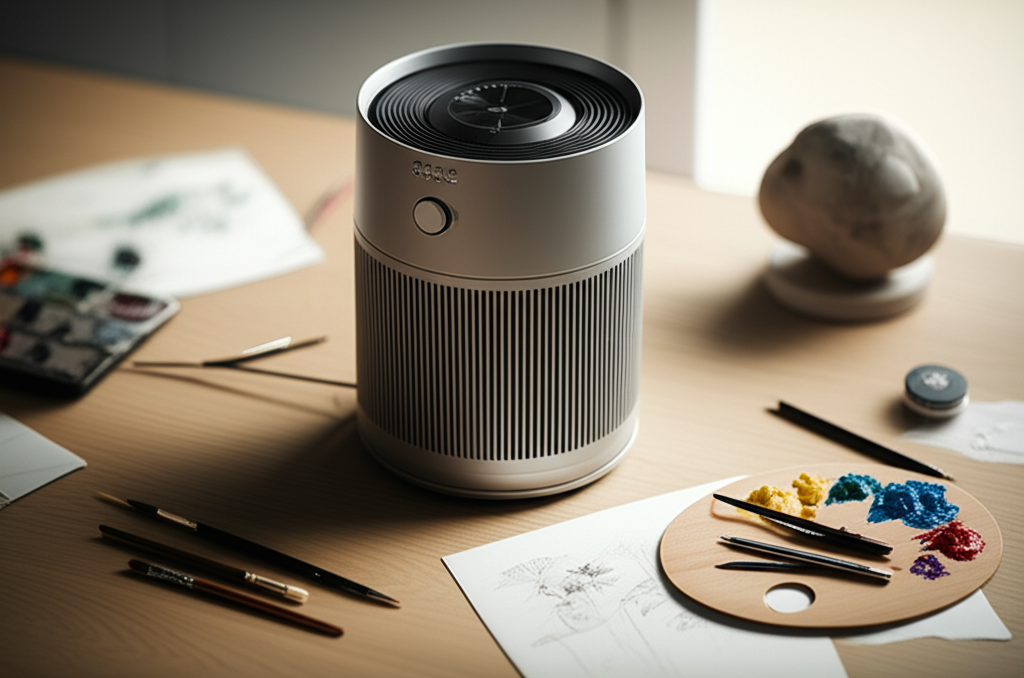
Different art mediums produce unique airborne hazards. Acrylics and oil paints release VOCs, while spray paints and fixatives create fine aerosols. Even dust from charcoal or pastels can be a significant irritant. Knowing these sources helps you choose an air purifier with the right filtration capabilities.
Volatile Organic Compounds (VOCs)
VOCs are gases emitted from many art supplies, including paints, varnishes, glues, and solvents. They can cause immediate symptoms like dizziness and nausea, and prolonged exposure is linked to more serious health problems. An air purifier with an activated carbon filter is essential for effectively capturing these chemical fumes.
Particulate Matter (PM)
Fine dust particles from dry media like pastels, charcoal, and sanding can easily become airborne. These particles, especially those smaller than 2.5 micrometers (PM2.5), can penetrate deep into your lungs. HEPA filters are highly effective at trapping these microscopic irritants.
Odor Control
Many art materials, particularly solvents and certain paints, have strong, persistent odors. While not always harmful, these smells can be unpleasant and distracting. Activated carbon filters excel at adsorping odor molecules, making your studio a more enjoyable place to work.
Key Features to Look for in an Art Studio Air Purifier
When selecting the best air purifier for art studio needs, specific features are paramount. You’ll want robust filtration, adequate coverage, and quiet operation. Consider these elements carefully to make an informed decision.
Advanced Filtration Systems: HEPA and Activated Carbon
The heart of any good air purifier lies in its filters. For an art studio, a combination of a True HEPA filter and a substantial activated carbon filter is non-negotiable. HEPA filters capture 99.97% of airborne particles down to 0.3 microns, while activated carbon adsorbs gases and odors.
True HEPA Filters
A True HEPA filter is designed to capture microscopic particles such as dust, pollen, mold spores, and pet dander. For art studios, this means trapping fine pigment dust from pastels and charcoal, as well as other common allergens. This ensures cleaner air and reduces the risk of respiratory irritation.
Activated Carbon Filters
Activated carbon filters are porous materials that attract and trap gas molecules, including VOCs and odors. They are crucial for neutralizing the chemical fumes released by paints, solvents, glues, and fixatives. Look for purifiers with a generous amount of carbon for maximum effectiveness.
Pre-filters
A washable pre-filter is a valuable addition as it captures larger particles like hair and dust bunnies. This protects the more sensitive HEPA and carbon filters, extending their lifespan and maintaining the overall efficiency of the air purifier. It’s a simple yet effective way to enhance performance.
Coverage Area and CADR Ratings
Ensure the air purifier you choose is sized appropriately for your studio space. An undersized unit will struggle to clean the air effectively, while an oversized one might be unnecessarily noisy and costly. Check the Clean Air Delivery Rate (CADR) for a good indication of performance.
Understanding CADR
CADR ratings measure how quickly an air purifier can filter specific pollutants: smoke, dust, and pollen. Higher CADR numbers indicate faster and more efficient air cleaning. For an art studio, a high CADR for smoke is particularly beneficial due to the potential for fumes.
Matching Purifier to Room Size
Most manufacturers provide guidelines on the maximum room size their air purifiers can effectively cover. It’s often recommended to choose a unit rated for a slightly larger room than your studio to ensure optimal performance, especially when dealing with strong art material emissions. This provides a buffer for intense creative sessions.
Noise Levels and Portability
The hum of an air purifier can be distracting, especially during focused creative work. Look for models with multiple fan speeds, including a quiet or sleep mode. Portability is also a consideration if you move your setup or work in different areas of your studio.
Decibel Ratings (dB)
Pay attention to the decibel (dB) ratings for different fan speeds. Lower dB numbers mean quieter operation. Many purifiers operate between 25-55 dB, with lower settings being ideal for background use. A quiet purifier enhances your concentration and overall studio experience.
Ease of Movement
Consider the weight and design of the air purifier. Some models feature handles or casters, making them easy to move between different work areas or storage. This flexibility can be a significant advantage in a dynamic studio environment.
Top Air Purifier Picks for Art Studios
Based on the essential features, here are some of the best air purifiers that cater specifically to the needs of an art studio. I’ve considered their filtration capabilities, coverage, and overall value.
Coway Airmega 200M
The Coway Airmega 200M is a popular choice for its robust filtration and sleek design. It features a True HEPA filter and a substantial activated carbon filter, making it excellent at capturing both particles and VOCs. Its coverage area is suitable for medium to large studios.
Pros: Excellent multi-stage filtration, quiet operation on lower settings, stylish design, energy-efficient.
Cons: Filter replacement costs can add up, may not have the highest CADR for extremely large spaces.
This unit provides reliable air purification, ensuring a healthier environment for artists. Its quiet performance allows for uninterrupted creative flow.
Blueair Classic 480i
Blueair is renowned for its advanced filtration technology, and the Classic 480i is a standout. It combines mechanical and electrostatic filtration with activated carbon to tackle a wide range of pollutants, including VOCs and odors. Its performance in larger rooms is particularly impressive.
Pros: High CADR, effective at removing both particles and gases, Wi-Fi connectivity for app control, low energy consumption.
Cons: Higher initial cost, some users find the design less aesthetically pleasing.
The Blueair Classic 480i is a powerful solution for studios where air quality is a significant concern. Its ability to handle larger spaces makes it versatile.
Winix 5500-2
The Winix 5500-2 is a highly-rated air purifier that offers excellent value. It includes a True HEPA filter, an activated carbon filter, and Winix’s PlasmaWave technology, which can break down pollutants at a molecular level. It’s well-suited for medium-sized studios.
Pros: Great value for money, effective multi-stage filtration, auto mode and air quality sensor, quiet operation.
Cons: PlasmaWave technology is optional and some users prefer to disable it, filter replacements are an ongoing cost.
This model provides comprehensive air cleaning at an accessible price point. It’s a solid choice for artists seeking effective protection without breaking the bank.
Levoit Core 300S
For smaller studios or specific work areas, the Levoit Core 300S is a compact yet powerful option. It features a 3-stage filtration system, including a True HEPA filter and an activated carbon filter, capable of handling common studio pollutants. Its small footprint is a major advantage.
Pros: Compact and lightweight, very quiet on low settings, affordable filter replacements, smart features with app control.
Cons: Best suited for smaller rooms, may require more frequent filter changes in heavily polluted environments.
The Levoit Core 300S is an excellent choice for artists with limited space or budget. It delivers impressive performance for its size.
How to Choose the Right Air Purifier for Your Studio
Selecting the best air purifier for art studio environments involves a systematic approach. Consider your specific needs, the size of your space, and the types of materials you use most frequently.
Assess Your Studio’s Specific Needs
The first step is to identify the primary airborne contaminants in your studio. Are you mainly concerned about VOCs from oil paints and solvents, or is dust from pastels and sanding a bigger issue? Understanding this will guide your filter selection.
Oil Paints vs. Acrylics vs. Watercolors
Oil paints and solvents typically release more VOCs and strong odors. Acrylics also emit VOCs, though often less intensely. Watercolors are generally safer but can still contribute to dust and mold spores if humidity is an issue. Tailor your purifier choice accordingly.
Spray Paints and Aerosols
If you use spray paints, fixatives, or aerosols, you need a purifier with exceptional particle filtration and strong odor adsorption. These applications create fine mists that can be inhaled and require robust filtering to protect your respiratory health.
Consider the Size of Your Workspace
Measure your studio accurately and compare it to the coverage area specified by air purifier manufacturers. It’s always better to slightly oversize your air purifier than to undersize it. This ensures it can adequately clean the air even during peak usage.
Calculating Room Volume
For a more precise calculation, multiply your studio’s length by its width and then by its height to get the cubic footage. Then, look for an air purifier with a CADR that matches or exceeds this volume. This ensures efficient air exchange.
Budget and Running Costs
Air purifiers vary significantly in price, from under $100 to over $500. Remember to factor in the ongoing cost of replacement filters. Some units have cheaper filters but require more frequent changes, while others have more expensive filters that last longer.
Initial Purchase Price
Your initial budget will play a role, but don’t let it be the sole deciding factor. A slightly more expensive unit with better filtration and longer-lasting filters might be more cost-effective in the long run. Consider it an investment in your health and your art.
Filter Replacement Frequency and Cost
Check the recommended replacement schedule for HEPA and carbon filters, usually every 6-12 months. Research the cost of these replacement filters before purchasing. This recurring expense can significantly impact the total cost of ownership.
Maintaining Your Air Purifier for Optimal Performance
Regular maintenance is key to ensuring your air purifier continues to function effectively. Cleaning and replacing filters as recommended will maximize its lifespan and air cleaning capabilities. Neglecting this can lead to reduced performance and potentially shorter unit life.
Cleaning and Replacing Filters
Most air purifiers have a pre-filter that can be vacuumed or washed. HEPA and activated carbon filters are typically not washable and need to be replaced. Always follow the manufacturer’s instructions for cleaning and replacement schedules.
Pre-filter Maintenance
The pre-filter catches larger dust and hair, preventing them from clogging the main filters. Vacuuming the pre-filter monthly or as needed will significantly extend the life of your HEPA and carbon filters. A clean pre-filter is crucial for efficiency.
HEPA and Carbon Filter Replacement
HEPA and activated carbon filters have a finite lifespan and will eventually become saturated. Replacement is usually recommended every 6-12 months, depending on usage and air quality. Many purifiers have filter change indicators to remind you.
Placement in Your Studio
Proper placement of your air purifier can significantly impact its effectiveness. Avoid placing it in corners or too close to walls, as this can obstruct airflow. Aim for a central location where air can circulate freely around the unit.
Maximizing Airflow
Ensure there is at least 1-2 feet of clearance around the air purifier. This allows the intake and exhaust vents to function optimally, drawing in polluted air and expelling clean air efficiently. Avoid placing it behind furniture or curtains.
Regular Cleaning of the Unit
Beyond filters, the exterior of the air purifier should be wiped down periodically. Use a damp cloth to remove dust accumulation, ensuring the unit remains clean and operates efficiently. This also contributes to the overall aesthetics of your studio.
FAQ: Your Air Purifier Questions Answered
Here are answers to common questions about choosing and using the best air purifier for art studio needs.
Q1: How often should I replace the filters in my air purifier?
A1: Filter replacement frequency typically ranges from 6 to 12 months, depending on the model and your studio’s air quality. Always check the manufacturer’s recommendations.
Q2: Can an air purifier remove fumes from oil paints and solvents?
A2: Yes, air purifiers with a substantial activated carbon filter are very effective at adsorbing VOCs and odors from oil paints and solvents.
Q3: Is an air purifier noisy?
A3: Most modern air purifiers have multiple fan speeds, including a quiet or sleep mode that operates at a very low decibel level, making them unobtrusive.
Q4: What is the difference between a HEPA filter and an activated carbon filter?
A4: A HEPA filter captures microscopic particles like dust and pollen, while an activated carbon filter adsorbs gases, VOCs, and odors. Both are essential for an art studio.
Q5: Do I need a large air purifier for a small studio space?
A5: It’s generally better to have a purifier rated for a slightly larger room than your studio to ensure it can effectively clean the air. However, compact models are available for very small spaces.
Q6: Can an air purifier help with dust from pastels or charcoal?
A6: Absolutely. A True HEPA filter is highly effective at capturing fine dust particles generated by dry art media, improving air quality and reducing respiratory irritation.
Conclusion: Breathe Easier, Create Better
Investing in the best air purifier for your art studio is a vital step towards a healthier and more productive creative process. By understanding the specific pollutants in your workspace and selecting a unit with robust HEPA and activated carbon filtration, you can significantly improve air quality. Remember to consider room size, noise levels, and ongoing filter costs to make the most informed choice. A clean studio environment not only protects your health but also safeguards your artwork from damaging airborne particles and fumes, allowing your creativity to flourish without compromise.
