
Are Dyson Air Purifier Worth It: Essential Clean Air

Yes, Dyson air purifiers can be worth it for those prioritizing advanced technology, multi-functionality, and sleek design, especially for allergy sufferers or those concerned about specific indoor air pollutants. However, their premium price point requires careful consideration of your specific needs and budget.
Are Dyson Air Purifiers Worth It for Essential Clean Air?
Are Dyson air purifiers worth it? This is a question many homeowners grapple with when considering a significant investment in indoor air quality. With rising concerns about allergens, pollutants, and overall health, clean air is no longer a luxury but a necessity. Dyson has carved a niche with its innovative, often futuristic-looking appliances, but their premium pricing often leads to hesitation. I understand the dilemma; you want the best for your home, but you also need to ensure the cost aligns with tangible benefits. This guide will break down what makes Dyson air purifiers stand out, their potential drawbacks, and help you decide if they are the right choice for your essential clean air needs.
Dyson’s Unique Approach to Air Purification
Dyson doesn’t just filter air; they aim to purify and circulate it with advanced technology. Their machines often combine multiple functions, such as purification, heating, and cooling, into a single unit. This multi-functionality is a key differentiator, offering convenience and space-saving benefits for many households.
Key Takeaway: Dyson’s integrated approach to air quality management sets them apart from single-function purifiers.
Understanding Dyson’s Air Multiplier™ Technology
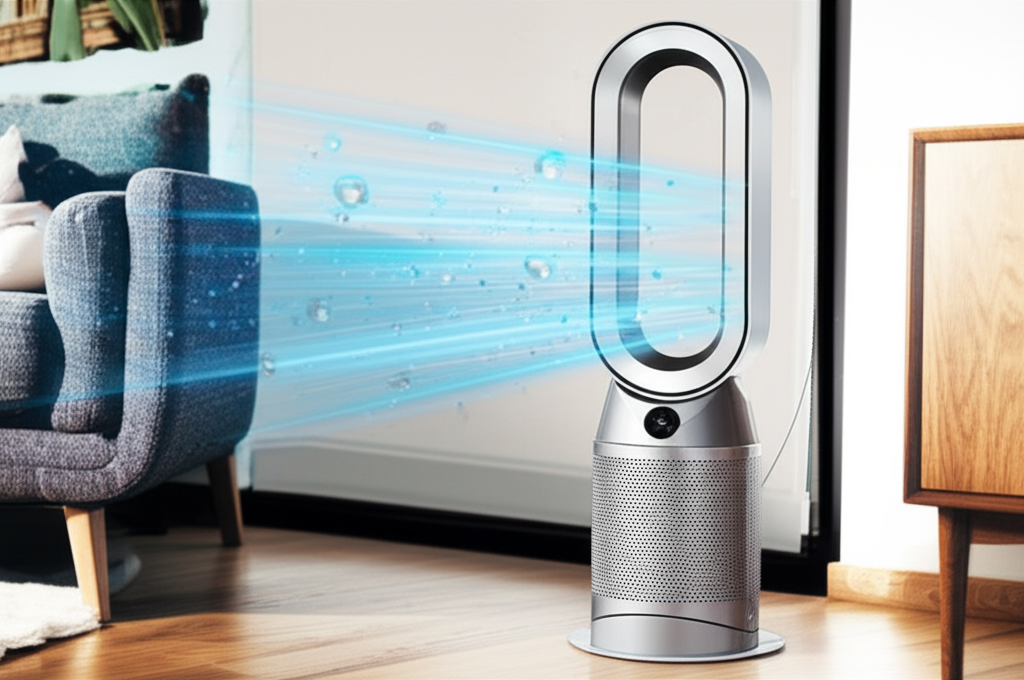
At the heart of Dyson’s air purifiers is their Air Multiplier™ technology. This system projects purified air further into the room, creating a powerful, consistent airflow. Unlike traditional fans that chop and buffet air, Dyson’s bladeless design provides a smoother, more even distribution of clean air.
Key Takeaway: Air Multiplier™ technology ensures efficient and widespread circulation of purified air throughout your space.
The HEPA Filtration System: What It Captures
Dyson air purifiers typically feature a sealed HEPA filtration system. This means the entire unit, including the filter, is designed to prevent air from leaking back into the room without passing through the filter. These filters are engineered to capture 99.97% of particles as small as 0.3 microns, including allergens, pollen, bacteria, and VOCs.
Key Takeaway: Dyson’s sealed HEPA filters are highly effective at trapping microscopic pollutants that can affect indoor air quality.
Activated Carbon Filters for Odors and Gases
Beyond HEPA, most Dyson models incorporate an activated carbon layer. This layer is crucial for adsorbing gases, odors, and volatile organic compounds (VOCs) that can emanate from cleaning products, furniture, and cooking. This dual-action filtration tackles both particulate matter and gaseous pollutants.
Key Takeaway: The activated carbon component effectively neutralizes unpleasant smells and harmful gases, enhancing overall air freshness.
Dyson’s Smart Features and Connectivity
Many Dyson air purifiers come equipped with smart technology. They can connect to your home Wi-Fi and be controlled via the Dyson Link app. This allows you to monitor indoor and outdoor air quality, adjust settings remotely, and schedule purification cycles. The app also provides filter life notifications and maintenance reminders.
Key Takeaway: Smart connectivity offers convenient remote control and real-time air quality monitoring through the Dyson Link app.
Real-time Air Quality Reporting
The Dyson Link app provides detailed, real-time reports on your home’s air quality. It breaks down PM2.5, PM10, VOCs, and NO2 levels, giving you a comprehensive understanding of your environment. This data can help you identify pollution sources and track the effectiveness of your purifier.
Key Takeaway: Detailed air quality data empowers users to understand their indoor environment and the purifier’s performance.
The Multi-Functionality Advantage: Purify, Heat, Cool
A significant draw for many is Dyson’s ability to combine air purification with heating and cooling functions. Models like the Dyson Purifier Hot+Cool™ offer year-round comfort, acting as a powerful fan in the summer and a safe, efficient heater in the winter, all while purifying the air. This integration reduces the need for multiple appliances.
Key Takeaway: The all-in-one functionality of heating, cooling, and purifying saves space and offers year-round comfort.
Dyson Air Purifier Models: A Quick Overview
Dyson offers a range of air purifiers, each with slightly different features and capabilities. Common models include the Dyson Purifier Cool, Dyson Purifier Hot+Cool, and the Dyson Purifier Humidify+Cool. Each series aims to address specific needs, from basic purification to advanced climate control.
Key Takeaway: Dyson provides a variety of models to suit different room sizes and functional requirements.
Dyson Purifier Cool Series
The Dyson Purifier Cool series focuses on purifying and cooling the air. These are ideal for warmer climates or rooms where air circulation is a primary concern. They utilize the Air Multiplier™ technology for powerful, diffused airflow.
Key Takeaway: The Cool series is designed for effective air purification and cooling, perfect for warmer environments.
Dyson Purifier Hot+Cool Series
These models offer the dual functionality of purification and heating. They are excellent for year-round use, providing clean air and comfortable temperatures in both summer and winter. The precise heating function ensures consistent room comfort without overheating.
Key Takeaway: The Hot+Cool series provides year-round comfort by combining purification with both heating and cooling capabilities.
Dyson Purifier Humidify+Cool Series
The most advanced series, the Humidify+Cool, adds humidification to the mix. This is particularly beneficial in dry climates or during winter months when indoor air can become excessively dry, leading to respiratory discomfort. It purifies, cools, and humidifies for optimal indoor climate control.
Key Takeaway: The Humidify+Cool series offers comprehensive climate control by adding humidification to purification and cooling.
Are Dyson Air Purifiers Worth It for Allergies?
For individuals suffering from allergies or asthma, Dyson air purifiers can be a worthwhile investment. Their HEPA filtration system is highly effective at capturing common allergens like pollen, dust mites, pet dander, and mold spores. The sealed system ensures these allergens are trapped and not recirculated.
Key Takeaway: Dyson purifiers excel at capturing allergens, making them a strong choice for allergy sufferers seeking relief.
Cost of Dyson Air Purifiers and Replacement Filters
The primary consideration when asking “are Dyson air purifiers worth it” is their price. Dyson products are positioned at the premium end of the market. Beyond the initial purchase, replacement filters also represent an ongoing cost. These filters typically need replacement every 12 months, depending on usage and air quality.
Key Takeaway: The initial cost and ongoing expense of replacement filters are significant factors to consider.
Filter Replacement Costs
Replacement filters for Dyson air purifiers can range from $50 to $80 or more, depending on the specific model. While this is an additional expense, it’s important to factor it into the overall cost of ownership. Many users find the performance justifies the recurring cost.
Key Takeaway: Budget for recurring filter replacement costs, which are essential for maintaining optimal purification performance.
Comparing Dyson to Other Air Purifier Brands
When evaluating “are Dyson air purifiers worth it,” it’s helpful to compare them to competitors. Brands like Coway, Blueair, and Levoit offer effective air purifiers at various price points. While these brands may not always match Dyson’s multi-functionality or design aesthetic, they can provide excellent air purification for less.
Key Takeaway: Competitors offer a range of options that may provide similar purification performance at a lower price point.
Key Differentiators in the Market
Dyson’s key differentiators include their proprietary Air Multiplier™ technology, integrated heating/cooling/humidifying functions, and often superior design. Other brands might focus more on raw CADR (Clean Air Delivery Rate) or offer simpler, more budget-friendly solutions.
Key Takeaway: Dyson’s unique technologies and multi-functional designs are their primary competitive advantages.
Pros and Cons of Dyson Air Purifiers
To help you decide, here’s a balanced look at the advantages and disadvantages:
| Pros | Cons |
|---|---|
| Highly effective HEPA filtration | High initial purchase price |
| Sealed filtration system prevents leaks | Replacement filters can be expensive |
| Multi-functional (purify, heat, cool, humidify) | May be overkill for basic air purification needs |
| Sleek, modern design | Smart features might not be essential for everyone |
| Quiet operation on lower settings | Can be noisy on higher fan speeds |
| Smart connectivity and app control | Limited filter options compared to some brands |
Key Takeaway: Weigh the advanced features and design against the higher cost and ongoing expenses.
Who Should Consider a Dyson Air Purifier?
You should strongly consider a Dyson air purifier if you:
- Suffer from severe allergies or asthma and need advanced filtration.
- Value the convenience of a multi-functional appliance (purifier + fan/heater/humidifier).
- Appreciate cutting-edge technology and a premium, modern design.
- Are looking for real-time air quality monitoring and smart home integration.
- Have a larger budget for home appliances and are willing to invest in long-term air quality.
Key Takeaway: Dyson is ideal for those who prioritize advanced features, multi-functionality, and design, and have the budget to match.
When Might a Dyson Air Purifier Not Be the Best Choice?
A Dyson air purifier might not be the best fit if you:
- Have a tight budget and are looking for a simple, effective air purifier.
- Only need basic air purification and don’t require heating, cooling, or humidifying functions.
- Are comfortable with simpler controls and don’t need smart app connectivity.
- Have a very small room where a less powerful, less expensive unit would suffice.
Key Takeaway: If budget or simplicity are your main concerns, other brands might offer better value.
Dyson Air Purifier Maintenance and Longevity
Maintaining your Dyson air purifier is straightforward. The Dyson Link app will notify you when it’s time to replace the filter, typically once a year. Wiping down the exterior and ensuring the vents are clear of dust will keep it running efficiently. The build quality is generally excellent, suggesting good longevity.
Key Takeaway: Regular filter replacement and simple cleaning ensure your Dyson purifier operates optimally for years.
Frequently Asked Questions (FAQ)
Q1: How often do Dyson air purifier filters need to be replaced?
Dyson air purifier filters typically need replacement every 12 months, depending on usage and the air quality in your home. The Dyson Link app will provide an accurate notification when it’s time for a change.
Q2: Are Dyson air purifiers effective against COVID-19?
While Dyson air purifiers are highly effective at capturing airborne particles, including viruses and bacteria, no air purifier can guarantee complete protection against any specific virus. They contribute to a healthier environment by removing a wide range of pollutants.
Q3: Can I use a Dyson air purifier in a large room?
Dyson offers different models designed for various room sizes. For larger spaces, ensure you select a model with a higher CADR rating or consider using multiple units to effectively purify the air.
Q4: Are Dyson air purifiers noisy?
Dyson air purifiers are designed for quiet operation, especially on lower fan speeds. On higher settings, like when purifying intensely or using the fan/heater function, they can produce more noticeable fan noise, similar to other high-performance appliances.
Q5: What is the main difference between Dyson Cool and Dyson Hot+Cool?
The Dyson Purifier Cool focuses solely on purifying and cooling the air, acting as a fan. The Dyson Purifier Hot+Cool adds a heating element, allowing it to provide both purified air and comfortable temperatures year-round.
Q6: Do Dyson air purifiers remove odors?
Yes, Dyson air purifiers feature an activated carbon layer in their filters, which is specifically designed to capture and neutralize household odors, gases, and VOCs.
Conclusion: Are Dyson Air Purifiers Worth It?
So, are Dyson air purifiers worth it? For many, the answer leans towards yes, especially if you value advanced technology, multi-functionality, and a premium user experience. Their ability to purify, heat, and cool, combined with effective HEPA filtration and smart features, offers a compelling package. If you’re a severe allergy sufferer, concerned about a wide range of indoor pollutants, or simply want a sleek, all-in-one solution for your home environment, a Dyson air purifier is a strong contender. However, the significant investment required means it’s crucial to assess your personal needs and budget. If your primary goal is basic air purification without the bells and whistles, more budget-friendly options might suffice. Ultimately, Dyson offers a sophisticated approach to clean air that, for the right user, is indeed worth the price.


