
Should You Dust Before Vacuuming? The Right Cleaning Order

Quick Answer
Yes. In most cleaning routines, you should dust before vacuuming. Dusting can dislodge particles that fall onto the floor, so vacuuming afterward collects that debris instead of leaving you to clean the same area twice. Work from high surfaces to low surfaces, use a dust-trapping cloth, and vacuum the floor last.
Why Is Dusting Before Vacuuming Usually Better?
Dusting before vacuuming is usually the more efficient approach because cleaning one surface can transfer loose dust to another. When you wipe a shelf, clean a lampshade, or dust a table, some particles may become airborne or fall onto the floor. Vacuuming afterward collects much of that debris.
If you vacuum first and then dust, you may leave freshly dislodged particles on a floor you have already cleaned. You might need to vacuum again, particularly after cleaning dusty furniture, blinds, ceiling fans, or shelves.
The sequence also makes sense because gravity carries many dislodged particles downward. Cleaning from the highest surfaces to the lowest allows you to collect falling debris as you work through the room.
However, dusting first is not a guarantee that every particle will land on the floor or that vacuuming will capture everything. Some dust remains airborne temporarily, settles on other surfaces, or escapes from poorly maintained cleaning equipment. The goal is to reduce unnecessary rework, not to achieve a completely dust-free room in one pass.
What Is the Best Order for Dusting and Vacuuming a Room?
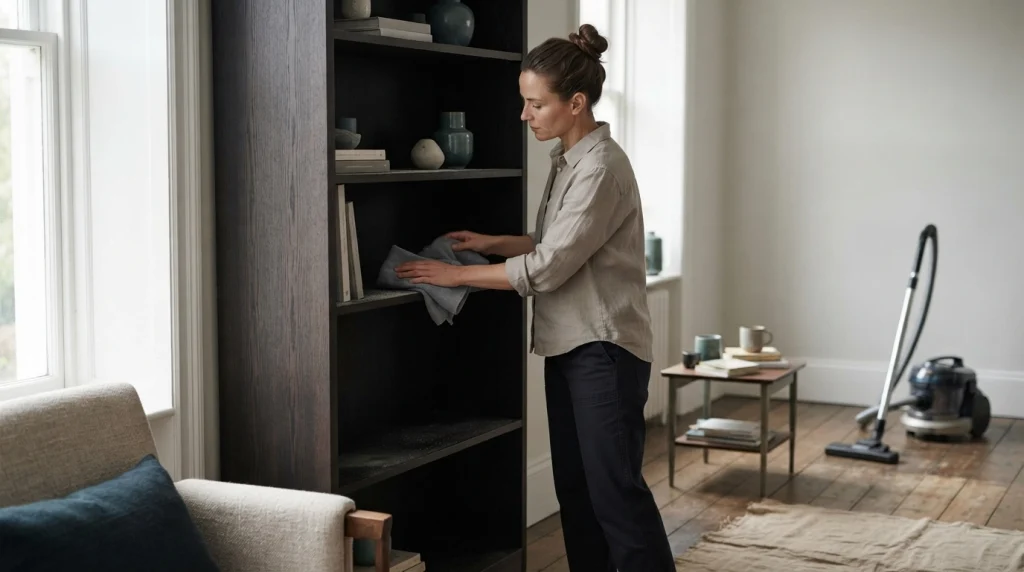
For an ordinary room, follow a top-to-bottom sequence: remove clutter, dust high surfaces, clean furniture and lower surfaces, and vacuum the floor last. If the floor also needs mopping, complete the dry cleaning first and mop afterward.
- Clear the area. Pick up loose items, clothing, toys, cables, and other objects that obstruct your cleaning tools.
- Dust high surfaces. Start with accessible ceiling fans, light fixtures, the tops of tall furniture, curtain rails, and high shelves. Use a suitable tool rather than shaking dust loose unnecessarily.
- Clean furniture and everyday surfaces. Dust tables, desks, shelves, window sills, and other reachable surfaces. Lift small objects when practical so you can clean underneath them.
- Work down to lower surfaces. Clean chair legs, baseboards, low shelves, and other areas where dust tends to collect.
- Vacuum upholstery and floor coverings. If upholstered furniture, rugs, or carpeted steps need attention, clean them before finishing the main floor, using appropriate attachments.
- Vacuum the floor. Cover the room systematically, including accessible edges and corners. Pay attention to the places where dust and debris have fallen.
- Mop suitable hard floors if needed. Once loose dirt has been removed, damp-mop according to the flooring manufacturer’s care instructions.
This sequence prevents one task from repeatedly undoing another. For example, cleaning a dusty bookcase after vacuuming may scatter debris onto the carpet, whereas cleaning the bookcase first lets you collect the fallen dust during the final vacuuming pass.
Does the Type of Dusting Method Change the Order?
Yes. The basic order remains the same, but the tool you use affects how much dust gets displaced and how much cleaning is needed afterward.
Use a slightly damp microfiber cloth for ordinary surfaces
A clean microfiber cloth that is only slightly damp can capture settled dust rather than simply pushing it around. The U.S. Environmental Protection Agency recommends damp dusting because moisture helps prevent settled dust from becoming airborne again.
Wring out excess water and use a cloth appropriate for the surface. Electronics, untreated wood, delicate finishes, and other moisture-sensitive items may need a dry cloth or a manufacturer-approved cleaning method instead.
Be careful with feather dusters and dry sweeping motions
A tool that merely scatters dust can leave more particles suspended in the air or spread them onto nearby surfaces. If a feather duster is your only option, use gentle movements and expect that some particles may settle later. A dust-trapping cloth or suitable vacuum attachment is generally a better choice for removing settled dust.
For more practical dust-control techniques, see this guide to vacuuming without spreading dust.
Should You Ever Vacuum Before Dusting?
Yes. Although dusting first is the usual choice for a full-room clean, vacuuming first can make sense when the floor has a substantial amount of loose debris that would otherwise get in the way.
- Large amounts of pet hair: Remove thick clumps of hair from the floor first if they interfere with dusting or are likely to be dragged around. Then dust the room and vacuum again at the end if necessary.
- Visible crumbs or tracked-in dirt: Pick up large, loose debris before detailed cleaning when it would be spread by foot traffic or cleaning tools.
- A quick floor-only cleanup: If the furniture and shelves are already clean, there may be no reason to dust the room before vacuuming.
- Dusting with a vacuum attachment: Some vacuums can collect dust directly from appropriate surfaces. Follow the equipment instructions and work from high to low, finishing with the floor.
The key distinction is between a quick cleanup and a complete cleaning session. If you are only removing crumbs from a kitchen floor, dusting the entire room first wastes time. If you are doing a thorough weekly clean, dusting before the final vacuum is usually more effective.
For a broader room-by-room routine, read how often you should vacuum your house.
How Can You Avoid Spreading Dust While Cleaning?
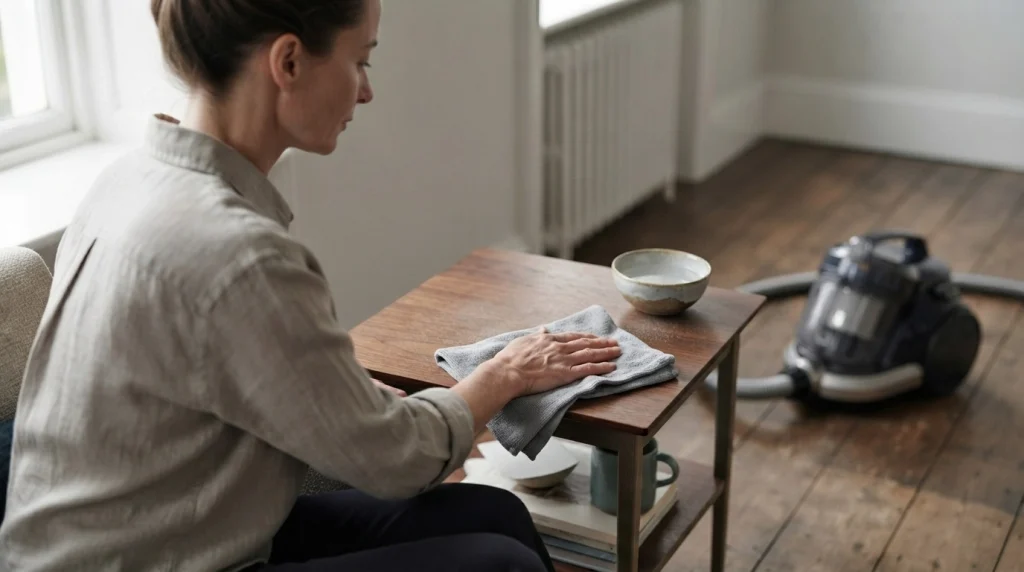
Cleaning order helps, but the way you remove and collect dust matters too. Dust can become airborne during ordinary activities, including walking, dusting, and vacuuming. Some particles then settle back onto furniture or floors.
- Use dust-trapping tools. A clean, slightly damp microfiber cloth is useful for many hard surfaces because it helps hold particles rather than displacing them.
- Move gently. Avoid vigorous brushing, shaking fabrics indoors, or sweeping motions that send visible dust into the air.
- Maintain your vacuum. Empty an overfilled bin or replace a full bag as directed. Inspect filters, seals, and hoses according to the manufacturer’s instructions.
- Choose suitable filtration. A vacuum with effective filtration, including a HEPA-filtered model where appropriate, can help reduce the amount of captured fine dust that escapes back into the room.
- Handle collected dust carefully. Empty a dusty container without shaking it, preferably away from the main living area when practical, and follow the vacuum’s instructions.
- Allow time for disturbed dust to settle. If you have used a method that visibly releases dust into the air, avoid immediately wiping every surface again. Let particles settle before checking whether additional cleaning is necessary.
The EPA’s guidance on indoor particulate matter and dust recommends frequent cleaning, damp dusting, and considering HEPA-filtered vacuuming to help control indoor dust. People with asthma or allergies should avoid remaining in the immediate area while vacuuming if the activity stirs up dust that could trigger symptoms.
What Common Cleaning Mistakes Leave Dust Behind?
Even when you dust before vacuuming, a few habits can reduce the effectiveness of your routine.
Vacuuming too early in the cleaning process
If you still have ceiling fans, shelves, furniture, or other dusty surfaces to clean, vacuuming the floor first creates an opportunity for rework. Complete the higher tasks before the final floor pass.
Using a dirty cloth
A heavily soiled cloth can redistribute dirt instead of collecting it effectively. Refold the cloth to expose a clean section, or replace it when it becomes dirty. Wash reusable cloths according to their care instructions.
Ignoring areas that collect hidden dust
Dust often accumulates on the tops of cabinets, behind accessible furniture, around baseboards, and along room edges. These areas do not necessarily need attention during every quick cleanup, but leaving them untouched during a thorough clean can allow debris to build up and spread later.
Assuming one vacuuming pass removes every particle
Vacuum performance varies with the machine, floor type, attachments, maintenance, and the debris being collected. Use the correct setting and move at a controlled pace. If dust appears to blow out of the machine, check its filter, bag or bin, and seals instead of assuming that vacuuming order alone is the problem.
Tip
For a full-room clean, remember one simple sequence: dust high surfaces, work downward, vacuum the floor, and mop suitable hard flooring last. If you have already vacuumed and then dusted, a quick final pass over the affected floor is usually enough.
Frequently Asked Questions
Should you dust before vacuuming carpet?
Yes. Dust shelves, furniture, and other raised surfaces before vacuuming carpet. This lets you collect loose particles that fall during dusting, although heavily soiled carpet may need additional passes.
Should you dust before vacuuming hardwood floors?
Yes, for a whole-room clean. Dust raised surfaces first, then vacuum with a floor head suitable for hardwood. Follow the flooring manufacturer’s instructions and use a compatible damp-mopping method if needed.
How long should you wait between dusting and vacuuming?
There is no fixed waiting time for every room. With a dust-trapping cloth and gentle technique, you can usually vacuum after finishing the surfaces. If your method visibly releases dust into the air, allow it to settle before completing the floor.
Should you dust or mop first?
Dust raised surfaces first, then remove loose debris from the floor before mopping. Vacuuming or sweeping before damp mopping helps prevent loose dirt from being dragged across the floor. Use a mop and cleaning solution appropriate for the flooring.
Does dusting before vacuuming help with allergies?
It can make cleaning more systematic, but the order alone does not eliminate allergens. Use a dust-trapping cloth, maintain effective vacuum filtration, and reduce exposure to disturbed dust. People with asthma or allergies may benefit from staying out of the area during vacuuming.
Should you dust every time you vacuum?
No. Dusting frequency depends on how quickly surfaces accumulate dust and how thoroughly you are cleaning. For a quick floor cleanup, vacuuming alone may be sufficient; for a whole-room clean, dusting first usually avoids unnecessary repeat work.
Conclusion
Dusting before vacuuming is the best default for a thorough room clean because it allows you to collect particles that fall from shelves, furniture, and other surfaces. Work from high to low, use tools that capture dust instead of scattering it, and finish by vacuuming the floor. Mop afterward when the flooring requires it.
You can reverse the order for a quick floor-only cleanup or to remove large amounts of loose debris before detailed cleaning. The goal is not to follow a rigid rule every time; it is to clean efficiently without repeatedly dirtying areas you have already finished.