
Why Your Vacuum Keeps Tripping a GFCI Outlet

Quick Answer
Your vacuum cleaner may keep tripping a GFCI outlet because of a damaged power cord, moisture inside the appliance, an electrical fault in the motor, or a problem with the outlet or wiring. Unplug the vacuum and inspect accessible parts for damage. If the GFCI trips repeatedly, stop using the vacuum until the cause has been identified. Never bypass the GFCI to keep cleaning.
A GFCI outlet is designed to interrupt power when it detects electricity flowing along an unintended path. If your vacuum trips it as soon as you plug the machine in, when you switch it on, or after several minutes of cleaning, the timing can help narrow down the problem.
The key distinction is that a GFCI trip is not necessarily the same as a circuit breaker overload. A GFCI responds to a ground-fault current imbalance, while an ordinary circuit breaker primarily protects against excessive current and short circuits. Either way, repeated trips deserve attention rather than repeated resets.
Why Does a Vacuum Cleaner Trip a GFCI Outlet?

The most likely explanations are electrical leakage from the vacuum, moisture, damaged insulation, or a fault in the outlet or circuit. The point at which the GFCI trips provides a useful starting clue, but it does not confirm a particular fault by itself.
- Damaged power cord or plug: Worn insulation, crushed sections, or damaged connections can create an electrical hazard.
- Moisture inside the vacuum: Water that reaches electrical components can create an unintended path for current.
- Motor or internal wiring fault: Deteriorated insulation, damaged windings, or another failing component may cause leakage.
- Problem with the outlet or circuit: A faulty GFCI, damaged wiring, or an installation issue may contribute to repeated trips.
- Combined leakage from connected equipment: Other appliances on the same protected circuit can contribute to the total leakage current.
A GFCI can trip even when the vacuum still appears to work normally. Do not assume the appliance is safe simply because suction remains strong or the motor sounds normal.
What Should You Check First?
Start with the vacuum disconnected from power. These external checks can help you identify visible problems without opening the machine or handling live electrical components.
- Unplug the vacuum. If the outlet or plug is wet, hot, scorched, or damaged, do not touch the affected area. Keep away and arrange qualified electrical assistance.
- Inspect the power cord. Look for cuts, crushed sections, exposed conductors, melted insulation, and damage where the cord enters the plug or vacuum body.
- Examine the plug. Check for discoloration, melted plastic, bent prongs, or other obvious damage. Do not use a damaged plug.
- Consider recent moisture exposure. Think about whether the vacuum was used on a damp floor, exposed to rain, cleaned with water, or stored in a wet area.
- Check for warning signs. Burning smells, sparks, unusual electrical buzzing, smoke, or a hot plug are reasons to stop using the appliance.
Do not remove the outlet cover, open the motor housing, or attempt internal wiring repairs as part of basic troubleshooting. A qualified technician can inspect the appliance or circuit using appropriate equipment.
Warning
Never bypass the GFCI, use an adapter to defeat its protection, or repeatedly reset it while the vacuum is connected. A trip may indicate a shock hazard that is not visible from the outside.
What Does the Timing of the GFCI Trip Tell You?
When the power interruption occurs can help you describe the fault to a repair technician. Use these patterns as clues, not as a substitute for electrical testing.
| When it trips | Possible explanation | Next step |
|---|---|---|
| Immediately when plugged in | A cord, plug, appliance, or circuit fault | Leave it unplugged and arrange inspection |
| When the motor starts | A fault associated with startup or internal components | Stop testing and seek appliance service |
| After several minutes | A heat-related or intermittent electrical fault | Do not keep running it to reproduce the trip |
| Only at one outlet | A possible outlet or circuit issue, or an interaction between the circuit and appliance | Ask an electrician to inspect the circuit |
For example, if the GFCI trips only after the motor has been running for a while, an intermittent fault may be involved. That does not prove the motor is defective, and repeatedly running the vacuum to confirm the pattern is not a safe diagnostic method.
Could the GFCI Outlet Be the Problem?
Yes. A worn or defective GFCI, a wiring fault, or another problem on the protected circuit can cause repeated interruptions. However, the outlet should not be blamed simply because it is the device that trips.
A GFCI can also protect other outlets downstream from it. If other appliances or receptacles lose power at the same time, the problem may involve the shared protected circuit rather than the vacuum alone.
Keep the following distinctions in mind:
- The vacuum trips multiple GFCI outlets: This raises concern about the vacuum or its cord, although the circuits themselves still need to be considered.
- Several appliances trip the same outlet: The GFCI or its circuit may need inspection.
- The outlet trips when nothing is connected: A fault in the outlet, wiring, or downstream circuit may be present.
- The ordinary circuit breaker trips instead: An overload, short circuit, or other electrical fault may be involved rather than a GFCI-only issue.
Do not repeatedly reset a GFCI that will not remain on. An electrician can determine whether the protective device, connected wiring, or another part of the circuit is responsible.
Can You Safely Test the Vacuum in Another Outlet?
Not if the vacuum has already caused repeated GFCI trips or shows signs of electrical damage. Moving a suspect appliance to another outlet may expose another circuit to the same fault, so it is not an appropriate way to keep testing a machine that may be unsafe.
If the cord is damaged, the plug is scorched, moisture may have entered the housing, or the vacuum smells burnt, leave it disconnected and arrange professional inspection.
If there are no visible warning signs but the GFCI has tripped repeatedly, the safest next step is still to have the appliance checked before further use. A technician can test insulation and internal electrical components without relying on repeated household trial and error.
For related symptoms, see our guides on why a vacuum cleaner trips a circuit breaker and how vacuum power cords become damaged. These problems can look similar, but the protective device involved changes what needs to be investigated.
When Should You Stop Troubleshooting and Call for Help?
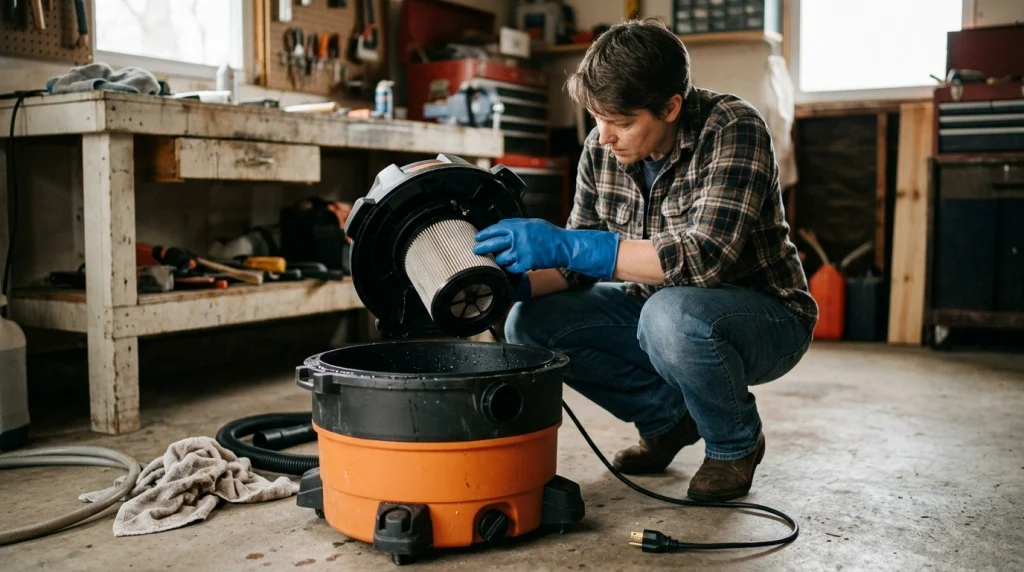
Stop using the vacuum immediately if you notice any of these warning signs:
- A burning or melting-plastic smell.
- Sparks, smoke, crackling, or unusual electrical buzzing.
- Exposed wires, a cracked plug, or melted insulation.
- A plug or outlet that is unusually hot or visibly scorched.
- Repeated GFCI trips, even after the vacuum has cooled.
- Water entering the motor or electrical compartment.
For appliance faults, contact the manufacturer or a qualified vacuum repair technician. For a suspect outlet, damaged household wiring, or a GFCI that trips with nothing connected, contact a qualified electrician.
The electrical safety guidance from Electrical Safety First’s vacuum cleaner advice recommends stopping use when electrical warning signs or repeated protective-device trips occur. The Electrical Safety Foundation International’s GFCI guidance also explains how these devices help protect people from electric shock.
Frequently Asked Questions
1. Does a GFCI trip mean my vacuum is dangerous?
Not every trip proves that the vacuum is defective, but repeated trips must be treated seriously. The cause could be the appliance, outlet, wiring, moisture, or a combination of factors. Leave the vacuum unplugged until the cause is identified.
2. Can a dirty vacuum filter trip a GFCI outlet?
A dirty filter primarily restricts airflow and may contribute to overheating in some models. It does not normally explain a ground-fault trip on its own. If the GFCI trips, investigate electrical safety rather than assuming filter maintenance will solve it.
3. Why does my vacuum trip the GFCI only when I turn it on?
The fault may occur when the motor or another electrical component becomes energized. Startup timing can help a technician narrow down the issue, but it cannot confirm which component has failed. Stop using the vacuum rather than repeatedly switching it on.
4. Can moisture make a vacuum trip a GFCI outlet?
Yes. Moisture inside the appliance, plug, or electrical connections can create a path for leakage current. Disconnect power if it is safe to do so, and do not operate the vacuum again until it has been appropriately inspected and confirmed safe.
5. Should I replace the GFCI outlet if my vacuum keeps tripping it?
Not automatically. The vacuum, outlet, or household wiring could be responsible. A qualified electrician can test the outlet and circuit, while an appliance technician can check the vacuum if the fault appears to follow the machine.
6. Is it safe to use a non-GFCI outlet instead?
Do not bypass required ground-fault protection to operate a vacuum that keeps tripping. The trip may be warning of an electrical fault, and removing protection does not fix the underlying problem. Have the appliance and circuit checked before using it again.
Conclusion
A vacuum cleaner that repeatedly trips a GFCI outlet may have a damaged cord, moisture exposure, a motor or wiring fault, or a problem with the outlet or circuit. The timing of the trip can help narrow down the possibilities, but it cannot establish the cause without proper testing.
Start with a safe external inspection and stop immediately if you notice heat damage, sparks, smoke, or a burning smell. Do not bypass the GFCI or keep resetting it to finish cleaning. Have a qualified appliance technician inspect a suspect vacuum and an electrician investigate a suspect outlet or circuit. Restoring safe operation matters more than getting the vacuum running again quickly.