Why Is My Vacuum Power Cord Damaged?

Quick Answer
A vacuum power cord usually gets damaged from repeated bending, pulling, crushing, abrasion, heat, or strain where the cord enters the plug or vacuum body. If you see split insulation, exposed wire, scorch marks, sparking, or a cord that becomes hot, stop using the vacuum and follow basic electrical safety guidance before arranging a proper repair or replacement.
Most common causes
- Pulling the cord: Yanking the cable instead of gripping the plug stresses the plug and internal connections.
- Sharp bending: Repeated tight bends can weaken the outer jacket and the wire strands inside.
- Crushing or pinching: Doors, furniture, wheels, and storage hooks can flatten or cut insulation.
- Vacuuming over it: A rotating brush, wheel, or floor head can scrape, nick, or tear the cord.
- Age and heat: Older insulation can stiffen, crack, or deform after years of use and poor storage.
What to do now
- Unplug the vacuum, inspect the full cord and plug, and do not keep using it if the insulation or electrical connection is damaged.
I’ve handled enough corded vacuums to know that cord damage rarely appears for no reason. The wear pattern usually points to the cause once you inspect the plug, the full cable, and the point where it enters the machine.
This guide explains what those patterns mean, when damage becomes unsafe, and what you can do next. As of 2026, the basic rule is still simple: a compromised mains power cord deserves more caution than a cosmetic scratch.
In This Guide
Why does a vacuum power cord get damaged?
Most vacuum cord damage comes from mechanical stress, not from the motor suddenly “sending too much power” through the cable. The cord gets bent, tugged, dragged, crushed, heated, or scraped during normal use and storage.
A damaged vacuum power cord is a cord whose plug, outer insulation, internal conductors, strain relief, or appliance connection is no longer physically intact and dependable.
Repeated bending breaks down the cord over time
The two highest-stress areas are usually beside the plug and where the cord enters the vacuum. These points flex every time you unwind, move, or store the machine.
If the cord is always bent at the same sharp angle, the outer jacket may split. The copper strands inside can also fatigue even before you see obvious surface damage.
Pulling the cord can damage hidden connections
Unplugging a vacuum by pulling the cable transfers force into the plug and conductor connections. A loose connection may later show up as intermittent power, heat, sparking, or a plug that feels unstable.
I always grip the plug body itself. It is one small habit that removes a lot of unnecessary strain.
Floor-level use exposes the cord to abrasion and crushing
- Vacuum wheels: Rolling over the cable can flatten the jacket or stress the internal wire.
- Brush rolls: Catching the cable with a powered floor head can scrape or cut insulation quickly.
- Doorways: Closing a door on the cable can pinch it into a narrow, damaged section.
- Furniture: Chair legs, sofas, and heavy cabinets can crush a cord left underneath them.
- Sharp edges: Metal shelving, baseboard corners, and rough flooring can wear through the outer jacket.
The U.S. Consumer Product Safety Commission has also warned that cords damaged by traffic, furniture, and tight wrapping can become shock or fire hazards.
What signs mean the vacuum cord is unsafe?
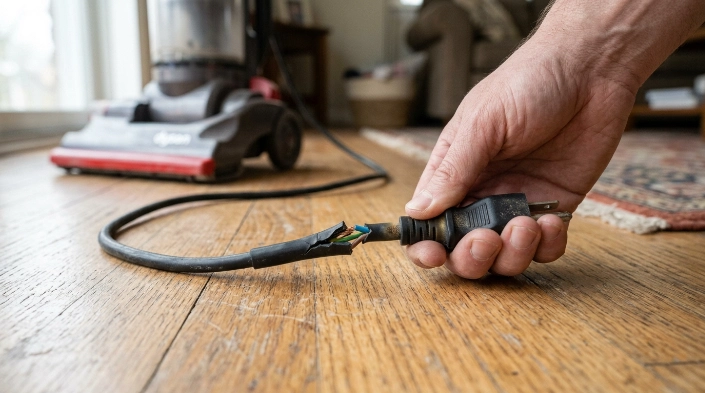
A cord is unsafe when damage reaches the insulation, conductors, plug, strain relief, or electrical connection. Visible copper is an obvious warning, but it is not the only one.
Inspect the entire cord while the vacuum is unplugged. Move slowly from the plug to the machine so small cuts or flattened areas do not get missed.
Stop-use signs I would not ignore
- Split or frayed insulation: The outer jacket has opened, peeled, or cracked.
- Exposed conductor: Metal wire is visible anywhere along the cable.
- Scorching or melting: Brown, black, bubbled, or softened material suggests overheating or arcing.
- Hot cord or plug: Unusual heat during normal operation can point to a connection or conductor problem.
- Sparks or buzzing: These can indicate a poor electrical connection or damaged insulation.
- Intermittent power: The vacuum cuts in and out when the cord moves or bends.
- Loose plug parts: Prongs, molded plug sections, or the cord entry feel unstable.
The NCBI electrical-injury guidance recommends replacing devices with damaged electrical cords. That is a useful safety baseline for household appliances.
A light surface scuff is different from a cut that opens the jacket. When I am unsure whether a mark is only cosmetic, I treat the cord conservatively and stop using the machine until it is checked.
Can I keep using a vacuum with a damaged cord?
If the power cord has cracked insulation, exposed wire, heat damage, sparking, or an unreliable connection, do not keep using the vacuum. Unplug it and arrange the correct repair or replacement.
Electrical damage can worsen with movement. A small split near a flexible point can spread each time the cord bends.
Why electrical tape is not a proper repair
Wrapping a damaged mains cord with household electrical tape may hide the defect without restoring the cord’s original strain relief, insulation system, or mechanical strength. It can also make future inspection harder.
CPSC consumer guidance advises replacing damaged cords or equipment rather than continuing to use frayed or cracked wiring. That is safer than treating tape as a permanent fix.
Expert Alert: If the repair involves opening the vacuum, replacing a fixed mains cable, testing insulation, or reconnecting internal wiring, use the manufacturer’s authorized service route or a qualified appliance repair technician.
What if the vacuum still works normally?
Normal suction does not prove the cord is safe. The motor can run while the cable has damaged insulation or a weakening conductor.
Do not use performance as your safety test. Condition of the cord and plug matters separately from cleaning performance.
How can I tell what caused the cord damage?
The location and shape of the damage often give the best clue. I check three zones first: the plug end, the middle length, and the machine-entry point.
| Damage pattern | Likely cause | What it suggests |
|---|---|---|
| Crack beside plug | Repeated bending or pulling | High strain at the plug-end flex point |
| Split where cord enters vacuum | Failed strain relief or repeated sharp bending | The cord-entry area needs professional inspection |
| Long scrape or shallow cut | Brush roll, sharp edge, or dragging | Abrasion occurred during cleaning or storage |
| Flattened section | Door, furniture, or wheel pressure | Internal conductors may also have been stressed |
| Melted or darkened area | Heat, arcing, or connection fault | Stop using the vacuum and have it assessed |
| Cuts in several places | Repeated rough handling or poor storage | The whole cord should be evaluated, not just one spot |
Some failures are also product-specific. A past CPSC vacuum recall involved cord insulation tearing where the cord attached to certain upright vacuums, which shows why the entry point deserves close attention.
If your cord looks damaged without any obvious accident, check the model’s support page and recall information. A defect, worn strain relief, or internal routing problem may be involved.
Should I repair or replace a damaged vacuum power cord?
The safest choice depends on whether the cord is detachable, permanently wired, or part of a retractable cord system. In every case, the replacement must match the vacuum’s electrical and mechanical requirements.
Detachable cords are usually simpler
If the manufacturer designed the cable to disconnect without opening the appliance, replace it only with the specified compatible cord. Match the connector, current rating, grounding arrangement, and manufacturer requirements.
Do not assume a cable is suitable because the plug happens to fit. Physical compatibility is not the same as electrical compatibility.
Fixed cords need a proper appliance repair
Many upright and canister vacuums use a fixed cord connected inside the housing. Replacing it can involve strain relief, terminals, routing, grounding, and insulation checks.
That is why I would not recommend a casual splice. A qualified repair technician can replace the complete cord assembly and inspect any heat or arcing damage nearby.
When replacement of the whole vacuum may make more sense
- Extensive heat damage: Melting or scorching extends into the vacuum body.
- Multiple electrical faults: The cord problem appears alongside sparking, burning smells, or repeated breaker trips.
- Unavailable parts: The correct cord assembly is no longer supported.
- High repair cost: A safe professional repair approaches the cost of a suitable replacement vacuum.
If the machine has shocked you, repeatedly trips a breaker, or smells electrically burnt, stop using it. The broader CPSC safety education resources reinforce the importance of taking electrical appliance defects seriously.
How can I prevent vacuum cord damage?
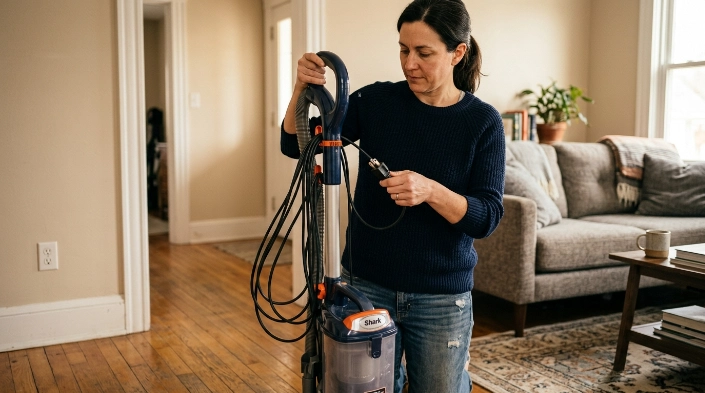
You can prevent much of this wear by changing how you unplug, route, and store the cable. The goal is to reduce sharp bends, crushing, abrasion, and tension.
Use the cord with less strain
- Unplug by the plug. Never jerk the cable from the wall outlet.
- Keep the cord behind you. This reduces the chance of running the floor head over it.
- Avoid tight corners. Do not drag the cable hard around furniture or door frames.
- Move the plug when needed. If the cord is stretched tight, use a closer outlet instead of pulling harder.
- Check before storage. Look for fresh cuts, hot spots, or crushed areas after cleaning.
Store it without sharp bends
Wrap the cord loosely around the vacuum’s cord hooks if the manufacturer provides them. Avoid cinching it tightly around the handle or forcing a sharp bend beside the plug.
For a retractable cord, guide the cable in rather than letting it whip across furniture. Stop and untwist it if the retractor starts pulling unevenly.
Do not trap the cable under the vacuum in a closet. A cord can look fine when stored, then emerge flattened after sitting under a wheel or base for weeks.
Section Takeaway: Gentle unplugging, loose storage, and keeping the floor head off the cable are the three habits that prevent most avoidable cord damage.
Frequently asked questions
Why is my vacuum cord cracking near the plug?
Cracking near the plug usually comes from repeated bending, pulling, or wrapping the cord too tightly. That area flexes often, so insulation fatigue tends to appear there first. Stop using the vacuum if the jacket is split or internal wire is visible.
Can a vacuum cleaner damage its own cord?
Yes. The vacuum can roll over its cable, catch it in a powered brush, or pull it around a sharp furniture edge. Upright floor heads are especially capable of scraping or cutting a cord if it crosses the cleaning path.
Is a small nick in a vacuum cord dangerous?
A superficial mark may only affect the surface, but a nick that cuts through the insulation can expose or weaken the electrical protection. If you cannot confidently tell how deep it is, unplug the vacuum and have the cord inspected.
Why does my vacuum turn off when I move the cord?
Intermittent power when the cord moves can indicate a broken conductor, loose plug connection, damaged strain relief, or internal wiring fault. Stop using the vacuum because continued flexing can worsen the failure.
Can I replace a vacuum cord myself?
A user-replaceable detachable cord may be straightforward when you use the exact specified replacement. A fixed mains cord usually requires opening the appliance and making safe electrical connections, so a qualified appliance repair technician is the better option.
Why is my vacuum plug getting hot?
A noticeably hot plug can point to a poor connection, damaged plug, worn outlet, or excessive resistance. Stop using the vacuum and unplug it safely. If the outlet is also hot, have the outlet checked by a qualified electrician.
Should I replace the vacuum if the cord is damaged?
Not always. A serviceable vacuum may only need a correct replacement cord assembly. Replacing the whole machine makes more sense when heat damage is extensive, multiple electrical faults exist, parts are unavailable, or safe repair is uneconomical.
If your vacuum cord is damaged, start by unplugging the machine and identifying the wear pattern. Do not let good suction or normal motor sound convince you that a compromised mains cable is harmless.
Once the cord is repaired or replaced correctly, change the handling habit that caused the damage. That is the best way to avoid seeing the same split, kink, or hot spot again.