
Why Is My Vacuum Cleaner Shocking Me? Safe Fixes

Quick Answer
Your vacuum cleaner is often shocking you because of static electricity created by friction between moving air, dust, plastic parts, and carpet fibers. Dry indoor air can make the problem worse. However, repeated tingling, burning smells, sparks, or shocks associated with damaged wiring may indicate an electrical fault. Stop using the vacuum immediately if you notice these warning signs.
Why Does My Vacuum Cleaner Give Me an Electric Shock?
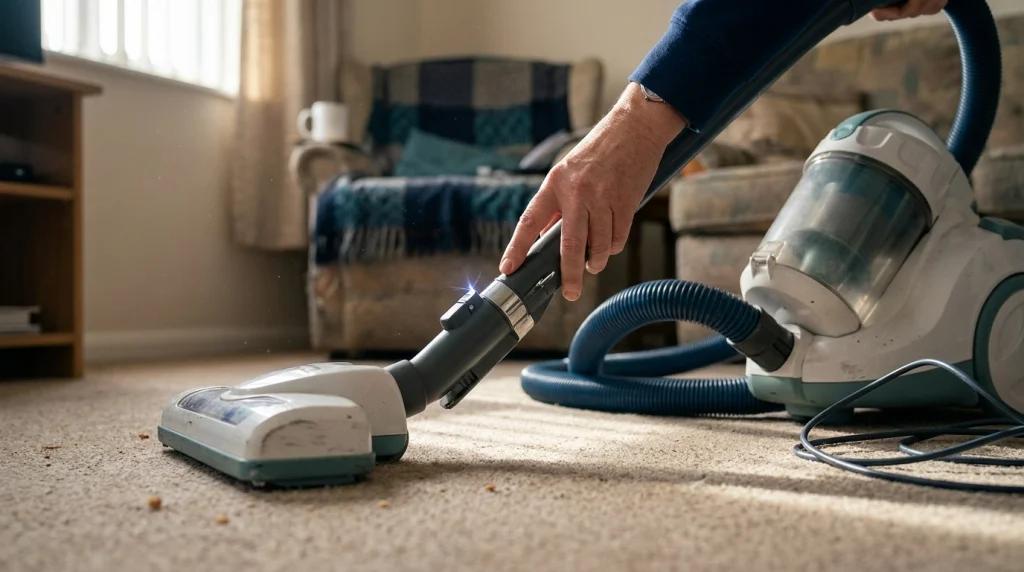
A vacuum cleaner can give you a brief electric-like zap when static electricity builds up during cleaning. This commonly happens when you vacuum synthetic carpets, move a plastic hose across surfaces, or operate the machine in a room with dry air.
Static electricity develops when materials interact and exchange electrical charge. Dust particles, plastic components, carpet fibers, and moving air can contribute to this buildup. When you touch the charged vacuum or another conductive object, the accumulated charge may discharge suddenly, producing a sharp, momentary shock.
However, not every shock is harmless. A faulty power cord, damaged insulation, or an internal electrical problem can expose you to dangerous current. The first priority is to distinguish a brief static zap from a possible electrical fault.
How Can You Tell Whether It’s Static Electricity or an Electrical Fault?
The sensation and circumstances surrounding the shock provide useful clues, although they cannot prove that an appliance is electrically safe.
| What you notice | Possible explanation | What to do |
|---|---|---|
| One brief snap after vacuuming carpet | Static electricity | If there are no warning signs, try the static-reduction measures below. |
| Continuous tingling while touching the housing | Possible current leakage or electrical fault | Stop using the vacuum and arrange professional inspection. |
| Shock accompanied by sparks, smoke, or a burning smell | Potential electrical damage or overheating | Stop immediately and keep the appliance out of service. |
| Shock occurs repeatedly even without carpet | Static or an electrical problem | Do not assume it is static; have persistent shocks investigated. |
A brief snap is more consistent with static electricity, while sustained tingling is more concerning. Nevertheless, a genuine electrical fault does not always produce obvious warning signs, so the sensation alone is not a reliable safety test.
What Are the Most Common Causes of Vacuum Cleaner Shocks?
1. Static electricity from carpets and plastic parts
Vacuuming creates repeated contact between different materials. As the floorhead moves over carpet and air carries dust through the hose, electrical charge can accumulate on the machine, its attachments, or your body.
Synthetic carpets and plastic hoses can make these discharges more noticeable. You may feel a zap when touching a metal wand, the vacuum body, or another conductive surface after cleaning.
2. Low indoor humidity
Dry air allows static charge to accumulate more readily because it reduces the rate at which charge dissipates from surfaces. This is why a vacuum that causes frequent zaps in one room may behave differently in a more humid environment.
When static is the likely cause and the appliance has no electrical warning signs, modestly increasing indoor humidity within a comfortable, healthy range may help. Avoid excessive humidity that encourages condensation or mold.
3. Dust buildup in the bin or filter
Dust and debris moving through a vacuum can contribute to static buildup. An overloaded dust container or poorly maintained filter may also interfere with normal airflow, although a dirty filter alone does not establish the cause of an electric shock.
Turn off and unplug the vacuum before cleaning its accessible parts. Follow the manufacturer’s instructions for emptying the bin, replacing the bag, and cleaning filters. Our guide to maintaining a vacuum cleaner explains how to inspect these components safely.
4. Damaged power cords or internal insulation
A cut, frayed, crushed, or overheated power cord can expose conductors or compromise electrical insulation. Internal wiring and motor insulation can also deteriorate with age, wear, or damage.
If electricity reaches a conductive part that you touch, the resulting shock can be dangerous. A cord that looks intact does not rule out internal damage.
5. A grounding or electrical protection problem
Some appliances use protective grounding to help carry fault current safely away from exposed conductive parts. If a required ground connection is missing, damaged, or incorrectly wired, electrical protection may be compromised.
Not every vacuum uses the same grounding design. Some are double-insulated and do not require a protective earth connection. Never modify a plug, remove a grounding pin, or add an improvised ground wire to solve a shock problem.
How Can You Stop Your Vacuum Cleaner From Giving Static Shocks?
If the shocks are brief, occur mainly after vacuuming carpet, and there are no signs of electrical damage, these measures may reduce static buildup. They are not a substitute for electrical inspection if the cause is uncertain.
- Switch off and unplug the vacuum before inspecting it. Check the cord, plug, housing, hose, and accessible attachments for damage. Do not handle exposed wiring or open the motor housing.
- Empty the dust container or replace the bag as directed. Remove accumulated dust without shaking debris around the room. Refit the container or bag correctly.
- Clean the filter according to the manual. Wash it only if the manufacturer identifies it as washable, and let it dry completely before reinstalling it.
- Reduce static-generating conditions. If the problem appears limited to static, consider a suitable indoor humidifier and review the manufacturer’s guidance for your vacuum and flooring.
- Check for model-specific instructions. Some manufacturers provide particular recommendations for static discharge. Follow those instructions only when the appliance shows no signs of an electrical fault.
For example, Philips’ vacuum-cleaner guidance identifies static buildup in low-humidity conditions and recommends appropriate maintenance and humidity measures.
Warning
Do not keep using a vacuum that causes sustained tingling, produces sparks, smells of burning, has a damaged cord, or repeatedly trips a protective electrical device. Disconnect power only if you can do so safely. If there is smoke, fire, or an immediate electrical hazard, keep away and seek appropriate emergency assistance.
What Should You Check Before Using the Vacuum Again?
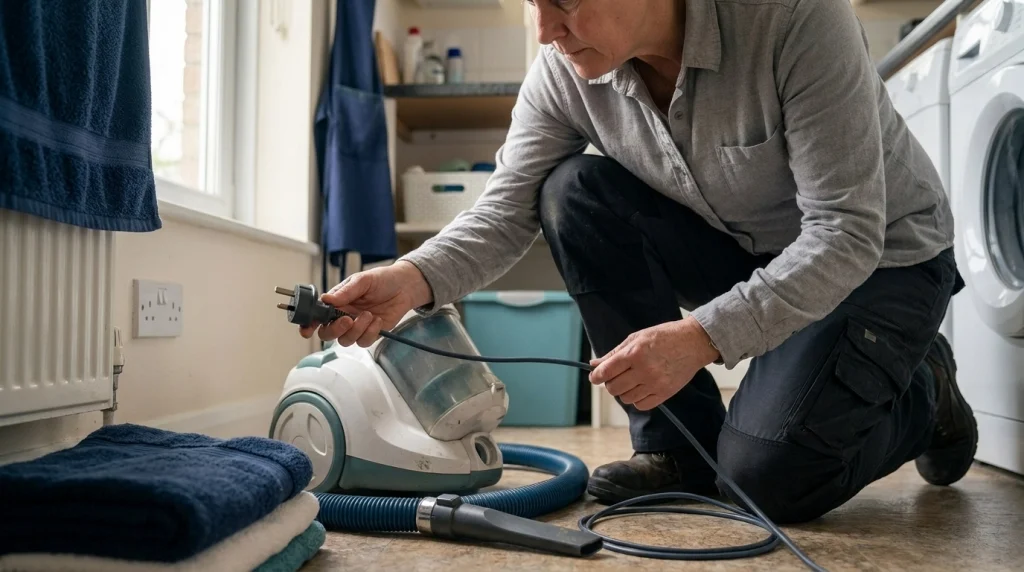
After an isolated static zap, a visual inspection may help identify obvious damage. After a suspected electrical shock, however, do not simply restart the vacuum to see whether the problem disappears.
- Power cord: Look for cuts, exposed conductors, crushed sections, melted areas, or damaged strain relief near the plug and machine.
- Plug and socket: Look for scorching, looseness, discoloration, or signs of overheating. Do not use a damaged outlet.
- Housing and attachments: Check for cracks, missing covers, or damage around accessible electrical connections.
- Electrical protection: If a breaker or residual-current protection device trips repeatedly, leave the appliance disconnected and have the cause investigated.
The Electrical Safety Foundation International’s appliance safety guidance advises stopping the use of damaged appliances and arranging repair or replacement when necessary.
If the inspection reveals damage, or if the shocks persist despite reasonable static-reduction measures, have the vacuum assessed by a qualified appliance repair technician. An electrician may also be needed if the outlet, wiring, or grounding is suspect.
Can a Vacuum Cleaner Shock Damage You?
A typical static discharge is brief and usually causes little more than a startling sensation. An actual electrical shock is different: its consequences depend on factors such as current, duration, and the path electricity takes through the body.
Do not dismiss a shock as harmless if you experience persistent pain, burns, numbness, weakness, or other symptoms. Seek prompt medical assessment when symptoms follow a suspected electrical injury. Severe symptoms, loss of consciousness, chest pain, or breathing difficulties require emergency medical help.
The safest decision is straightforward: treat an occasional snap after carpet cleaning as a possible static problem, but treat sustained tingling or shocks associated with damage as a potential electrical hazard until the cause is established.
Frequently Asked Questions
Why does my vacuum shock me only when I clean carpet?
Carpet fibers rubbing against the floorhead and your movement across the floor can generate static electricity. Synthetic carpet and dry indoor air may make the buildup more noticeable. If the shock is persistent or accompanied by warning signs, stop using the vacuum and have it checked.
Why does my vacuum shock me when I touch the metal tube?
The metal tube may discharge static that has accumulated on the vacuum or your body. However, a metal component can also expose you to an electrical fault, so repeated or sustained tingling should never be assumed harmless.
Can a cordless vacuum give you a static shock?
Yes. Cordless vacuums can accumulate static through friction involving dust, plastic parts, and carpet fibers. Because they are battery-powered during operation, the absence of a mains cord does not eliminate every electrical or battery-related hazard.
Should I use an anti-static spray on my vacuum?
Only use a product if it is suitable for the specific surface and approved by the vacuum or flooring manufacturer. Never spray liquids into the motor, vents, electrical connections, or dust chamber unless the instructions explicitly permit it.
Why does my vacuum shock me even on hard floors?
Static can develop from dust movement, clothing, footwear, and other material interactions, even without carpet. If shocks occur repeatedly on different surfaces, especially while touching the running appliance, stop using it until the cause has been checked.
When should I replace my vacuum instead of repairing it?
Replacement may make more sense when electrical damage is extensive, safe repair is impractical, or a qualified technician determines that the machine cannot be restored economically and safely. Do not continue using a vacuum with an unresolved electrical fault simply because it still runs.
Conclusion
A vacuum cleaner that shocks you is often building up static electricity, especially when you clean synthetic carpets in dry conditions. Emptying the dust container, maintaining the filter correctly, and following the manufacturer’s static-reduction advice may help.
However, never assume every shock is harmless. Sustained tingling, damaged wiring, sparks, burning smells, or repeated electrical trips are reasons to stop using the appliance and arrange an appropriate inspection. If you cannot confidently distinguish static from an electrical fault, leave the vacuum disconnected until it has been checked. Preventing another shock is less important than making sure the appliance is safe to operate.