
Winter Vacuum Storage Tips: How to Protect Your Vacuum in Cold Weather

Quick Answer
For safe winter vacuum storage, empty and clean the vacuum, dry every washable part completely, protect the cord and hose, and keep the machine in a dry indoor location whenever possible. Moisture control matters during cold weather, and the EPA recommends keeping indoor humidity around 30% to 50%.
Quick winter storage steps
- Empty it: Remove dust and debris from the bin or check the disposable bag.
- Clean it: Remove hair, string, and debris from the brush roll, hose, wand, and floor head.
- Dry it: Let washed filters, bins, tanks, and tools dry completely before reassembly.
- Protect it: Wrap cords loosely and store hoses without sharp bends or crushing pressure.
- Keep it indoors: Choose a dry closet or utility area instead of an exposed garage or shed when possible.
- Check the battery: Follow the manufacturer’s winter storage instructions for cordless vacuum batteries.
Winter changes how I think about vacuum cleaner storage. Cold rooms, damp basements, condensation, and unused appliances can create home-hygiene problems that barely matter during normal weekly use.
The good news is that winter vacuum storage doesn’t need to be complicated. A clean, dry machine in a stable indoor location is the safest starting point for most households.
In This Guide
- What do winter vacuum storage tips protect against?
- How should you prepare a vacuum for winter storage?
- Where is the best place to store a vacuum in winter?
- Can you store a vacuum in a garage or basement during winter?
- How should winter storage change by vacuum type?
- What winter vacuum storage mistakes should you avoid?
- Frequently asked questions
What Do Winter Vacuum Storage Tips Protect Against?
Winter vacuum storage protects the cleaner from moisture, temperature extremes, trapped dirt, physical damage, and careless battery storage. These risks become more important when a vacuum sits unused for weeks or months.
A winter vacuum storage routine is simply the process of cleaning, drying, protecting, and positioning a vacuum before a period of cold-weather storage.
Why is moisture such a concern?
Moisture deserves the first check because winter often creates large temperature differences between indoor and unheated spaces. Condensation can appear when moist air contacts a colder surface.
The EPA recommends controlling indoor relative humidity and generally identifies the 30% to 50% range as desirable for homes. Its mold and moisture guidance also emphasizes drying wet materials promptly.
- Damp filters: Never put a washed filter back into storage while it still feels wet.
- Wet collection tanks: Empty and dry wet-dry vacuums before closing them for the season.
- Condensation: Watch unheated garages, sheds, basement walls, and other cold surfaces.
- Leaks: Keep electrical appliances away from leaking pipes, damp walls, and water-entry areas.
What happens to the dust already inside?
A vacuum can contain fine household dust, hair, pet dander, pollen, and other debris long after the visible floor looks clean. Storing that material for months gives you a dirtier machine to reopen later.
The EPA notes that household dust can contain pollen, mold spores, pet dander, dust-mite material, hair, and other particles. Its indoor particulate matter guidance also discusses regular vacuuming and HEPA filtration as dust-control measures.
HEPA means high-efficiency particulate air. If your vacuum uses a HEPA filter, follow the manufacturer’s instructions for cleaning, replacing, and storing that specific filter.
Section Takeaway: Winter storage is mainly about keeping dirt and moisture out while protecting the vacuum from harsh environmental conditions.
How Should You Prepare a Vacuum for Winter Storage?
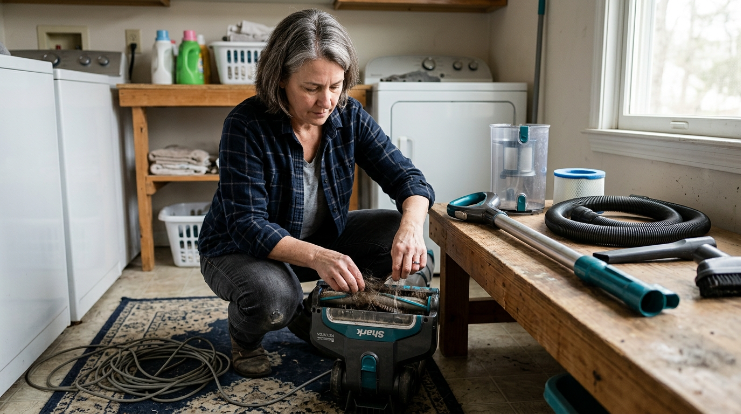
Prepare a vacuum for winter by cleaning the collection system, checking the airflow path, drying washable parts, and protecting anything that can bend or become damaged. I treat this as a short maintenance session rather than simply putting the vacuum out of sight.
1. Empty the dustbin or check the bag
Start with the material the vacuum collected. Empty a bagless bin outside or over a suitable trash container when practical.
For a bagged vacuum, check the bag and replace it if your machine’s instructions call for replacement. There’s little benefit in storing a machine packed with old household debris.
2. Clear the brush roll and intake
Turn the vacuum off and unplug a corded model before touching its brush area. Remove the battery first when the manufacturer instructs you to do so.
- Brush roll: Remove wrapped hair, thread, carpet fibers, and string.
- Floor head: Look for larger debris lodged near the intake.
- Wand: Check that the air passage is clear.
- Hose: Remove visible blockages without puncturing or sharply bending it.
- Wheels: Remove hair or fibers that prevent them from turning normally.
3. Clean filters according to the manual
Not every vacuum filter is washable. Check the owner’s manual before putting any filter under water.
If the filter is washable, give it enough drying time before reinstallation. “Almost dry” isn’t good enough for long-term storage.
4. Dry every washable component
This is the step I pay the most attention to before seasonal storage. Water can hide around seams, filter folds, hose cuffs, collection tanks, and attachment joints.
- Leave washable filters exposed to airflow until completely dry.
- Wipe moisture from clear dustbins and collection tanks.
- Drain wet-dry vacuum hoses thoroughly.
- Check hollow attachments for trapped water.
- Reassemble the vacuum only after washed pieces are dry.
Expert Alert: If your storage room has widespread mold, persistent water intrusion, damaged outlets, or unsafe electrical wiring, address the underlying problem with a qualified professional before storing electrical appliances there.
5. Protect the cord, hose, and attachments
Wrap a power cord loosely around the vacuum’s cord hooks. Avoid pulling the cable tight around the machine or forcing a sharp bend near the plug.
Flexible hoses also need room. I prefer a relaxed curve instead of squeezing a hose behind boxes where it can stay crushed for months.
- Cords: Use broad, loose loops.
- Hoses: Avoid sharp folds or heavy objects on top.
- Wands: Store where they cannot fall or bend.
- Attachments: Keep tools together in their onboard holders or a small container.
Section Takeaway: Put a clean and completely dry vacuum into storage, not the exact machine you finished cleaning the house with.
Where Is the Best Place to Store a Vacuum in Winter?
The best winter storage location is usually a dry indoor closet, cleaning cabinet, utility room, or other protected interior area. The exact location matters less than its moisture, temperature, and physical conditions.
As of 2026, my default is still simple: use normal indoor conditions whenever the vacuum’s size and your available space allow it.
| Storage location | Winter suitability | Main concern | What to check |
|---|---|---|---|
| Indoor closet | Excellent | Crowding | Keep hoses and cords uncrushed |
| Utility room | Good | Plumbing or laundry moisture | Keep away from leaks and condensation |
| Dry finished basement | Good to conditional | Humidity | Aim for roughly 30–50% indoor RH where practical |
| Unheated garage | Conditional | Cold, condensation, pests | Check manufacturer storage limits |
| Outdoor shed | Usually poor | Temperature and moisture swings | Prefer indoor storage |
Should you cover a stored vacuum?
A clean cover can keep settled dust off the appliance during several months of non-use. A loose, dry cover is usually more sensible than trapping a possibly damp machine inside an airtight plastic bag.
If you use a cover, make sure the machine is already dry. Covering the vacuum doesn’t solve a damp storage environment.
Should the vacuum sit directly on a basement floor?
I avoid placing an appliance in a basement location known for seepage or occasional standing water. A shelf or stable raised platform can add protection, but it doesn’t fix a moisture problem.
Check the surrounding walls and floor before winter. Condensation, dampness, water stains, and musty odors are reasons to choose another location.
Section Takeaway: A dry indoor closet is the lowest-risk default, while basements and garages require a closer look at humidity, leaks, and temperature.
Can You Store a Vacuum in a Garage or Basement During Winter?
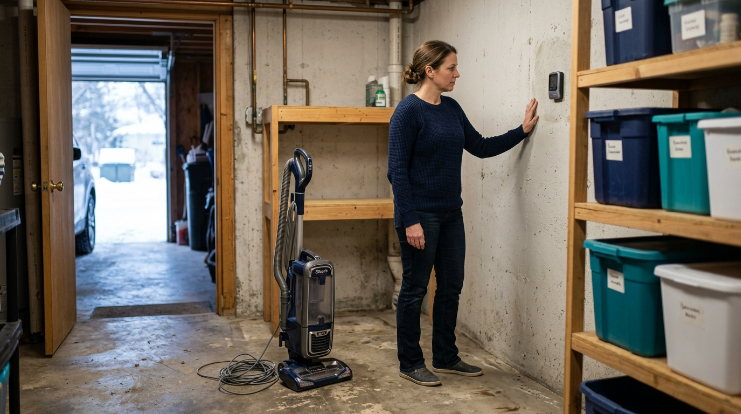
You can store a vacuum in a garage or basement during winter only when the location stays dry and remains within the manufacturer’s storage limits. An indoor location is safer when the space freezes, develops condensation, floods, or stays persistently damp.
When can garage storage work?
A garage may work for a corded vacuum if it remains dry and protected. Temperature changes still deserve attention, especially with electronics, plastics, and rechargeable batteries.
- There are no roof or wall leaks.
- The floor stays dry around the storage area.
- Condensation does not regularly form nearby.
- Boxes, tools, and bicycles cannot fall against the vacuum.
- Rodents or pests cannot easily reach exposed cables and hoses.
- The manufacturer allows storage under the temperatures you experience.
What should you do with a cordless vacuum battery?
Cordless vacuums deserve extra care because most modern models rely on rechargeable lithium-ion batteries. There isn’t one universal winter charge percentage that applies to every vacuum.
Follow the instructions for your exact battery and charger. The EPA’s lithium-ion battery guidance recommends room-temperature storage and avoiding long periods of extreme heat or cold.
- Use normal indoor conditions: Avoid freezing sheds, hot vehicles, and heat sources.
- Keep it dry: Protect the battery and charger from condensation and water.
- Check the manual: Follow model-specific long-term charge recommendations.
- Inspect first: Don’t continue using a battery that is swollen or visibly damaged.
What if a cold vacuum is brought back indoors?
A vacuum stored in a cold space can become much colder than the air inside your home. Moving it suddenly into warmer, humid air can create condensation on cold surfaces.
If you see moisture, don’t immediately plug in or charge the machine. Let it reach normal indoor conditions and make sure it is dry first.
Section Takeaway: Garage storage is conditional, and cordless batteries make temperature control more important. When in doubt, move the vacuum or battery indoors.
How Should Winter Storage Change by Vacuum Type?
The clean-and-dry rule applies to every vacuum, but each design has different vulnerable parts. Pay attention to the components unique to your machine.
Upright vacuum
Store an upright vacuum in its normal locked position when the manual permits it. Make sure it cannot tip into a door, shelf, or nearby appliance.
- Clear hair from the brush roll.
- Empty the bin or inspect the bag.
- Wrap the cord loosely.
- Secure onboard hoses and tools.
- Keep heavy objects off the cleaner head.
Canister vacuum
The flexible hose needs the most attention on many canister models. Avoid crushing it underneath the vacuum or forcing it into a tight bend.
Keep the wand and attachments beside the machine rather than scattered through the storage area. A small labeled bin works well when the vacuum lacks onboard tool storage.
Cordless stick vacuum
Use the manufacturer-approved wall dock, floor stand, or storage position. Check the battery instructions if the machine will remain unused for an extended period.
Keep the dock and charger away from damp walls, leaking plumbing, radiators, and unheated locations with large temperature swings.
Robot vacuum
Clean the robot’s dustbin, brushes, wheels, sensors, and charging contacts according to its instructions. Long-term battery guidance varies by brand and model.
If the robot won’t operate through winter, consult its manual before disconnecting or storing the dock. Don’t assume another cordless appliance’s battery routine applies.
Wet-dry vacuum
A wet-dry vacuum needs the most careful drying routine. Empty the tank, hose, wet-use filters, and attachments before long-term storage.
Inspect areas where water can hide before closing the tank. Trapped moisture is easy to miss around drain plugs, hose cuffs, seams, and filter assemblies.
Expert Alert: If a wet-dry vacuum, charger, plug, or motor assembly has suffered water damage beyond normal approved wet pickup, stop using it and have the electrical safety issue evaluated appropriately.
Section Takeaway: Match the storage routine to the vacuum design, especially when batteries, long hoses, docking stations, or wet collection systems are involved.
What Winter Vacuum Storage Mistakes Should You Avoid?
The biggest mistakes are storing the vacuum damp, choosing an exposed location, and ignoring the battery or flexible parts. Most of them are easy to prevent.
- Storing a wet filter: Let washable filters dry completely before reinstalling them.
- Leaving the bin full: Remove accumulated household debris before seasonal storage.
- Using a damp basement corner: Move the vacuum away from moisture and water-entry areas.
- Leaving a cordless battery in extreme cold: Follow the manufacturer’s limits and prefer normal indoor conditions.
- Wrapping the cord tightly: Use loose loops without sharp bends near the plug.
- Crushing the hose: Leave flexible hoses in a relaxed position.
- Stacking boxes on the vacuum: Give the cleaner a protected, stable storage zone.
- Sealing a damp machine in plastic: Dry it completely before using any storage cover.
- Ignoring condensation: Allow a cold machine to acclimate and dry before powering or charging it.
What should you check when taking the vacuum out in spring?
Do a short inspection before the first cleaning session. This takes only a few minutes and catches storage problems before you start vacuuming.
- Check for moisture: Look for condensation, dampness, or water marks.
- Smell the vacuum: Investigate unexpected musty or burnt odors before use.
- Inspect the cord: Look for damaged insulation, a bent plug, or obvious cuts.
- Check the hose: Make sure it wasn’t crushed during storage.
- Inspect filters: Confirm they are installed correctly and ready for use.
- Check moving parts: Make sure wheels and brush areas move normally.
- Inspect the battery: Stop if a rechargeable battery is swollen, leaking, or visibly damaged.
The CDC also recommends addressing moisture problems when mold appears in a home. Its mold cleanup guidance explains when extra protective measures may be needed.
Section Takeaway: A good winter-storage routine ends with a spring inspection. Don’t automatically power up a machine that looks damp, damaged, or abnormal.
Frequently Asked Questions About Winter Vacuum Storage
Can I leave my vacuum in an unheated garage all winter?
Only if the garage remains dry and temperatures stay within the vacuum manufacturer’s storage limits. I prefer indoor storage when the garage freezes, develops condensation, or contains a rechargeable vacuum battery.
Can cold weather damage a cordless vacuum battery?
Long periods of extreme cold are not ideal for lithium-ion batteries. EPA guidance favors room-temperature storage, while your vacuum manufacturer should provide the specific limits and long-term charging instructions for your model.
Should I empty my vacuum before storing it for winter?
Yes. Empty a bagless dustbin and inspect a bagged vacuum before storage so old dust, hair, pet debris, and other material don’t remain unnecessarily inside the machine for months.
Should I wash the filter before winter storage?
Wash a filter only when the manufacturer identifies it as washable. If you do wash it, let it dry completely before putting it back into the vacuum or closing it inside a storage container.
Is a basement a good place to store a vacuum?
A dry, finished basement can be suitable. Avoid areas with persistent high humidity, condensation, leaks, flooding risk, wet walls, or known mold problems.
Can I wrap my vacuum in a plastic bag for winter?
A cover can keep dust off a clean vacuum, but avoid tightly sealing a machine that may contain moisture. Make sure the vacuum, filters, bin, hose, and attachments are completely dry first.
How do I restart a vacuum after several months in storage?
Inspect the cord, hose, filters, brush roll, battery, and surrounding storage area first. Let a cold vacuum reach normal indoor conditions and make sure there is no condensation before plugging it in or charging it.
Final Takeaway: The best winter vacuum storage routine is simple: clean it, dry it, protect the flexible parts, and keep it somewhere stable and moisture-controlled. Before the coldest part of winter arrives, give your vacuum a dedicated indoor storage spot so it is clean and ready when you need it again.