
Why Is My Vacuum Making a Burning Smell?

Quick Answer
A vacuum usually makes a burning smell because its brush roll is jammed, its drive belt is slipping, airflow is restricted, or the motor or electrical system is overheating. Switch it off and disconnect the power before checking anything. If the vacuum is also unusually hot, start with this guide to why a vacuum overheats.
Most likely causes
- Tangled brush roll: Hair or string creates friction and can produce a hot, rubbery smell.
- Slipping belt: A stretched, jammed, or damaged belt may heat against the pulley.
- Blocked airflow: A full bin, clogged hose, or dirty filter can make the vacuum run hotter.
- Motor trouble: A sharp electrical or burnt-insulation odor may indicate an internal fault.
- Battery problem: Abnormal heat, swelling, smoke, or a chemical odor from a cordless battery needs immediate attention.
When to stop troubleshooting
- Do not restart a vacuum that produces smoke, sparks, melting plastic, damaged-wire smells, or repeated electrical burning odors.
A burning smell from a vacuum is one warning I never ignore. Sometimes the fix is as simple as removing a wad of hair from the roller.
Other times, that smell points to overheating or an electrical problem. This guide shows you how to tell the difference safely.
In This Guide
- Why Does My Vacuum Smell Like It Is Burning?
- Should You Stop Using a Vacuum That Smells Burnt?
- What Does Each Type of Vacuum Burning Smell Mean?
- How Do You Fix a Vacuum With a Burning Smell?
- When Does a Burning-Smell Vacuum Need Repair?
- How Can You Prevent Vacuum Burning Smells?
- Vacuum Burning Smell FAQ
Why Does My Vacuum Smell Like It Is Burning?
A vacuum smells burnt when friction, restricted airflow, or an electrical problem creates abnormal heat. The location and character of the smell can help narrow down the cause.
Definition: A vacuum burning smell is an abnormal hot, rubbery, plastic, dusty, or electrical odor produced while the cleaner is operating or immediately after use.
A jammed brush roll creates friction
The brush roll spins against carpet while the vacuum runs. Hair, thread, pet fur, and carpet fibers can wrap tightly around it.
I usually check the two ends of the roller first. I have opened vacuum heads that looked clean in the middle but had dense rings of hair hidden around both bearings.
- Hair and thread: These tighten around the roller shaft.
- Carpet fibers: Long fibers can wrap around rotating parts.
- Small objects: A sock, toy, or fabric edge can stop the roller suddenly.
- Seized end caps: Debris can stop the roller from turning freely.
If the brush roll is difficult to rotate, follow the detailed steps for cleaning a vacuum brush roll before using the machine again.
A slipping belt may smell like burnt rubber
Many upright vacuums use a rubber belt to drive the brush roll. If the roller jams while the motor keeps turning, the belt can rub against its pulley.
The result is often a sharp rubber smell. You may also notice that the brush roll has stopped spinning.
- A stretched belt can slip.
- A seized brush roll can overload the belt.
- A misaligned belt can rub against nearby parts.
- A worn belt may develop cracks, glazing, or damaged edges.
Do not keep running the machine to see whether the smell disappears. More friction usually creates more heat.
Restricted airflow can overheat the vacuum
A vacuum motor depends on its designed airflow path while operating. A packed bin, full bag, blocked hose, or dirty filter can reduce that airflow.
A clogged vacuum filter can contribute to overheating, especially when other airflow restrictions are present.
The U.S. EPA also recommends maintaining vacuum bags and filtration systems as directed when controlling household dust. See the EPA’s indoor particulate matter guidance.
Section Takeaway: A rubber smell points me toward the brush roll and belt first, while a hot dusty smell makes me inspect airflow. A sharp electrical odor deserves much more caution.
Should You Stop Using a Vacuum That Smells Burnt?
Yes. Switch the vacuum off when a new burning smell appears, then disconnect it from power before inspecting it.
For a cordless machine, turn it off and follow the manufacturer’s instructions for safely disconnecting a removable battery if appropriate.
Stop immediately for these warning signs
- Visible smoke: Do not restart the vacuum.
- Sparks: Stop use and keep the appliance disconnected.
- Melting plastic: Heat may be damaging electrical or structural components.
- Damaged cord: Frayed, cracked, exposed, or unusually hot wiring needs professional attention.
- Electrical odor: A persistent burnt-insulation smell may indicate overheated electrical components.
- Battery swelling: Stop using a cordless vacuum with a swollen or damaged battery.
CDC electrical-safety guidance says burning odors associated with electrical equipment can indicate a serious electrical hazard. The CDC electrical hazard guidance recommends shutting down electrical systems when burning odors accompany possible electrical faults.
The U.S. Consumer Product Safety Commission also provides broader guidance for household electrical products and associated hazards.
Expert Alert: Do not open a vacuum motor, rewire damaged electrical components, bypass a thermal protector, or attempt lithium-ion battery repair unless you are qualified to do that work. Use an authorized service center or qualified appliance technician.
What Does Each Type of Vacuum Burning Smell Mean?
The odor alone cannot prove which part has failed. However, matching the smell with other symptoms can make troubleshooting much faster.
| Smell or symptom | Common area to inspect | Other clue | First action |
|---|---|---|---|
| Burnt rubber | Belt or brush roll | Brush stops or squeals | Disconnect power and inspect roller movement |
| Hot dusty smell | Filter, bin, bag, hose | Weak suction or hot exhaust | Restore airflow |
| Hot plastic smell | Brush housing, wiring, motor area | Discoloration or melting | Stop use |
| Electrical or burnt-insulation smell | Motor, cord, electronics | Sparks, smoke, abnormal sound | Professional inspection |
| Burning smell plus automatic shutdown | Airflow system or motor | Machine becomes unusually hot | Cool completely and diagnose before restart |
A vacuum that smells hot and repeatedly shuts itself off may be protecting itself from excessive heat. That still means you need to find the cause before continuing.
If suction has also dropped, check for a recurring blockage. My guide to why a vacuum keeps clogging covers the full airflow path.
How Do You Fix a Vacuum With a Burning Smell?
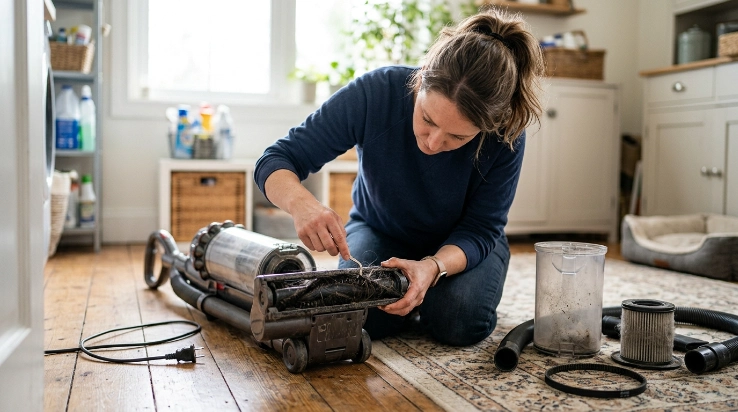
Start with the safest external checks. Do not open the motor housing or electrical system during basic household troubleshooting.
1. Disconnect the vacuum
Unplug a corded vacuum before touching the floor head, roller, hose, filters, or belt area. Keep your hands away from powered moving parts.
2. Let the vacuum cool
Do not immediately restart an unusually hot machine. Give the vacuum time to cool in a safe, open area away from combustible materials.
3. Empty the dust container
- Empty a bagless bin before debris becomes tightly packed.
- Replace a disposable bag when required by the manufacturer.
- Check the bin inlet for compacted hair and dust.
4. Inspect the filters
Look for filters coated with fine dust. Clean only washable filters, and only when the manufacturer permits washing.
Never reinstall a washed filter while it is damp. Moisture inside a dry vacuum can create new problems.
5. Check the hose and air path
- Inspect the floor-head intake.
- Check removable hoses.
- Look through the wand.
- Inspect narrow bends and bin inlets.
- Remove only debris you can reach safely.
6. Inspect the brush roll
Cut away wrapped hair and string carefully. Check both roller ends, because debris often hides behind visible sections.
The roller should move as the manufacturer intends. If it is seized, do not force the vacuum to run.
7. Inspect an accessible belt
If your vacuum uses a replaceable belt, look for obvious damage according to the owner’s manual. Cracks, melted areas, or a loose belt may justify replacement.
Use the exact belt type specified for the vacuum. A similar-looking belt may have different dimensions or tension.
8. Test cautiously
Reassemble every component correctly before reconnecting power. Run the vacuum only if you found and corrected a non-electrical cause.
Stop immediately if the burning smell returns. A repeated odor after basic cleaning points toward a component problem that needs closer inspection.
For a broader maintenance routine, see how to maintain a vacuum cleaner.
Section Takeaway: Clear airflow restrictions and brush-roll tangles before assuming the motor has failed. If the odor returns after those checks, stop repeated test runs.
When Does a Burning-Smell Vacuum Need Repair?
A vacuum needs professional attention when the smell appears electrical, internal, persistent, or connected with visible damage. Basic cleaning cannot safely solve every cause.
Choose professional repair when you notice:
- sparks from the vacuum, plug, cord, or charging system;
- smoke from the motor housing;
- a persistent burnt-electrical odor;
- melted or discolored electrical components;
- a damaged power cord;
- repeated overheating after airflow has been restored;
- grinding or arcing sounds from inside the motor area;
- an abnormally hot, swollen, leaking, or damaged battery.
The National Fire Protection Association’s electrical safety checklist identifies burning or rubbery appliance odors among signs that warrant qualified electrical attention.
Repair versus replacement
Compare the repair estimate with the machine’s age, overall condition, parts availability, and replacement cost. A minor belt or brush component is different from a damaged motor or battery system.
As of 2026, I would also check whether the model is subject to an active manufacturer or CPSC safety recall before paying for major electrical repair.
A newer premium vacuum may justify a motor repair. An older machine with several failing components may not.
How Can You Prevent Vacuum Burning Smells?
Most preventable burning smells start with excess friction or restricted airflow. Routine inspection catches those problems before they create enough heat to smell.
- Empty debris early: Do not let the bin or bag become tightly packed.
- Maintain filters: Follow the cleaning and replacement schedule for your exact model.
- Clear hair: Remove hair and thread from brush rolls before they bind tightly.
- Check hoses: Investigate sudden suction loss before continuing to vacuum.
- Use the right setting: A floor head set too low can increase brush resistance on thick carpet.
- Avoid wrong debris: Do not collect liquids, hot ash, large objects, or renovation dust unless the vacuum is designed for them.
- Inspect cords: Stop using a machine with cracked, crushed, frayed, or heat-damaged wiring.
- Watch batteries: Follow the manufacturer’s charging, storage, and replacement instructions.
Good vacuum maintenance also supports cleaner household dust control. EPA guidance notes that vacuuming and proper filtration can help manage indoor particulate matter, though cleaning can also disturb settled dust.
That is why I treat suction loss, unusual heat, new noises, and strange odors as early maintenance signals. They are easier to handle before the machine reaches a full shutdown.
Vacuum Burning Smell FAQ
Can a clogged vacuum cause a burning smell?
Yes. A clog can restrict airflow and make the vacuum run hotter than normal. Check the bin or bag, filters, hose, wand, floor head, and other accessible airflow passages before restarting the machine.
Why does my vacuum smell like burnt rubber?
A burnt-rubber smell often points to friction around a drive belt or jammed brush roll. Disconnect the vacuum and check for wrapped hair, string, seized roller ends, or a visibly damaged belt.
Can hair in the brush roll cause a burning smell?
Yes. Hair can wrap tightly around the brush roll and its ends. That extra resistance creates friction and may also make a belt slip or overheat.
Why does my vacuum smell burnt but still work?
A vacuum can continue running while a belt slips, a roller binds, airflow becomes restricted, or an electrical component overheats. Continued operation does not prove the machine is safe, so stop and diagnose the odor first.
Is a hot vacuum smell normal?
A mild warm-machine odor may vary by model, but a new or strong burning, rubber, melting-plastic, or electrical smell should not be treated as normal. Disconnect the vacuum and inspect it before further use.
Can a dirty filter make my vacuum smell burnt?
A dirty filter can restrict airflow and contribute to abnormal heat. Clean or replace the filter only according to your vacuum manufacturer’s instructions, and never reinstall a washable filter while it is still wet.
Should I use my vacuum again after it smells burnt?
Only after you have identified and corrected a safe, external cause such as a clog or brush-roll tangle. Do not restart a vacuum with smoke, sparks, electrical odors, melting, damaged wiring, or battery abnormalities.
Final Takeaway
If your vacuum makes a burning smell, switch it off first. Then check the brush roll, belt, bin, filter, hose, and airflow path before considering another test.
A rubbery smell often comes from friction. A persistent electrical, melting, smoky, or battery-related odor needs professional attention rather than repeated DIY testing.
Keeping the vacuum clean, clear, and properly maintained is the simplest way to catch heat-producing problems early.