
Why Does My Vacuum Keep Clogging? Causes, Fixes, and Prevention

Quick Answer
A vacuum usually keeps clogging because of restricted airflow caused by packed dustbins, tangled hair around the brush roll, or a blocked hose. To fix this permanently, you need to systematically inspect every suction point from the floor nozzle to the exhaust. For deeper guidance on maintaining cleaning appliances, read our home hygiene equipment guide.
Immediate Troubleshooting Steps
- Power off safely: Always unplug your vacuum before checking for blockages.
- Check the hose: Remove the flexible hose and drop a coin through it to test for hidden obstructions.
- Inspect brush rolls: Cut away tangled threads, pet hair, and carpet fibers wrapped around the agitator bar.
- Empty the bin: Never let dirt containers exceed their maximum fill lines.
- Wash filters: Clean clogged foam or HEPA filters that choke motor airflow.
Prevention Best Practices
- Pick up large debris, coins, and paper clips by hand before you start running your machine.
Dealing with a machine that constantly stops mid-clean is one of the most frustrating household chores. As a home hygiene enthusiast who has disassembled dozens of upright, canister, and cordless stick vacuums, I know how fast a seemingly minor blockage can turn into a total loss of suction.
This comprehensive guide explores every mechanical and environmental reason behind recurring vacuum clogs. You will learn how to diagnose airflow failures, safely clear stubborn blockages, and adopt better cleaning habits to protect your investment.
In This Guide
- What Are the Most Common Causes of Vacuum Clogs?
- How Do You Clear Blockages in Hoses and Wands?
- How Do Dirty Filters and Reduced Airflow Cause Clogging?
- Why Do Hair and Debris Wrap Around the Brush Roll?
- Vacuum Type Comparison: Which Models Are Most Prone to Clogs?
- What Preventative Habits Stop Future Clogs?
- Frequently Asked Questions
What Are the Most Common Causes of Vacuum Clogs?
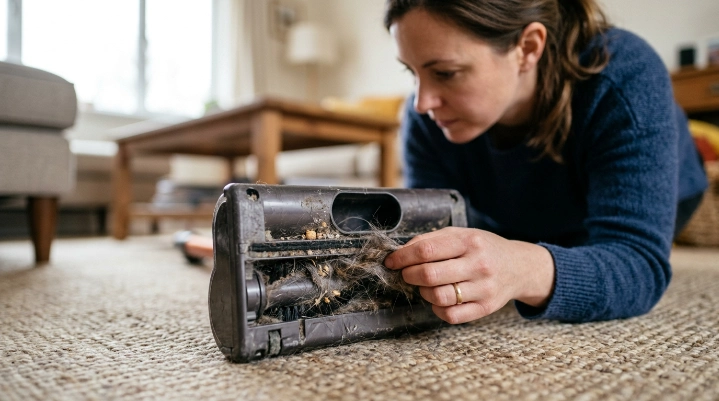
A vacuum clog rarely happens overnight. It is usually the result of cumulative debris catching on microscopic imperfections inside the airway.
Fine dust mixes with carpet fibers, pet hair, and rogue household objects to form dense plugs. When these plugs lodge in narrow turns, suction drops rapidly.
The most frequent physical culprits include:
- Pet hair clumps: Long fur binds together with dust to choke the intake port.
- Fine powders: Baking soda or drywall dust cakes inside damp or unsealed airways.
- Hard objects: Coins, small toys, and hairpins wedge sideways in rigid bends.
- Lint accumulation: Dryer lint and fabric fibers mat together tightly inside canister inlets.
Section Takeaway: Regular clogs usually stem from a combination of pet hair accumulation, fine powder caking, or hard objects wedging inside the intake path.
How Do You Clear Blockages in Hoses and Wands?
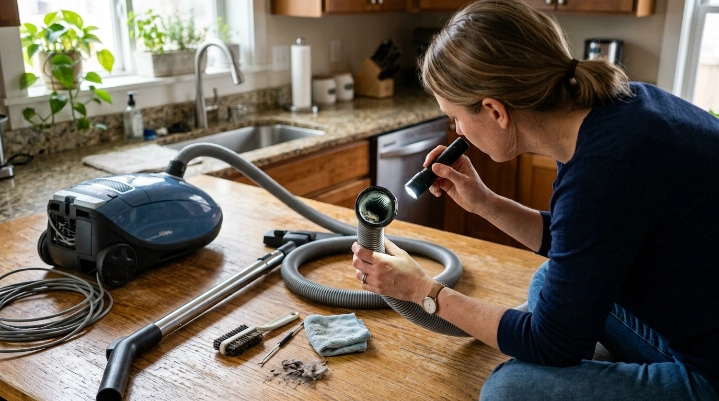
The flexible hose and extension wands are the most vulnerable zones for stubborn debris jams. Because these parts feature ridges and tight bends, debris easily snags.
You should detach the hose from both the main body and the floor tool. Straighten the hose out completely on the floor to inspect the interior.
Follow this safe clearing method:
- Shine a flashlight down one end to spot dark shadows or stuck objects.
- Drop a small coin or ball of paper through the tube to test for obstructions.
- Push a blunt broom handle or a flexible plumber’s snake carefully through the hose if you find a stubborn clog.
- Avoid using sharp metal screwdrivers that can puncture the flexible plastic wall.
Once the blockage pops out, reconnect your hose and test the suction power. If you smell a faint burning odor, turn the machine off immediately to prevent motor strain.
Section Takeaway: Safely clear hose blockages by detaching the tubing, inspecting it with a flashlight, and pushing clogs out with a blunt tool rather than sharp metal objects.
How Do Dirty Filters and Reduced Airflow Cause Clogging?
A restricted filter creates a cascading mechanical failure that mimics a physical clog. When dust blocks your filter, airflow drops sharply.
Without sufficient airflow, heavy debris fails to reach the dust bin and settles inside the intake tubing instead. This creates a fast, artificial clog.
Modern vacuums utilize high-efficiency particulate air (HEPA) filtration or foam layers to trap allergens. According to the U.S. Environmental Protection Agency (EPA), maintaining clean indoor air filters is essential for optimal appliance performance and healthy indoor air quality.
Inspect your pre-filters and exhaust filters every month. Wash foam filters thoroughly in lukewarm water and let them air dry for at least 24 hours before reinstalling them.
Section Takeaway: Dirty filters choke motor airflow, which causes heavy dirt to drop out of suspension and form clogs inside the vacuum body.
Why Do Hair and Debris Wrap Around the Brush Roll?
The floor nozzle agitator bar spins at thousands of RPMs to pull embedded dirt from deep carpet piles. Unfortunately, this high-speed rotation acts like a spool for long human hair and pet fur.
As hair wraps tightly around the brush roll, it builds friction and restricts the intake throat opening. This choke point blocks larger debris from entering the suction channel.
You can manage brush roll wrapping with these maintenance steps:
- Flip the vacuum upside down and unplug it from the wall outlet.
- Use a seam ripper or small pair of scissors to slice through wrapped hair parallel to the brush bristles.
- Pull the loosened hair strands away from the rotating cylinder by hand.
- Verify that the roller spins freely without catching on plastic housing parts.
Many modern upright and stick vacuums now feature anti-tangle combs or active blade technologies to minimize this exact issue.
Section Takeaway: High-speed brush rolls quickly collect wrapped hair and threads, creating a physical choke point at the floor nozzle intake.
Vacuum Type Comparison: Which Models Are Most Prone to Clogs?
Different vacuum designs handle debris streams in unique ways. Understanding your machine’s mechanical layout helps you anticipate where clogs will form.
| Vacuum Type | Common Clog Location | Primary Vulnerability |
|---|---|---|
| Cordless Stick | Dust bin inlet and cyclone shroud | Narrow airflow paths and compact collection bins |
| Upright Vacuum | Flexible hose connector and brush throat | Sharp 90-degree turns right behind the floor head |
| Canister Vacuum | Wand connection and bag collar | Overstuffed dust bags restricting bag chamber airflow |
| Robot Vacuum | Side brush gears and suction port | Low motor clearance and small internal channels |
Stick vacuums require frequent emptying because their compact cyclones pack debris tightly. Canisters offer superior airflow capacity, but overfilled disposable bags will immediately bottleneck suction.
Section Takeaway: Cordless stick vacuums clog easily at narrow bin inlets, while upright models frequently trap debris at sharp 90-degree hose bends.
What Preventative Habits Stop Future Clogs?
Stopping clogs before they start saves time and extends the operational lifespan of your cleaning appliances. Simple adjustments to your daily routine make a massive difference.
Adopt these core preventative habits in your home:
- Pre-inspect floors: Walk through rooms to pick up coins, paper clips, and large plastic toys before cleaning.
- Empty bins early: Never wait until the dirt cup reaches the maximum fill line; empty it when it hits 75 capacity.
- Schedule filter washes: Clean washable foam filters every 30 days and replace HEPA filters annually.
- Avoid fine powders: Refrain from vacuuming large piles of fireplace ash, baking soda, or drywall dust without a specialized separator.
Building these quick maintenance checks into your cleaning schedule ensures your vacuum maintains peak suction power year after year.
Section Takeaway: Prevent clogs by pre-inspecting floors for large items, emptying dirt bins at 75 capacity, and scheduling regular monthly filter washes.
Frequently Asked Questions
Why does my vacuum lose suction even when there is no visible clog?
Hidden airflow restrictions usually cause this issue. A heavily soiled filter, a micro-crack in the flexible hose, or an unsealed dust bin lid will let air escape and destroy suction power.
Is it safe to vacuum up fine powders like baking soda?
You should avoid vacuuming fine powders in large quantities. Fine dust particles pass straight through standard filters, cake onto the motor windings, and instantly clog filter pores.
How often should I clean my vacuum brush roll?
Inspect and clean your brush roll every two to three cleaning sessions. If you have long-haired pets or family members, you may need to check it weekly to prevent heavy hair wrapping.
Can a clogged vacuum burn out the motor?
Yes. Severe clogs block cooling airflow over the electric motor, causing it to overheat, trip thermal cutoffs, or permanently burn out winding coils.
What should I do if I smell a burning odor while vacuuming?
Turn off and unplug the vacuum immediately. A burning smell usually indicates that a jammed brush roll belt is slipping against a locked cylinder or the motor is struggling against a total airflow blockage.
Keep Your Home Cleaning Smoothly
Troubleshooting a constantly clogging vacuum comes down to systematic inspection of your filters, hoses, and brush rolls. By keeping airways clear and performing routine maintenance, you can protect your appliance and maintain a spotless home environment.