
Best Mop For Baseboards: Genius Cleaning Solution

The Best Mop for Baseboards: Your Genius Cleaning Solution for a Spotless Home
Tired of dirty baseboards that ruin your home’s look? The best mop for baseboards makes this chore simple. We’ll explore top tools and easy methods to get them sparkling clean. Say goodbye to grime and hello to pristine walls with our expert guide.
Cleaning baseboards can feel like a chore nobody loves. They collect dust, scuffs, and pet hair, making your beautiful home look dull. Many people struggle to find the right tool for the job. Some mops are too big, others too messy. But with the right approach, cleaning your baseboards can be quick and effective. This guide will show you exactly what you need to know.
Why Baseboard Cleaning Matters
Baseboards are often overlooked, but they are vital to your home’s appearance. They act as a border for your walls, and when dirty, they detract from the whole room. Regular cleaning keeps your home looking fresh and well-maintained. It also helps reduce allergens like dust and pet dander that settle on them.
Keeping your baseboards clean is not just about looks. It contributes to a healthier living environment. Dust and allergens can become trapped on these surfaces, affecting air quality. Addressing this often-forgotten area can significantly improve your home’s overall cleanliness and your family’s well-being.
The Challenges of Cleaning Baseboards
Cleaning baseboards presents unique challenges. Their low position requires bending or kneeling, which can be uncomfortable. Many standard mops are too large to maneuver easily around corners and tight spaces. Plus, the materials baseboards are made from, like wood or vinyl, need gentle cleaning to avoid damage.
Scrubbing baseboards by hand with a cloth can be slow and tiring. You might end up with streaks or miss spots. Finding a tool that is effective without being harsh is key. It’s about striking a balance between cleaning power and gentleness.
What Makes a Mop the “Best” for Baseboards?
The best mop for baseboards is one that is compact and maneuverable. It should have a flat or slim head to reach easily. Absorbent material is important for picking up dirt and moisture. Durability and ease of use are also crucial factors.
A good baseboard mop should also be versatile. It should work on different types of baseboard materials. Easy cleaning and storage are bonuses. Think about tools that can reach without causing strain.
Top Mop Types for Sparkling Baseboards
Several types of mops excel at baseboard cleaning. Each has its own advantages. Understanding these options helps you choose the perfect tool for your needs.
1. Microfiber Flat Mops
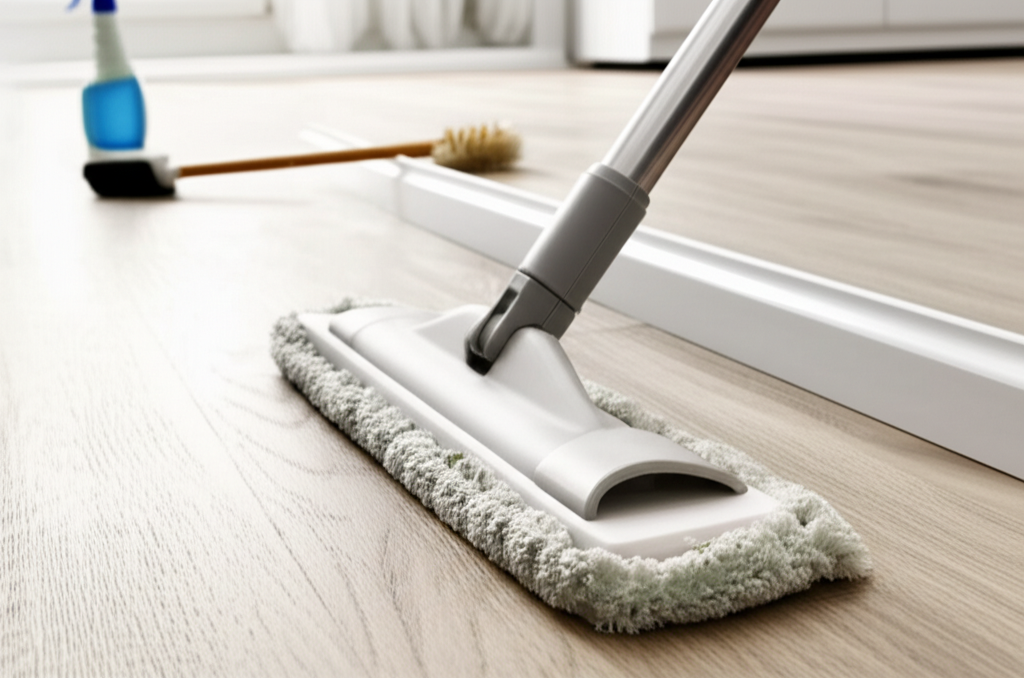
Microfiber flat mops are a popular choice. Their slim heads easily slide under furniture and along baseboards. The microfiber material is highly absorbent and great at trapping dust and dirt. Many come with extendable handles, reducing the need to bend.
These mops are lightweight and easy to control. They work well with just water or a mild cleaning solution. After cleaning, the microfiber pads are usually washable, making them eco-friendly and cost-effective.
2. Spin Mops with Detachable Heads
Spin mops offer convenience with their self-wringing capabilities. Some models have smaller, detachable mop heads that are perfect for detailed cleaning. This allows you to use a smaller, more manageable piece for your baseboards. The wringing mechanism ensures the mop is not too wet, preventing water damage.
The spinning action makes it easy to control the moisture level. This is important for protecting wood or painted surfaces. Look for spin mops with flexible joints for better reach.
3. Small Handheld Mops or Scrubbers
For tough scuffs or targeted cleaning, small handheld mops or scrubbers can be very effective. These are not traditional mops but specialized tools. They allow you to apply concentrated cleaning power exactly where needed.
These are ideal for spot cleaning. They offer great control for tackling stubborn marks. Many come with washable pads or replaceable sponges.
4. Traditional String Mops (with Modifications)
While not ideal on their own, traditional string mops can be adapted. You can use a smaller head or wring it out extremely well. A highly wrung-out string mop can work on sturdy baseboards. However, this method requires more effort and care.
Using a string mop effectively means ensuring it is almost dry. This prevents excess water from seeping into the baseboard material. It’s a method best suited for durable surfaces.
The Ultimate DIY Baseboard Cleaning Tool: The Microfiber Wand
Many users find that a simple microfiber wand is the best mop for baseboards. These are often sold as part of a larger floor cleaning system. The wand’s slim profile and absorbent microfiber pad are perfect for this task.
This tool allows you to clean without bending over much. The microfiber pad picks up dust and grime efficiently. It’s a versatile tool that can also be used for other cleaning jobs.
Step-by-Step Guide: Cleaning Your Baseboards Like a Pro
Follow these simple steps for perfectly clean baseboards. This method uses a microfiber mop or a similar slim tool.
1. Gather Your Supplies: You will need your chosen mop, a bucket, water, and a mild cleaning solution (like diluted dish soap or a specialized cleaner). Have a dry cloth ready for touch-ups.
2. Prepare the Area: Clear any furniture or decor away from the baseboards. Vacuum the floor near the baseboards to remove loose debris.
3. Mix Your Solution: Fill your bucket with warm water. Add a small amount of mild cleaning solution. Do not make it too sudsy.
4. Dampen the Mop: Dip the mop head into the solution. Wring it out thoroughly until it is just damp, not dripping wet. This prevents water damage.
5. Start Cleaning: Begin at one end of the room. Gently wipe the mop along the top edge of the baseboard, then down the face. Work in small sections.
6. Rinse and Repeat (If Needed): For stubborn marks, you might need to go over them a second time. Ensure the mop is still only damp.
7. Address Corners and Edges: Use the corner of the mop head or a small brush for tight spots. Be gentle around painted surfaces.
8. Dry and Inspect: Use a dry cloth to wipe away any excess moisture. Inspect your work. You should see a noticeable difference.
9. Clean Your Tools: Rinse your mop head thoroughly. Wash reusable pads according to their instructions.
This systematic approach ensures you don’t miss any spots. It also protects your baseboards from damage.
Dealing with Stubborn Scuffs and Stains
Sometimes, baseboards get more than just dust. Scuffs from shoes or furniture can be tough. Here’s how to tackle them:
Mild Abrasive: For painted baseboards, a magic eraser can work wonders. Gently rub the scuff mark. Test in an inconspicuous area first.
Baking Soda Paste: Make a paste of baking soda and water. Apply it to the stain with a soft cloth. Gently scrub and wipe clean.
* Rubbing Alcohol: For greasy marks, a small amount of rubbing alcohol on a cloth can help. Wipe the spot and then rinse with a damp cloth.
Always use the gentlest method first. Harsh chemicals can damage paint or finishes.
Choosing the Right Cleaning Solution
The best cleaning solution for baseboards is usually simple. For most dirt and dust, warm water and a little dish soap are sufficient. If you have painted baseboards, avoid abrasive cleaners. For wood baseboards, use a solution specifically designed for wood or just a damp cloth.
Authoritative Insight: According to the EPA, indoor air quality can be significantly improved by regular dusting and cleaning. Focusing on surfaces like baseboards helps reduce airborne particles.
Always test any cleaning solution in a small, hidden area first. This ensures it won’t discolor or damage the baseboard material.
When to Call a Professional
If your baseboards are heavily damaged or have persistent stains, you might consider professional cleaning. Professionals have specialized tools and knowledge. This is especially true for delicate finishes or historic homes.
For most homes, though, regular cleaning with the right tools is enough. Don’t hesitate to tackle this task yourself. With the right mop, it becomes much easier.
Frequently Asked Questions (FAQ)
What is the best mop for cleaning dusty baseboards?
For dusty baseboards, a microfiber flat mop is ideal. Its dense fibers trap dust effectively. The slim head easily reaches along the baseboard’s edge. It is gentle and requires minimal moisture.
Can I use a regular floor mop for baseboards?
A regular floor mop is often too large and unwieldy for baseboards. It can be difficult to maneuver. If you must use one, wring it out extremely well to avoid excessive water. A smaller, more specialized mop is usually better.
How often should I clean my baseboards?
You should clean your baseboards every 1-3 months. This depends on your home environment. Homes with pets or children may need more frequent cleaning. Regular dusting can extend the time between deep cleans.
What should I avoid when cleaning baseboards?
Avoid using abrasive cleaners or harsh scrubbing pads. Excessive water should also be avoided, as it can damage wood or paint. Never use steam cleaners directly on most baseboard types, as the heat and moisture can cause warping or peeling.
How do I clean scuff marks off white baseboards?
For white baseboards, a magic eraser sponge often works well on scuff marks. Gently rub the mark. You can also try a paste of baking soda and water. Always test in a small area first to prevent damage.
Conclusion: Your Baseboard Cleaning Champion
Finding the best mop for baseboards can transform a dreaded chore into a simple task. A microfiber flat mop or a specialized slim mop offers maneuverability and effective cleaning. By using the right tools and a gentle approach, you can keep your baseboards looking pristine. This not only enhances your home’s appearance but also contributes to a cleaner living space. Start cleaning your baseboards today and enjoy a fresh, spotless home.


