
Top 10 Home Air Purifiers: Essential Buys

Breathe easier with the top 10 home air purifiers. These essential buys tackle allergens, dust, and odors, improving your home’s air quality for a healthier living space. Find the perfect model for your needs today.
You want clean air in your home, but it’s hard to know where to start. Dust, pet dander, and strange smells can make your living space feel less comfortable. It’s frustrating when you just want to relax and breathe freely. Don’t worry, I’m here to help you find the best way to clean your home’s air. This guide will walk you through the top 10 home air purifiers that are must-haves for any household.
Why Clean Home Air Matters
Clean air at home is vital for your health and well-being. Poor indoor air quality can trigger allergies, asthma, and other respiratory issues. It can also affect your sleep and overall energy levels. Investing in a good air purifier helps remove harmful particles from your environment.
The U.S. Environmental Protection Agency (EPA) notes that indoor air can be two to five times more polluted than outdoor air. This is often due to common household items and activities. Things like cleaning products, cooking, and even furniture can release pollutants.
How Air Purifiers Work
Air purifiers use filters to trap tiny particles from the air. Most have a fan that pulls air into the unit. This air then passes through several filters. The filters catch things like dust, pollen, pet dander, smoke, and even some odors. Finally, the clean air is released back into the room.
Different types of filters exist, but the most common is the HEPA filter. HEPA stands for High-Efficiency Particulate Air. A true HEPA filter can capture at least 99.97% of airborne particles that are 0.3 microns in size. This is incredibly small, making them very effective.
Key Features to Look For
When choosing a home air purifier, several features are important. Consider the size of the room it needs to cover. This is often measured in square feet. Look for the Clean Air Delivery Rate (CADR), which indicates how quickly the purifier cleans the air.
Other features include filter types, noise levels, and energy efficiency. Some purifiers have smart features like app control or air quality sensors. The number of filters and their replacement cost are also practical considerations.
Top 10 Home Air Purifiers: Essential Buys
Here is my curated list of the top 10 home air purifiers. I’ve chosen these based on performance, features, and user satisfaction. Each offers a great solution for cleaner air in your home.
1. Coway Airmega 200M
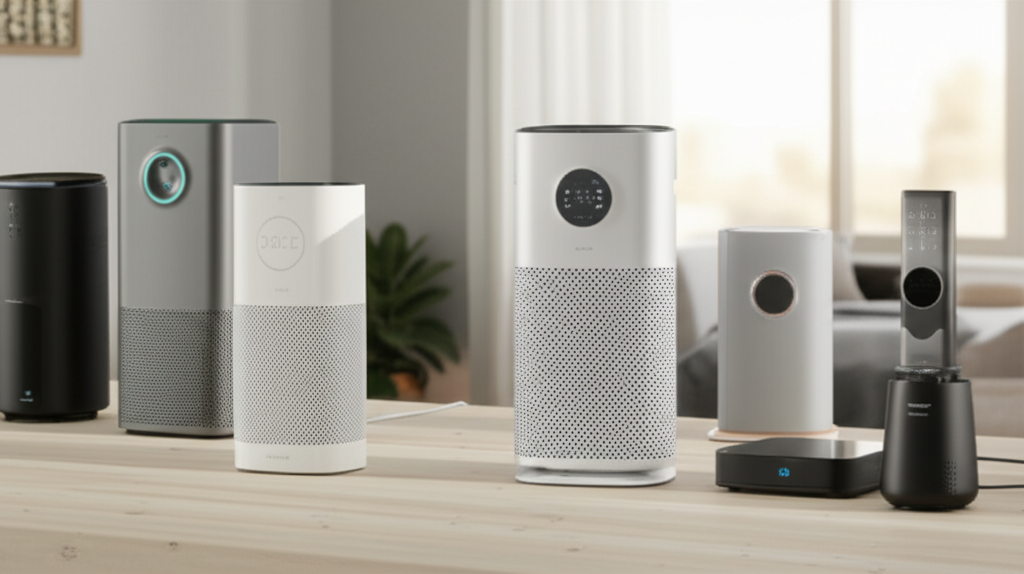
The Coway Airmega 200M is a popular choice for its strong performance and user-friendly design. It effectively cleans medium to large rooms. Its true HEPA filter captures 99.97% of airborne particles.
This model features an eco-mode that adjusts fan speed based on air quality. It also has a filter life indicator to remind you when to replace filters. The design is sleek and modern, fitting well into most home decors.
2. Blueair Blue Pure 211+ Auto
Blueair’s Blue Pure 211+ Auto is known for its high performance and simple operation. It uses a unique combination of electrostatic and mechanical filtration. This captures a wide range of pollutants.
The “Auto” version includes an air quality sensor. It adjusts settings automatically to maintain optimal air purity. Its large coverage area makes it suitable for spacious living areas.
3. Levoit Core 300
For smaller rooms or bedrooms, the Levoit Core 300 is an excellent, budget-friendly option. It’s compact and quiet, making it ideal for personal spaces. Despite its size, it packs a powerful punch with its 3-stage filtration system.
This system includes a pre-filter, a true HEPA filter, and an activated carbon filter. It effectively tackles dust, pet hair, smoke, and odors. Its simple controls make it easy for anyone to use.
4. Winix 5500-2
The Winix 5500-2 is a well-rounded air purifier that offers great value. It features a true HEPA filter and an activated carbon filter. It also includes Winix’s PlasmaWave technology, which can neutralize airborne pollutants.
This technology is optional and can be turned off if preferred. The unit has an auto mode that adjusts fan speed based on detected air quality. It’s suitable for medium to large rooms.
5. Honeywell HPA300
Honeywell is a trusted brand, and the HPA300 is a solid performer. It’s designed for larger rooms and boasts a high CADR. The true HEPA filter captures 99.97% of allergens and other particles.
It offers three different air cleaning levels and a turbo setting for quick cleaning. The filter change indicator ensures you maintain optimal performance. This purifier is a robust choice for busy households.
6. Dyson Purifier Cool TP07
Dyson’s Purifier Cool TP07 is a high-tech option that doubles as a bladeless fan. It combines air purification with air circulation. Its sealed HEPA filtration system captures 99.97% of particles.
The unit connects to an app, allowing you to monitor air quality and control the purifier remotely. It displays real-time air quality reports. This makes it a sophisticated choice for modern homes.
7. Austin Air HealthMate HM450
The Austin Air HealthMate HM450 is built for serious air purification. It’s a larger unit designed for substantial coverage. It features a medical-grade HEPA filter and a substantial carbon filter.
This makes it excellent for those with severe allergies or respiratory conditions. It’s a durable, long-lasting unit. While it’s larger, its effectiveness is undeniable for cleaner air.
8. Mila Air Purifier
Mila is a newer player focusing on smart technology and a minimalist design. It features multiple sensors to track air quality and a unique filter system. The filters are designed for specific concerns like allergens or odors.
You can control Mila via its app, set schedules, and receive personalized air quality insights. It’s a great option for tech-savvy users who want detailed control.
9. Philips 2000i Series Air Purifier
The Philips 2000i Series offers advanced purification with smart features. It uses a multi-layer filtration system, including a HEPA filter and activated carbon. It effectively removes allergens, gases, and odors.
The app provides real-time air quality feedback and control. It can monitor both indoor and outdoor air quality. This makes it a comprehensive solution for a healthy home environment.
10. IQAir HealthPro Plus
The IQAir HealthPro Plus is often considered one of the best for severe allergies and sensitivities. It uses a HyperHEPA filter, which is even more effective than standard HEPA. It also has a gas and odor filter.
This purifier is designed for larger spaces and offers superior filtration. While it is a significant investment, its performance is exceptional for those needing the highest level of air purity. You can learn more about HEPA filter standards on the U.S. Department of Energy website.
Understanding Air Purifier Specs
When comparing air purifiers, understanding the specifications is key. Here’s a look at some important terms:
| Specification | What it Means | Why it Matters |
| :——————— | :————————————————– | :—————————————————- |
| Coverage Area | The square footage the purifier can effectively clean | Ensures it’s suitable for your room size. |
| CADR (Clean Air Delivery Rate) | How fast it filters air (for smoke, dust, pollen) | Higher CADR means faster purification. |
| HEPA Filter | Captures 99.97% of particles 0.3 microns and larger | Essential for removing allergens, dust, and dander. |
| Activated Carbon Filter | Absorbs odors, gases, and VOCs (Volatile Organic Compounds) | Good for homes with pets, smokers, or cooking smells. |
| Noise Level (dB) | How loud the purifier is when operating | Important for bedrooms and living areas. Lower is better. |
| Energy Consumption | How much electricity it uses | Affects your electricity bill; look for Energy Star ratings. |
Filter Maintenance: A Crucial Step
Regular filter maintenance is essential for your air purifier to work correctly. Most purifiers have indicators that tell you when it’s time to change the filters. Follow the manufacturer’s instructions for your specific model.
Ignoring filter changes means the purifier becomes less effective. Clogged filters can also strain the motor, reducing its lifespan. Some filters can be washed, while others need to be replaced entirely.
Who Needs an Air Purifier?
Air purifiers are beneficial for almost everyone. However, they are especially helpful for certain groups. People with allergies or asthma will find significant relief. Those with pets often use them to combat dander and odors.
Anyone living in an area with high pollution or smoke can also benefit. Even if you don’t have specific health concerns, cleaner air contributes to a healthier home. The American Lung Association offers great resources on indoor air quality.
Frequently Asked Questions About Air Purifiers
What is the best air purifier for allergies?
For allergies, look for a purifier with a true HEPA filter. Models like the IQAir HealthPro Plus or Austin Air HealthMate are excellent choices. They capture tiny allergens like pollen and dust mites effectively.
How often should I run my air purifier?
It’s generally recommended to run your air purifier continuously, especially in rooms where you spend the most time. Many models have energy-saving modes that adjust fan speed automatically. This helps maintain air quality without excessive energy use.
Can air purifiers remove odors?
Yes, air purifiers with activated carbon filters are very effective at removing odors. These filters absorb smells from cooking, pets, smoke, and other sources. The amount of carbon in the filter affects its odor-removing capacity.
Do air purifiers use a lot of electricity?
Modern air purifiers are quite energy-efficient. Many have earned the Energy Star certification, meaning they use less energy than standard models. Running them on lower settings or using auto modes can further reduce electricity consumption.
How big should my air purifier be?
The size of the air purifier should match the size of your room. Check the manufacturer’s specifications for the recommended coverage area in square feet. Using a purifier that is too small won’t clean the air effectively.
Do I need an air purifier if I have an HVAC filter?
While your HVAC system’s filter removes some particles, it’s not as efficient as a dedicated air purifier. Air purifiers are designed to capture much smaller particles and are often placed in specific rooms for targeted cleaning. They complement, rather than replace, your HVAC filter.
Conclusion: Invest in Your Health
Choosing the right home air purifier is an investment in your health and comfort. The top 10 home air purifiers I’ve highlighted offer excellent solutions for various needs and budgets. From powerful HEPA filtration to smart features, there’s a model perfect for your home. Prioritize clean air today for a healthier tomorrow.
If you found this guide helpful, consider exploring more tips for a healthy home on Home Hygia.
