
Philips Air Purifier Vs Dyson: Essential Choice

Philips air purifier vs Dyson: Discover which brand offers the best air purification for your home, considering features, performance, and budget to make an essential choice for cleaner air.
Are you breathing the cleanest air possible at home? Many of us worry about unseen pollutants. This is where air purifiers come in. But with so many brands, choosing can feel overwhelming. Philips and Dyson are top contenders. They both offer advanced technology. However, they differ in key areas. This guide will help you compare Philips air purifier vs Dyson. We will look at their designs, performance, and unique features. By the end, you’ll know which one is the best fit for your needs.
Philips Air Purifier vs Dyson: What’s the Big Difference?
When comparing Philips air purifier vs Dyson, the core difference lies in their approach to air purification and design philosophy. Philips often focuses on proven filtration technologies and user-friendly interfaces, while Dyson emphasizes innovative multi-functional devices and sleek aesthetics. Both aim to improve indoor air quality but achieve it through distinct engineering and feature sets, catering to different user priorities and budgets.
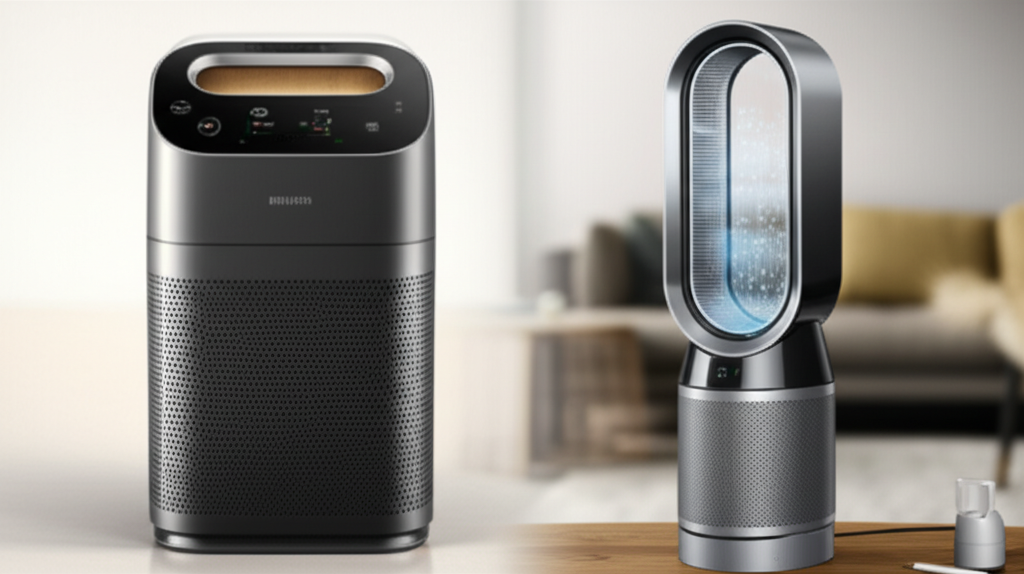
Philips air purifiers are known for their robust filtration systems, often featuring multiple layers of HEPA and activated carbon filters. They are designed to be effective and straightforward to use. Dyson, on the other hand, often integrates air purification with other functions like heating, cooling, or humidifying. Their designs are typically futuristic and technologically advanced.
Understanding Air Quality and Your Needs
Before diving into specific models, it’s crucial to understand what makes air quality important and what you need from an air purifier. Indoor air can be filled with allergens, dust, pet dander, smoke, and even harmful gases. These can affect your health, causing allergies, asthma, and other respiratory issues. Identifying your primary concerns, like allergies or pet odors, will guide your choice.
Think about the size of the room you need to purify. This will determine the required Clean Air Delivery Rate (CADR) of the purifier. Also, consider noise levels, energy consumption, and any special features you might want, such as smart connectivity or specific filter types. Your personal comfort and health priorities are paramount.
Philips Air Purifiers: Proven Performance and Value
Philips has a long-standing reputation for reliable home appliances. Their air purifiers are no exception, often praised for their effective multi-stage filtration systems. These systems are designed to capture a wide range of airborne particles, from microscopic allergens to larger dust. They offer a balance of performance and affordability.
Many Philips models use a combination of a pre-filter, an activated carbon filter, and a HEPA filter. This layered approach ensures comprehensive purification. They are often designed with user convenience in mind, featuring intuitive controls and clear filter replacement indicators. This makes them a solid choice for those seeking dependable air cleaning without excessive complexity.
Key Philips Air Purifier Features
Philips air purifiers often highlight their advanced filtration technology. This includes NanoProtect HEPA and Activated Carbon filters that work together. Many models also feature an allergen mode. This automatically boosts purification when it detects higher allergen levels.
Smart sensors are common, providing real-time air quality feedback. This allows the purifier to adjust its fan speed automatically. Some Philips units also offer app connectivity for remote control and monitoring. This adds a layer of convenience for tech-savvy users.
Dyson Air Purifiers: Innovation and Multi-Functionality
Dyson is renowned for its innovative engineering and distinctive product design. Their air purifiers often go beyond simple air cleaning. Many Dyson models are 2-in-1 or 3-in-1 devices, combining purification with fans, heaters, or humidifiers. This multi-functionality can save space and offer year-round utility.
Dyson’s unique bladeless fan technology is also a hallmark. This design is not only aesthetically pleasing but also contributes to safer operation, especially in homes with children or pets. They often use advanced sensing technology to detect and report on air quality in detail.
Dyson’s Advanced Technology
Dyson purifiers typically feature HEPA filtration combined with activated carbon. They often boast a fully sealed filtration system, ensuring that no air bypasses the filters. This means all the air is directed through the filters for maximum purification.
Their bladeless fan technology, known as Air Multiplier™, is a key innovation. It projects purified air efficiently and quietly. Many Dyson purifiers also come with sophisticated app integration. This allows users to monitor indoor and outdoor air quality and control the device remotely.
Filtration Technology: HEPA vs. Other Systems
Both Philips and Dyson use HEPA filters, which are considered the gold standard for capturing airborne particles. A True HEPA filter captures at least 99.97% of particles 0.3 microns in size. This includes dust, pollen, mold spores, and pet dander. Philips and Dyson ensure their HEPA filters meet these high standards.
However, the overall filtration system can differ. Philips often uses a multi-layer approach. Dyson emphasizes the sealing of their units to prevent any air leakage. Some purifiers might also include additional technologies like UV-C light or ionization, but these can sometimes produce ozone, which is a lung irritant. Both Philips and Dyson generally avoid ozone-producing technologies in their core air purification.
Design and Aesthetics: A Matter of Preference
When it comes to design, Philips air purifier vs Dyson presents a clear contrast. Philips models tend to have a more traditional, functional aesthetic. They are often designed to blend into a home environment without drawing too much attention. The focus is on practicality and ease of use.
Dyson purifiers, conversely, are statement pieces. Their futuristic, often minimalist designs are sleek and modern. They are built to be seen and admired, integrating seamlessly into contemporary home decor. The bladeless design is a signature element that sets them apart visually.
Performance Metrics: CADR and Room Coverage
The Clean Air Delivery Rate (CADR) is a crucial metric for air purifiers. It measures how quickly a purifier can clean a room of smoke, dust, and pollen. Higher CADR ratings mean faster and more effective purification. Both Philips and Dyson offer models with varying CADR ratings to suit different room sizes.
When choosing, check the manufacturer’s recommended room size for each model. This ensures the purifier is powerful enough for your space. A purifier that is too small will struggle to maintain good air quality. Conversely, an oversized unit might be unnecessarily noisy and consume more energy.
Smart Features and Connectivity
In today’s connected world, smart features are becoming increasingly important. Both Philips and Dyson offer models with Wi-Fi connectivity. This allows you to control your air purifier via a smartphone app. You can adjust settings, schedule operation, and monitor air quality remotely.
Dyson often integrates more advanced smart capabilities. Their apps can provide detailed historical data on air quality. They might also link with other smart home ecosystems. Philips also offers app control, providing convenience and control over your device from anywhere.
Noise Levels and Energy Consumption
Noise level is a significant factor, especially for bedrooms or living areas. Air purifiers operate with fans, which produce sound. Philips and Dyson models vary in their noise output. Generally, higher fan speeds will result in more noise. Many models have a “sleep mode” that operates at a lower, quieter setting.
Energy consumption is another consideration. Look for Energy Star certified models, as they are more energy-efficient. Both brands offer models with different energy ratings. While Dyson’s multi-functional devices might consume more power when heating or cooling, their purification modes are often competitive. Always check the power consumption details for the specific model you are considering.
Price Point and Value for Money
The Philips air purifier vs Dyson comparison often highlights a significant price difference. Dyson products are typically positioned as premium, high-end devices. This is due to their advanced technology, innovative design, and multi-functionality. They often come with a higher price tag.
Philips air purifiers generally offer more competitive pricing. They provide excellent purification performance and reliable features at a more accessible cost. This makes them a great option for budget-conscious consumers who still want effective air cleaning. The value proposition depends on what features and brand prestige you prioritize.
User Reviews and Real-World Experiences
Hearing from other users can provide valuable insights. Many reviews highlight Philips air purifiers for their effectiveness and ease of use. Users often appreciate their quiet operation in lower settings and the clear indicators for filter replacement. Some mention that while effective, their design is less striking.
Dyson purifiers frequently receive praise for their innovative features, powerful performance, and stylish design. Users love the multi-functionality and the advanced app control. However, some reviews point to the higher cost and the need for proprietary replacement filters. It’s beneficial to read reviews for specific models you are considering.
A user named Sarah, who suffers from severe pollen allergies, shared her experience: “I’ve tried several air purifiers, but my Philips Series 2000 has made a noticeable difference in my bedroom. I wake up breathing easier, and it’s surprisingly quiet on the lowest setting.”
On the other hand, Mark, a tech enthusiast with pets, commented on his Dyson Pure Cool: “The Dyson is amazing. It cools the room, purifies the air, and looks fantastic. The app is super useful for tracking air quality, especially with my dog shedding so much.”
Philips Air Purifier vs Dyson: Feature Comparison Table
To help you visualize the differences, here’s a table comparing typical features of Philips and Dyson air purifiers. Keep in mind that specific features vary by model within each brand.
| Feature | Philips Air Purifier (Typical) | Dyson Air Purifier (Typical) |
| :——————— | :———————————————————– | :—————————————————————– |
| Primary Function | Air Purification | Air Purification, Fan, Heater, Humidifier (model dependent) |
| Filtration | Multi-stage (Pre-filter, Activated Carbon, HEPA) | Sealed HEPA + Activated Carbon filtration |
| Design | Functional, traditional, unobtrusive | Futuristic, sleek, statement piece, bladeless fan technology |
| Smart Features | App control, auto modes, sensors | Advanced app control, detailed air quality reporting, voice control |
| Noise Level | Generally quiet on lower settings | Varies by model and function, can be louder on high fan settings |
| Price Range | Mid-range to Upper-mid-range | Premium, high-end |
| Filter Replacement | Standard HEPA and Carbon filters | Proprietary filters, can be more expensive |
| Ease of Use | Intuitive controls, clear indicators | Advanced interface, app-centric control |
Making Your Essential Choice
The essential choice between a Philips air purifier vs Dyson ultimately depends on your personal priorities and budget. If you are looking for effective, reliable, and straightforward air purification without breaking the bank, Philips is an excellent option. Their focus on proven filtration technology ensures clean air for your home.
If you desire cutting-edge technology, a stylish design, and the added benefit of multi-functionality (like cooling or heating), and your budget allows, then a Dyson purifier might be the perfect fit. They offer a premium experience with advanced features and a unique aesthetic. Consider what aspects of air purification matter most to you.
Frequently Asked Questions
Which brand is better for allergies: Philips or Dyson?
Both brands offer excellent HEPA filtration, which is crucial for allergy sufferers. Philips models are often praised for their effective allergen capture. Dyson’s sealed systems ensure all air passes through filters, making them highly effective too. Your specific allergies might lean you towards one over the other based on filter types and CADR.
Are Dyson air purifiers worth the extra cost?
Dyson purifiers are generally more expensive. They are worth it if you value their advanced technology, multi-functional capabilities (like heating or cooling), and premium design. If you only need basic, effective air purification, a Philips unit might offer better value.
How often do I need to replace filters for Philips and Dyson?
Filter replacement frequency depends on usage and air quality. Typically, HEPA filters need replacing every 6-12 months, and activated carbon filters may need similar or slightly more frequent changes. Always check the manufacturer’s recommendations for your specific model.
Can air purifiers really improve my health?
Yes, air purifiers can significantly improve indoor air quality by removing pollutants like dust, pollen, pet dander, and smoke. This can lead to fewer allergy symptoms, reduced asthma triggers, and overall better respiratory health for many individuals.
Which air purifier is quieter: Philips or Dyson?
Noise levels vary by model and fan speed. Many Philips air purifiers are designed for quiet operation, especially in lower settings. Dyson purifiers can be quiet, but their multi-functional aspect (like fan mode) can sometimes produce more audible airflow at higher speeds. Always check specific model reviews for noise.
Do Philips or Dyson air purifiers use ozone?
Reputable brands like Philips and Dyson typically avoid using ozone-generating technologies in their air purifiers. Ozone can be harmful to respiratory health. They focus on HEPA and activated carbon filtration for safe and effective purification.
Conclusion: Your Healthier Home Awaits
Choosing between a Philips air purifier vs Dyson is about finding the right balance of features, performance, and price for your home. Philips offers dependable, effective air purification with a focus on value and user-friendliness. Dyson provides innovative, multi-functional devices with a premium design and advanced technology for those seeking the ultimate in home air control.
Both brands are committed to improving your indoor air quality. Assess your specific needs – allergies, room size, budget, and desired features – to make the essential choice. Whichever you choose, investing in a quality air purifier is a step towards a healthier living environment.
For more insights on creating a healthy home, be sure to explore our other guides on home air quality solutions and smart home technologies.


