
Dyson Air Purifier vs Coway: Essential Clean Air Guide

Comparing Dyson and Coway air purifiers reveals key differences in filtration, smart features, and price, helping you choose the best option for your home’s clean air needs.
The air we breathe indoors can be surprisingly full of pollutants, from dust and pet dander to allergens and even VOCs from everyday products. This can impact our health, causing everything from allergies to sleep disturbances. Choosing the right air purifier is crucial, and two brands often stand out: Dyson and Coway. Deciding between a Dyson air purifier vs Coway can feel overwhelming with their advanced features and varying price points. I’m here to guide you through this essential clean air journey, breaking down what each brand offers so you can make an informed decision for your family’s well-being.
Dyson Air Purifier vs Coway: Which is Right for Your Home?
When considering a Dyson air purifier vs Coway, the core question is about achieving the cleanest possible air for your specific living space and budget. Both brands excel in different areas, offering advanced technology to tackle indoor air quality challenges. Understanding their strengths and weaknesses will help you pinpoint the perfect match.
Dyson is known for its premium design, powerful airflow, and multi-functional capabilities, often combining purification with heating or cooling. Coway, on the other hand, is highly regarded for its effective filtration systems, user-friendly designs, and generally more accessible price points. Your choice will depend on your priorities, whether that’s cutting-edge tech, superior filtration for specific allergens, or overall value.
Understanding Air Purification Technology
Air purifiers work by drawing in room air, passing it through a series of filters, and releasing cleaner air back into the room. The effectiveness of an air purifier largely depends on the types of filters it uses and how well it captures different airborne particles. Understanding these technologies is key when comparing models.
HEPA filters are the gold standard, capturing at least 99.97% of particles as small as 0.3 microns. Activated carbon filters are excellent at removing odors and gases, such as volatile organic compounds (VOCs). Some purifiers also use pre-filters to catch larger particles like hair and dust, extending the life of the main filters.
Dyson Air Purifiers: Innovation and Integrated Functionality
Dyson air purifiers are often lauded for their sleek, modern designs and their ability to do more than just purify. Many Dyson models are 2-in-1 or 3-in-1 devices, offering fan and heater functions alongside air purification. This integrated approach can save space and provide year-round utility.
Their purification technology typically includes a sealed HEPA and activated carbon filter system, ensuring that pollutants are trapped effectively. Dyson’s bladeless fan technology also contributes to a safer and quieter operation, making them a popular choice for homes with children and pets. The brand emphasizes capturing microscopic particles and gases.
Dyson’s Unique Features
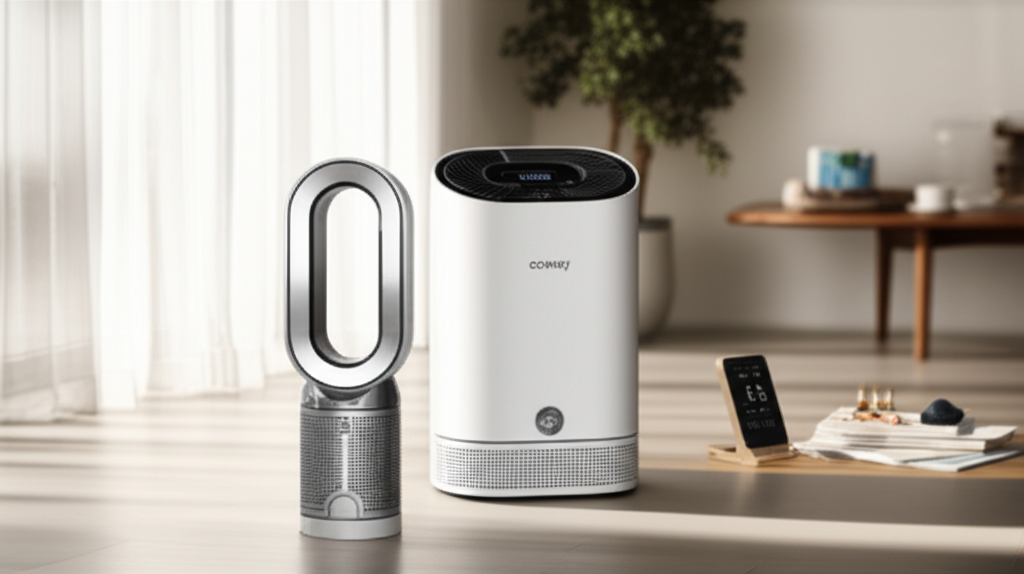
Dyson often integrates advanced sensors that continuously monitor air quality, displaying real-time data on an LCD screen or through a connected app. Their commitment to engineering means they focus on powerful airflow to circulate purified air effectively throughout a room. Many users appreciate the intelligent auto mode that adjusts fan speed based on detected pollution levels.
Sealed Filtration System: Prevents air from leaking around filters, ensuring maximum purification.
Air Multiplier™ Technology: Provides smooth, powerful airflow without blades.
Smart Connectivity: App control for remote monitoring and scheduling.
Multi-Functionality: Often includes fan and heater capabilities.
Dyson’s dedication to detailed engineering ensures a premium user experience and robust performance in their air purifiers. These integrated features offer significant convenience for those seeking multi-purpose devices.
Coway Air Purifiers: Filtration Excellence and Value
Coway has carved out a strong reputation for delivering highly effective air purification at competitive price points. Their focus is squarely on providing exceptional air cleaning performance, often featuring multi-stage filtration systems designed to tackle a wide range of indoor pollutants. They are a go-to for many seeking powerful, reliable air purification without the premium price tag.
The brand frequently employs a robust combination of pre-filters, activated carbon filters, and True HEPA filters. Many Coway models are specifically designed for larger rooms and are recognized for their quiet operation and energy efficiency. Their user-friendly interfaces and simple maintenance routines also add to their appeal.
Coway’s Filtration Prowess
Coway purifiers are consistently praised for their excellent CADR (Clean Air Delivery Rate) ratings, indicating how quickly they can clean a room. Their multi-stage filtration process is designed to capture everything from large dust particles to fine allergens and odor-causing gases. This comprehensive approach makes them ideal for allergy sufferers.
Multi-Stage Filtration: Combines pre-filter, odor filter, and True HEPA filter.
High CADR Ratings: Efficiently cleans large spaces.
Quiet Operation: Designed for minimal disruption, especially at night.
Energy Efficiency: Often ENERGY STAR certified.
Coway’s commitment to advanced filtration means you can trust their devices to significantly improve your indoor air quality. Their focus on core purification performance delivers tangible results for a healthier home environment.
Key Differences: Dyson Air Purifier vs Coway
The primary distinctions between Dyson air purifier vs Coway lie in their feature sets, design philosophy, and overall cost. Dyson often leads in technological innovation and multi-functionality, while Coway excels in delivering top-tier filtration performance and value.
| Feature | Dyson Air Purifier | Coway Air Purifier |
| :—————— | :———————————————– | :———————————————– |
| Primary Function| Purification, Fan, Heater (model dependent) | Purification |
| Filtration | HEPA + Activated Carbon, sealed system | Multi-stage HEPA + Activated Carbon |
| Design | Premium, modern, often bladeless | Functional, user-friendly, sometimes larger |
| Smart Features | Advanced sensors, app control, real-time data | Basic sensors, app control (on some models) |
| Price Point | Higher | Mid-range to higher mid-range |
| Noise Level | Generally quiet, but can increase with fan speed | Often very quiet, especially on lower settings |
| Maintenance | Filter replacement, occasional cleaning | Filter replacement, washable pre-filter |
When evaluating Dyson air purifier vs Coway, consider which features align best with your daily life and health needs. Dyson’s integrated functions might appeal if you want a device that does more, while Coway’s specialized filtration is perfect for those prioritizing pure air cleaning power.
Filtration Performance: A Deep Dive
Both Dyson and Coway use HEPA filters, but the way they are implemented and the overall filtration system can differ. Dyson’s sealed systems are engineered to ensure no air bypasses the filters, maximizing capture efficiency. Coway often boasts multiple layers of filtration, designed to tackle a broader spectrum of pollutants simultaneously.
For those with severe allergies or asthma, the specific particle capture rates and the effectiveness against different types of allergens are paramount. Coway’s dedicated focus on filtration often means higher CADR ratings for their core purification function, making them incredibly effective for quickly clearing a room of allergens and pollutants. Studies from organizations like the Environmental Protection Agency (EPA) highlight the importance of HEPA filtration for removing fine particles.
Smart Features and Connectivity
In today’s connected world, smart features are a significant consideration for many consumers. Dyson generally leads in this area, offering sophisticated app integration that allows users to monitor air quality, control settings, and receive filter life notifications remotely. Their real-time air quality reporting provides granular insights into your home environment.
Coway also offers smart connectivity on many of its models, providing app control and air quality monitoring. However, Dyson’s ecosystem often feels more integrated and advanced, with a greater emphasis on data visualization and predictive maintenance. The level of smart technology you desire will influence your Dyson air purifier vs Coway decision.
Design and Aesthetics
The look and feel of an appliance in your home are important. Dyson is renowned for its futuristic, minimalist designs. Their bladeless technology not only contributes to safety but also gives them a distinctive, modern aesthetic that often blends seamlessly into contemporary decor.
Coway purifiers, while functional and well-built, tend to have a more traditional appliance design. They prioritize performance and ease of use, which can sometimes result in larger footprints or less visually striking appearances compared to Dyson. If aesthetics are a top priority, Dyson might have an edge.
Noise Levels and User Experience
Noise is a critical factor, especially for bedrooms or home offices. Both brands generally perform well in this regard, but there can be differences. Coway models are often praised for their remarkably quiet operation, particularly on lower fan speeds, making them ideal for continuous use without distraction.
Dyson’s bladeless technology contributes to a smooth, consistent airflow sound, but at higher fan speeds, like any powerful appliance, they can become more noticeable. User reviews frequently mention Coway’s quietness as a major advantage. The overall user experience also includes ease of filter replacement and control panel usability, areas where both brands generally score well.
Cost and Maintenance
When comparing Dyson air purifier vs Coway, cost is a significant differentiator. Dyson air purifiers typically come with a premium price tag, reflecting their advanced technology, multi-functionality, and brand prestige. Coway models, while still an investment, are generally more budget-friendly, offering excellent value for their purification capabilities.
Maintenance costs, primarily filter replacements, should also be factored in. Both brands require regular filter changes to maintain optimal performance, and the cost of these replacement filters can add up over time. It’s wise to research the cost and availability of replacement filters for specific models you are considering.
Which Air Purifier is Best for You?
The “best” air purifier between Dyson air purifier vs Coway ultimately depends on your individual needs and priorities.
Choose Dyson if: You value cutting-edge technology, multi-functional devices (like a fan or heater), sleek design, and advanced smart features. You are willing to invest more for these integrated capabilities.
Choose Coway if: Your primary goal is superior air filtration performance, especially for allergies and pollutants, and you are looking for excellent value. You prioritize quiet operation and a straightforward, effective purification experience.
Ultimately, both Dyson and Coway are reputable brands that offer high-quality air purifiers. By understanding their distinct strengths, you can confidently select the one that will best serve your home and your health.
Frequently Asked Questions (FAQ)
Q1: Which brand is better for allergies, Dyson or Coway?
Both brands use True HEPA filters, which are excellent for capturing allergens. Coway is often favored by allergy sufferers due to its strong filtration focus and high CADR ratings, meaning it can clean allergen-filled air quickly.
Q2: Are Dyson air purifiers worth the extra cost?
Dyson air purifiers offer advanced features like multi-functionality (fan/heater) and sophisticated smart technology. If these integrated features and premium design are important to you, they can be worth the investment.
Q3: How often do I need to replace the filters?
Filter replacement frequency varies by model and usage, but typically ranges from 6 to 12 months for HEPA filters. Always check your specific model’s manual for recommended replacement schedules.
Q4: Can Dyson air purifiers also act as fans?
Yes, many Dyson air purifiers are designed with fan functionality, using their Air Multiplier™ technology to circulate air, providing both purification and cooling.
Q5: Are Coway air purifiers noisy?
Coway air purifiers are generally known for their quiet operation, especially on lower fan speeds. They are designed to be unobtrusive, making them suitable for bedrooms and living areas.
Q6: Do I need an air purifier if I don’t have allergies?
Yes, air purifiers can benefit everyone by removing common indoor pollutants like dust, pet dander, smoke particles, and VOCs, contributing to overall better respiratory health and a fresher living environment.
Final Verdict
Deciding between a Dyson air purifier vs Coway comes down to balancing advanced features and integrated functionality against specialized filtration performance and value. Dyson offers a premium, multi-functional experience with a sleek design and smart capabilities, perfect for tech-savvy users seeking more than just purification. Coway, on the other hand, delivers exceptional, focused air cleaning power and quiet operation at a more accessible price point, making it a top choice for those prioritizing pure air quality and effective allergen removal. Both brands are excellent, and your choice hinges on what you value most for your home’s clean air.
