Coway Vs Molekule Air Purifier: Essential Choice

Choosing between Coway and Molekule air purifiers involves weighing innovative technology against established performance for your essential home air quality needs.
The air we breathe indoors significantly impacts our health and well-being. With concerns about allergens, pollutants, and even viruses, air purifiers have become a staple in many homes. Two prominent names often surface in this conversation: Coway and Molekule. Deciding between the Coway vs Molekule air purifier can feel overwhelming, as both offer unique approaches to cleaner air. This guide will break down their features, performance, and value, helping you make an informed choice for your essential air purification needs.
Understanding Your Air Purification Needs
Before diving into specific models, it’s crucial to understand what you need from an air purifier. Are you primarily concerned about seasonal allergies, pet dander, or perhaps the lingering odors from cooking? Identifying your main air quality concerns will guide you toward the most effective technology and filtration system. This foundational step ensures your investment directly addresses your household’s unique challenges.
Coway Air Purifiers: A Legacy of Filtration
Coway has built a strong reputation for effective and reliable air purification systems. They often focus on multi-stage filtration, combining HEPA filters with activated carbon to capture a wide range of airborne particles. Their designs are typically functional, prioritizing performance and user-friendliness.
Coway’s Filtration Technology
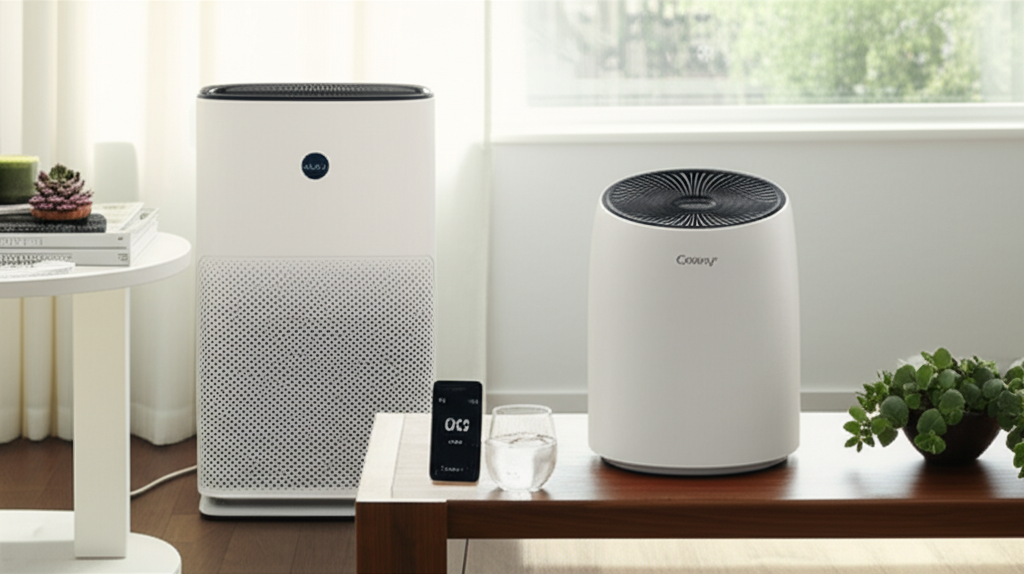
Coway’s approach usually involves a pre-filter for larger particles, an activated carbon filter for odors and VOCs, and a True HEPA filter for fine particles like dust, pollen, and pet dander. This layered system is a proven method for comprehensive air cleaning. Many Coway models also feature advanced sensors that monitor air quality and automatically adjust fan speed.
Key Benefits of Coway Air Purifiers
Coway air purifiers are known for their robust performance in removing common allergens and pollutants. They often offer excellent value, providing powerful filtration at competitive price points. Their user interfaces are generally intuitive, making them easy to operate for most households.
Molekule Air Purifiers: The PECO Revolution
Molekule stands out with its unique Photo Electrochemical Oxidation (PECO) technology. Unlike traditional HEPA filters that trap pollutants, PECO aims to destroy them at a molecular level. This innovative approach targets viruses, bacteria, VOCs, and other microscopic contaminants that HEPA filters might miss.
How Molekule’s PECO Technology Works
The PECO filter in Molekule devices uses a UV-C light source to activate a catalyst. This reaction breaks down pollutants into harmless components like CO2 and water. It’s a sophisticated process designed to tackle a broader spectrum of airborne contaminants beyond what conventional filters can achieve.
Advantages of Molekule’s Innovative Approach
Molekule’s PECO technology offers a potential advantage in neutralizing microscopic threats, including certain viruses and bacteria. This makes it an attractive option for those highly concerned about germ transmission or sensitive to a wide range of airborne irritants. The sleek, modern design of Molekule units also appeals to those prioritizing aesthetics.
Coway Vs Molekule Air Purifier: A Direct Comparison
When you place Coway vs Molekule air purifier side-by-side, their core differences become clear. Coway excels in traditional, proven filtration, while Molekule bets on its proprietary PECO technology for a more advanced, molecular-level clean. Your choice will depend on whether you prioritize established HEPA effectiveness or the potential of PECO’s molecular destruction.
Filtration Performance: HEPA vs. PECO
Traditional HEPA filters, like those in Coway units, are certified to capture 99.97% of particles down to 0.3 microns. This is highly effective for dust, pollen, mold spores, and pet dander. Molekule’s PECO technology, on the other hand, claims to break down pollutants at a molecular level, including VOCs and even some viruses and bacteria that might be smaller than 0.3 microns.
What the Science Says
Studies on HEPA filtration consistently demonstrate its efficacy in removing particulate matter. Research into PECO technology is ongoing, with independent third-party testing showing promising results in breaking down certain VOCs and killing some viruses. However, the real-world impact on a broad range of airborne pathogens in typical home environments is still a subject of scientific exploration and user observation.
Particle Removal Effectiveness
For common allergens and dust, Coway’s multi-stage HEPA filtration is a well-established and highly effective solution. Molekule’s PECO technology aims to go further by neutralizing VOCs and other microscopic contaminants that might pass through or accumulate on HEPA filters. This means for immediate, proven particulate removal, Coway often has an edge, while Molekule offers a complementary or alternative approach to molecular breakdown.
Cost of Ownership: Filters and Energy
The long-term cost of owning an air purifier is a significant factor. This includes the price of replacement filters and the unit’s energy consumption. Understanding these recurring costs is essential for budgeting your Coway vs Molekule air purifier decision.
Filter Replacement Cycles and Costs
Coway typically uses multi-part filter systems, with HEPA and carbon filters needing replacement at intervals often ranging from 6 to 12 months. The cost of these replacement filters can vary by model but is generally competitive. Molekule’s PECO filters also require regular replacement, typically every 6 months, and their cost can be a more significant recurring expense.
Energy Efficiency
Both Coway and Molekule air purifiers are designed to be relatively energy-efficient, especially when operating at lower fan speeds. Energy Star certifications are common for many Coway models, indicating good energy performance. Molekule units also aim for efficiency, but the energy required to power the UV-C light in their PECO system is a factor to consider in overall consumption.
Design and User Experience
Beyond performance, the look and feel of an air purifier matter, especially if it will be a visible part of your home decor. Ease of use, noise levels, and smart features also contribute to the overall user experience.
Aesthetic Appeal
Coway units often feature a more utilitarian design, prioritizing functionality and air intake/output efficiency. They are available in various sizes and styles to suit different room aesthetics. Molekule purifiers are known for their modern, minimalist designs, often resembling sleek cylinders or towers that blend seamlessly into contemporary interiors.
Noise Levels and Smart Features
Noise levels are a critical consideration, especially for bedrooms or living areas. Both brands offer models with varying noise outputs, often detailed in decibel (dB) ratings. Many modern air purifiers, including select Coway and Molekule models, come equipped with smart features like Wi-Fi connectivity, app control, and air quality monitoring, allowing for remote operation and data tracking.
Coverage Area and CADR Ratings
The effectiveness of an air purifier is often measured by its Clean Air Delivery Rate (CADR) and its suitability for different room sizes. CADR ratings indicate how quickly an air purifier can clean the air of specific pollutants like smoke, dust, and pollen.
Understanding CADR
CADR ratings are standardized measurements that allow for direct comparison of different air purifiers’ particle-removing speeds. Higher CADR numbers mean faster air cleaning. When comparing Coway vs Molekule air purifier, looking at their respective CADR ratings for smoke, dust, and pollen can provide valuable insights into their particle removal capabilities for specific pollutants.
Room Size Suitability
Both Coway and Molekule offer a range of units designed for different room sizes, from small bedrooms to large living spaces. It’s essential to match the purifier’s capacity to your room dimensions for optimal performance. Overestimating your needs is generally better than underestimating them.
Coway vs Molekule: Which is Right for You?
The decision between a Coway and a Molekule air purifier ultimately hinges on your priorities. If you seek a proven, robust, and often more budget-friendly solution for common allergens and pollutants, Coway is an excellent choice. If you are intrigued by cutting-edge technology aimed at molecular-level purification and are willing to invest in its proprietary system, Molekule presents a compelling, albeit often more expensive, alternative.
Frequently Asked Questions About Coway and Molekule Air Purifiers
What is the primary difference between Coway and Molekule air purifiers?
Coway uses traditional multi-stage HEPA filtration to capture particles, while Molekule employs PECO technology to break down pollutants at a molecular level. This is a key distinction in the Coway vs Molekule air purifier debate.
Are Molekule filters more expensive than Coway filters?
Generally, yes. Molekule’s proprietary PECO filters tend to have a higher replacement cost compared to the multi-part filter systems found in many Coway models.
Which type of air purifier is better for allergies?
For common allergens like pollen, dust, and pet dander, Coway’s True HEPA filtration is highly effective and a trusted solution. Molekule’s PECO technology may offer additional benefits for a broader range of irritants.
Do Molekule air purifiers require a lot of electricity for the PECO system?
The PECO system requires UV-C light, which consumes energy. While Molekule units are designed for efficiency, this is a factor to consider in their overall power usage compared to HEPA-only systems.
Can I use both a Coway and a Molekule air purifier in the same room?
While you could, it’s generally not necessary or cost-effective. Each purifier is designed to handle a room’s air quality on its own. Choosing one that best fits your needs is more practical.
What is the lifespan of Coway HEPA filters?
Coway HEPA filters typically need replacement every 6 to 12 months, depending on usage and air quality. Always refer to your specific model’s manual for exact recommendations.
Conclusion: Your Essential Air Quality Choice
Navigating the Coway vs Molekule air purifier landscape reveals two distinct paths to cleaner indoor air. Coway offers a reliable, well-established, and often more economical approach with its multi-stage HEPA filtration, ideal for tackling everyday allergens and pollutants. Molekule provides an innovative, albeit pricier, alternative with its PECO technology, aiming to neutralize contaminants at a molecular level. Consider your primary air quality concerns, budget, and desired technological approach to make the essential choice that will best serve your home’s health and comfort.
To stay updated on the latest in home air quality and wellness, consider subscribing to our newsletter for more expert insights and product reviews.