
Best Indoor Air Purifier For Smoke: Essential Guide

The best indoor air purifier for smoke offers robust filtration, targeting particulate matter and odors from wildfires, cooking, and tobacco. This guide helps you choose a unit that effectively clears your air, ensuring a healthier home environment.
Are you struggling with lingering smoke odors or concerned about the air quality in your home after a wildfire or even from everyday cooking? The presence of smoke indoors can be more than just an annoyance; it can significantly impact your health and comfort. Fortunately, finding the best indoor air purifier for smoke can make a world of difference. This guide will walk you through everything you need to know to select the right air purifier, transforming your living space into a sanctuary of fresh, clean air.
Why Smoke Indoors Demands a Specialized Air Purifier
Smoke, whether from wildfires, cigarettes, or cooking, releases a complex mixture of harmful particles and gases into your home. These can include fine particulate matter (PM2.5), volatile organic compounds (VOCs), and unpleasant odors that standard air filters often miss. A dedicated smoke-purifying unit is crucial for effectively capturing these microscopic threats.
Understanding Smoke Particles and Their Health Impacts
Smoke contains tiny particles, often less than 2.5 micrometers in diameter, which can penetrate deep into your lungs. These particles are linked to respiratory issues, cardiovascular problems, and can exacerbate allergies and asthma. Addressing these airborne pollutants is essential for maintaining good health.
Key Features to Look for in a Smoke Air Purifier
When selecting the best indoor air purifier for smoke, prioritize models with multi-stage filtration systems. This typically includes a pre-filter for larger particles, a HEPA filter for fine smoke particles, and an activated carbon filter to neutralize odors and gases. Consider the CADR (Clean Air Delivery Rate) to ensure it’s suitable for your room size.
HEPA Filtration: The Gold Standard for Smoke Particles
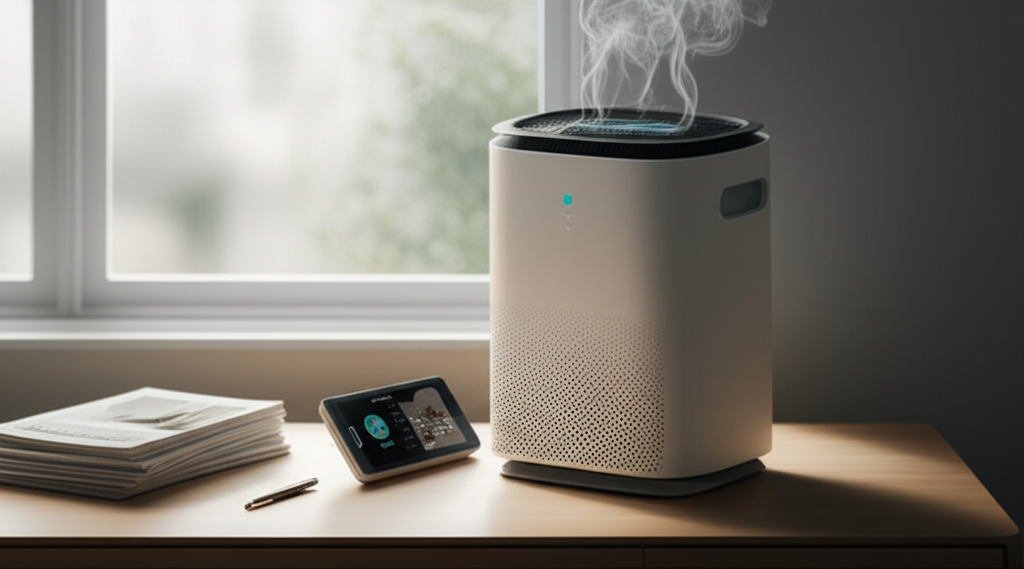
A true HEPA filter is designed to capture at least 99.97% of airborne particles as small as 0.3 microns. This is vital for trapping the fine particulate matter found in smoke, making HEPA filtration a non-negotiable feature for effective smoke removal.
Activated Carbon: Your Ally Against Smoke Odors
While HEPA filters tackle particles, activated carbon filters are the superheroes for smoke odors. These filters use a porous carbon material to adsorb gases and VOCs, effectively eliminating that tell-tale smoky smell from your home. The more activated carbon a purifier has, the better it will be at odor neutralization.
Pre-Filters: Extending the Life of Your Main Filters
A washable pre-filter is an excellent addition, as it captures larger particles like dust, pet hair, and lint. This protects the more sensitive HEPA and carbon filters from getting clogged too quickly, extending their lifespan and maintaining the purifier’s efficiency.
Choosing the Right Size and Coverage Area
Selecting an air purifier that matches your room size is paramount for optimal performance. A unit that is too small will struggle to adequately clean the air, while an oversized unit might be unnecessarily noisy or expensive to run. Always check the manufacturer’s specified coverage area and CADR ratings.
What is CADR and Why Does it Matter for Smoke?
The Clean Air Delivery Rate (CADR) indicates how quickly an air purifier can clean a room of specific pollutants. Higher CADR ratings for smoke, dust, and pollen mean faster air purification. For smoke, a high smoke CADR is particularly important.
Room Size Considerations for Effective Smoke Purification
For smaller rooms like bedrooms or offices, a compact unit with a CADR suitable for 200-300 sq ft might suffice. Larger living areas or open-plan spaces will require more powerful units with higher CADR ratings and greater coverage, often exceeding 500 sq ft.
Top Air Purifier Brands and Models for Smoke
Several brands consistently deliver excellent performance in smoke purification. While specific models change, brands like Coway, Levoit, Winix, and Blueair are frequently recommended for their effective filtration systems and reliability. I’ve found that focusing on their HEPA and activated carbon offerings is key.
Featured Models: Our Top Picks for Smoke
Coway Airmega AP-1512HH Mighty: Often cited as a top performer, it boasts a robust four-stage filtration system and excellent energy efficiency. It’s a great all-rounder for smoke and general air quality.
Levoit Core 300S: A popular choice for smaller spaces, this unit offers a three-stage filtration system and smart features, making it a convenient and effective option for tackling smoke.
* Winix 5500-2: Known for its comprehensive filtration, including a PlasmaWave technology (which can be turned off if preferred), it’s highly effective against smoke and odors.
These models represent a good starting point for your research, offering a blend of performance, features, and value.
Beyond Filtration: Additional Features to Consider
Some air purifiers offer additional features that can enhance their effectiveness against smoke or improve user experience. These might include air quality sensors, automatic modes, timers, and smart connectivity.
Air Quality Sensors and Auto Mode: Smart Smoke Detection
Purifiers with air quality sensors can detect the level of pollutants in the air and automatically adjust their fan speed accordingly. This ensures that the unit works harder when smoke is present and conserves energy when the air is clean, providing seamless protection.
Smart Connectivity and App Control
For added convenience, many modern air purifiers offer Wi-Fi connectivity and app control. This allows you to monitor air quality, change settings, and set schedules remotely, ensuring your home remains smoke-free even when you’re not there.
Maintenance and Filter Replacement: Keeping Your Purifier Effective
To ensure your air purifier continues to perform optimally, regular maintenance is essential. This includes cleaning the pre-filter and replacing the HEPA and activated carbon filters according to the manufacturer’s recommendations. Neglecting maintenance can significantly reduce the unit’s effectiveness.
Understanding Filter Lifespan and Costs
HEPA filters typically last 6-12 months, while activated carbon filters may need replacement every 3-6 months, depending on usage and the level of pollutants. Factor in the ongoing cost of replacement filters when making your purchase decision.
Setting Up and Using Your New Air Purifier for Smoke
Proper placement and initial setup can maximize your air purifier’s impact. Place it in the room where smoke is most prevalent or where you spend the most time, ensuring unobstructed airflow around the unit. Always follow the manufacturer’s instructions for initial operation.
Optimal Placement for Maximum Smoke Capture
Positioning your air purifier in a central location within the room, away from walls and furniture, allows for optimal air circulation. Placing it near the source of smoke, if possible, can also help capture pollutants before they spread widely.
Frequently Asked Questions About Air Purifiers for Smoke
Q1: How quickly can an air purifier remove smoke from a room?
An air purifier’s speed depends on its CADR, room size, and the density of the smoke. High-performance units with strong filtration can significantly reduce smoke and odors within an hour.
Q2: Do air purifiers with ionizers or ozone generators help with smoke?
While some purifiers use ionizers or ozone, they can be controversial. Ionizers release charged particles that can help pollutants clump together, but they may also produce ozone, a lung irritant. Ozone generators intentionally produce ozone, which is harmful. For smoke, prioritize HEPA and activated carbon filtration.
Q3: Can an air purifier completely eliminate smoke smell?
A good air purifier with a substantial activated carbon filter can drastically reduce or eliminate smoke smell. However, deeply embedded odors in fabrics or walls might require additional cleaning measures.
Q4: How often should I run my air purifier for smoke?
For continuous protection, especially during periods of poor air quality or if you regularly deal with smoke, running your air purifier 24/7 is recommended. Using the auto mode can optimize this process.
Q5: Are expensive air purifiers for smoke worth it?
While budget options exist, investing in a higher-quality air purifier with true HEPA and ample activated carbon filtration generally offers superior performance and longevity for effectively combating smoke.
Conclusion: Breathe Easier with the Right Air Purifier for Smoke
Choosing the best indoor air purifier for smoke is a proactive step towards a healthier and more comfortable living environment. By understanding the importance of HEPA and activated carbon filtration, considering room size, and looking for key features, you can confidently select a unit that effectively tackles smoke particles and odors. Investing in a quality air purifier means investing in your well-being, allowing you to breathe easier and enjoy your home to its fullest, free from the irritations of smoke.
