
Air Purifier with Activated Carbon Filter for VOCs: Essential Clean Air

An air purifier with an activated carbon filter is your best defense against VOCs, ensuring essential clean air in your home. Discover how this powerful combination tackles invisible pollutants for a healthier living space.
Breathing in your home should feel safe and refreshing, not like a chemical experiment. Yet, many common household items release Volatile Organic Compounds (VOCs) into the air we breathe daily. These invisible pollutants can cause headaches, dizziness, and long-term health issues. The good news is, achieving truly clean air is within reach. This guide will walk you through why an air purifier with an activated carbon filter for VOCs is an essential tool for a healthier home.
Understanding Volatile Organic Compounds (VOCs) and Their Impact
VOCs are chemical compounds that easily turn into gases at room temperature. They are emitted from a vast array of everyday products and materials, often unnoticed. Identifying these sources is the first step to mitigating their presence in your home environment.
Common Sources of VOCs in Your Home
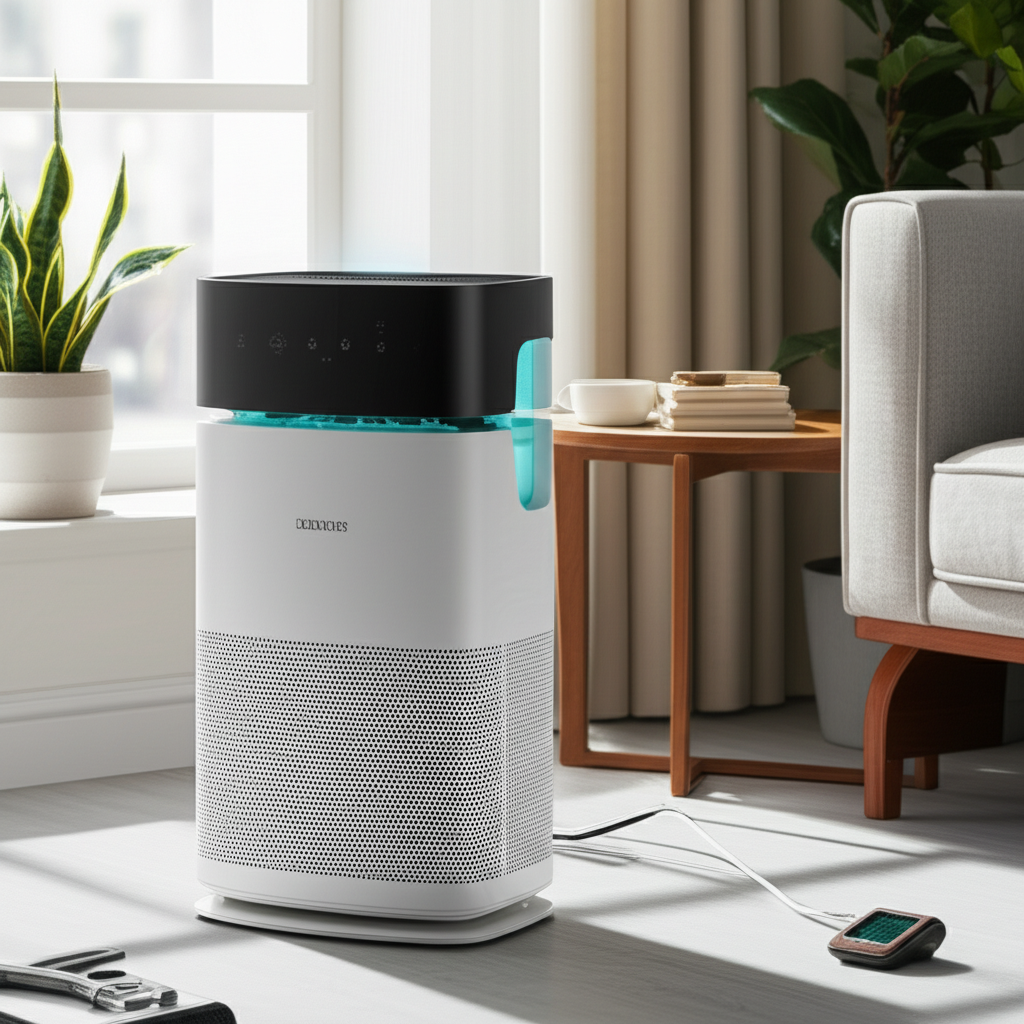
Many items we use daily are silent contributors to indoor air pollution. From furniture to cleaning supplies, VOCs are more pervasive than you might think. Understanding where they come from helps in making informed choices for a healthier living space.
Building Materials and Furnishings: New carpets, paints, varnishes, and pressed-wood furniture often off-gas formaldehyde and other VOCs.
Household Products: Cleaning agents, air fresheners, aerosol sprays, and even scented candles can release a cocktail of chemicals.
Personal Care Products: Hairsprays, perfumes, and nail polish removers are significant sources of VOCs.
Hobby and Craft Supplies: Glues, permanent markers, and solvents used in hobbies can contribute to indoor air pollution.
Office Equipment: Some printers and copiers can also emit VOCs.
The Health Risks Associated with VOC Exposure
Exposure to VOCs, even at low levels, can lead to a range of health problems. These symptoms can vary from mild discomfort to more serious chronic conditions over time. Prioritizing clean indoor air is crucial for overall well-being.
Short-term effects often include headaches, nausea, dizziness, and irritation of the eyes, nose, and throat.
Long-term exposure has been linked to more severe issues, including damage to the liver, kidneys, and central nervous system. Some VOCs are also known or suspected carcinogens.
The Crucial Role of Activated Carbon Filters in Air Purification
While HEPA filters excel at capturing particulate matter like dust and pollen, they are ineffective against VOCs. This is where activated carbon filters shine, offering a unique solution to invisible chemical pollutants. An air purifier with activated carbon filter for VOCs is therefore indispensable.
How Activated Carbon Works Its Magic
Activated carbon is a highly porous material treated to increase its adsorptive surface area. This structure allows it to trap and hold onto gas molecules, effectively removing them from the air. It’s like a microscopic sponge for airborne chemicals.
Activated carbon works through a process called adsorption, where gas molecules chemically bond to its vast internal surface. The more surface area the carbon has, the more VOCs it can capture. This makes it a powerful tool for improving indoor air quality.
The Science Behind Adsorption
Adsorption is a surface phenomenon, distinct from absorption. In adsorption, molecules adhere to the surface of the adsorbent material. Activated carbon’s intricate pore structure provides an enormous surface area, making it incredibly efficient at capturing gases.
The effectiveness of activated carbon depends on several factors, including the type of VOC, the amount of carbon present, and the contact time between the air and the filter. A good air purifier with activated carbon filter for VOCs will feature a substantial amount of high-quality carbon.
Why an Air Purifier with Activated Carbon Filter is Essential for VOCs
When it comes to tackling VOCs, a standard air purifier often falls short. Combining a HEPA filter with an activated carbon filter in a single unit offers comprehensive protection against both particulate matter and gaseous pollutants. This dual-action approach is key to achieving truly clean air.
Beyond Particulates: Addressing Gaseous Pollutants
Particulate matter like dust, pollen, and pet dander can trigger allergies and respiratory issues. However, VOCs present a different kind of threat, impacting our health through chemical means rather than physical irritation. An air purifier with activated carbon filter for VOCs addresses this vital gap.
While HEPA filters are excellent for capturing particles, they do nothing for gases and odors. Activated carbon filters are specifically designed to adsorb these harmful airborne chemicals, making them a crucial component for comprehensive air purification.
The Synergy of HEPA and Activated Carbon
The most effective air purifiers combine multiple filtration stages. A pre-filter captures larger particles, a HEPA filter traps fine particulates, and an activated carbon filter tackles VOCs and odors. This layered approach ensures that your air is cleaned of a wide spectrum of contaminants.
This combined filtration system provides a holistic solution for indoor air quality. It ensures that your environment is free from both visible dust and invisible chemical pollutants, promoting a healthier living space.
Choosing the Right Air Purifier with Activated Carbon Filter for VOCs
Selecting the best air purifier with activated carbon filter for VOCs involves considering several key features. Not all activated carbon filters are created equal, and the design of the purifier plays a significant role in its effectiveness. I always recommend looking for units with substantial carbon content.
Key Features to Look For
When shopping for an air purifier with activated carbon filter for VOCs, pay close attention to the amount and quality of the activated carbon. This is often the most overlooked, yet critical, component for VOC removal.
Amount of Activated Carbon: Look for purifiers that specify the weight of activated carbon used, ideally several pounds for larger units. More carbon means longer-lasting effectiveness.
Type of Activated Carbon: Granular activated carbon (GAC) is common, but some purifiers use carbon cloth or a blend for enhanced performance.
Carbon Filter Thickness and Surface Area: A thicker, denser carbon filter generally offers more contact time for VOCs to adsorb.
Pre-filter: A washable pre-filter extends the life of the HEPA and carbon filters by capturing larger particles.
CADR Ratings: Ensure the Clean Air Delivery Rate (CADR) for smoke, dust, and pollen is appropriate for your room size.
Understanding Carbon Filter Lifespan and Replacement
Activated carbon filters have a finite lifespan; once their adsorption sites are full, they can no longer capture VOCs. Knowing when to replace them is crucial for maintaining air quality.
The lifespan of an activated carbon filter varies depending on the level of VOCs in your environment and how often the purifier is used. Manufacturers typically provide an estimated replacement interval, often between 6 to 12 months. It’s wise to replace them sooner if you notice odors returning.
How Much Activated Carbon is Enough?
The general rule of thumb is that more activated carbon is better when targeting VOCs. A few pounds of carbon in a unit designed for a medium-sized room is a good starting point. For areas with higher pollution levels, consider purifiers with even more substantial carbon filtration.
For truly effective VOC removal, I advise against purifiers with only a thin layer of carbon. Look for models that clearly state the weight of their activated carbon, as this is a strong indicator of their VOC-fighting capability.
Top Air Purifier Brands and Models for VOC Removal
Several reputable brands offer air purifiers with robust activated carbon filtration systems designed to combat VOCs. Researching these options can help you find a unit that best suits your needs and budget. I’ve personally found success with brands known for their comprehensive filtration.
Industry Leaders in Activated Carbon Technology
When it comes to effective VOC removal, some brands consistently stand out for their commitment to quality filtration. They often use advanced carbon technologies and substantial carbon loads in their units.
Coway: Known for their multi-stage filtration, often including significant amounts of activated carbon.
Blueair: Offers models with their proprietary “CleanZone” activated carbon filters designed for chemical and odor removal.
Austin Air: Specializes in large, heavy-duty purifiers with substantial carbon beds, ideal for severe air quality issues.
IQAir: High-performance systems with specialized carbon filters that can be customized for specific pollutants.
Winix: Offers models with PlasmaWave technology alongside HEPA and carbon filters, providing a comprehensive approach.
Comparing Features and Performance
When comparing different models, consider the amount of activated carbon, the overall filtration system, room coverage, and noise levels. Reading independent reviews can provide valuable insights into real-world performance.
A table comparing key features can be very helpful in making an informed decision.
| Feature | Model A (Brand X) | Model B (Brand Y) | Model C (Brand Z) |
| :——————- | :—————- | :—————- | :—————- |
| Activated Carbon Weight | 2 lbs | 5 lbs | 1.5 lbs |
| HEPA Filter Type | True HEPA | True HEPA | True HEPA |
| Room Coverage (sq ft) | 300 | 500 | 250 |
| Carbon Filter Life | 6-9 months | 12-18 months | 4-6 months |
| Noise Level (dB) | 25-50 | 30-55 | 20-45 |
User Experiences and Expert Recommendations
I always recommend checking user reviews and expert testing reports for specific models. These can offer practical insights into how well an air purifier with activated carbon filter for VOCs performs in real-world conditions. Websites like Wirecutter and Consumer Reports often provide detailed analyses.
Maintaining Your Air Purifier for Optimal VOC Removal
Proper maintenance is key to ensuring your air purifier with activated carbon filter for VOCs continues to perform at its best. Regular cleaning and timely filter replacements will maximize its effectiveness against VOCs. It’s a simple process that yields significant results.
Regular Cleaning of Components
Keeping your air purifier clean prevents dust buildup from hindering airflow and filter efficiency. This includes the pre-filter and the exterior of the unit.
Pre-filter: Most pre-filters are washable. Gently vacuum them or rinse them under water and allow them to dry completely before reinserting.
Exterior: Wipe down the outside of the unit with a damp cloth to remove dust and debris. Ensure the unit is unplugged before cleaning.
Timely Filter Replacement
This is the most critical maintenance step for effective VOC removal. A saturated activated carbon filter can no longer trap new pollutants and may even release trapped ones. Always follow the manufacturer’s recommendations for replacement.
Replacing filters according to the manufacturer’s schedule is paramount. For an air purifier with activated carbon filter for VOCs, this ensures the carbon remains active and capable of adsorbing harmful gases.
Signs Your Carbon Filter Needs Replacement
Beyond the recommended schedule, there are sensory clues that indicate your activated carbon filter is no longer effective. Trusting your senses can help you maintain optimal air quality.
Return of Odors: If you notice lingering cooking smells, pet odors, or other common household smells that the purifier used to eliminate, it’s a strong sign.
Reduced Airflow: A clogged filter can reduce the amount of air the purifier can process, leading to less effective air cleaning.
Where to Place Your Air Purifier for Maximum VOC Capture
The placement of your air purifier with activated carbon filter for VOCs significantly impacts its ability to clean the air in your home. Strategic positioning ensures optimal airflow and maximum contaminant capture. I always aim for central locations with good circulation.
Optimizing Airflow and Circulation
Air purifiers work best when they have unobstructed airflow. Placing them in corners or too close to walls can restrict the intake and outflow of air, reducing their efficiency.
The ideal placement is in an open area, away from furniture or curtains that could block air intake. This allows the purifier to draw in polluted air and circulate clean air effectively throughout the room.
Strategic Room Placement
Consider the rooms where VOCs are most prevalent or where you spend the most time. Bedrooms, living rooms, and kitchens are often prime locations for an air purifier.
Bedrooms: Essential for healthy sleep, free from off-gassing from mattresses or furniture.
Living Areas: Where families gather, often containing furniture, electronics, and decorative items that can release VOCs.
Kitchens: Cooking fumes and cleaning products can contribute significantly to VOC levels.
Using Multiple Units for Whole-House Coverage
For larger homes or areas with persistent air quality issues, using multiple air purifiers in different rooms can provide comprehensive clean air. This ensures that VOCs are tackled in all key living spaces. Investing in an air purifier with activated carbon filter for VOCs for each major room offers the best protection.
The Future of Air Purification and VOC Control
Technological advancements continue to improve the efficiency and effectiveness of air purification. Innovations in filtration materials and smart features are making it easier than ever to manage indoor air quality. The future looks promising for cleaner, healthier homes.
Emerging Technologies in Filtration
Researchers are constantly exploring new materials and methods for capturing pollutants. These innovations aim to improve efficiency, extend filter life, and reduce the environmental impact of air purifiers.
Newer activated carbon technologies are being developed to offer higher adsorption capacities and faster reaction times for VOCs. Nanotechnology is also being explored for its potential in creating more efficient filtration media.
Smart Air Purifiers and Connectivity
Many modern air purifiers come with smart features, allowing for remote control via smartphone apps and integration with home automation systems. These devices can also monitor air quality in real-time.
Smart sensors can detect VOC levels and automatically adjust the purifier’s fan speed. This ensures your air purifier with activated carbon filter for VOCs is always working efficiently to maintain optimal air quality.
Sustainability in Air Purifier Design
There’s a growing focus on making air purifiers more sustainable, from energy efficiency to the materials used in their construction and filters. Consumers are increasingly seeking eco-friendly options.
Manufacturers are exploring recyclable filter materials and energy-saving modes to reduce the environmental footprint of air purifiers. This aligns with a broader trend towards sustainable home appliances.
Frequently Asked Questions About Air Purifiers and VOCs
Q1: Can an air purifier with an activated carbon filter remove all VOCs?
While an air purifier with activated carbon filter for VOCs is highly effective, it may not remove all VOCs. The effectiveness depends on the type and concentration of VOCs, the amount of carbon in the filter, and the purifier’s airflow.
Q2: How often should I replace the activated carbon filter?
This varies by manufacturer and usage, but typically every 6-12 months. If you notice odors returning or reduced effectiveness, it’s time for a replacement sooner.
Q3: Are activated carbon filters safe?
Yes, activated carbon is a safe and natural material. It works by adsorption, trapping pollutants on its surface without releasing harmful substances.
Q4: Can an air purifier help with new furniture smell?
Absolutely. The “new furniture smell” is often due to VOCs like formaldehyde. An air purifier with activated carbon filter for VOCs is excellent for removing these chemical odors.
Q5: Do I need a separate activated carbon filter, or is it usually combined with a HEPA filter?
Most effective air purifiers for VOCs combine a HEPA filter for particles with a substantial activated carbon filter for gases and odors. This dual approach offers comprehensive air cleaning.
Q6: How much activated carbon is considered “enough” for good VOC removal?
Look for purifiers that use several pounds of activated carbon. A thin layer might offer minimal benefit, while a significant amount provides much greater adsorption capacity and longevity.
Conclusion: Invest in Essential Clean Air for a Healthier Home
Volatile Organic Compounds are an invisible threat in many homes, impacting our health and well-being. Fortunately, an air purifier with activated carbon filter for VOCs offers a powerful and effective solution. By understanding how these purifiers work, choosing the right unit, and maintaining it properly, you can significantly improve your indoor air quality. Investing in an air purifier with activated carbon filter for VOCs is not just about removing odors; it’s about creating a safer, healthier environment for yourself and your loved ones. Breathe easier, knowing you’re taking proactive steps towards essential clean air.