
Air Purifier With Activated Carbon For Smoke: Essential Defense

Air Purifier With Activated Carbon for Smoke: Your Essential Defense Against Indoor Air Pollution
An air purifier with activated carbon for smoke is your best defense against airborne pollutants. It effectively captures smoke particles and odors, creating a healthier indoor environment. Discover why this technology is crucial for your home and how to choose the right one.
Living with smoke indoors, whether from cooking, fireplaces, or external sources like wildfires, can be incredibly frustrating and detrimental to your health. The persistent smell, the visible haze, and the invisible particles that settle on surfaces all contribute to a less-than-ideal living space. Fortunately, you don’t have to endure it. An air purifier with activated carbon for smoke offers a powerful and effective solution to reclaim your home’s air quality. This guide will walk you through everything you need to know to make an informed choice and breathe easier.
Why Activated Carbon is Key for Smoke Elimination
Activated carbon is a champion in absorbing odors and gases, making it indispensable for tackling smoke. Its porous structure provides an enormous surface area, perfect for trapping volatile organic compounds (VOCs) and other smoke-related molecules that cause that unpleasant smell and contribute to poor air quality.
When smoke enters your home, it releases a complex mixture of particles and gases. While HEPA filters excel at capturing larger particulate matter, they are less effective against the microscopic gases and odors that define smoke’s lingering presence. This is where activated carbon shines, acting as a vital complement to particulate filtration.
The Science Behind Activated Carbon’s Power
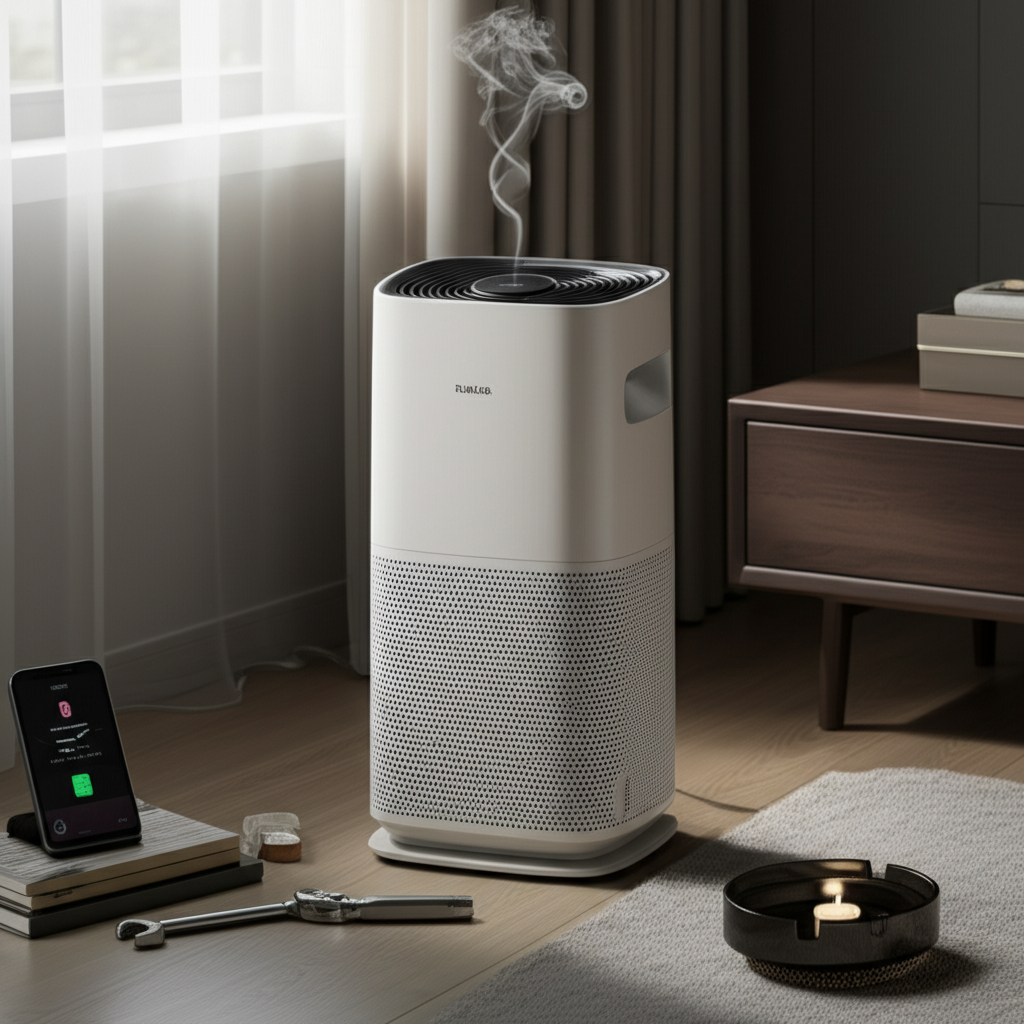
Activated carbon is essentially charcoal that has been treated to be extremely porous. This process creates millions of tiny pores within the carbon material, vastly increasing its surface area. This increased surface area allows for a process called adsorption, where gas and odor molecules chemically bond to the surface of the carbon.
Think of it like a microscopic sponge specifically designed for smoke and odors. As air passes through the activated carbon filter, the harmful and smelly compounds in smoke are attracted to and held within these pores, leaving cleaner air to circulate back into your room.
How an Air Purifier with Activated Carbon for Smoke Works
An air purifier with activated carbon for smoke employs a multi-stage filtration system to tackle airborne pollutants. Typically, it starts with a pre-filter to catch larger particles like dust and pet hair, followed by a HEPA filter to trap fine particles, and crucially, an activated carbon filter to neutralize gases and odors.
This layered approach ensures comprehensive air purification. The activated carbon filter specifically targets the invisible but potent elements of smoke, effectively removing the acrid smells and harmful VOCs that can linger long after the visible smoke has dissipated.
The Filtration Process Explained
Air is drawn into the unit by a fan, passing through each filter in sequence. The pre-filter captures larger debris, extending the life of the other filters. The HEPA filter removes up to 99.97% of airborne particles as small as 0.3 microns, including smoke particulates. Finally, the air flows through the activated carbon filter, where smoke odors and gases are adsorbed.
The result is cleaner, fresher air that significantly reduces the impact of smoke on your indoor environment. This makes an air purifier with activated carbon for smoke an essential tool for anyone affected by smoke.
Key Benefits of Using Activated Carbon for Smoke
The primary benefit is the effective removal of smoke odors, transforming a smoky-smelling room into a fresh-smelling one. Beyond odor control, activated carbon also adsorbs harmful VOCs released by burning materials, contributing to better respiratory health.
Investing in an air purifier with activated carbon for smoke means investing in your well-being. It provides a tangible solution to a pervasive problem, offering peace of mind and a healthier living space for you and your family.
Odor Elimination: The Most Noticeable Impact
Smoke carries a distinct and often overpowering odor that can permeate fabrics, furniture, and even walls. Activated carbon filters are exceptionally good at adsorbing these odor-causing molecules, breaking the cycle of stale, smoky air and restoring a pleasant atmosphere.
This immediate and noticeable improvement in air freshness is a major reason why activated carbon is a sought-after feature in air purifiers designed for smoke removal. It tackles the sensory aspect of smoke pollution head-on.
Removal of Harmful VOCs and Gases
Beyond the smell, smoke releases a cocktail of volatile organic compounds (VOCs) and other harmful gases. These can include carbon monoxide, nitrogen dioxide, and various carcinogens, depending on the source of the smoke. Activated carbon’s adsorptive properties help capture many of these dangerous airborne chemicals.
By adsorbing these VOCs, an air purifier with activated carbon for smoke contributes to a healthier indoor air environment, reducing exposure to potentially long-term health risks associated with smoke inhalation.
Choosing the Right Air Purifier with Activated Carbon for Smoke
When selecting an air purifier with activated carbon for smoke, consider the size of the room it will be used in, the amount of activated carbon in the filter, and the CADR (Clean Air Delivery Rate) for smoke. A larger room requires a higher CADR and a more robust carbon filter.
Don’t be swayed by marketing jargon alone; look for specific details about the carbon filter’s weight or thickness, as this often indicates its capacity and longevity. This ensures you get a unit that can truly handle your smoke purification needs.
Understanding Filter Specifications
Look for purifiers with a substantial amount of activated carbon, often measured in pounds or kilograms. A thin layer of carbon will be less effective and require more frequent replacement. Also, check the CADR ratings specifically for smoke, as this tells you how quickly the unit can clean the air of smoke particles and odors.
A higher CADR for smoke means the purifier can process more air and remove smoke contaminants more efficiently, making it a better choice for dealing with persistent smoke issues.
HEPA vs. Activated Carbon: Understanding the Difference
While both are crucial for smoke, they serve different purposes. HEPA filters capture particulate matter—the visible smoke particles. Activated carbon filters capture gases and odors—the invisible but often more offensive aspects of smoke. For comprehensive smoke control, you need both.
A unit that only has one type of filter will not be as effective. An air purifier with activated carbon for smoke should ideally integrate both HEPA and activated carbon filtration for optimal results.
Maintenance and Replacement: Keeping Your Purifier Effective
Activated carbon filters have a finite lifespan and will become saturated over time, losing their adsorptive capacity. Regular replacement is essential to maintain the purifier’s effectiveness in combating smoke odors and gases.
Ignoring filter replacement can lead to reduced performance and even re-release of trapped pollutants. Following the manufacturer’s recommendations for replacement ensures your air purifier continues to provide clean, fresh air.
When to Replace Your Activated Carbon Filter
The lifespan of an activated carbon filter varies depending on usage and the severity of smoke exposure. Most manufacturers recommend replacement every 6 to 12 months. Some purifiers have indicator lights to signal when it’s time for a change.
If you notice smoke odors returning or the air doesn’t smell as fresh, it’s a clear sign that your activated carbon filter needs attention, regardless of the recommended schedule.
Pre-Filter and HEPA Filter Considerations
The pre-filter should be cleaned or replaced regularly, often monthly, to prevent it from clogging and hindering airflow. A dirty pre-filter reduces the efficiency of the entire system. HEPA filters typically last longer, often 1-3 years, but should also be replaced as recommended by the manufacturer.
Maintaining all filters ensures optimal performance and longevity of your air purification system. This holistic approach guarantees that your air purifier with activated carbon for smoke performs at its best.
Top Brands and Models to Consider
Several reputable brands offer excellent air purifiers with robust activated carbon filters designed for smoke. Brands like Coway, Levoit, and Winix are consistently praised for their performance, features, and value. Researching specific models within these brands can help you find the perfect fit.
When comparing, pay close attention to the amount of activated carbon used in their filters and the specific CADR ratings for smoke. These details can significantly impact their effectiveness in your home environment.
Factors Influencing Performance
Beyond the brand, consider the amount of activated carbon used. Thicker, heavier carbon filters generally offer better odor and gas absorption and last longer. Also, look for features like auto modes that adjust fan speed based on air quality, and noise levels, especially if the unit will be in a bedroom or living area.
Many users find that air purifiers with a dedicated “smoke” or “odor” setting provide enhanced performance for these specific concerns.
Beyond Smoke: Other Air Quality Benefits
While an air purifier with activated carbon for smoke is invaluable for smoke-related issues, its benefits extend much further. It can effectively reduce odors from cooking, pets, and mold, as well as trap allergens like pollen, dust mites, and pet dander, contributing to overall healthier indoor air.
This versatility makes it a wise investment for any home, offering year-round air quality improvements beyond just smoke mitigation.
Improving General Indoor Air Quality
By removing particulate matter and adsorbing VOCs and odors, these purifiers create a cleaner living environment. This can lead to reduced allergy symptoms, fewer respiratory irritations, and a generally more comfortable atmosphere for everyone in the household.
The continuous circulation and cleaning of air contribute to a healthier home ecosystem, making the air you breathe fresher and cleaner every day.
Frequently Asked Questions
How much activated carbon is enough for smoke?
For effective smoke removal, look for air purifiers with a substantial amount of activated carbon, ideally measured in pounds or kilograms, rather than just a thin coating. A heavier carbon filter generally means better adsorption and longer filter life.
Can an air purifier completely eliminate smoke smell?
An air purifier with activated carbon can significantly reduce and often eliminate smoke smell. However, complete elimination might depend on the severity of the smoke, the amount of carbon in the filter, and how frequently the filter is replaced.
How often do I need to replace the activated carbon filter for smoke?
This depends on the manufacturer’s recommendation and the level of smoke exposure. Generally, expect to replace it every 6 to 12 months. If you notice smoke odors returning, it’s time for a replacement.
Will a HEPA filter alone remove smoke smell?
No, a HEPA filter is designed to capture particulate matter (like smoke particles) but not gases or odors. Activated carbon is essential for adsorbing smoke smells and harmful VOCs.
Are air purifiers with activated carbon expensive to maintain?
The main cost is filter replacement. While initial purchase prices vary, ongoing costs are primarily for replacing HEPA and activated carbon filters, typically every 6-12 months for carbon filters, which is a reasonable expense for improved air quality.
Can an air purifier help with wildfire smoke?
Yes, an air purifier with a good HEPA filter and a substantial activated carbon filter is highly effective at removing both the fine particulate matter and the smoky odors and gases associated with wildfire smoke.
Conclusion
An air purifier with activated carbon for smoke is not just a luxury; it’s an essential defense for your home’s air quality. It tackles both the visible particles and the invisible, yet potent, odors and gases that smoke introduces. By understanding how activated carbon works and what to look for in a unit, you can make a confident choice that will significantly improve your indoor environment and your overall well-being.
